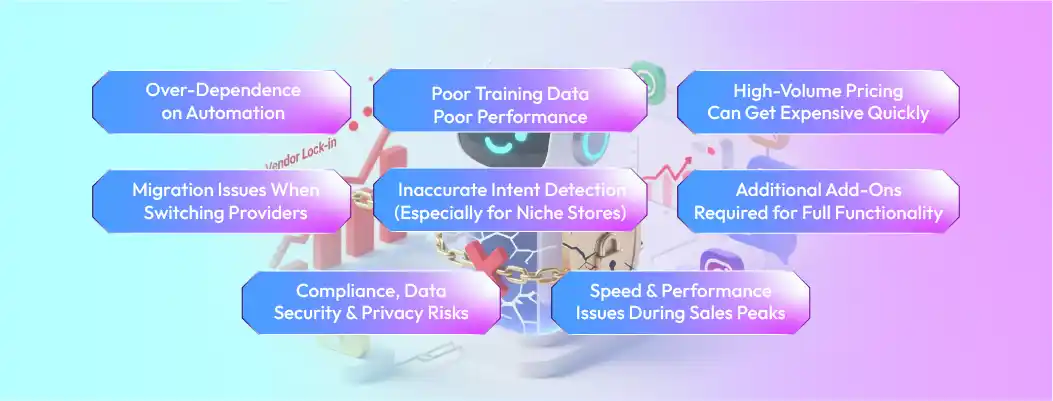
While AI chatbots can significantly improve customer experience and revenue, many e-commerce store owners underestimate the hidden costs and risks involved. Understanding these upfront helps you choose the right solution and avoid expensive surprises later.
1. Over-Dependence on Automation
Relying too heavily on automation can backfire. If the chatbot mishandles complex queries or fails during high-traffic moments, customers may receive poor support. This leads to frustration, lower satisfaction, and even negative reviews. Maintaining a balance between AI and human support is essential to avoid service gaps. Many E-commerce businesses use a chatbot analytics dashboard to track conversations, measure performance, and improve sales funnels over time.
2. Poor Training Data = Poor Performance
AI is only as good as the data it’s trained on. If your product catalog, FAQs, or customer history is outdated or incomplete, the chatbot may give incorrect answers. This reduces accuracy, increases cart abandonment, and harms trust. Improving training data often requires ongoing maintenance, which adds to time and cost.
3. High-Volume Pricing Can Get Expensive Quickly
Many chatbot platforms charge based on:
Although pricing may look affordable initially, costs can rise sharply once your store grows. For some platforms, a jump from a low-tier plan to high-tier AI features can exceed $200-$500/month, which surprises many small businesses.
4. Migration Issues When Switching Providers
If you ever want to switch chatbot tools, exporting flows, training data, and integrations is not always simple. Many platforms use proprietary systems, making migrations:
-
time-consuming
-
technically difficult
-
risky for data loss
This creates “vendor lock-in,” keeping you tied to one provider even if prices rise or performance drops.
5. Inaccurate Intent Detection (Especially for Niche Stores)
General-purpose chatbots sometimes struggle with niche product categories (e.g., automotive parts, supplements, specialized tools). This causes misinterpretation of queries and leads to:
-
wrong recommendations
-
missed sales
-
customer frustration
To fix this, you may need custom AI tuning, another cost most businesses don’t anticipate.
6. Additional Add-Ons Required for Full Functionality
Many chatbot platforms advertise AI features, but essential tools like:
-
WhatsApp integration
-
multi-language support
-
analytics dashboards
-
CRM syncing
-
abandoned cart flows
They are often paid add-ons, not included in base plans.
7. Compliance, Data Security & Privacy Risks
If your chatbot collects personal data (e.g., emails, phone numbers, order details), you must comply with GDPR/CCPA requirements. Mishandling data could lead to:
-
legal penalties
-
complaints
-
reputational damage
Some cheap chatbot tools lack robust encryption or compliance controls, putting your store at risk.
8. Speed & Performance Issues During Sales Peaks
During events like Black Friday or seasonal promotions, some chatbots slow down or fail under load. Poor performance at critical moments can directly reduce conversions.


 ChatGPT
 Perplexity
 Claude



Leave a Comment
Your email address will not be published. Required fields are marked *
By submitting, you agree to receive helpful messages from Chatboq about your request. We do not sell data.