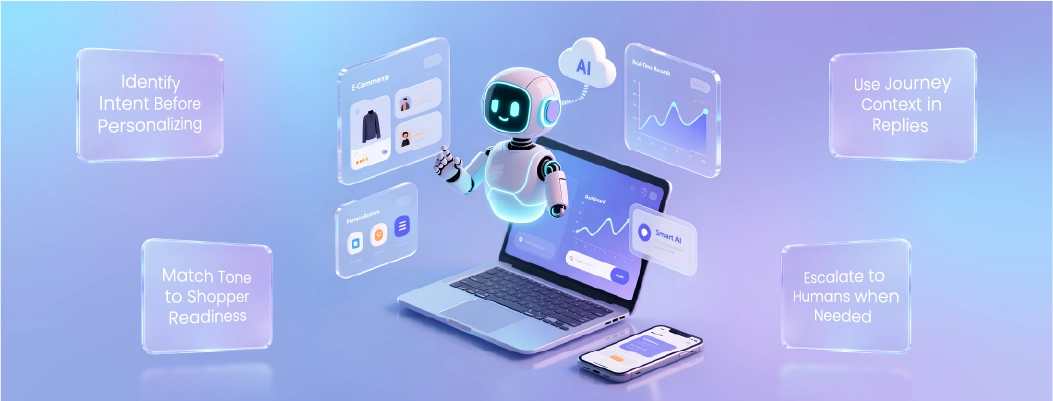
Ecommerce chatbot interactions are personalized by adjusting responses step by step as the conversation unfolds. Each reply depends on why the shopper is engaging, where they are in the journey, and what they have already done. To personalize safely, the chatbot must first identify shopper intent before using context and behavior to shape replies.
Identify Shopper Intent Before Personalizing Responses
Every personalized Ecommerce chatbot interaction begins with intent. The chatbot must first understand why the shopper started the conversation. Without intent clarity, personalization becomes guesswork.
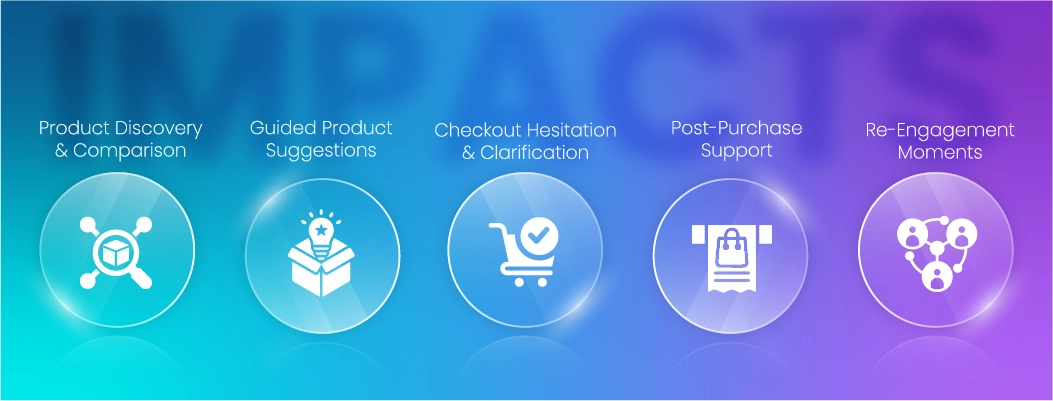
Common Ecommerce intents include browsing products, comparing options, preparing to buy, or requesting customer support. Each intent requires a different response style. Browsing needs guidance. Comparison needs clarity. Buying needs reassurance. Support needs accuracy.
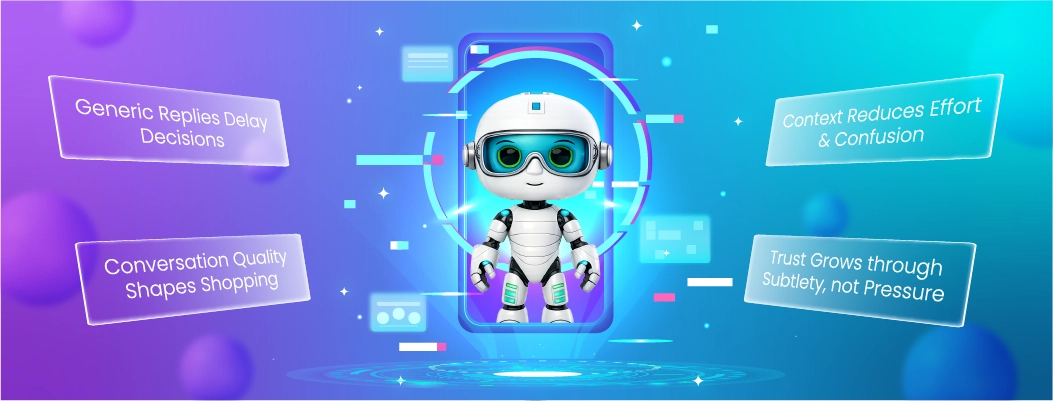
Intent must be identified before adapting tone or content. If the chatbot personalizes too early, responses feel mismatched. Asking a simple question like “What are you looking for?” helps anchor the conversation. Intent detection relies on message content, not assumptions, and should adjust as the shopper’s behavior changes through structured customer query analysis.
Example
A shopper asks, “Is this available in medium?”
The chatbot confirms availability before offering any additional information.
Use Page and Journey Context to Shape Chatbot Replies
Context changes the meaning of shopper questions. The same question can signal different needs depending on where it appears in the journey.
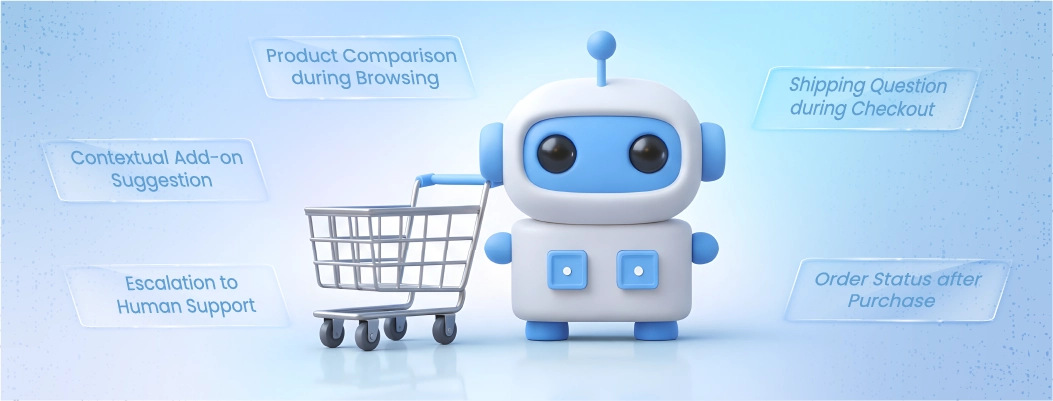
A shipping question on a product page often signals evaluation. The shopper is deciding whether to continue. The same question during checkout usually signals reassurance. The shopper is close to buying but needs confirmation. A post-purchase shipping question signals tracking or delay concerns.
Personalized chatbot interactions must account for page context. Product pages, cart pages, checkout flows, and post-purchase views each require different response depth. Using journey context prevents repetition, avoids mistimed suggestions, and keeps conversations aligned with shopper readiness.
Example
A shopper asks about delivery while on a product page.
The chatbot explains standard delivery timelines without referencing checkout.
Personalize Based on Shopper Behavior, Not Assumptions
Safe personalization depends on observable behavior. It should never rely on predictions without evidence.
Behavior signals include products viewed, items in the cart, repeated questions, time spent on a page, and past purchases. These signals form a working customer profile for the current session. The chatbot uses this information to decide what to say and when to say it.
Predictive guessing reduces trust. When a chatbot assumes intent without confirmation, shoppers feel misunderstood. Grounded responses feel predictable and accurate. Contextual product recommendations only work when tied directly to browsing behavior or cart contents, not inferred preferences.
Example
A shopper views the same product twice.
The chatbot answers a durability question using product details already viewed.
Adjust Response Tone and Depth to Shopper Readiness
Personalization affects delivery, not just content. The same answer can feel helpful or intrusive depending on how it is delivered.
Early-stage shoppers need short, neutral confirmations. They are exploring and do not want pressure. Decision-ready shoppers need clear reassurance. They want details about delivery, returns, or compatibility. Returning customers expect faster responses and less explanation.
Tone adjustment prevents friction. Calm replies reduce uncertainty when shoppers are close to making a decision. Overly detailed responses too early create pressure. Overly short replies too late create doubt. Matching tone and depth to readiness keeps the conversation balanced.
Example
During browsing, the chatbot replies with a brief confirmation.
After the item is added to the cart, replies become more detailed.
Escalate to Human Support When Personalization Reaches Its Limit
Automation should stop when judgment is required. Personalization does not mean handling every situation automatically.
Signals that require escalation include hesitation that does not resolve, complaints, refund requests, disputes, or emotional language. These moments require trust and human judgment. Continuing automation here increases risk.
Escalation works only when context is preserved. Conversation history, customer data, and prior messages must transfer to the human agent. This avoids repetition and frustration. Automation should scale volume, not replace decision-making in sensitive moments.
Example
A shopper requests a refund and expresses frustration.
The chatbot transfers the conversation to a human agent.
Maintain a Consistent Chatbot Personality Across Personalized Interactions
Personalized interactions must remain consistent in tone across conversations. A chatbot’s personality governs phrasing and style, not decision logic. In Ecommerce, consistency signals reliability.
When tone varies unpredictably, shoppers question response credibility. A controlled and neutral personality supports discovery, checkout, and post-purchase support equally. Personalization should adjust content and depth while keeping voice stable and predictable.
Example
The chatbot uses the same neutral tone when answering sizing and return questions.
Use Customer Language to Reduce Misinterpretation During Conversations
Personalization works only when responses are easy to understand. Internal product terms, marketing phrases, or technical language increase confusion and slow decisions.
Using customer-facing language reduces clarification loops. This includes familiar terminology, clear phrasing, and region-appropriate expressions. When shoppers understand responses immediately, conversations progress without friction or correction.
Example
A shopper asks if a product fits a small desk.
The chatbot responds using measurements, not internal product labels.
Apply Internal Context Only When Accuracy Is Required
Some personalized responses require verified information. Order status, delivery dates, inventory availability, and return eligibility cannot be inferred from conversation alone.
When internal context is missing, personalization becomes unreliable. Accurate responses prevent false reassurance during checkout and confusion after purchase. Internal data should support personalization only when it improves response correctness, not when it expands automation scope.
Example
A shopper asks about order status.
The chatbot retrieves the specific tracking update.
Keep Personalized Responses Aligned With Current Policies and Products
Personalized chatbot interactions depend on up-to-date information. When policies, pricing, or product details change, response logic must change as well.
Outdated personalization creates inconsistency that shoppers notice quickly. Keeping responses current prevents repeated correction and loss of trust. Reliable personalization depends on ongoing accuracy, not static automation.
Example
A return window changes from 14 to 30 days.
The chatbot reflects the updated policy in responses.
Handle Cart Recovery as a Continuation of the Conversation
Cart recovery fits personalization only when treated as part of an existing interaction. Generic prompts or reminders interrupt the shopping flow and increase resistance.
Effective recovery references known context such as cart contents, earlier questions, or checkout hesitation. The goal is clarification, not urgency. When handled conversationally, cart recovery reduces abandonment without applying pressure.
Example
A shopper returns after leaving the checkout.
The chatbot answers the previously asked delivery question.
Support Loyalty-Related Questions Through Context-Aware Responses
Returning shoppers often ask loyalty-related questions during checkout or post-purchase. These interactions require awareness of customer status and prior activity.
Personalization should acknowledge context without promoting programs prematurely. Loyalty support works best when it answers specific questions clearly. Proactive promotion without intent distracts from the decision at hand and increases friction.
Example
A returning shopper asks if points apply to the order.
The chatbot confirms eligibility without promoting rewards.

 ChatGPT
 Perplexity
 Claude



Leave a Comment
Your email address will not be published. Required fields are marked *
By submitting, you agree to receive helpful messages from Chatboq about your request. We do not sell data.