Chatbots capture leads in Ecommerce by engaging visitors at high-intent moments, guiding them through short conversational prompts, and collecting contact information after delivering value. Effective chatbot lead generation is structured, not random.
To turn engagement into measurable results, Ecommerce stores should follow a clear step-by-step framework:
Step 1: Lead Capture - Starting the Conversation
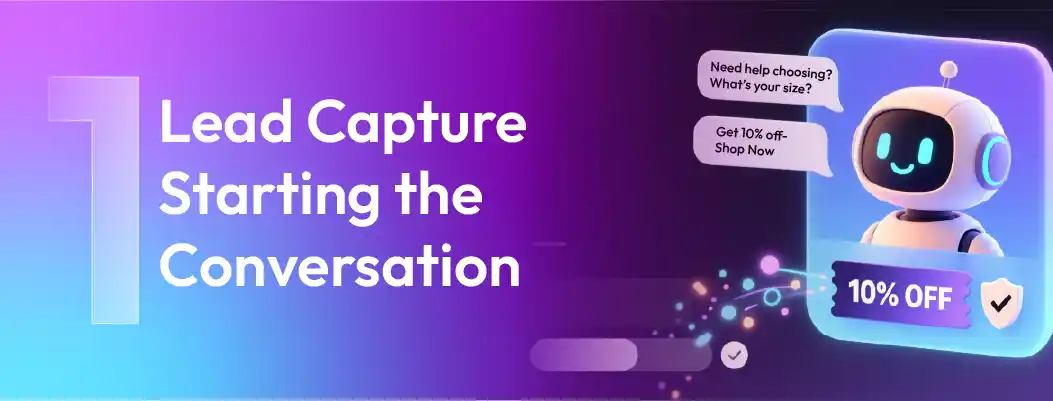
The first job of a chatbot is to grab a visitor’s attention and start a friendly chat.
This is called lead capture, and it happens in different ways:
-
Chat Pop-ups: A chatbot can appear when someone spends time on a page or looks like they’re about to leave.
Example: “Hey there! Can I help you find the right size or product?”
-
Product Suggestions: The chatbot can recommend products based on what the person is browsing.
Example: “You might also like these sneakers that match your outfit.”
-
Discount Offers: Many brands use chatbots to offer small rewards, like discounts, to collect emails.
Example: “Want 10% off your first order? Just drop your email below!”
-
First-Party Data Collection: Modern Ecommerce chatbots collect direct insights from users, like emails, preferences, product interests, and behavioral signals, that belong to your business, not third-party advertisers.
Example: “Tell us what products you love, and we’ll recommend the perfect match for you!”
-
Consent Management: Chatbots ensure privacy compliance with GDPR and CCPA by including opt-in checkboxes, consent prompts, and privacy disclaimers.
Example: “We respect your privacy. Please check here to agree to receive personalized offers and updates.
This approach feels more natural than a boring form and helps boost Ecommerce lead generation because people love quick, interactive help.
Step 2: Lead Qualification - Finding the Right Customers
After capturing a lead, the chatbot’s next job is to determine who is ready to buy and who is just browsing. This process is called lead qualification, but modern AI chatbots go beyond simple qualification; they use behavioral questions and scoring to prioritize high-value prospects.
AI chatbots ask friendly, targeted questions such as:
-
“Are you shopping for yourself or for someone else?”
-
“Do you have a price range in mind?”
-
“When are you planning to make your purchase?”
Behavioral Questions & Lead Scoring
Your chatbot can collect behavioral insights from these questions and dynamically assign a lead score. For example:
This allows your sales team to focus on high-intent prospects, ensuring better follow-ups and higher conversion rates.
Segmentation by Intent, Budget, and Timelines
Leads can be grouped into actionable segments such as:
-
Ready to buy now - High-intent, high-value leads
-
Comparing options - Medium-intent, need nurturing
-
Needs more info- Low-intent, educational follow-ups
Segmentation can also include budget ranges and purchase timelines, giving your marketing team clear targeting parameters.
High-Intent vs. Low-Intent Customer Detection
Using lead scores and behavioral responses, chatbots can detect high-intent customers early, trigger immediate follow-ups, and escalate to human agents when needed. Low-intent users can be nurtured with drip campaigns, content, or targeted offers until they’re ready to convert.
Step 3: CRM Sync - Sending Leads Where They Belong
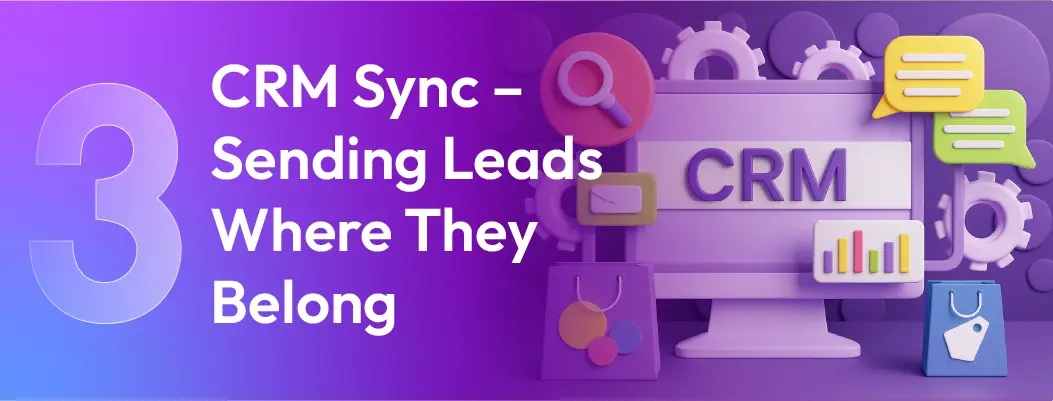
Once the chatbot collects and qualifies leads, it doesn’t stop there. It sends all that valuable data directly into your CRM or marketing tools like HubSpot, Salesforce, or Mailchimp automatically, ensuring seamless lead management and follow-up.
Here’s how it usually works:
-
The chatbot asks for basic info like name, email, and product interest.
-
It sends this data straight to your CRM system.
-
The CRM then triggers follow-ups, such as welcome emails, discount codes, or product reminders.
Step 4: Cart Abandonment Recovery - Saving Lost Revenue
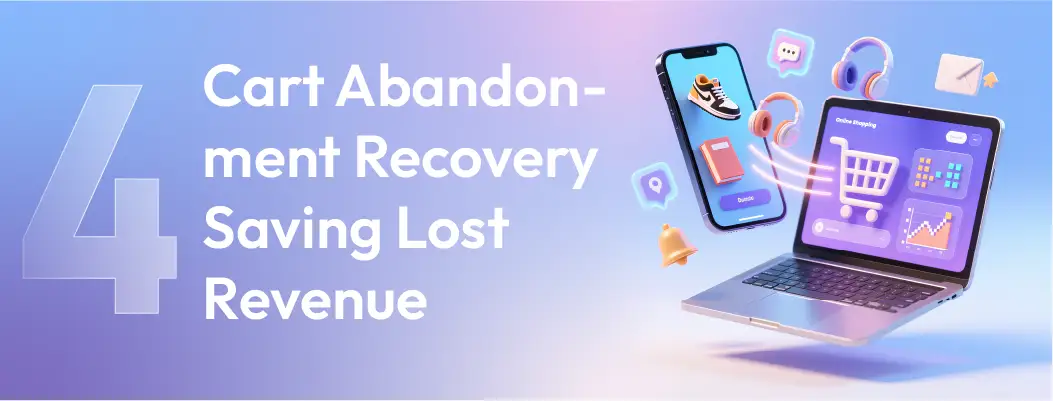
Capturing a lead is important, but recovering abandoned carts is where real revenue impact happens. Cart abandonment occurs when a shopper adds products to their cart but leaves before completing the purchase. This is one of the biggest revenue leaks in Ecommerce.
Chatbots can intervene at critical hesitation moments such as checkout inactivity or exit intent. Instead of allowing the visitor to leave silently, the chatbot can:
-
Ask if the customer needs help completing the purchase
-
Answer last-minute objections (shipping, returns, sizing)
-
Offer a limited-time discount or free shipping
-
Capture email or SMS for follow-up reminders
Example:
“Looks like you’re almost done! Want us to save your cart and send you a reminder?”
If the purchase is not completed immediately, the chatbot ensures the lead is captured for automated abandoned cart campaigns. This transforms lost traffic into recoverable revenue opportunities.
By combining real-time intervention with automated follow-ups, Ecommerce stores reduce cart abandonment and increase conversion rates without increasing support costs.
Step 5: Lead Nurturing & Conversion Automation - Turning Leads into Customers
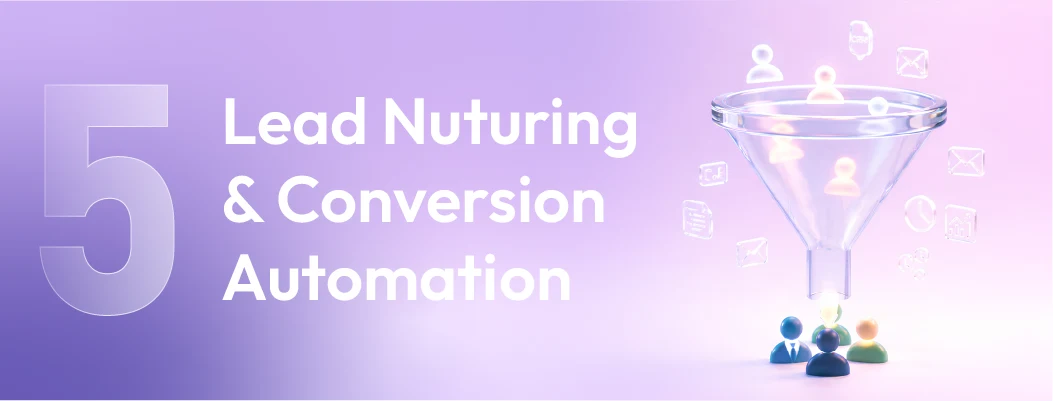
Not every captured lead is ready to buy immediately. Some visitors are researching, comparing options, or waiting for the right time. Lead nurturing ensures these prospects stay engaged until they are ready to convert.
Once the chatbot sends data to your CRM or marketing platform, automated workflows can begin:
Segmentation from Step 2 becomes powerful here. High-intent leads can receive urgent follow-ups, while lower-intent leads can enter longer nurture campaigns.
Example:
A visitor with a budget and purchase timeline of “within 7 days” receives a targeted reminder with a small incentive. A browsing user receives a style guide or product comparison email.
This structured nurturing process turns conversational engagement into long-term customer acquisition. Instead of collecting passive emails, Ecommerce stores build automated lead generation systems that continuously convert prospects into buyers.

 ChatGPT
 Perplexity
 Claude


Leave a Comment
Your email address will not be published. Required fields are marked *
By submitting, you agree to receive helpful messages from Chatboq about your request. We do not sell data.