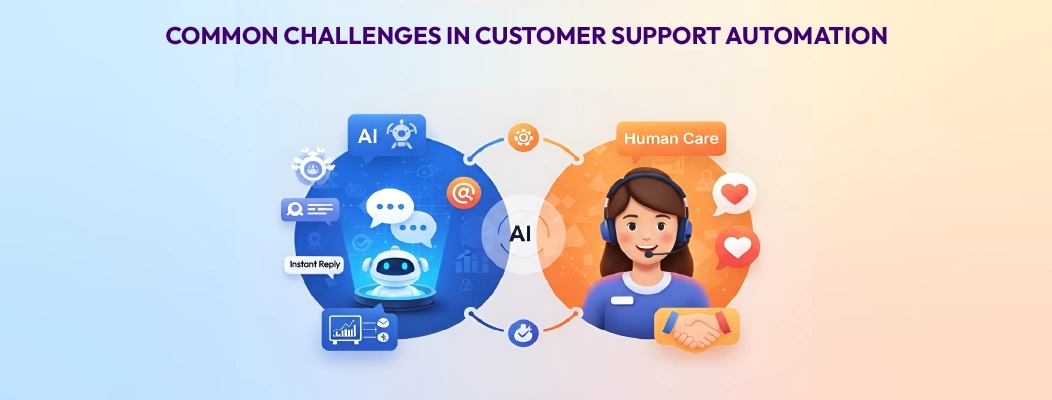
Implementing human touch in intelligent customer support is not just about adding a live agent option. it’s about creating a seamless collaboration between AI and humans. This hybrid approach ensures customers receive fast, accurate responses while still feeling valued and understood.
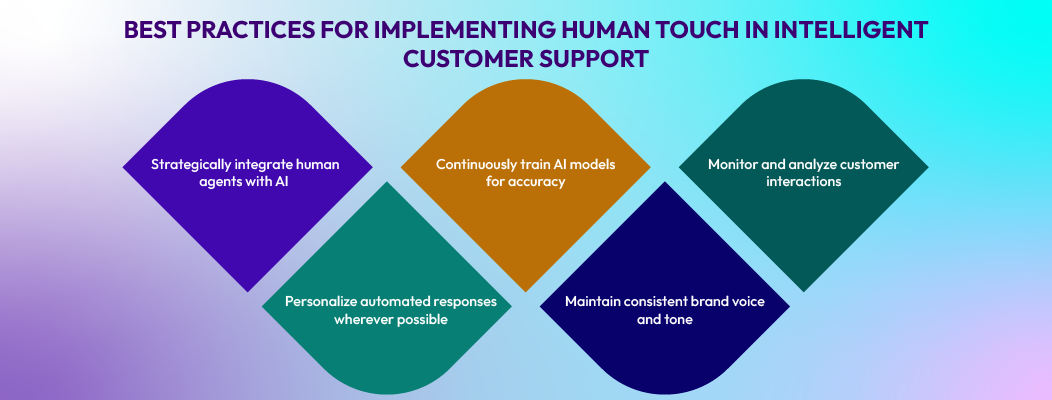
Following best practices helps businesses maintain efficiency without sacrificing empathy, personalization, or customer satisfaction. Here are some key strategies to achieve this balance:
1. Strategically integrate human agents with AI
To maximize the effectiveness of customer support, it’s important to define clear roles for both AI and human agents. AI can handle repetitive, routine tasks such as answering FAQs, automated ticket resolution, tracking orders, or providing basic troubleshooting, as we discussed in instant customer support with AI, freeing up human agents for more complex tasks.
When AI cannot resolve an issue, it automatically routes the customer to the right human agent with all the context. A chatbot with human escalation ensures efficiency without compromising the quality of support or the personal touch that customers value.
Key Points:
-
Assign repetitive tasks to AI for faster responses
-
Route complex issues to skilled human agents
-
Use AI to gather context before escalation
-
Define clear roles for AI and human agents
-
Ensure seamless collaboration between AI and humans
2. Continuously train AI models for accuracy
AI systems are only as effective as the data is inserted properly and with effective training. Regularly updating and training AI models ensures they understand evolving customer queries, new products, and changing business processes. Accurate AI reduces errors, customer query management, enhances response quality, and improves the overall customer experience.
Key Points:
-
Update AI with new product or service information
-
Train models to understand customer intent better
-
Incorporate feedback from customer interactions
-
Test and refine responses to minimize errors
-
Ensure AI learns from complex or unusual queries
3. Monitor and analyze customer interactions
Tracking and analyzing interactions helps identify gaps in both AI and human support. By understanding patterns, frequently asked questions, and common pain points, businesses can optimize processes, support workflow automation, and deliver a more effective, personalized customer experience.
Key Points:
-
Track chatbot and human agent performance
-
Identify recurring customer issues
-
Analyze response times and resolution rates
-
Use insights to improve AI accuracy and agent training
-
Continuously refine support strategies based on data
4. Personalize automated responses wherever possible
Even automated support can feel human when responses are personalized. Tailoring interactions based on customer data, preferences, and history helps customers feel understood and valued, which helps in customer experience optimization. Personalized automation improves engagement, builds trust, and enhances the overall support experience.
Key Points:
-
Use customer names and account information in responses
-
Reference past interactions to provide context
-
Offer product or service suggestions based on behavior
-
Adjust tone and language to match the customer
-
Make automated messages feel empathetic and relevant
5. Identify interactions that require human intervention
Not every customer query can be fully handled by AI. Recognizing which interactions need a human touch ensures that complex, sensitive, or high-stakes issues are addressed effectively. This prevents frustration and maintains a high level of customer satisfaction.
Key Points:
-
Flag queries that AI cannot resolve accurately
-
Detect emotionally charged or sensitive issues
-
Escalate multi-step or complex problems to human agents
-
Set clear criteria for when human intervention is needed
-
Ensure quick and seamless escalation for urgent cases
6. Maintain consistent brand voice and tone
Maintaining a consistent brand voice ensures that both AI and human agents reflect the company’s personality and values. Consistency builds trust, reinforces brand identity, and makes interactions feel more professional and cohesive.
Key Points:
-
Define a clear brand voice guideline for all interactions
-
Train AI and human agents to follow the same tone
-
Ensure responses align with company values and culture
-
Adapt tone slightly for different customer segments while staying consistent
-
Regularly review communications to maintain uniformity
7. Enable seamless handoff between AI and humans
A smooth transition from AI to human agents is critical for maintaining customer satisfaction. When the handoff is seamless, customers don’t have to repeat themselves, and human agents can resolve issues more efficiently.
Key Points:
-
Ensure AI collects the complete context before escalation
-
Transfer conversation history to human agents automatically
-
Minimize delays during the handoff process
-
Train agents to pick up where AI left off
-
Maintain a consistent and smooth customer experience
8. Regularly review and refine human-AI collaboration strategies
Continuous evaluation of how AI and human agents work together ensures that customer support remains efficient, effective, and empathetic. Refining collaboration strategies through built-in analytics dashboard helps identify gaps, improve processes, and adapt to evolving customer needs.
Key Points:
-
Monitor the performance of AI and human agents together
-
Identify bottlenecks or inefficiencies in workflows
-
Adjust AI capabilities based on real-world performance
-
Update escalation rules for smoother handoffs
-
Implement improvements based on ongoing analysis
9. Gather customer feedback for improvement
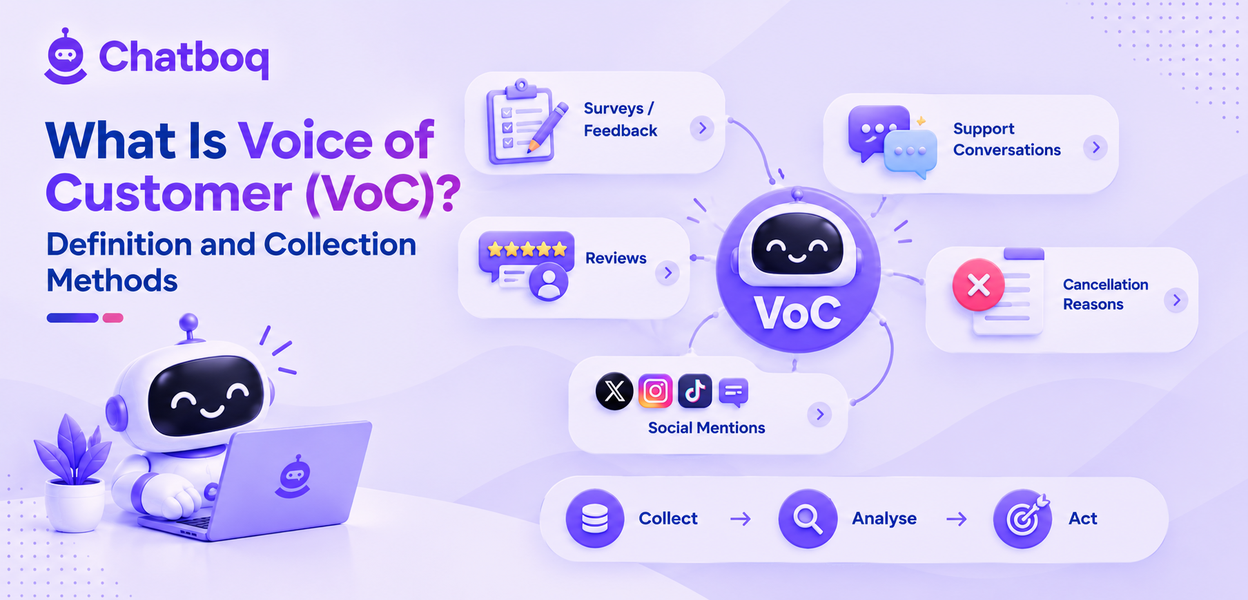
Collecting feedback directly from customers provides valuable insights into both AI and human support performance. Acting on this feedback helps businesses refine their systems, enhance personalization, and deliver a better overall experience.
Key Points:
-
Use surveys, ratings, and direct comments to gather insights
-
Analyze feedback to identify recurring issues or gaps
-
Adjust AI responses and agent training based on feedback
-
Encourage customers to share their experience openly
-
Continuously improve processes to meet evolving expectations

 ChatGPT
 Perplexity
 Claude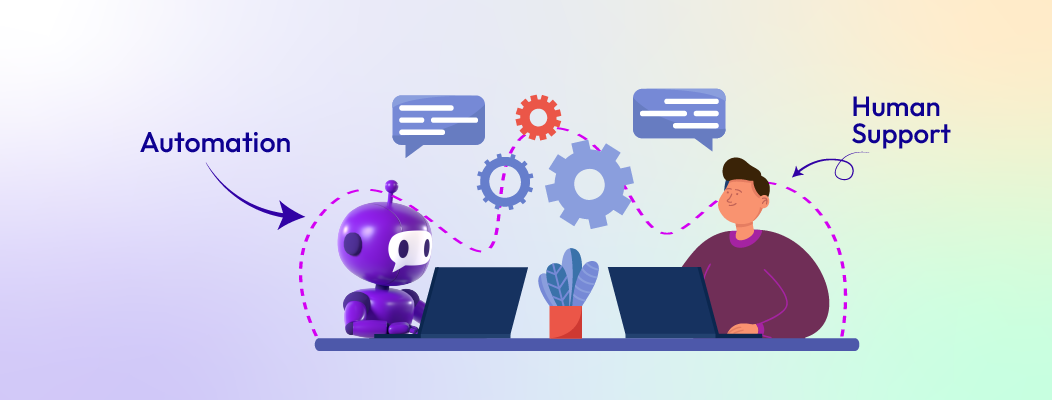



Leave a Comment
Your email address will not be published. Required fields are marked *
By submitting, you agree to receive helpful messages from Chatboq about your request. We do not sell data.