Six major compliance risks threaten businesses: (1) Data privacy violations (GDPR fines €20M), (2) Biased or harmful outputs (liability lawsuits), (3) Lack of transparency (regulatory enforcement), (4) Cybersecurity breaches (data leaks, CCPA liability), (5) Regulatory fines (FTC, regional authorities, up to 4-10% revenue), (6) Legal liability for chatbot advice (medical, financial, legal misguidance causing harm). Companies like OpenAI, Google DeepMind, and Amazon Web Services continually update policies to address evolving regulations.
Risk 1: Data Privacy Violations
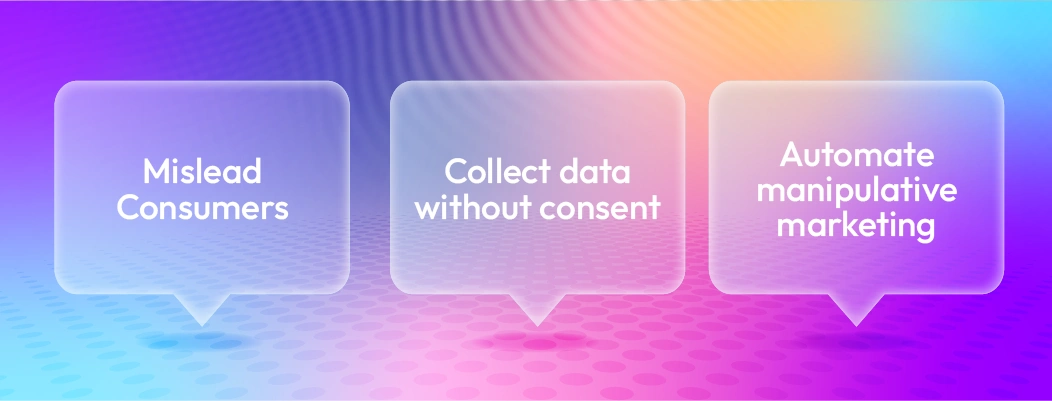
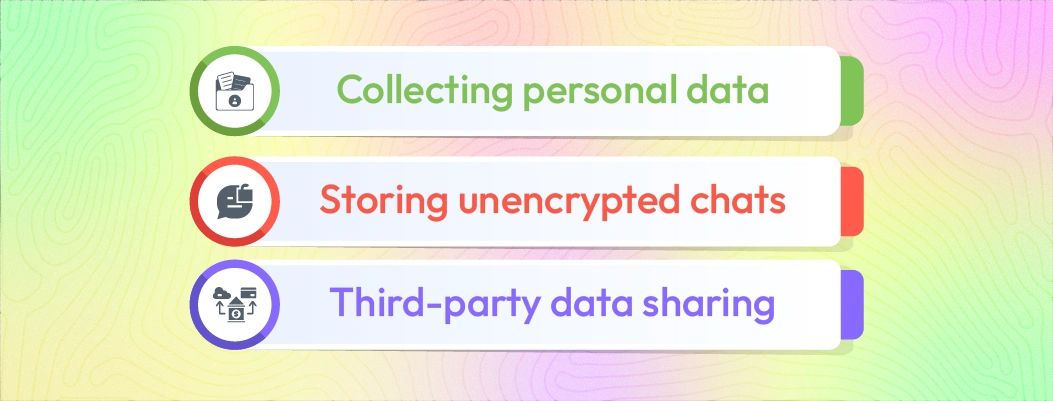
What happens: Collecting data without consent. Storing unencrypted chats. Third-party data sharing without disclosure.
Business impact: GDPR fines up to €20M or 4% global revenue. CCPA penalties up to $7,500 per violation. Loss of customer trust.
Real example: Meta faced $100M FTC penalty for privacy violations in 2024.
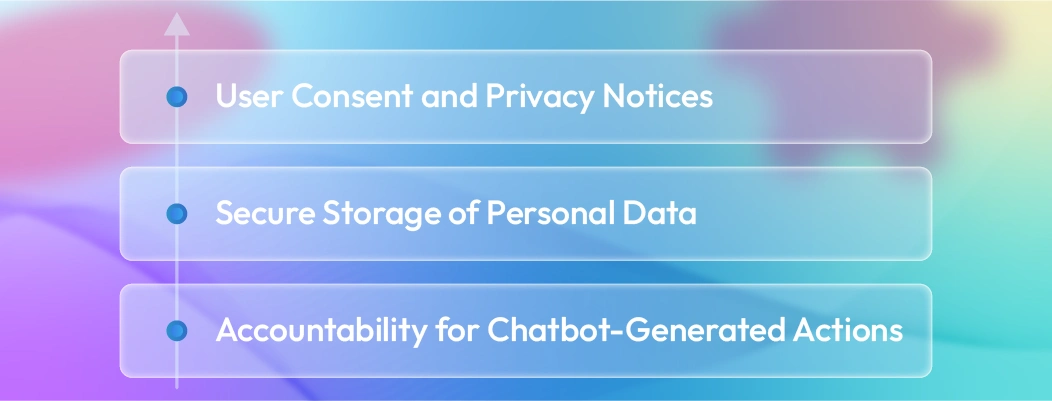
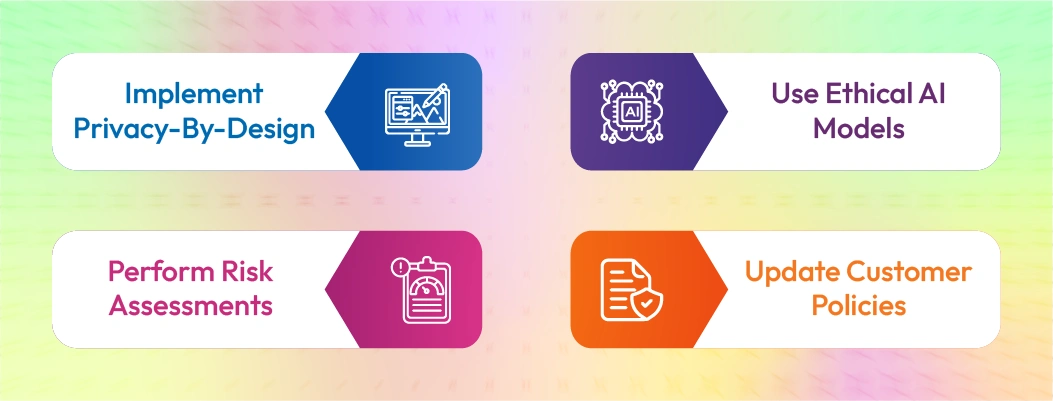
Mitigation: Implement privacy-by-design. Encrypt all data. Obtain explicit consent. Audit data vendors.
Risk 2: Biased or Harmful Outputs
What happens: Chatbot generates discriminatory responses. AI recommends harmful products. Chatbot amplifies misinformation.
Business impact: Lawsuits for user harm. Regulatory action. Reputational damage. Product liability exposure.
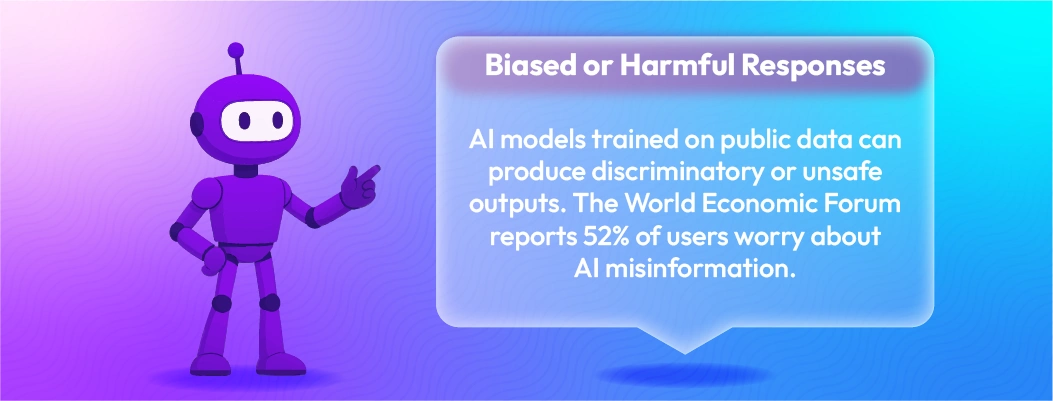
Real example: World Economic Forum reports 52% of users worry about AI misinformation.
Mitigation: Test chatbots against bias benchmarks. Train on diverse data. Monitor responses. Escalate sensitive queries to humans.
Risk 3: Lack of Transparency
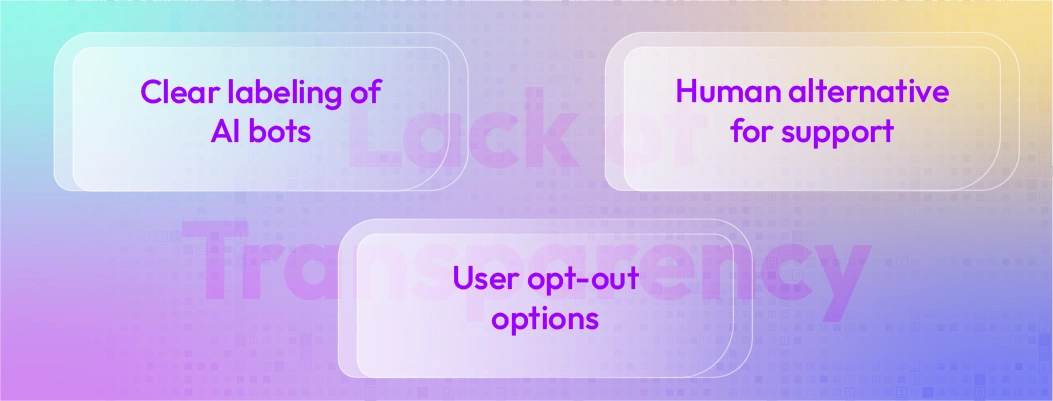
What happens: Users don't know they're chatting with AI. No disclosure of data usage. Hidden algorithm decisions.
Business impact: FTC enforcement. Consumer complaints. Legal action.
Real example: FTC warned companies in 2024 about undisclosed AI-generated content.
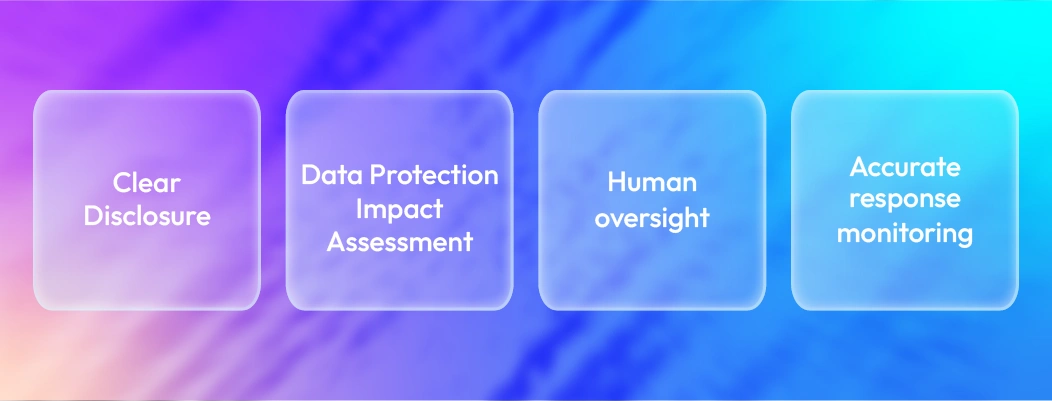
Mitigation: Disclose AI usage clearly. Explain data collection. Provide transparency into recommendations.
Risk 4: Cybersecurity Breaches
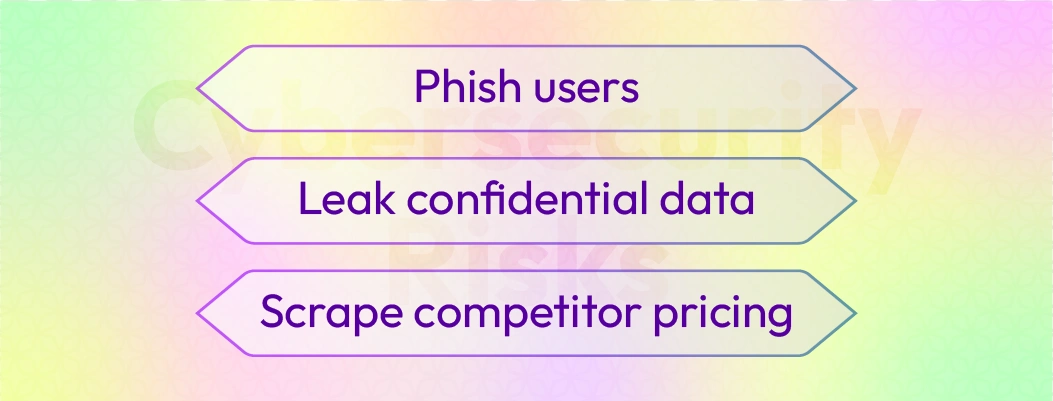
What happens: Chatbot exploited for phishing. User data leaked. Competitor pricing scraped.
Business impact: Breach notification costs. GDPR/CCPA liability. Regulatory investigation. Reputational damage.
Real example: Amazon blocked AI shopping bots in 2024 due to security concerns.
Mitigation: Implement strong encryption. Monitor for abuse. Restrict chatbot access to sensitive systems.
Risk 5: Regulatory Fines
What happens: Non-compliance with regional laws triggers enforcement actions.
Business impact: Fines up to €20M (GDPR), $15M (PIPEDA), ₹500 Cr (DPDPA), or higher.
Real example: Meta, Google, Amazon all paid regulatory fines for compliance violations.
Mitigation: Conduct compliance audits. Document policies. Train teams on regulations.
Risk 6: Legal Liability
What happens: Chatbot provides financial, medical, or legal advice that causes harm.
Business impact: Personal injury lawsuits. Professional liability claims. Regulatory action.
Real example: Users sued companies for chatbot-provided medical advice that worsened conditions.
Mitigation: Include disclaimers. Escalate advice requests to qualified professionals. Add "not legal/medical advice" warnings.

 ChatGPT
 Perplexity
 Claude


Leave a Comment
Your email address will not be published. Required fields are marked *
By submitting, you agree to receive helpful messages from Chatboq about your request. We do not sell data.