In the world of AI chatbots for ecommerce, businesses increasingly rely on ecommerce chatbot solutions to enhance customer experiences, automate key tasks, and drive conversions. Whether it’s cart recovery ecommerce bots to reduce abandonment or providing personalized shopping experiences, choosing the right AI chatbot can have a significant impact on your ecommerce business. Let's dive into the best ecommerce purchase bots and where you can get them.
1. Chatboq
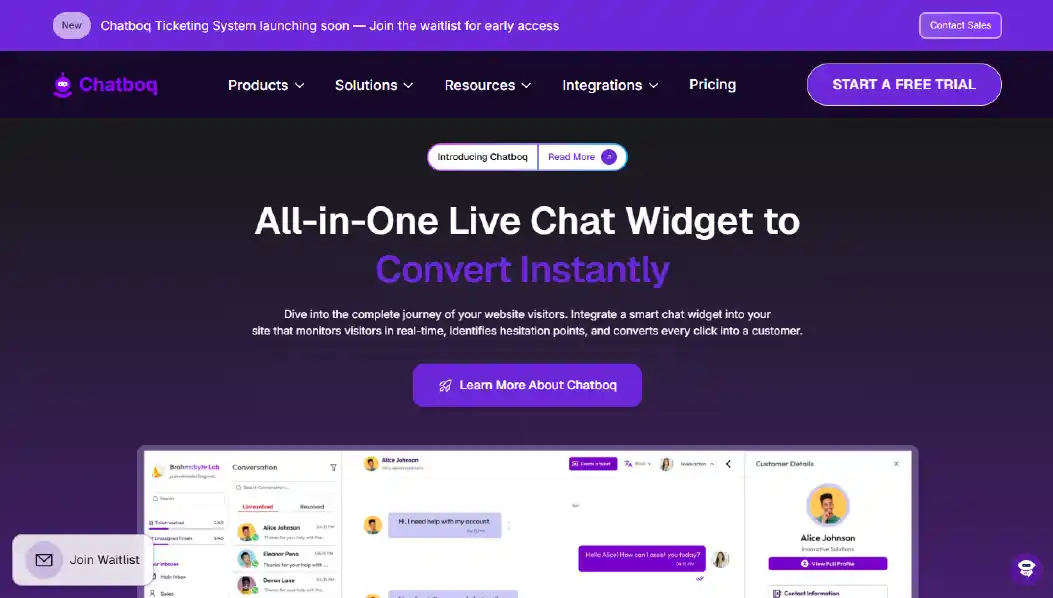
Chatboq is an AI-powered chatbot platform designed to help businesses automate customer communication using an AI chatbot for ecommerce built for live sales and support. and improve overall customer experience. It offers features such as lead generation, customer support automation, and personalized interactions, making it suitable for businesses of various sizes.
Key Features:
-
Handles customer inquiries 24/7 with advanced AI for instant responses.
-
Integrates with websites, apps, and social media (e.g., Facebook, WhatsApp).
-
Automates tasks like lead qualification, order tracking, and support escalation.
-
Provides detailed insights into chatbot performance and customer engagement.
-
Seamlessly integrates with CRM systems and third-party tools.
Where to Get It:
Chatboq is available via its official website. To get started, visit Chatboq's website, where you can sign up for a free trial or explore their premium plans. Chatboq offers flexible pricing based on your business size and needs, with both freemium and advanced paid plans that cater to businesses of all scales. It integrates seamlessly with popular ecommerce platforms, CRM systems, and social media channels to maximize your automation and customer engagement.
Pros
-
Provides round-the-clock customer engagement, enhancing satisfaction.
-
Automatically qualifies leads, boosting conversions and saving sales team time.
-
Tailorable to business needs with personalized greetings and workflows.
Cons
-
Customizing workflows may take time for users to fully configure.
-
In-depth analytics and integrations are available only on higher-tier plans.
-
AI may not always match the level of personalized assistance provided by humans for complex queries.
2. Tidio
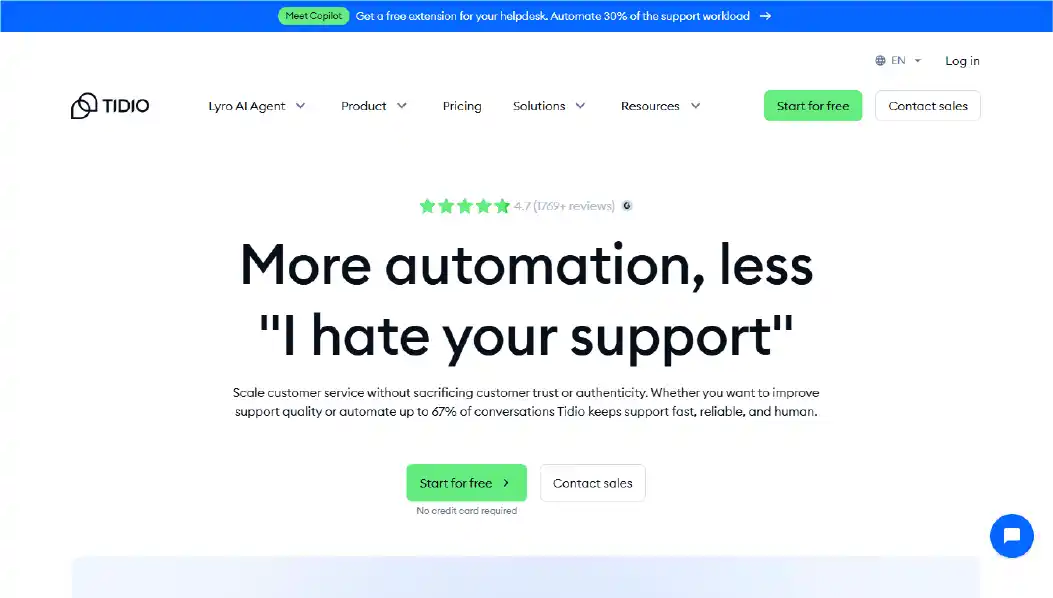
Tidio is a user-friendly chatbot platform that seamlessly integrates with Shopify. It offers both live chat and automated AI responses for enhanced customer service and sales.
Key Features:
-
Easy integration with ecommerce platforms like Shopify and WordPress
-
Personalized product recommendations based on user data
-
AI-powered customer support and order tracking
-
Multi-channel support (web chat, Facebook Messenger, etc.)
Where to Get It:
You can get Tidio directly from their website, where you can sign up for a free plan or explore their paid options. Additionally, Tidio is available as an app on the Shopify App Store for Shopify users.
Pros:
-
Easy integration with Shopify & WordPress
-
Multi-channel support (web, Facebook Messenger, etc.)
-
Affordable, with a free plan available
Cons:
-
Basic analytics and reporting
-
Limited advanced features compared to competitors
-
Small business-focused (may not scale well for large enterprises)
3. Drift
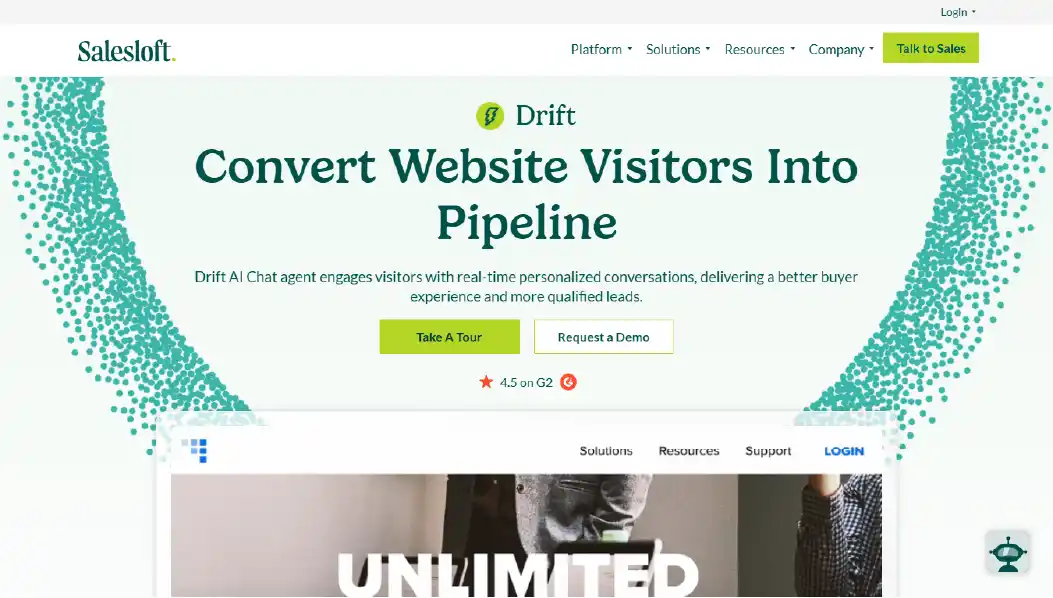
Drift is a powerful AI chatbot tool known for driving conversions. It uses conversational marketing to qualify leads and schedule meetings with sales reps directly from the chatbot.
Key Features:
Where to Get It:
You can get Drift by visiting their official website, where you can sign up for a free trial or request a demo. Drift also has a Salesforce AppExchange listing for easy integration with Salesforce users.
Pros:
-
Excellent for lead generation and qualification
-
Seamless CRM integrations (Salesforce, HubSpot)
-
Real-time conversational sales messaging
Cons:
-
Expensive for small businesses (starting at $50/month)
-
Complex setup process for beginners
-
Advanced features might be unnecessary for smaller stores
4. ManyChat

ManyChat is ideal for social commerce, integrating seamlessly with Facebook Messenger and Instagram. It’s a great choice for businesses that sell through social media platforms.
Key Features:
-
Automated product recommendations based on user preferences
-
Integrates with Facebook Messenger and Instagram Direct Messages
-
Multi-language support for global businesses
-
In-built marketing tools to nurture leads and push promotions
Where to Get It:
You can access ManyChat by visiting their official website. From there, you can sign up for free and get started with their platform. ManyChat also offers an app for mobile users, which you can download from the App Store or Google Play for on-the-go management.
Pros:
-
Great for social commerce (Facebook Messenger, Instagram)
-
Multi-language support for global businesses
-
Free plan and affordable paid options
Cons:
-
Limited ecommerce features (more focused on messaging)
-
Complex for users new to chatbots
-
Might not integrate well with some ecommerce platforms outside social media
5. Shopify Ping
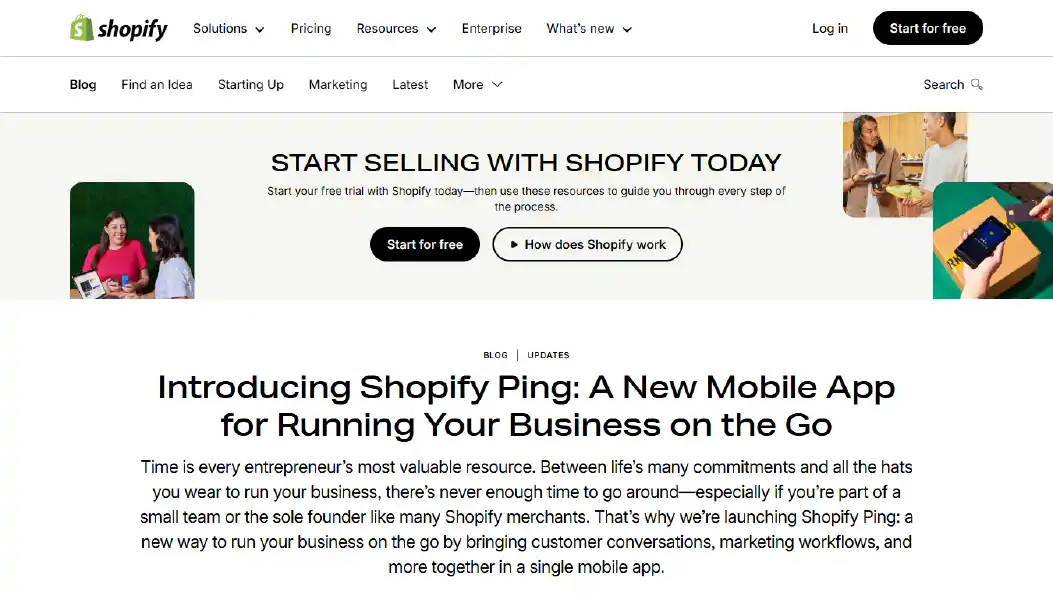
Shopify Ping is Shopify’s native chatbot tool, designed specifically for Shopify store owners. It allows for personalized customer service and easy sales directly from the chatbot.
Key Features:
-
Integrated with Shopify stores for seamless operations
-
Personalizes product recommendations based on customer data
-
Supports multi-channel communication (SMS, email, Messenger)
-
Easy setup and low learning curve
Where to Get It:
Shopify Ping is available for download on both iOS and Android. You can find the app in the App Store for Apple devices or Google Play for Android devices. It is also accessible through your Shopify admin dashboard for store owners who already use Shopify. Simply search for "Shopify Ping" in the app store or visit the Shopify app section from your Shopify dashboard to get started.
Pros:
-
Native integration with Shopify for seamless operation
-
Multi-channel messaging (SMS, email, Messenger)
-
Easy setup and no additional costs for Shopify users
Cons:
-
Limited customization and features for non-Shopify users
-
Lacks advanced automation and analytics
-
Basic compared to other advanced ecommerce chatbots
6. Intercom
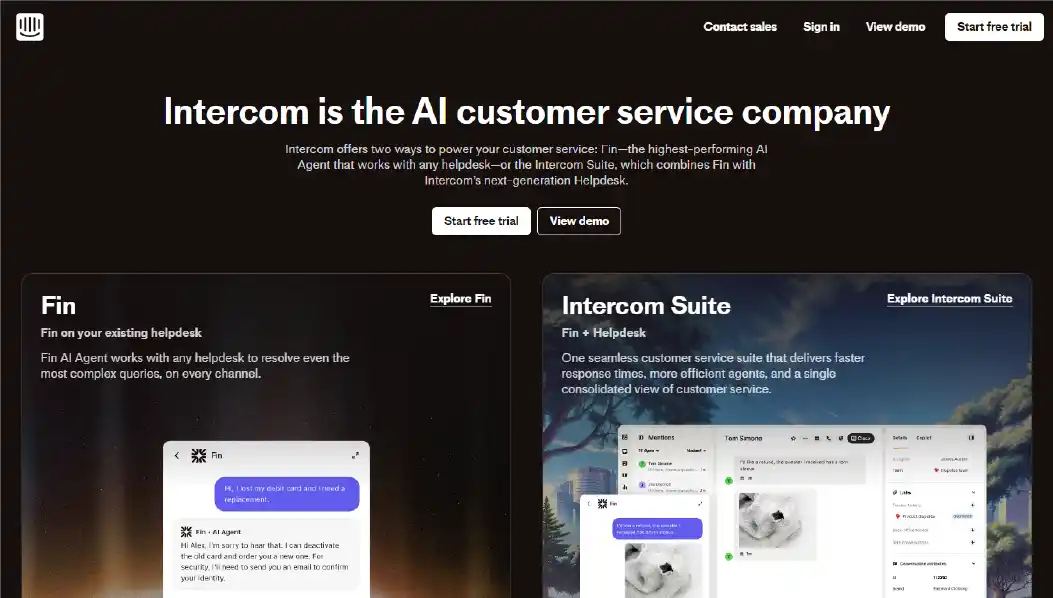
Intercom is an all-in-one customer messaging platform. It’s great for ecommerce businesses looking to automate tasks like product inquiries and order tracking while providing personalized shopping experiences.
Key Features:
-
In-app messaging and live chat for better customer engagement
-
Customizable workflows for cart recovery and product recommendations
-
Seamless integrations with ecommerce platforms and CRMs
-
Advanced segmentation for targeted messaging
Where to Get It:
Intercom is available as a cloud-based service and can be accessed directly from their website. To get started, visit the official site and sign up for an account. You can choose from various pricing plans based on your business needs, from small startups to large enterprises.
Additionally, Intercom offers integrations with popular e-commerce platforms like Shopify, BigCommerce, and WooCommerce, which can be easily set up through their dashboard.
Pros:
-
Advanced messaging automation (order tracking, product inquiries)
-
Powerful segmentation tools for targeted messaging
-
Good for medium to large ecommerce businesses
Cons:
-
Expensive pricing (starts at $39/month)
-
Complicated setup and customization
-
May be overkill for smaller businesses
7. LivePerson
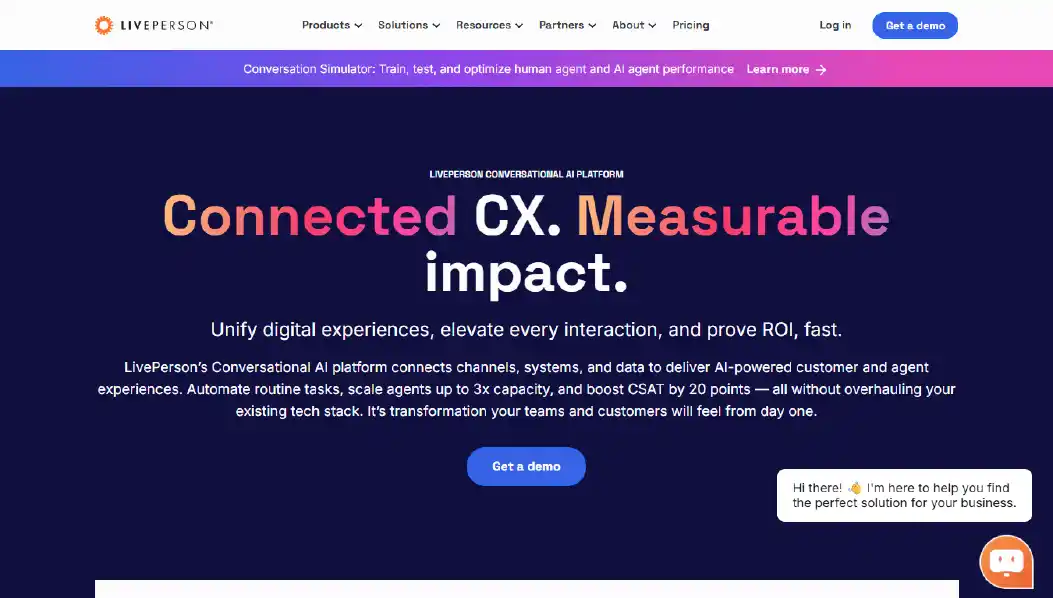
LivePerson offers enterprise-grade chatbot solutions designed for high-traffic ecommerce websites. Their AI bots use natural language processing to provide high-quality, conversational experiences.
Key Features:
-
AI-powered chatbots that handle complex queries and escalate when needed
-
Integrated with major ecommerce platforms
-
Provides detailed analytics to optimize chat performance
-
Customizable conversation flows to match your brand’s tone
Where to Get It:
LivePerson is available directly through their official website. To get started, visit, where you can request a demo or sign up for an account. LivePerson offers tailored solutions for enterprise-level businesses, and pricing is available upon request, as it’s based on your specific requirements and traffic volume. Their platform integrates with popular ecommerce platforms such as Shopify and Magento, allowing for easy setup.
Pros:
-
AI-powered chatbots with natural language processing (NLP)
-
Scalable for high-traffic, enterprise-level stores
-
Detailed analytics and custom workflows for better performance
Cons:
-
Custom pricing (cost can be high for smaller businesses)
-
Integration setup can be complicated
-
Best suited for larger companies, not ideal for small stores
Want higher conversions from every ecommerce conversation?
Try the Chatboq chatbot to guide shoppers, recover carts, and convert visits into sales.
|
Chatbot
|
Best For
|
Key Features
|
Pricing
|
|
Chatboq
|
Multi-platform support
|
AI-powered chatbot automation, multichannel support (web, mobile, social media), customizable workflows, analytics
|
Freemium
|
|
Tidio
|
Quick integration with Shopify
|
Easy integration, AI-powered support, multi-channel support
|
Free plan, Paid plans start at $18/month
|
|
Drift
|
Lead generation and conversational sales
|
AI lead qualification, CRM integrations, and real-time chat
|
Starts at $50/month
|
|
ManyChat
|
Social commerce (Facebook/Instagram)
|
Automated product recommendations, multi-language support
|
Free basic plan, Paid plans start at $10/month
|
|
Shopify Ping
|
Best for Shopify users
|
Shopify integration, multi-channel support, easy setup
|
Free with Shopify plans
|
|
Intercom
|
Advanced ecommerce automation
|
In-app messaging, cart recovery, customizable workflows
|
Starts at $39/month
|
|
LivePerson
|
High-volume ecommerce stores
|
AI chatbots for complex queries, advanced analytics, customizable flows
|
Custom pricing
|
Here's a comparison chart for the chatbots mentioned, including key features and pricing:Bot Performance, ROI & Case Studies
To understand the full impact of AI chatbots, measuring their performance through customer support reporting and performance metrics is essential. AI chatbots provide real-time customer support and automate routine tasks like order tracking, returns, and product inquiries. By tracking Customer Satisfaction (CSAT) and Net Promoter Score (NPS), businesses can assess the effectiveness of their chatbot strategies.
Bot Performance Metrics
Tracking customer support reporting is critical to evaluating chatbot effectiveness. For instance, Zendesk provides a reporting dashboard that businesses can use to measure performance. Some key metrics include:
-
Response time: How quickly does the bot answer customer queries?
-
Resolution rate: How many customer issues are resolved without needing human intervention?
-
Engagement rate: How often do customers interact with the chatbot before proceeding to checkout?
-
Net Promoter Score (NPS): NPS measures customer loyalty and helps determine the likelihood that customers will recommend your business to others. By tracking NPS, businesses can evaluate the overall success of AI chatbots for e-commerce in creating a positive customer experience. Bots that generate high NPS scores are likely contributing to greater customer satisfaction and repeat business.
By integrating support data with CRM systems, businesses can improve the customer experience and drive more conversions. AI-driven support tools can automate tasks like ticket categorization, making it easier for human agents to focus on higher-value tasks.
Optimizing & Measuring Bot Performance
To ensure that your ecommerce chatbot is providing maximum value, you need to continually measure its performance and optimize its effectiveness. Here’s how you can do that:
Funnel Metrics & Conversion Funnels:
-
Funnel Metrics track conversion funnels, providing valuable insights into how well your e-commerce purchase bot is guiding users through the buying process. Funnel metrics help businesses identify areas where customers are dropping off, enabling them to optimize the chatbot interactions for better results.
-
Conversion funnels refer to the stages that a customer goes through before making a purchase. By analyzing chatbot interactions across these stages, you can identify opportunities to optimize messaging and increase conversion rates.
A/B Testing: A/B testing involves testing two different chatbot messages or interactions to determine which one performs better. For example, you can test different product recommendations, discounts, or call-to-action (CTA) messages to see which ones drive more conversions or engagement. Regular A/B testing allows you to refine and improve your chatbot’s effectiveness over time.
Refinement: Continuous refinement of chatbot responses based on data is crucial. By analyzing performance metrics like response times, customer satisfaction (CSAT), and resolution rates, you can identify areas for improvement. Refining chatbot interactions ensures a smoother, more personalized experience for users, leading to better outcomes.
Bot-to-Human Handoff: Best Practices
While AI chatbots can handle a variety of tasks, there are times when human intervention is necessary. Here’s how to ensure the bot-to-human handoff is seamless:
-
Escalation Design: Ensure that the bot can detect when it is unable to resolve an issue and automatically escalate the conversation to a human agent. For instance, if the bot cannot answer a complex product query or handle an escalated support issue, it should smoothly transition the conversation to a human without the customer having to repeat their problem.
-
Preserve Context: The chatbot needs to pass relevant information (like customer details, previous interactions, and issue context) to the human agent during the handoff. This ensures that the agent doesn’t start from scratch and can pick up the conversation seamlessly.
-
Maintain CX: To maintain a positive CX, ensure that the chatbot handoff is timely and transparent. Customers should be notified that a human agent is taking over, and the transition should be quick and hassle-free. This helps maintain trust and satisfaction.
Privacy & Data Compliance for Chatbots
-
GDPR Compliance: In regions like the EU, the General Data Protection Regulation (GDPR) applies to the collection and processing of personal data. Chatbots must request explicit consent before collecting any sensitive data and allow users to access, update, or delete their personal information upon request.
-
CCPA Compliance: In California, the California Consumer Privacy Act (CCPA) mandates businesses to inform users about data collection practices and allow them to opt-out or delete their personal data. Ecommerce businesses must ensure that their chatbots are CCPA-compliant.
-
Data Encryption: To protect customer data during chatbot interactions, end-to-end encryption should be implemented, particularly when dealing with sensitive information such as payment details, login credentials, or personally identifiable information (PII).
Scaling Chatbots Globally: Multilingual Strategies
Future Trends: LLMs, RAG & Conversational Commerce
-
LLMs: Chatbots powered by large language models can generate more human-like, context-aware conversations.
-
RAG: Combines search and generative models to provide dynamic, accurate responses in real-time.
-
Conversational Commerce: Chatbots are becoming sales agents, enabling customers to browse, purchase, and complete transactions directly within the chat.
ROI and Performance Tracking Tools
-
Zendesk Reporting Dashboard: By integrating Zendesk's Reporting Dashboard, businesses can get a clear view of their chatbot's performance across multiple channels. From customer satisfaction ratings (CSAT) to NPS, Zendesk offers valuable insights into chatbot interactions, helping businesses assess the return on investment (ROI) and adjust their strategies accordingly.
-
Integration with CRM Systems: To further optimize chatbot performance, Support Data from AI bots can be integrated with CRM systems. This allows businesses to track customer engagement, support history, and purchase patterns in one unified system, enhancing personalization and improving customer service.

 ChatGPT
 Perplexity
 Claude



Leave a Comment
Your email address will not be published. Required fields are marked *
By submitting, you agree to receive helpful messages from Chatboq about your request. We do not sell data.