
AI sales chatbots increase ecommerce sales 10–30%. Sephora increased conversions 11%. H&M recovered 8–12% abandoned carts. Velux cut support costs 30%.
Chatbots convert through five mechanisms: objection handling (sizing, shipping, returns answered instantly), product recommendations (15–25% AOV lift), cart recovery reminders (10–15% recovery rate), trust building at checkout, personalization (8–18% repeat customer lift).
Conversion lift varies by category. Fashion sees 12–18%. Electronics see 8–15%. Home goods see 10–20%. Beauty see 15–22%. Furniture see 10–15%.
Platform selection determines performance. Chatboq achieves 12–20% lift ($50–150/mo). Tidio delivers 5–10% ($0–$99/mo). Intercom delivers 8–18% ($500+/mo). Drift reaches 10–25% ($500+/mo) for high-ticket sales. ManyChat captures 8–15% ($0–$125/mo) on social platforms.
Implementation: choose platform and goal → configure product catalog and automations → launch cart recovery and FAQs → optimize weekly. ROI payback: 1 hour (small stores), 1–2 months (mid-market), 1–2 days (enterprise). Break-even: 3–6 months for $500K+ revenue stores.
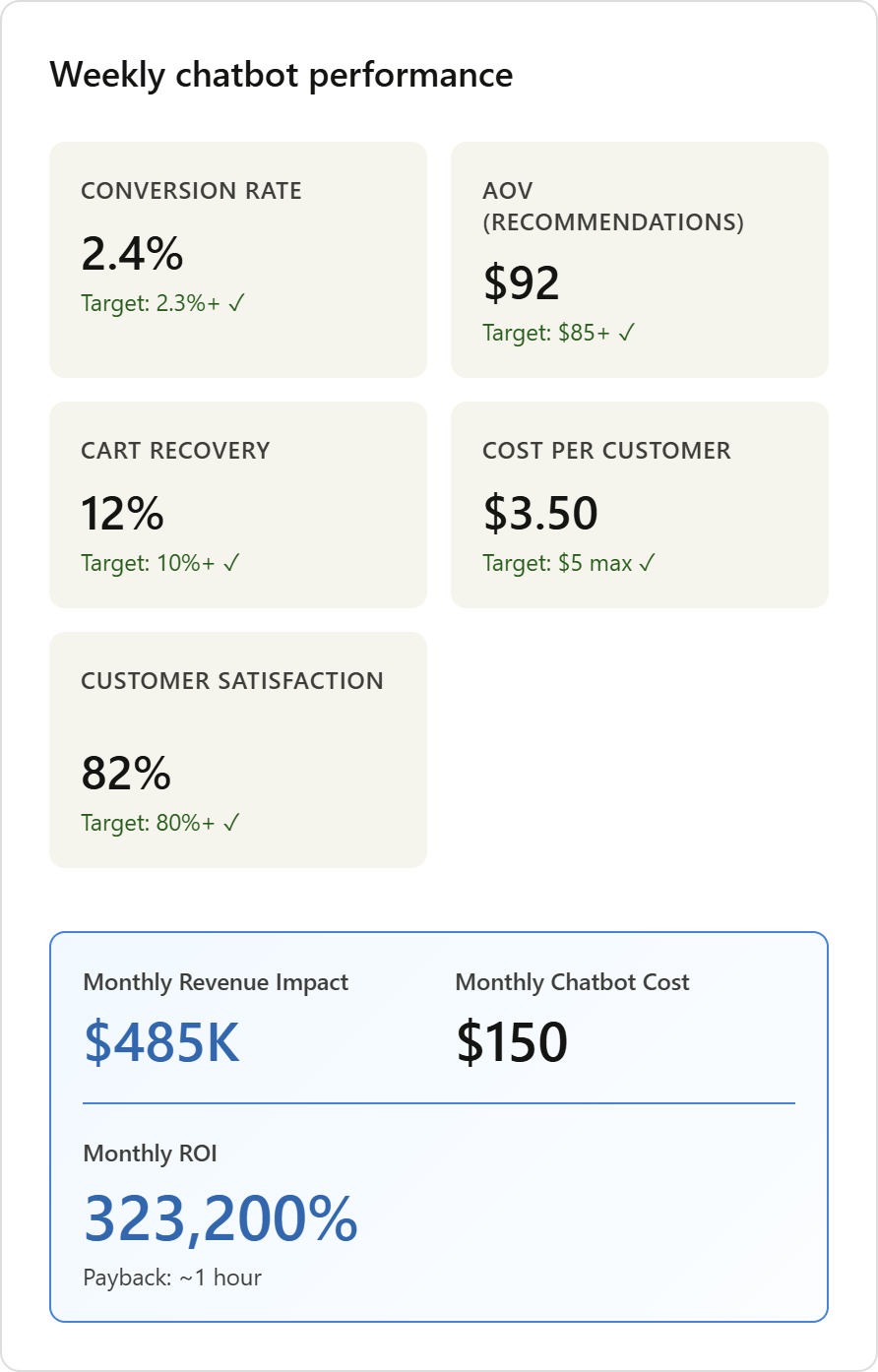
Track five metrics weekly: conversion lift (8–20%), AOV increase (15–25%), cart recovery (10–15%), customer acquisition cost (under $5), satisfaction (80%+). Optimized results: $485K monthly revenue, $150 cost, 323,200% ROI.
Failure patterns destroy performance. Poor UX (slow responses, generic messages) drops engagement below 5%. Irrelevant recommendations (no context, wrong products) produce zero AOV lift. Message saturation (too many reminders) causes 30%+ unsubscribes. Prevention: sub-1-second responses, personalized messages, smart timing, frequency caps.
 ChatGPT
 Perplexity
 Claude

Leave a Comment
Your email address will not be published. Required fields are marked *
By submitting, you agree to receive helpful messages from Chatboq about your request. We do not sell data.