Operational metrics
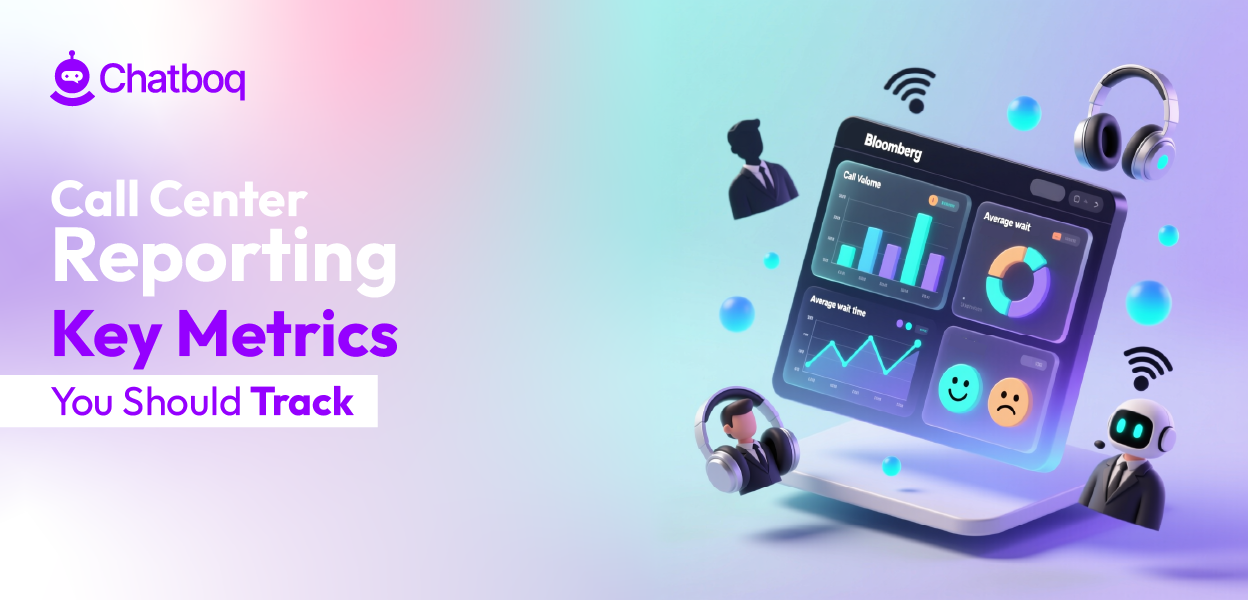
Service level (SLA compliance) measures how often calls are answered within a target time window. Service level is a core SLA metric because it translates staffing and queue performance into a clear promise the operation can manage.
Average speed of answer (ASA) measures how long callers wait before speaking to an agent. ASA is a leading indicator for abandonment and service level because longer waits typically increase hang-ups and degrade SLA performance.
Relationship to watch: if ASA rises → abandonment often increases → service level drops → staffing, forecasting, or adherence issues are likely.
Call abandonment rate is the percentage of callers who disconnect before reaching an agent. Rising abandonment usually signals long waits, poor call routing, or insufficient staffing during peak periods.
Call volume trends show how inbound demand changes by hour, day, or season. Volume trends are essential for forecasting, staffing plans, and intraday reallocation when spikes occur.
Calls in queue + longest wait (or percentile wait) adds context that averages hide. Calls in queue shows live pressure, and longest-wait/percentile-wait surfaces outliers that can damage customer experience even when average ASA looks acceptable.
Agent productivity metrics
Average handle time (AHT) measures the total time an agent spends per contact. AHT is strongest when tracked as components:
AHT = talk time + hold time + after-call work (ACW).
After-call work (ACW) measures wrap-up time spent on notes, tagging, disposition codes, and ticket updates. High ACW often points to poor tooling, missing integrations, or unclear workflows, not necessarily poor agent performance.
Schedule adherence (adherence report) measures whether agents are working when they are scheduled and following planned breaks and shifts. Adherence reporting is a staffing control metric because even small adherence gaps can raise ASA and increase abandonment during peak hours.
Occupancy / utilization measures how much of an agent’s logged-in time is spent handling contacts versus waiting. Occupancy helps balance efficiency and burnout risk, especially when combined with AHT and QA score to ensure speed doesn’t reduce quality.
Quality and customer experience metrics
First call resolution (FCR) measures how often issues are solved in the first interaction without repeat contact. Higher FCR reduces repeat calls, lowers total volume pressure, and typically improves CSAT.
Customer satisfaction score (CSAT) captures customer feedback after an interaction. CSAT becomes more actionable when segmented by issue type, queue, agent, or time period, so managers can link satisfaction changes to operational shifts.
QA score / quality monitoring measures whether interactions meet defined standards (accuracy, empathy, compliance, resolution steps). QA reporting is stronger when paired with call recordings and transcripts, because scoring needs evidence and coaching examples.
Call recordings and transcripts provide the “why” behind the numbers. Recordings, transcripts, and agent notes are the context layer that explains drops in CSAT, rising ACW, repeated transfers, or low FCR

 ChatGPT
 Perplexity
 Claude





Leave a Comment
Your email address will not be published. Required fields are marked *
By submitting, you agree to receive helpful messages from Chatboq about your request. We do not sell data.