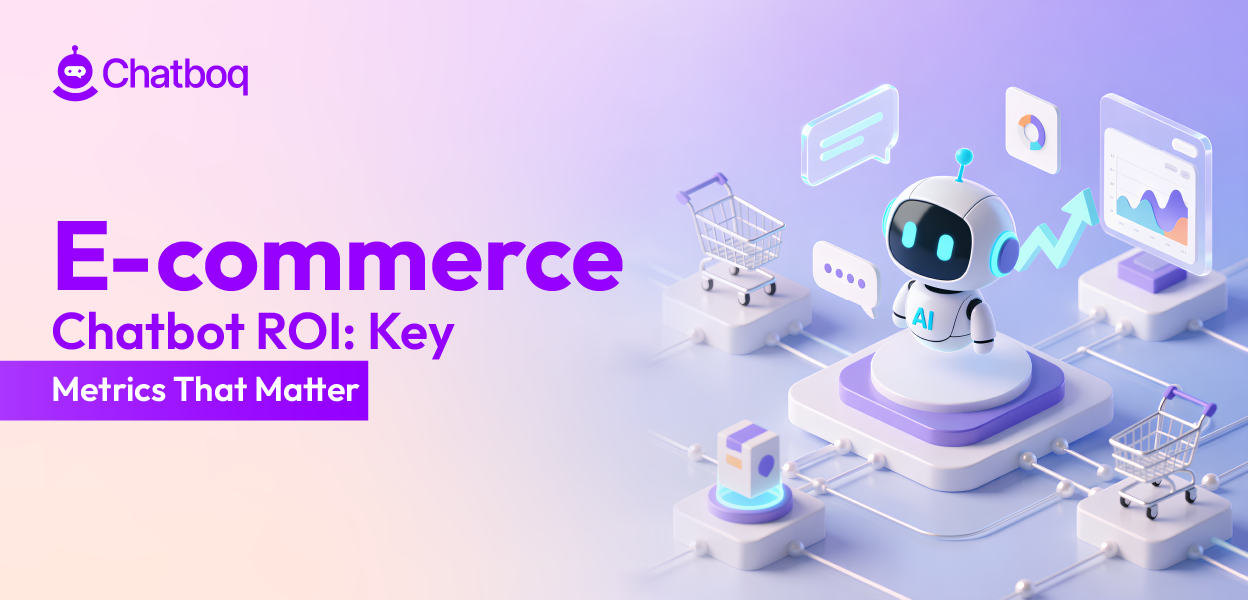
Not all chatbot metrics show ROI. Some only show activity, like total chats or messages sent. To measure real impact, metrics must connect chatbot performance to cost savings, customer experience, and revenue growth.
That’s why chatbot ROI metrics fall into three clear groups.
Operational Efficiency Metrics (Cost and Productivity)
These metrics show how much work the chatbot removes from human agents and how much money automation saves.
First Contact Resolution (FCR) Rate
FCR measures how often the chatbot solves a customer issue in a single conversation without needing human help. A high FCR means fewer repeat contacts and a lower support workload. For many E-commerce stores, an FCR above 80% shows strong chatbot performance and efficient automation.
Agent Deflection (Containment) Rate
This metric shows how many conversations the chatbot handles from start to finish. A higher containment rate means fewer chats reach human agents, which directly reduces support costs and ticket volume.
Cost per Interaction/Conversion
Cost per interaction compares the cost of a chatbot conversation to a human agent conversation. Bot interactions usually cost much less. This makes the metric one of the clearest inputs for calculating chatbot ROI.
Average Response Time
Chatbots respond instantly, often in under a second. Fast replies reduce customer frustration, improve satisfaction, and allow support teams to handle higher volumes without delays.
Human Handover Rate
This shows how often conversations move from the chatbot to a human agent. A lower rate is generally good, but only when handovers are smooth and include full conversation context. Poor handovers hurt both efficiency and customer experience.
Customer Experience Metrics (Trust and Satisfaction)
Chatbot ROI only works long-term if customers stay happy and trust the experience.
Customer Satisfaction (CSAT) Score
CSAT is collected through short post-chat surveys. It shows how customers feel after interacting with the chatbot. Scores above 80% usually indicate that the chatbot experience meets customer expectations.
Net Promoter Score (NPS)
NPS measures how likely customers are to recommend the brand after chatting with the bot. It reflects long-term trust and loyalty, not just short-term satisfaction.
Fallback or Error Rate
This metric tracks how often the chatbot fails to understand a user’s question or intent. A high fallback rate signals gaps in the knowledge base and leads to frustration, drop-offs, and lost trust.
User Retention Rate
User retention shows how many customers return to use the chatbot again. Repeat usage is a strong sign that the chatbot provides real value and helps customers successfully.
Sales and Marketing Impact Metrics (Revenue Growth)
These metrics connect chatbot activity directly to money.
Conversion Rate
This measures how many chatbot conversations lead to purchases, sign-ups, or other key actions. It’s one of the most important chatbot ROI metrics for E-commerce.
Abandoned Cart Recovery Rate
Chatbots can re-engage shoppers who leave items in their cart by answering questions, offering reminders, or providing support. This metric shows how effective those recovery flows are.
Average Order Value (AOV)
AOV tracks whether customers who interact with the chatbot spend more. Personalized recommendations, cross-sell, and upsell flows often increase order size.
Lead Generation/Qualification Rate
For stores selling high-value products or services, chatbots can capture and qualify leads automatically. With CRM integration, this impact becomes easy to measure.
Platforms like Chatboq combine chatbot analytics, CRM data, and sales tracking in one place. When conversation data connects directly to revenue and support metrics, ROI becomes clear and actionable.

 ChatGPT
 Perplexity
 Claude


Leave a Comment
Your email address will not be published. Required fields are marked *
By submitting, you agree to receive helpful messages from Chatboq about your request. We do not sell data.