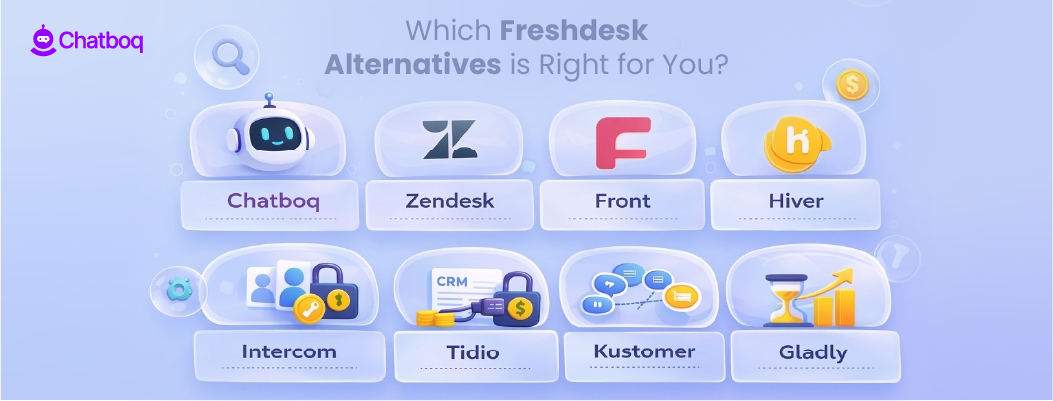
Below, you’ll find detailed reviews of each Freshdesk alternative listed above.
Each platform follows the same structure so you can compare automation depth, workflow flexibility, reporting dashboards, omnichannel support, integrations, and pricing clearly without unnecessary complexity.
1. Chatboq - All-in-One AI Chatbot & Live Chat Platform
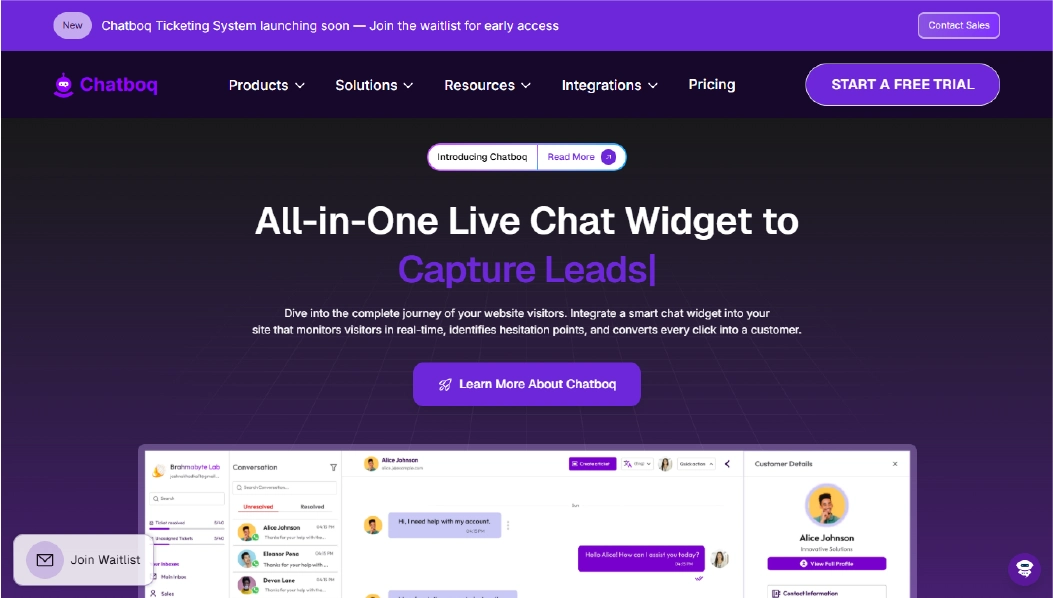
Chatboq is a platform built for teams that want tighter control over conversations and ticket timelines. It combines live chat, ticket management, SLA policies, AI reply assistance, and messaging integrations inside a single workspace.
Chatboq connects live chat directly to structured ticket control, so conversations move into defined workflows without manual transfer. A website conversation can become a structured ticket with defined priority, status, and response deadlines. Each organization inside the account operates independently, which prevents workflow overlap when multiple teams or clients are managed.
Chatboq works best when teams need clear control over ticket movement, escalation timing, and structured resolution stages.
Why It’s a Strong Freshdesk Alternative
Freshdesk works well when ticket organization is the main requirement. But as support operations mature, teams often need stronger enforcement around response time and resolution control.
Chatboq focuses on enforcement, not just organization.
SLA policies are defined at the organization level. When a ticket approaches its deadline, the system generates warnings before the breach happens. Priority can escalate automatically. Teams can monitor tickets in structured stages using Kanban view. Related issues can be merged or structured as parent and child tickets to prevent duplication.
This changes how support is monitored. Instead of checking dashboards manually, the workflow itself highlights risk.
Core Strengths
-
AI reply assistant trained on internal FAQs, uploaded documents, inbox history, and articles
-
Live chat with typing preview for agents, seen indicators, voice and file support
-
Email-to-ticket conversion
-
Custom SLA policies with response and resolution definitions
-
Automatic alerts when tickets reach 85% of SLA window
-
Organization-specific priority levels and editable hierarchies
-
Custom ticket statuses per workspace
-
Ticket merge and parent–child linking
-
Watchers and internal collaboration system
-
Visitor tracking with IP and country visibility
-
Trigger campaigns with condition logic and scheduling
-
Messaging integrations (WhatsApp, Messenger, Instagram, Slack, Telegram, Line, Discord)
-
CRM integrations including Zoho CRM and PipeDrive
-
Role-based permissions and workspace isolation
Why is Chatboq Better Than Freshdesk
Freshdesk emphasizes ease of use and structured ticket views. It provides omnichannel support and workflow rules that help teams manage moderate ticket complexity.
Chatboq puts more weight on time enforcement and ticket lifecycle control. Instead of depending only on automation rules, it links SLA deadlines directly to ticket behavior. The system highlights risk automatically rather than relying on manual monitoring.
For higher ticket volume or stricter SLA commitments, this reduces operational blind spots.
Limitations
-
Not positioned as a full IT service management system
-
Smaller ecosystem compared to enterprise marketplace-heavy platforms
-
AI reasoning for complex multi-step analysis continues to develop
Best For
-
Ecommerce teams handling real-time customer inquiries
-
SaaS companies with strict SLA requirements
-
Agencies managing multiple client environments
-
Support teams that need structured ticket escalation control
Pricing Snapshot
-
Plan-based subscription
-
Workspace-level billing structure
-
Card and invoice support included
-
Not purely seat-based pricing
-
Scales based on organizational setup and usage
2. Front - Shared Inbox Collaboration Platform
Front is a shared inbox and customer communication platform built to centralize email, SMS, chat, and social messages inside one collaborative workspace. It keeps conversations in an inbox-style interface while allowing teams to assign, comment, and automate workflows.
Front keeps conversations in threaded inbox views. It prioritizes ownership and internal collaboration. Messages remain in threads. Teams collaborate internally using comments and mentions. Automation rules route conversations based on conditions.
Front fits teams that want shared inbox coordination more than structured ticket stages.
Why It’s a Strong Freshdesk Alternative
Freshdesk structures support around tickets and statuses. This fits teams that rely on ticket categorization and SLA policies.
Front approaches support from a collaboration angle. Conversations stay in an email-like format, but visibility is shared. Teams can see who is replying, leave internal notes, and assign responsibility directly within the thread. Automation can distribute workload using round-robin assignment.
For teams that operate heavily through email and account-based communication, this reduces overlap and improves coordination.
Core Strengths
-
Shared inbox across email, SMS, chat, and social channels
-
Draft collaboration before sending replies
-
Rule-based automation for routing and assignment
-
Analytics dashboards for response time and workload visibility
-
CRM integrations including Salesforce and HubSpot
-
Role-based permissions and access control
Why Is Front Better Than Freshdesk?
Freshdesk organizes support through ticket stages and structured workflow rules.
Front centralizes conversation collaboration. Instead of focusing on ticket lifecycle stages, it focuses on visibility and ownership inside shared inboxes. Internal coordination happens directly alongside customer messages.
For teams managing high-volume email workflows or account-driven communication, this structure simplifies teamwork and reduces response duplication.
Limitations
-
Less emphasis on advanced ticket lifecycle enforcement
-
SLA automation depth may be limited compared to ticket-first systems
-
Pricing increases as seat count grows
Best For
-
Teams managing high email volume
-
Customer success and account management teams
-
SaaS support teams needing shared inbox visibility
-
Organizations prioritizing conversation collaboration over ticket hierarchy
Pricing Snapshot
-
Per-seat subscription model
-
Tier-based feature access
-
Advanced automation and analytics in higher tiers
-
Costs scale directly with seat count
Check out the top Front alternatives and select one that best suits your business.
3. Zendesk - Enterprise Customer Service Platform
Zendesk is a customer service software platform built for structured, large-scale support operations. It combines ticketing, omnichannel support, workflow automation, reporting dashboards, and AI tools inside one system.
Zendesk converts conversations from email, live chat, messaging, and voice into structured tickets. Teams define workflows, routing rules, SLAs, and permissions across departments. The platform supports complex environments where multiple teams handle different queues under one account.
Zendesk fits organizations managing complex routing, multi-team governance, and detailed operational reporting.
Why It’s a Strong Freshdesk Alternative
Freshdesk works well for small to mid-sized teams that need organized ticketing and ease of use.
Zendesk adds deeper control for larger operations. It supports advanced ticket routing, stronger SLA management, workforce management tools, and more configurable automation. Reporting dashboards provide detailed visibility across agents, queues, and performance metrics.
As complexity increases, Zendesk supports enterprise scalability. It allows structured queue management, multi-department routing, and granular permissions that reduce operational bottlenecks.
When analytics depth and routing flexibility become critical, Zendesk offers broader configuration control.
Core Strengths
-
Advanced ticket routing and automation workflows
-
AI-powered agent copilot and ticket summaries
-
Omnichannel support including email, live chat, voice, and messaging
-
Detailed reporting dashboards and support analytics
-
Workforce management and scheduling tools
-
CRM integration including Salesforce and HubSpot
Why Is Zendesk Better Than Freshdesk?
Freshdesk focuses on ease of use and fast setup.
Zendesk provides deeper configuration control. It supports more complex routing logic, granular role management, and advanced reporting visibility. For organizations managing high ticket volume across multiple teams, the system provides stronger scalability.
Zendesk supports enterprise scalability through structured queue control and broader automation depth. This makes it suitable when operational complexity exceeds basic workflow rules.
Limitations
-
Steeper learning curve compared to Freshdesk
-
Higher pricing tiers for advanced AI and analytics features
-
Configuration requires administrative oversight
Best For
-
Mid-sized to enterprise customer support teams
-
Organizations with strict SLA management requirements
-
Multi-department support operations
-
Companies needing advanced reporting and workforce management
Pricing Snapshot
-
Per-agent subscription pricing
-
Tier-based feature access
-
Advanced AI and analytics in higher plans
-
Costs increase with seat count and add-ons
Check out the best Zendesk alternatives available on the market today.
4. Kayako - Unified Customer Journey Support Platform
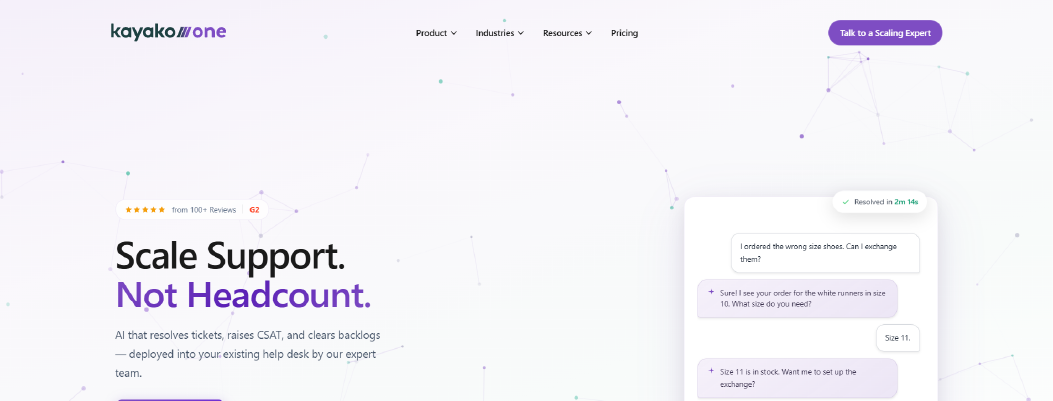
Kayako is a customer service platform designed to give teams a unified view of the customer across conversations. It combines email, live chat, social messaging, and help center tools into one system while showing a continuous customer journey timeline.
Instead of separating interactions by channel, Kayako groups conversations by customer. Agents can see past messages, ticket history, and context in a single timeline view. This reduces the need to search across multiple threads.
Kayako works best for teams that need customer history visible across channels.
Why It’s a Strong Freshdesk Alternative
Freshdesk structures support tickets and automation rules. That works well when categorization and workflow routing are the main focus.
Kayako emphasizes conversation continuity. It organizes support around the customer rather than isolated tickets. When the same customer contacts you through multiple channels, those interactions appear in one unified history.
For teams that feel Freshdesk separates conversations too rigidly, Kayako provides more contextual visibility across channels.
Core Strengths
-
Unified customer timeline across channels
-
Shared inbox for email, chat, and social messaging
-
Conversation grouping by customer identity
-
Basic automation and routing rules
-
Knowledge base and self-service portal
-
CRM and third-party integrations
Why Is Kayako Better Than Freshdesk?
Freshdesk organizes support primarily through structured ticket views and rule-based routing.
Kayako focuses more on conversation continuity. It keeps the customer history centralized, which helps agents understand context before replying. For teams managing repeat customers or ongoing account relationships, this reduces fragmented communication.
If your challenge is customer context visibility rather than workflow complexity, Kayako can feel more natural to operate.
Limitations
-
Automation depth is lighter compared to enterprise systems
-
Reporting dashboards may be less advanced than larger platforms
-
Ecosystem integrations are narrower than large marketplace-driven tools
Best For
-
Support teams handling repeat customers
-
SaaS businesses managing ongoing client conversations
-
Small to mid-sized teams needing contextual visibility
-
Teams prioritizing conversation continuity over advanced workflow automation
Pricing Snapshot
-
Tier-based subscription pricing
-
Per-agent billing structure
-
Advanced features available in higher plans
-
Costs scale with seat count
Read more: Discover the best Kayako Alternative and choose the right one for your business.
5. Kustomer - CRM-Centered Customer Service Platform
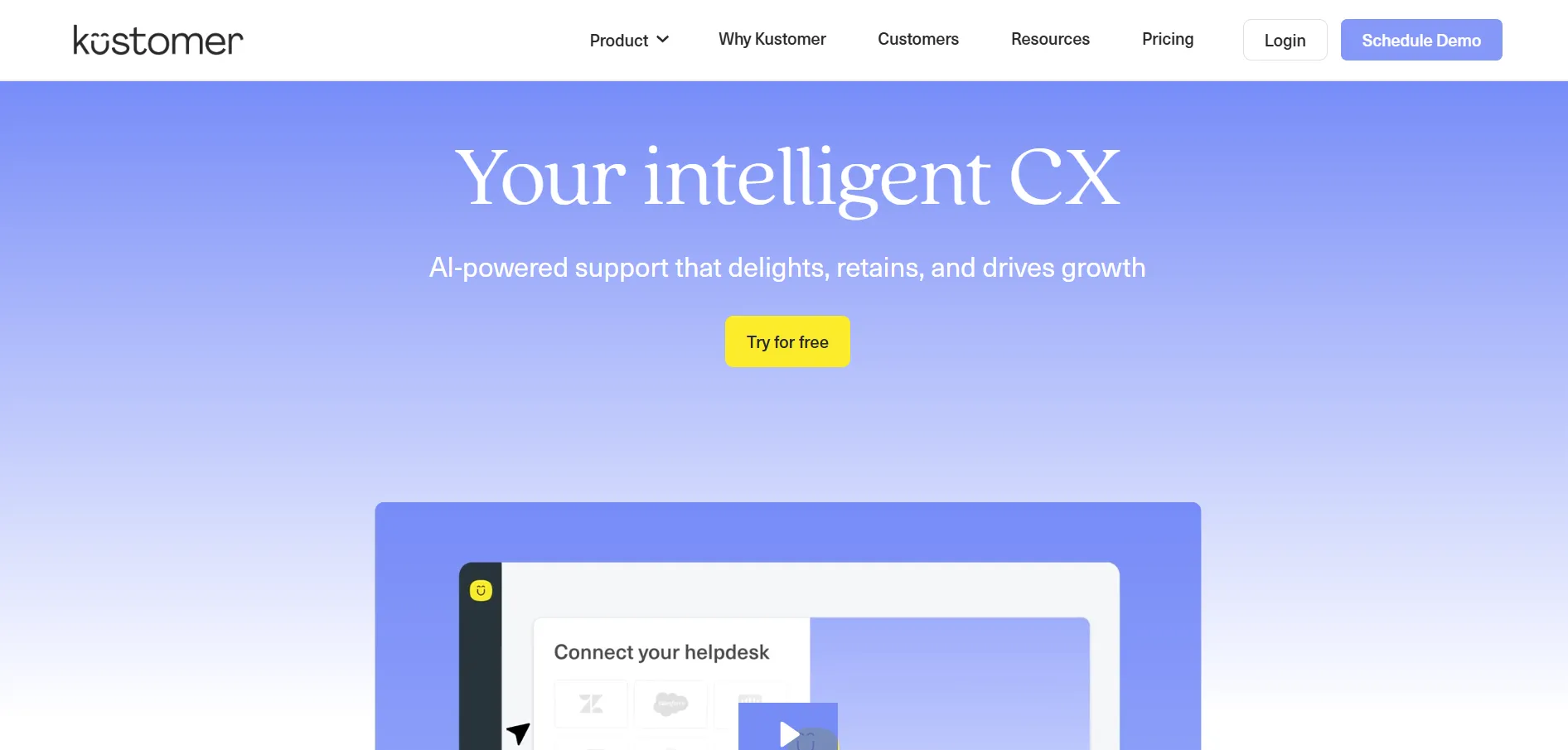
Kustomer is a customer service platform built around a customer timeline model instead of a traditional ticket queue. It connects conversations, events, and customer data into one unified profile so agents can see the full history before responding.
Kustomer attaches each interaction to a persistent customer record. Agents work from one continuous profile. Email, chat, messaging, and social conversations appear inside one continuous timeline. This structure supports teams that need visibility into orders, subscriptions, and account activity while handling support.
Kustomer is a better fit when support depends on CRM-level customer context.
Why It’s a Strong Freshdesk Alternative
Freshdesk uses ticket queues and rule-based routing to manage support flow. That works well for structured ticket management.
Kustomer centers support around the customer profile. Conversations attach to a unified record that includes interaction history and custom data fields. Automation can route conversations based on customer attributes, behavior, or lifecycle stage.
For teams that feel Freshdesk separates conversations from broader customer context, Kustomer provides stronger alignment between support and CRM data.
Core Strengths
-
Unified customer timeline across all channels
-
Persistent customer record with structured data fields
-
Omnichannel support including email, chat, messaging, and social
-
Advanced reporting and support analytics
-
Integration flexibility with ecommerce and CRM systems
-
Role-based permissions and admin controls
Why Is Kustomer Better Than Freshdesk?
Freshdesk structures support around ticket queues.
Kustomer structures support customer records. Instead of switching between tickets to understand history, agents work from a centralized customer timeline. This reduces context switching and supports account-based service models.
For ecommerce and subscription-based businesses where customer history drives resolution speed, this model can improve visibility and reduce repeated data checks.
Limitations
-
Higher pricing compared to small-team platforms
-
Setup and configuration may require technical resources
-
More complex interface for teams used to simple ticket queues
Best For
-
Ecommerce brands with repeat customers
-
Subscription and SaaS businesses
-
Mid-sized to enterprise customer service operations
-
Teams that need CRM-aligned support workflows
Pricing Snapshot
-
Enterprise-oriented pricing structure
-
Per-agent subscription model
-
Advanced automation and analytics in higher tiers
-
Costs increase with feature depth and integrations
Evaluate the most effective alternatives to kustomer and pick the one that scales with your business.
6. Intercom - AI-First Conversational Support Platform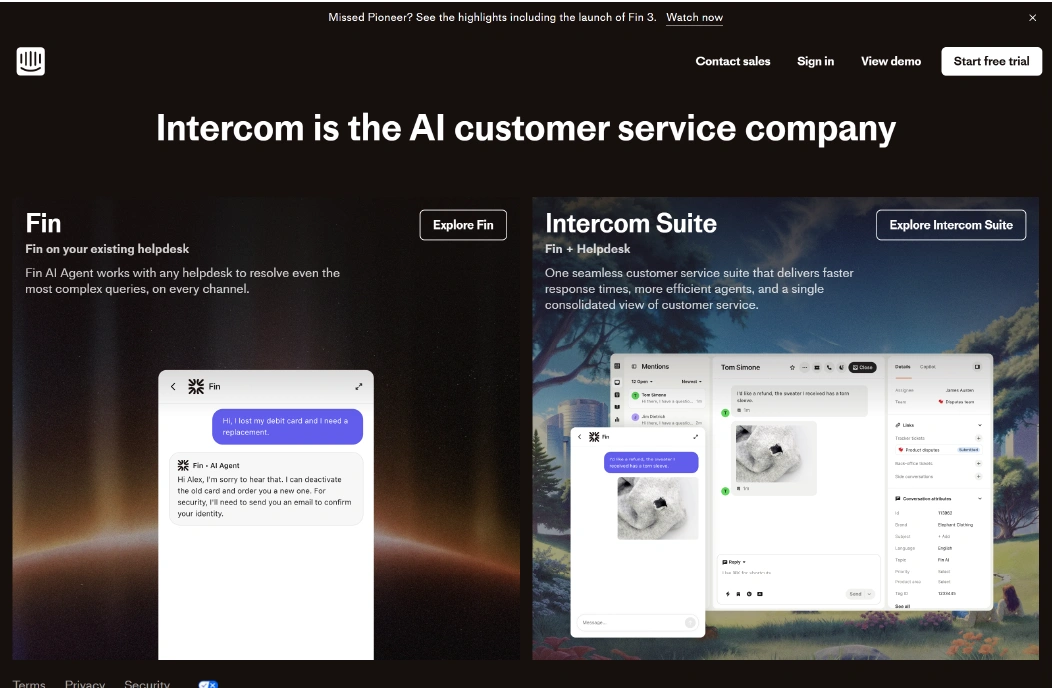
Intercom is a customer communication platform built around chat-first engagement and AI automation. It combines live chat, in-app messaging, help center tools, outbound messaging, and AI agents inside one system.
Instead of focusing mainly on ticket queues, Intercom emphasizes real-time conversation. Visitors can interact through chat widgets or in-app messages. AI handles common questions, routes conversations, and assists agents before a human reply is sent.
Intercom fits teams that want proactive engagement and AI-led support rather than traditional ticket-only workflows.
Why It’s a Strong Freshdesk Alternative
Freshdesk relies on ticket queues and workflow rules to organize incoming conversations. This matches reactive, queue-based support teams.
Intercom focuses on conversational automation. AI agents can answer common questions instantly. Conversations can be routed based on behavior, account type, or message content. Support teams can engage customers proactively through outbound messages and product tours.
Intercom leads in AI-first chat automation by placing AI at the front of the interaction instead of only inside the workflow builder.
Intercom increases AI involvement directly at the conversation layer rather than limiting automation to backend routing rules.
Core Strengths
-
AI chatbot and automation for first-line support
-
Live chat and in-app messaging
-
Automated conversation routing and prioritization
-
Help center and knowledge base tools
-
Custom workflows and automation rules
-
Omnichannel support including chat and messaging channels
Why Is Intercom Better Than Freshdesk?
Freshdesk handles structured ticketing and rule-based automation well.
Intercom puts AI at the front of support. It attempts to resolve questions before tickets are created. This reduces ticket volume and shortens first response time when AI training is properly configured.
For SaaS products and digital platforms where live chat and in-app support drive engagement, Intercom can reduce dependency on traditional ticket queues.
Limitations
-
Pricing increases with usage and AI resolution volume
-
Advanced AI features require higher plans
-
May be more chat-focused than email-heavy teams prefer
Best For
-
SaaS companies offering in-app support
-
Product-led growth teams
-
Ecommerce brands needing proactive messaging
-
Teams prioritizing AI-driven first response automation
Pricing Snapshot
-
Per-seat pricing with usage-based AI add-ons
-
Tiered feature structure
-
Additional costs for advanced automation and AI resolution
-
Pricing scales with conversation volume
Check out the top Intercom alternatives and select one that best suits your business.
7. LiveAgent - Omnichannel Ticketing and Live Chat Platform
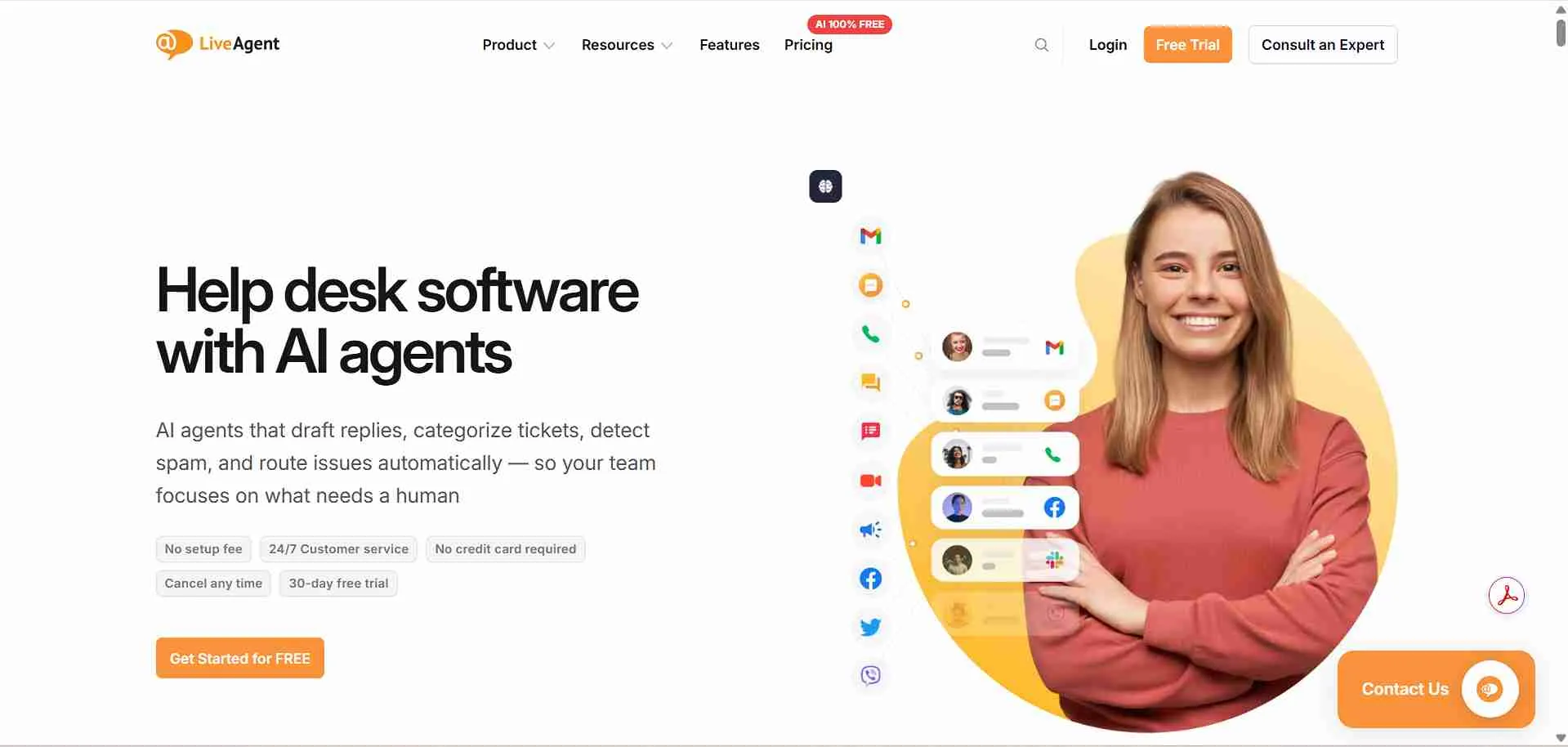
LiveAgent is a help desk and customer service platform designed to centralize email, live chat, voice, and social messages inside one ticketing system. It converts conversations from different channels into structured tickets and manages them in a shared workspace.
Instead of focusing only on chat or email, LiveAgent emphasizes omnichannel customer service. Messages from multiple channels flow into one queue. Agents respond from a unified interface while tracking status, priority, and SLA rules.
LiveAgent works well for teams that require voice, chat, and email managed inside one structured ticketing system.
Why It’s a Strong Freshdesk Alternative
Freshdesk works well for email-centric and moderate omnichannel support. However, some teams look for stronger channel breadth or more built-in voice support.
LiveAgent provides built-in live chat and call center features alongside ticketing. Conversations from chat, email, and calls convert into tickets automatically. Teams can manage them from one dashboard without adding external voice tools.
For businesses that want chat, voice, and ticketing tightly connected, LiveAgent provides broader native channel coverage.
Core Strengths
-
Omnichannel ticketing across email, live chat, voice, and social
-
Automation rules for ticket routing
-
Reporting dashboards and performance analytics
-
Knowledge base and customer portal
-
Custom fields and tagging
-
Integration marketplace
Why Is LiveAgent Better Than Freshdesk?
Freshdesk provides structured ticketing and automation. It supports multiple channels but often relies on configuration or add-ons for full channel depth.
LiveAgent places stronger emphasis on built-in voice and real-time chat tools. For teams that want phone, chat, and email working natively together, this reduces integration dependency.
If your main need is broader channel coverage rather than deeper workflow logic, LiveAgent can feel more complete out of the box.
Limitations
-
Interface may feel dense for new users
-
Advanced reporting may require higher plans
-
Automation depth is moderate compared to enterprise systems
Best For
-
Small to mid-sized support teams
-
Businesses needing built-in voice support
-
Ecommerce and service teams handling multi-channel inquiries
-
Teams prioritizing omnichannel coverage over advanced lifecycle control
Pricing Snapshot
-
Tier-based subscription pricing
-
Per-agent billing structure
-
Feature access increases by plan level
-
Pricing scales with seat count
Read more: Discover the best LiveAgent alternatives and compare features to choose the right helpdesk for your team.
8. Hiver - Gmail-Based Shared Inbox Platform
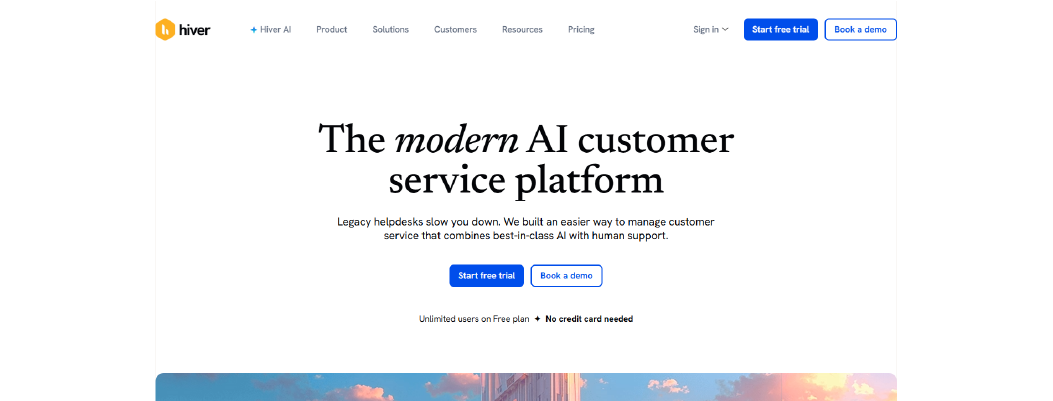
Hiver is a shared inbox and help desk solution built directly inside Gmail. It turns Google Workspace email accounts into collaborative inboxes without requiring a separate ticketing interface.
Instead of moving agents into a new dashboard, Hiver works inside the Gmail interface. Emails can be assigned to team members, tagged, tracked, and monitored for SLA compliance. Internal notes and shared visibility allow teams to collaborate without forwarding emails.
Hiver fits teams that want structured support inside Gmail rather than switching to a separate help desk system.
Why It’s a Strong Freshdesk Alternative
Freshdesk moves support into a dedicated ticketing system. That works well for teams that want structured ticket stages and deeper automation.
Hiver keeps support inside Gmail. For teams that operate primarily through email, this reduces onboarding friction. Agents do not need to learn a new interface. Conversations remain in familiar inbox views while still allowing assignment and tracking.
For small teams that find full help desk platforms heavier than needed, Hiver provides structured collaboration without leaving Google Workspace.
Core Strengths
-
Native Gmail integration
-
Shared inbox management inside Google Workspace
-
Email assignment and ownership tracking
-
Automation rules for assignment and notifications
-
Reporting dashboards for response time and workload
-
Integration with Google tools and selected third-party apps
Why Is Hiver Better Than Freshdesk?
Freshdesk offers a full ticketing environment with omnichannel support.
Hiver simplifies support by staying inside Gmail. There is no need to migrate to a separate agent workspace. For email-heavy teams, this can reduce context switching and training time.
If your primary workflow is email and you do not need advanced multi-channel routing or deep automation, Hiver can feel lighter and easier to manage.
Limitations
-
Limited omnichannel depth beyond email
-
Automation capabilities are lighter than full ticketing platforms
-
Reporting depth is moderate compared to larger systems
Best For
-
Small customer support teams
-
Startups using Google Workspace
-
Email-first support operations
-
Teams wanting minimal setup overhead
Pricing Snapshot
-
Per-user subscription pricing
-
Tier-based feature structure
-
Costs scale with number of Gmail users
-
Advanced automation available in higher plans
Check out the best Hiver alternatives available on the market today.
9. Tidio - Chat-First Support and Automation Platform
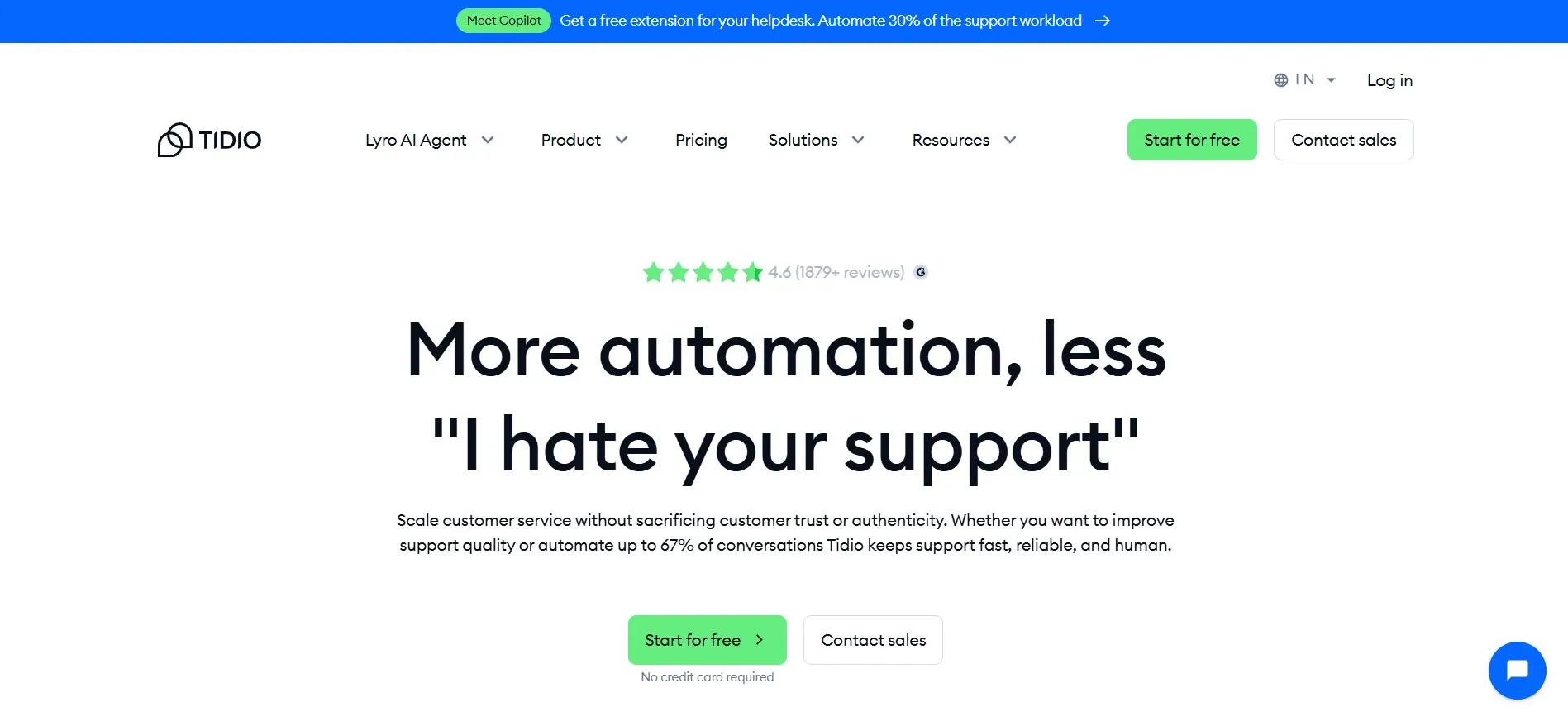
Tidio is a customer communication platform focused on live chat and chatbot automation. It combines website chat, basic ticketing, email handling, and automation flows inside one dashboard.
Instead of centering support around structured ticket queues, Tidio emphasizes real-time chat engagement. Visitors can interact through chat widgets. Automated flows respond to common questions and collect contact information before handing the conversation to an agent.
Tidio fits teams that want fast chat deployment with lightweight ticket management.
Why It’s a Strong Freshdesk Alternative
Freshdesk structures support around tickets and queue management. That works well for organized, multi-stage support operations.
Tidio focuses more on immediate interaction. Automation flows can answer predictable questions before a ticket is created. For ecommerce and small businesses that rely heavily on website chat, this reduces response time and lowers ticket volume.
If your challenge is increasing live engagement rather than managing complex SLA workflows, Tidio offers a more chat-centered approach.
Core Strengths
-
Real-time live chat with website widget
-
Chatbot automation for common queries
-
Email and chat combined in one inbox
-
Basic reporting dashboards
-
Integrations with ecommerce platforms
-
CRM and marketing tool integrations
Why Is Tidio Better Than Freshdesk?
Freshdesk provides structured ticket control and workflow automation.
Tidio emphasizes real-time chat automation. Instead of routing tickets after they are created, it attempts to resolve questions at the conversation level. For businesses where speed and engagement matter more than layered SLA enforcement, this model reduces friction.
If you need a fast chat-first solution rather than a structured help desk system, Tidio can feel simpler to operate.
Limitations
-
Limited advanced SLA management
-
Reporting depth is lighter than full help desk platforms
-
Complex workflow routing may require higher plans
Best For
-
Ecommerce stores handling live visitor questions
-
Startups needing quick chat deployment
-
Small support teams
-
Businesses prioritizing chatbot automation over structured ticket lifecycle control
Pricing Snapshot
-
Tier-based subscription pricing
-
Free plan available with limitations
-
Add-ons for advanced chatbot features
-
Pricing scales based on usage and automation depth
Read more: Discover the best Tidio Alternative and choose the right one for your business.
10. Gladly - Customer-Centered Conversation Platform
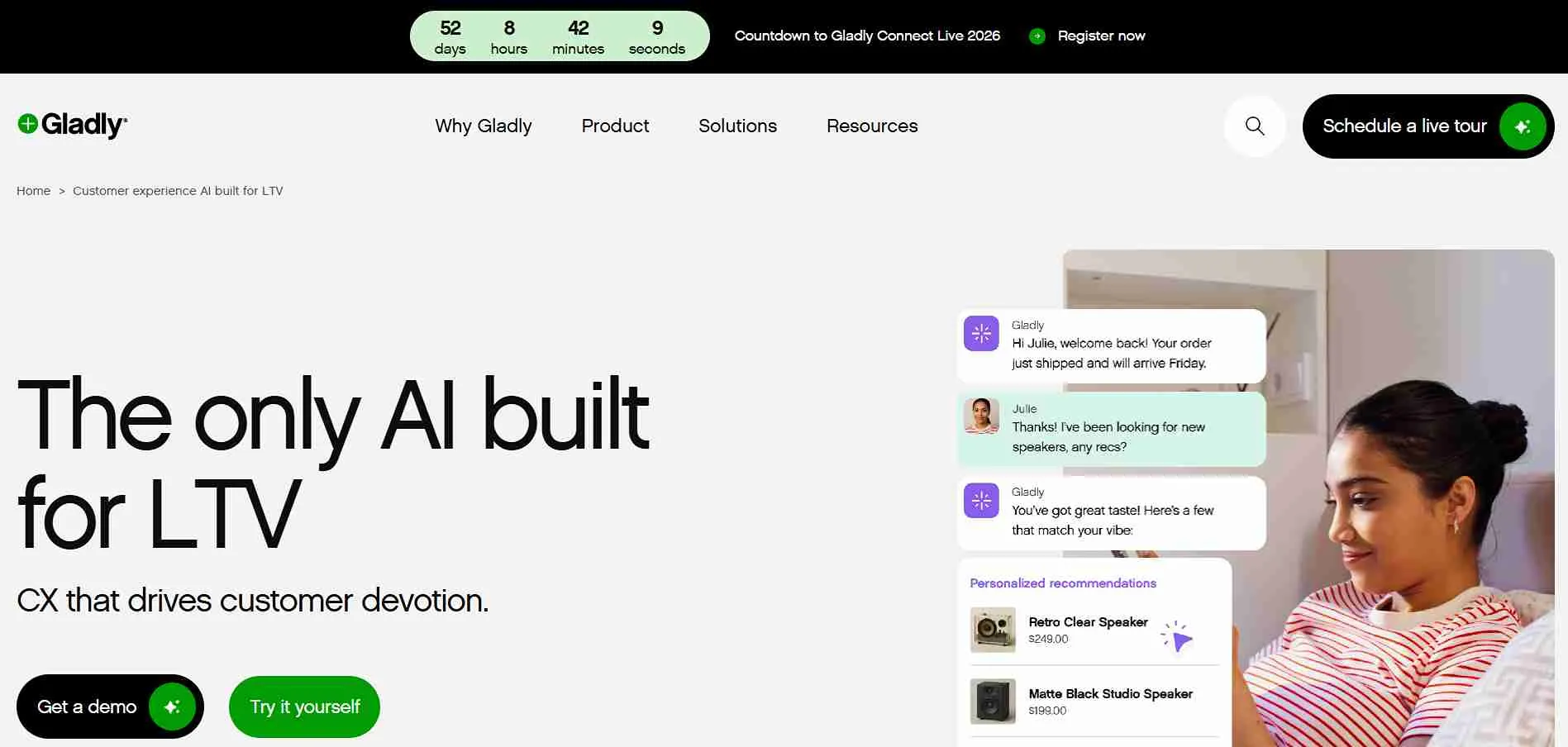
Gladly is a customer service platform built around a people-first model rather than a ticket-first model. It combines email, chat, voice, SMS, and social messaging into one continuous customer conversation.
Gladly keeps one continuous conversation per customer. It reduces the need to manage separate tickets. Agents see past purchases, previous support cases, and communication history in one unified thread. This structure supports brands that manage ongoing relationships instead of one-time issues.
Gladly works best when teams want one continuous customer thread instead of ticket queues.
Why It’s a Strong Freshdesk Alternative
Freshdesk manages support through individual tickets and structured status stages. That works well for queue-based management.
Gladly removes the ticket layer and centers everything around the customer. Conversations across channels appear in one timeline. Agents do not need to switch between tickets to understand context.
For teams that feel Freshdesk fragments conversations into separate records, Gladly provides continuity across the entire customer relationship.
Core Strengths
-
Single lifelong conversation per customer
-
Omnichannel support including voice, SMS, chat, email, and social
-
Real-time routing and assignment
-
Performance dashboards and reporting
-
Knowledge base and self-service tools
-
Integrations with ecommerce and CRM platforms
Why Is Gladly Better Than Freshdesk?
Freshdesk organizes support by tickets.
Gladly organizes support by customers. Instead of tracking multiple tickets for the same person, agents respond within one continuous thread. This reduces duplication and improves context awareness.
For ecommerce brands and subscription businesses managing repeat customers, this structure supports long-term relationship visibility.
Limitations
-
Enterprise-focused pricing structure
-
Less emphasis on traditional ticket hierarchy
-
Setup may require structured onboarding
Best For
-
Ecommerce brands with repeat buyers
-
Retail and subscription businesses
-
Enterprise support teams
-
Organizations prioritizing customer continuity over ticket queues
Pricing Snapshot
-
Enterprise-level pricing model
-
Custom quotes based on organization size
-
Per-agent structure in most deployments
-
Pricing scales with operational complexity

 ChatGPT
 Perplexity
 Claude



Leave a Comment
Your email address will not be published. Required fields are marked *
By submitting, you agree to receive helpful messages from Chatboq about your request. We do not sell data.