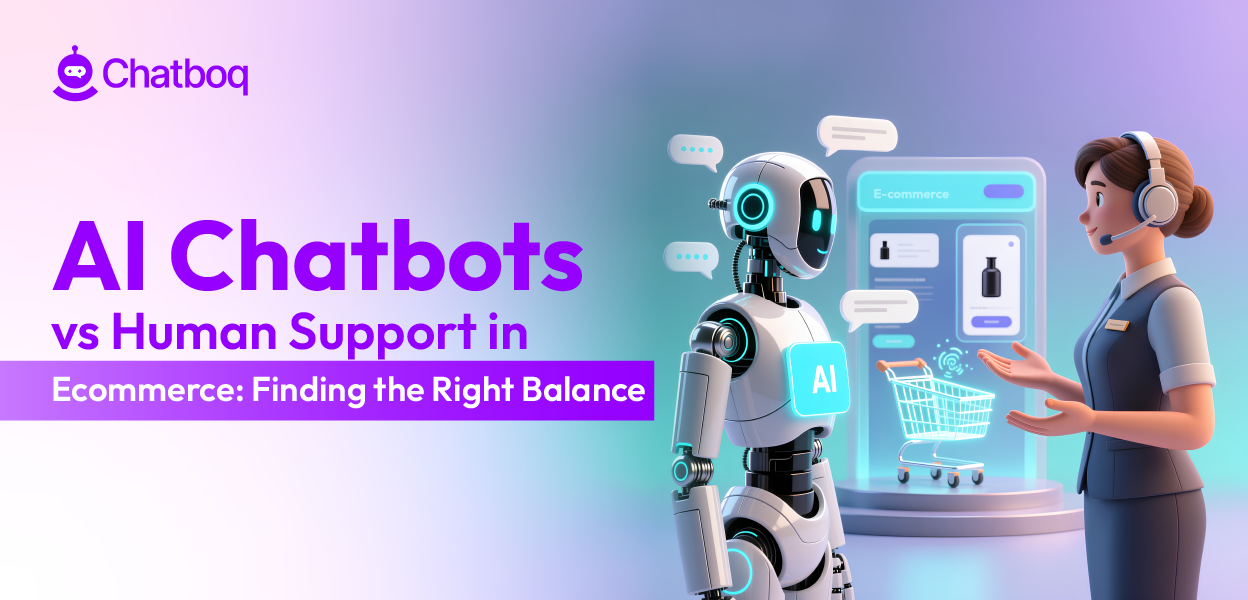
In Ecommerce, AI chatbots excel at handling high-volume, repetitive, and time-sensitive ecommerce interactions instantly and at scale. Their strength lies in resolving predictable inquiries efficiently while reducing operational strain on human support teams.
AI performs best when customer requests follow structured patterns such as order tracking, shipping updates, return policies, and product availability. In these scenarios, automation delivers consistent answers faster than manual workflows.
1. Handling High-Volume FAQs Instantly
Ecommerce customers frequently ask the same questions: order status, shipping timelines, return policies, payment confirmations, and delivery updates. AI chatbots answer these instantly using predefined logic and connected order data. This removes queue delays and reduces first response time to near zero, especially during peak traffic periods.
Instead of agents responding to repetitive tickets, AI resolves routine inquiries automatically. This protects human capacity for more complex cases.
2. Providing 24/7 Support Without Staffing Expansion
Online stores operate beyond business hours. Customers browse late at night, across time zones, and during weekends. AI chatbots maintain continuous availability without requiring shift scheduling or overtime costs.
This ensures customers always receive an immediate response, even if final resolution requires escalation later. The result is consistent coverage without proportional hiring increases.
3. Scaling During Sales, Campaigns, and Seasonal Peaks
Promotions, holiday sales, and product launches create sudden surges in support volume. Human-only teams struggle to scale instantly. AI chatbots manage simultaneous conversations at scale without performance degradation.
During high-traffic moments, AI absorbs the majority of first-level inquiries, preventing backlog accumulation and reducing wait times.
4. Managing Repetitive Operational Tasks
Ecommerce support includes repetitive backend actions such as:
AI automates these structured workflows. In many stores, this accounts for the majority of incoming tickets. Automation reduces manual workload and lowers cost per interaction.
5. Assisting Product Discovery in Real Time
Customers often need quick clarification before completing a purchase. AI chatbots guide users through structured questions such as size selection, compatibility, availability, and pricing tiers.
This immediate assistance reduces hesitation and prevents abandonment during the browsing or checkout process.
6. Enabling Fast First-Level Triage
AI chatbots act as the first point of contact in a support workflow. They classify intent, gather relevant details, and route complex cases to the appropriate human agent when necessary.
This structured triage shortens resolution cycles and ensures agents receive context before engaging. AI optimizes efficiency at the entry point of customer support.
AI chatbots do not replace human support in ecommerce. Their strength lies in handling predictable, high-frequency interactions quickly and consistently. This allows human agents to focus on scenarios where judgment, flexibility, and empathy matter most.

 ChatGPT
 Perplexity
 Claude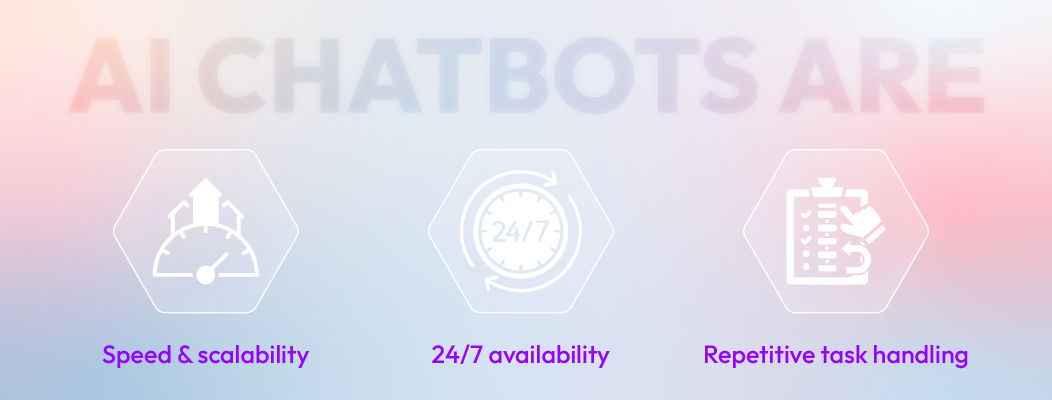

.webp)


Leave a Comment
Your email address will not be published. Required fields are marked *
By submitting, you agree to receive helpful messages from Chatboq about your request. We do not sell data.