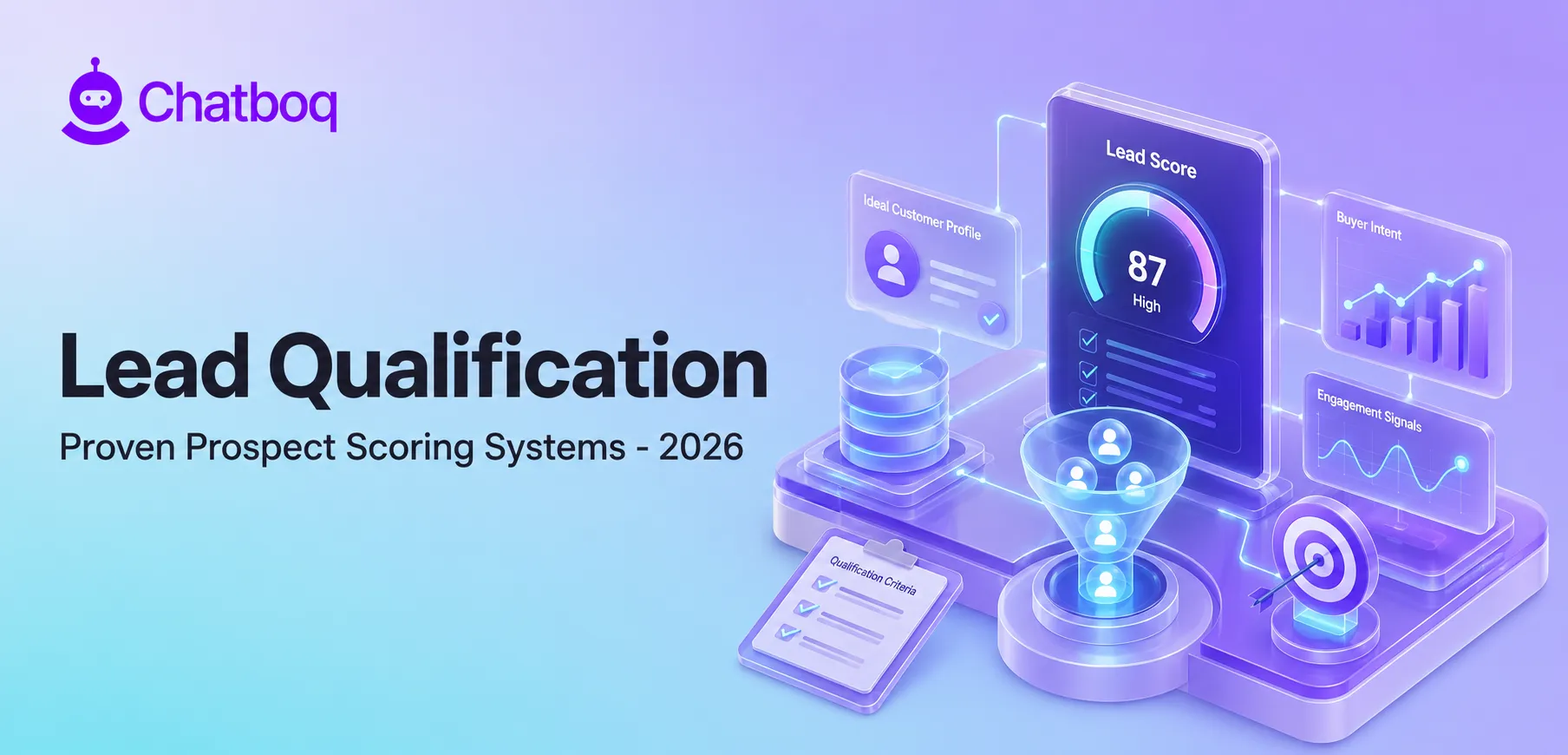
Lead qualification works through a four-stage operational workflow: information collection, intent evaluation, lead scoring, and CRM-based routing. Each stage filters prospects against qualification criteria before advancing them to the next stage of the sales process.
Collecting and Analyzing Prospect Information
Prospect information collection starts at the first point of contact, whether inbound form submission, chatbot interaction, or outbound sales call. Sales and marketing teams gather four categories of data: demographic data (name, role, contact information), firmographic data (company size, industry, annual revenue, geographic location), behavioral data (website activity, content consumption, email engagement), and intent data (search behavior, third-party intent signals, competitor research activity). CRM systems store and structure this data automatically when integrated with marketing automation platforms. Complete prospect profiles enable accurate qualification scoring in subsequent workflow stages.
Evaluating Buyer Intent and Engagement Behavior
Buyer intent evaluation measures the actions a prospect takes across digital touchpoints before sales contact. High-intent signals include three or more product page visits within seven days, pricing page access, demo or trial requests, content downloads on bottom-of-funnel topics, and direct sales inquiries. Low-intent signals include single-page visits, top-of-funnel content consumption only, and no email reply activity. Engagement scoring assigns numeric values to each signal. A prospect scoring above the intent threshold, typically 60 to 80 points depending on the qualification model, advances to active lead scoring. Prospects below threshold enter lead nurturing sequences.
Scoring and Prioritizing Leads Based on Qualification Criteria
Lead scoring converts prospect attributes and behaviors into a qualification score used for prioritization and routing decisions. Scoring models evaluate 5 primary dimensions: demographic fit (role, seniority), firmographic fit (company size, industry), behavioral engagement (site activity, email interaction), intent signals (purchase-related actions), and CRM interaction history. Each dimension carries a weighted score. Total qualification scores determine priority tiers, typically high (immediate outreach), medium (scheduled follow-up), and low (nurture sequence). Predictive lead scoring models adjust weights automatically based on historical conversion data. Leads in the high-priority tier enter direct sales routing.
Routing Qualified Leads into Sales Workflows
Lead routing assigns qualified leads to specific sales representatives or teams based on territory, product line, company size, or deal value. CRM automation executes routing rules without manual input, reducing handoff time from hours to minutes. Routing logic evaluates three factors: geographic territory, account ownership rules, and representative capacity. Leads above the SQL threshold route directly to an account executive. Leads between MQL and SQL thresholds route to a sales development representative for discovery calls. Leads below MQL threshold return to marketing automation for continued nurturing. Proper routing prevents qualified prospects from being delayed in shared queues and ensures timely sales follow-up.

 ChatGPT
 Perplexity
 Claude




Leave a Comment
Your email address will not be published. Required fields are marked *
By submitting, you agree to receive helpful messages from Chatboq about your request. We do not sell data.