Each tool below is structured using the same evaluation framework. We compare automation depth, AI control, reporting strength, integrations, scalability, and pricing transparency.
The goal is not to declare a winner. The goal is to help you compare Tidio competitors based on your workflow, growth stage, and operational requirements.
Now let’s start with the first Tidio alternative.
1. Chatboq - All-in-One AI Chatbot & Live Chat Platform Alternative to Tidio
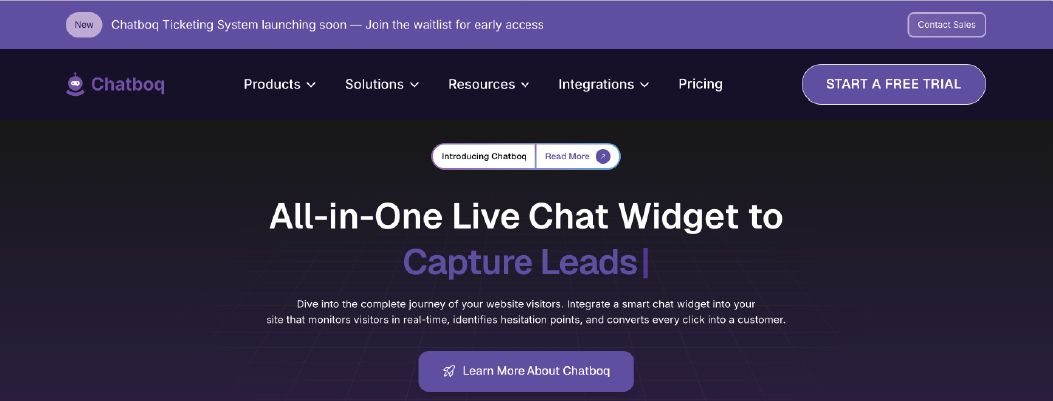
Chatboq is an all-in-one AI chatbot and live chat platform designed for teams that need structured automation, ticket control, and predictable pricing beyond what lightweight chat tools provide. It combines AI-driven conversations, SLA-backed ticketing, and omnichannel messaging inside a single operational workspace.
Why It’s a Strong Tidio Alternative
Chatboq addresses common switching triggers from Tidio, including limited workflow depth, basic chatbot builder logic, and reporting constraints.
While Tidio performs well for fast live chat setup and simple automation, Chatboq focuses on structured ticket lifecycle control, permission governance, and AI knowledge training.
For teams managing refunds, billing cases, high-volume chat, or multi-agent routing, Chatboq enforces SLA thresholds, ticket priority logic, and organization-level isolation.
Core Strengths
-
AI agent trained on knowledge base, documents (PDF, DOCX, CSV), inbox history, and structured responses
-
Full ticketing system with custom priorities, statuses, and SLA policies
-
Shared inbox with agent assignment, role permissions, and workspace separation
-
Live chat widget with typing indicators, file upload, voice message, and chat transcripts
-
CRM integration connects chat conversations to customer history
-
Omnichannel messaging including WhatsApp, Messenger, Slack, Telegram, Discord, and Zoho CRM
-
Visitor tracking with IP logs and country-level insights
-
Plan-based billing with subscription and invoice tracking
Why is Chatboq Better Than Tidio
Tidio prioritizes simplicity and fast onboarding. Chatboq prioritizes governance and structured automation.
Tidio’s chatbot builder works well for linear flows. Chatboq supports layered automation rules and organization-specific ticket control.
Tidio reporting focuses on chat metrics. Chatboq integrates ticket SLA tracking and operational visibility across agents.
Tidio pricing can scale with contacts or usage. Chatboq emphasizes predictable subscription tiers.
Limitations
-
Requires structured setup for ticket policies and automation
-
More configuration steps than lightweight chat widget tools
-
Advanced AI training depends on prepared knowledge sources
Chatboq is not optimized for teams that only need basic live chat without workflow structure.
Best For
-
Ecommerce customer support teams managing order-based workflows
-
Organizations requiring SLA enforcement and ticket governance
-
Teams scaling beyond template-based automation
-
Businesses seeking predictable pricing over usage-based scaling
Pricing Snapshot
Plan-based subscription with billing transparency, invoice management, and structured plan upgrades.
2. LiveChat - Real-Time Engagement Alternative to Tidio
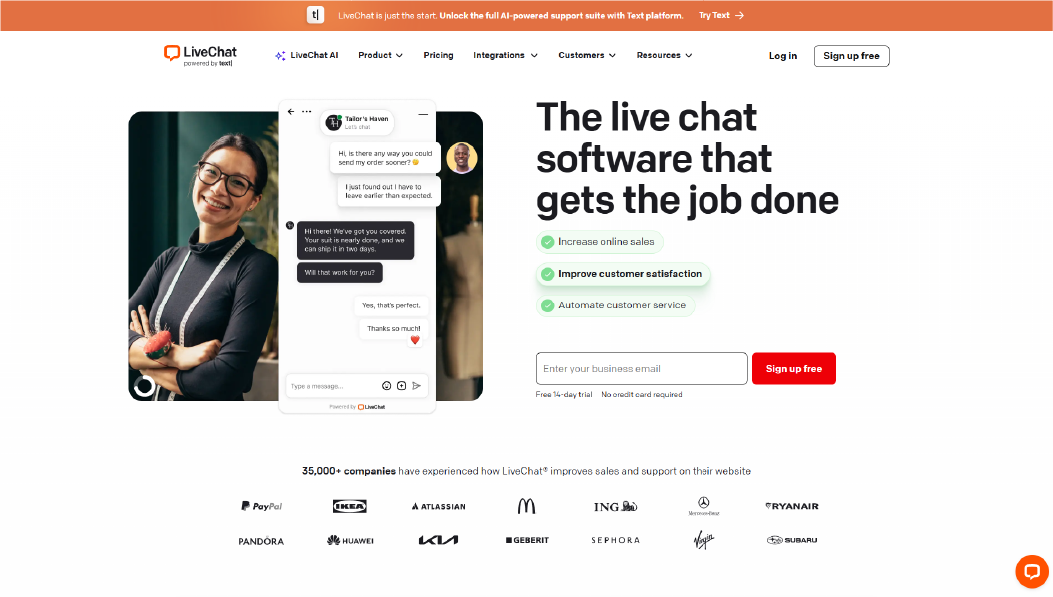
LiveChat is a live chat software platform built for teams that prioritize fast human response and direct customer conversations over complex automation layers.
Why It’s a Strong Tidio Alternative
Teams usually switch to LiveChat when response time and agent visibility become more important than automation depth.
Tidio leans on AI chat automation. LiveChat is chosen when teams want tighter agent control and real-time handling.
If your priority is improving response time, handling concurrent chats, and giving agents visibility into visitor behavior, LiveChat provides a stable structure.
Core Strengths
-
High-performance chat widget optimized for website engagement
-
Real-time typing preview for agents
-
Built-in ticketing system for follow-ups
-
CRM integration and APIs for workflow connectivity
-
Integrations with ecommerce platforms and help desk tools
Why is LiveChat Better Than Tidio
Tidio works best when automation carries the conversation. LiveChat fits teams that want agents to own the chat end-to-end.
Tidio includes AI-driven replies. LiveChat focuses on structured human chat with monitoring and routing tools.
Tidio supports simple automation. LiveChat strengthens visibility, queue management, and team performance tracking.
Limitations
LiveChat is not designed as a heavy AI chatbot platform.
Best For
-
Service teams prioritizing human chat
-
Ecommerce brands focused on conversion through live engagement
-
Teams improving response time and chat quality
-
Organizations wanting structured chat routing without complex automation
Pricing Snapshot
Per-agent monthly pricing with tiered plans based on features and reporting depth.
Read more: Discover the best LiveChat Alternative and choose the right one for your business.
3. LiveAgent - Multichannel Help Desk Alternative to Tidio
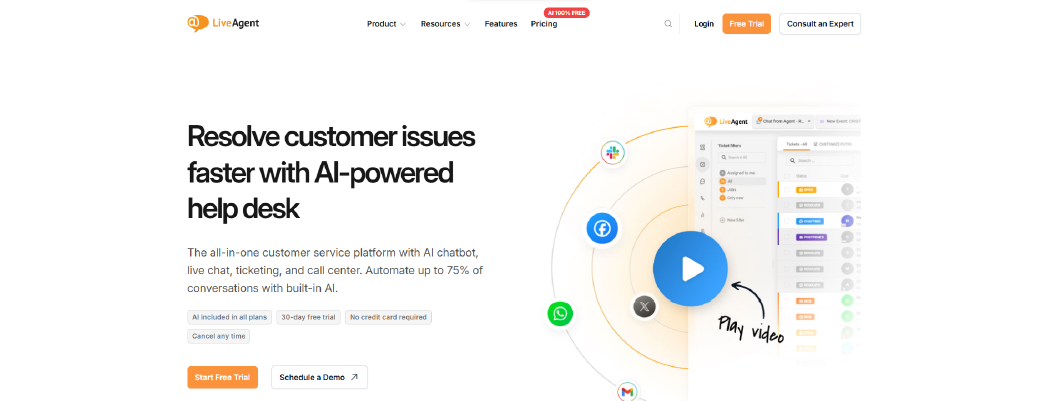
LiveAgent is a help desk and live chat software platform built for teams that need structured ticketing, omnichannel support, and call center integration alongside chat automation.
Why It’s a Strong Tidio Alternative
LiveAgent addresses switching triggers related to ticket lifecycle control and multichannel coordination.
While Tidio focuses on AI chatbots and website chat, LiveAgent emphasizes full ticketing system governance. It supports email, live chat, call center, and social channels inside one shared inbox.
If you are comparing Tidio competitors because you need stronger ticket tracking and cross-channel routing, LiveAgent provides that structure.
Core Strengths
-
Built-in ticketing system with structured status control
-
Omnichannel support including email, live chat, and voice
-
Shared inbox for multi-agent collaboration
-
Reporting dashboards for response time and resolution rate
-
CRM integration and APIs for external systems
-
Knowledge base and self-service portal
Why is LiveAgent Better Than Tidio
Tidio centers on AI chatbots and lightweight automation. LiveAgent centers on ticket governance and multichannel coordination.
Tidio supports simple help desk features. LiveAgent provides structured ticket states, SLA rules, and call center functionality.
Tidio works well for chat-first workflows. LiveAgent suits organizations managing email-heavy or voice-supported environments.
Limitations
-
Interface can feel dense for new users
-
Setup requires configuration planning
-
AI chatbot features are less advanced than AI-first platforms
LiveAgent is not designed primarily as an AI chatbot platform.
Best For
-
Support teams managing email and call center workflows
-
Organizations requiring SLA enforcement
-
Mid-size teams handling multichannel support
-
Businesses migrating from chat-only systems
Pricing Snapshot
Tiered per-agent pricing with plans based on feature access and channel support.
Read more: Discover the best LiveAgent alternatives and compare features to choose the right helpdesk for your team.
4. Zoho Desk - Structured Help Desk Alternative to Tidio
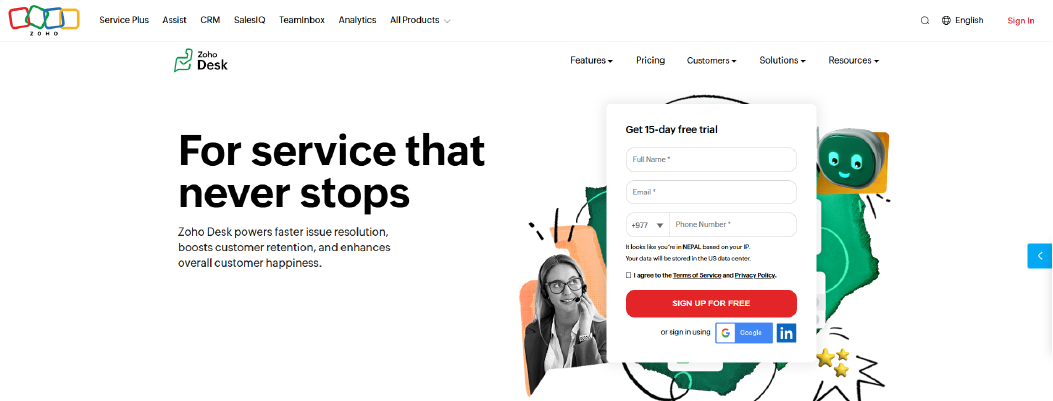
Zoho Desk is a customer support platform built for teams that need structured ticketing, workflow automation, and CRM-level visibility across departments.
Why It’s a Strong Tidio Alternative
Zoho Desk addresses switching triggers related to ticket governance, reporting depth, and cross-team coordination.
While Tidio blends live chat software and AI chatbots for conversational support, Zoho Desk focuses on structured ticket lifecycle control. It supports custom workflows, department-based routing, and SLA tracking.
Teams usually move to Zoho Desk when chat-only workflows no longer provide enough ticket control or reporting visibility.
Core Strengths
-
Full ticketing system with custom statuses and priorities
-
Omnichannel support including email, chat, and social
-
Shared inbox with department separation
-
Reporting dashboards for performance tracking
-
CRM integration within the Zoho ecosystem
-
Knowledge base and self-service portal
Why is Zoho Desk Better Than Tidio
Tidio centers on AI chat automation and chat widget simplicity. Zoho Desk centers on ticket governance and structured workflows.
Tidio is optimized for conversational engagement. Zoho Desk is optimized for operational case management.
Tidio reporting focuses on chat metrics. Zoho Desk supports department-level analytics and SLA compliance tracking.
Limitations
-
Interface can feel complex for first-time users
-
Advanced features require higher-tier plans
-
AI chatbot depth depends on integrations
Zoho Desk is not a lightweight live chat-first platform.
Best For
-
Teams needing structured ticket governance
-
Organizations requiring SLA enforcement
-
Businesses already using Zoho CRM
-
Support environments with department-based workflows
Pricing Snapshot
Tiered per-agent pricing with feature-based plans and scalable enterprise options.
Compare the best Zohodesk competitors to find the ideal tool for your business.
5. Pipedrive - Sales-Driven CRM Alternative to Tidio
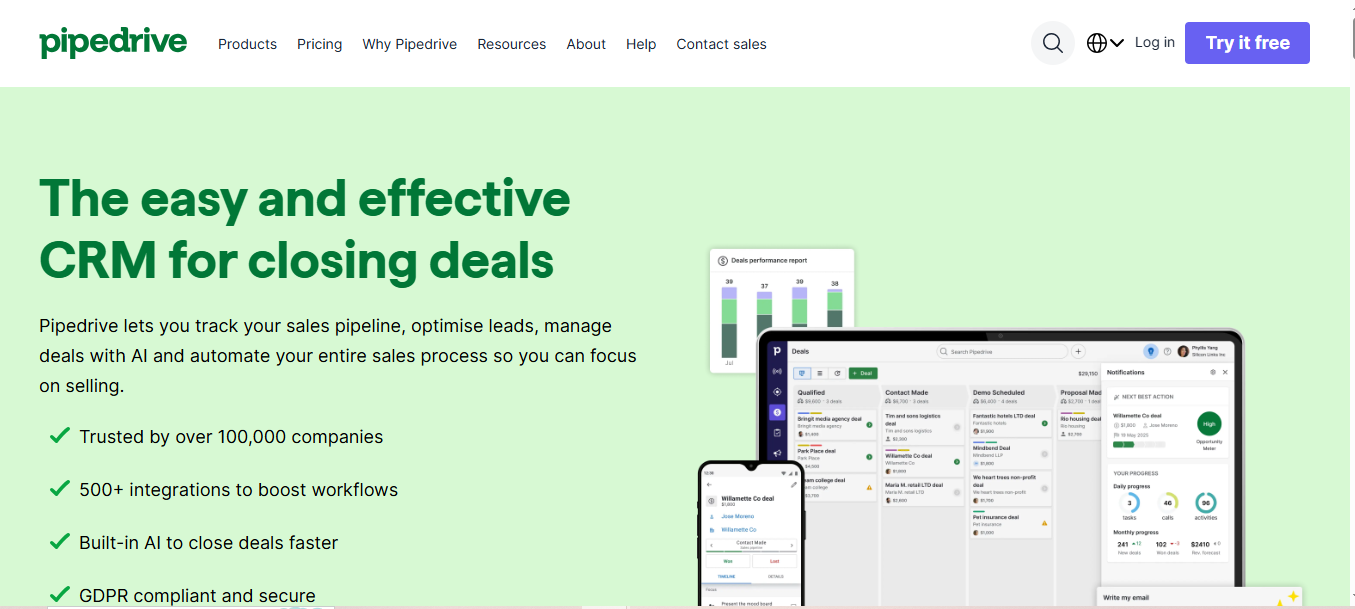
Pipedrive is a CRM platform built for sales teams that need structured pipeline tracking, deal management, and lead capture integrated with chat workflows.
Why It’s a Strong Tidio Alternative
Pipedrive addresses switching triggers related to sales visibility and CRM control.
While Tidio focuses on live chat software and AI chatbots for customer conversations, Pipedrive centers on structured sales pipelines. It tracks deals, activities, and customer history inside one CRM system.
If you are comparing Tidio alternatives because you want chat to connect directly to revenue tracking and deal stages, Pipedrive provides that structure.
Core Strengths
-
Lead and deal tracking with activity reminders
-
CRM integration connecting chat conversations to customer history
-
Email sync and follow-up automation
-
Reporting dashboards for revenue forecasting
-
Integrations with chat tools and marketing platforms
Why is Pipedrive Better Than Tidio
Tidio is built as a customer support platform with live chat and AI chatbots. Pipedrive is built as a CRM for sales management.
Tidio supports ticketing and chat automation. Pipedrive supports pipeline tracking and deal progression.
Tidio improves response time and customer satisfaction. Pipedrive improves lead conversion and revenue visibility.
Limitations
-
Not a full ticketing system
-
Live chat requires integrations
-
AI chatbot depth depends on external tools
Pipedrive is not designed as a standalone live chat software platform.
Best For
-
Sales-driven organizations
-
Teams focused on lead capture and conversion
-
Businesses needing structured CRM workflows
-
Companies aligning chat with revenue tracking
Pricing Snapshot
Per-user monthly pricing with tiered plans based on CRM features and automation access.
6. Front - Collaborative Inbox Alternative to Tidio
Front is a shared inbox and collaboration platform built for teams that manage high volumes of email, chat, and internal communication.
Why It’s a Strong Tidio Alternative
Front addresses switching triggers related to team collaboration and inbox control.
While Tidio focuses on live chat software and AI chatbots, Front focuses on structured inbox management. It allows teams to manage email, chat, and social conversations inside one shared workspace.
If you are comparing Tidio alternatives because you need stronger internal collaboration, conversation ownership tracking, and approval workflows, Front provides that structure.
Core Strengths
-
Shared inbox with conversation assignment
-
Internal comments and collaboration threads
-
Analytics dashboards for response time and workload
-
CRM integration and API connectivity
-
Email notifications and rule-based automation
-
Omnichannel support including email and chat
Why is Front Better Than Tidio
Tidio centers on chat widget automation and AI chatbots. Front centers on inbox governance and team collaboration.
Tidio supports conversational engagement. Front supports structured communication across departments.
Tidio improves live chat response. Front improves coordination between agents.
Limitations
Front is not designed as an AI-first chatbot platform.
Best For
-
Teams managing high email volume
-
Organizations needing structured conversation ownership
-
Support and operations teams requiring internal collaboration
-
Businesses aligning support and account management
Pricing Snapshot
Per-user tiered pricing based on collaboration features and analytics depth.
Read more: Check the top Front alternatives and choose the best ecommerce helpdesk solution for Shopify support.
7. TeamSupport - B2B Ticketing Alternative to Tidio
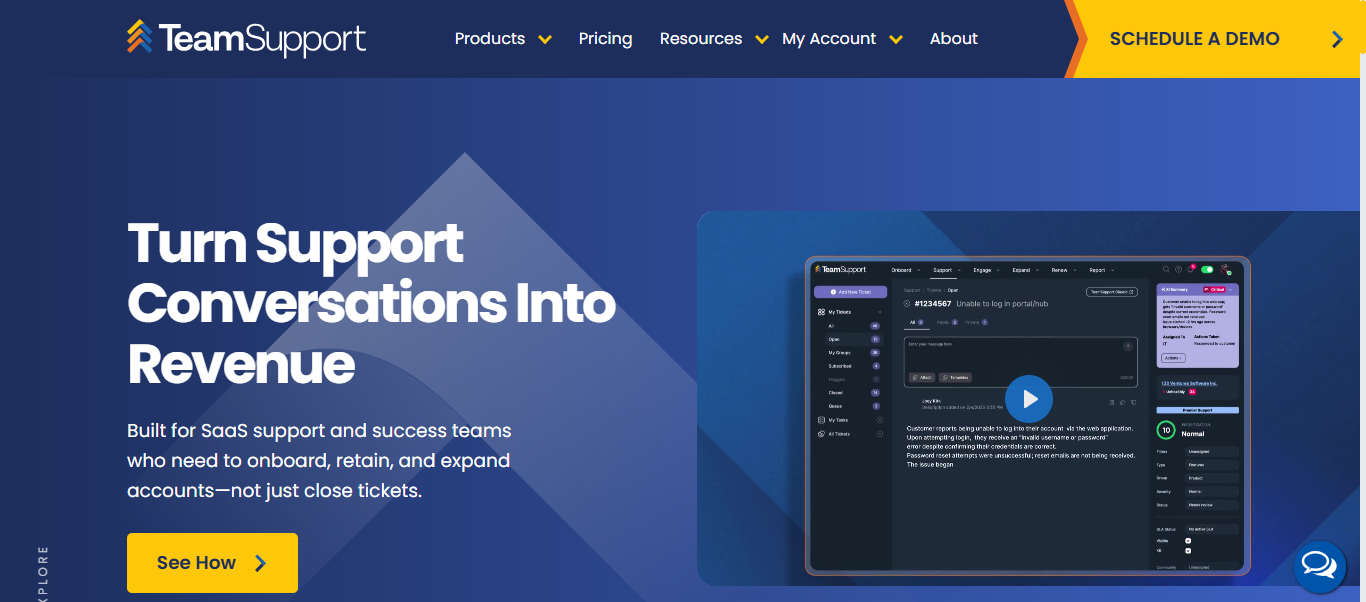
TeamSupport is a customer support platform built for B2B organizations that manage structured ticketing, account-level support, and SLA governance.
Why It’s a Strong Tidio Alternative
TeamSupport addresses switching triggers related to account-based support and formal ticket lifecycle control.
While Tidio focuses on live chat software and AI chatbots for conversational engagement, TeamSupport focuses on structured ticketing for B2B environments. It tracks tickets by customer account, not just by individual contact.
If you are comparing Tidio alternatives because your support process requires deeper case management across multiple stakeholders within the same company, TeamSupport provides that framework.
Core Strengths
-
Account-based ticket management
-
Shared inbox with team assignment
-
Internal collaboration and ticket comments
-
Customer portal and knowledge base
-
Reporting dashboards for response time and resolution rate
-
CRM integration for account visibility
Why is TeamSupport Better Than Tidio
Tidio centers on chat automation and website engagement. TeamSupport centers on structured B2B ticket governance.
Tidio supports individual chat sessions. TeamSupport supports account-level case tracking.
Tidio improves real-time engagement. TeamSupport improves long-term case management across business clients.
Limitations
-
Interface may feel complex for chat-first teams
-
AI chatbot features are limited
-
Setup requires structured workflow planning
TeamSupport is not optimized for lightweight live chat use cases.
Best For
-
B2B support teams managing multiple stakeholders
-
Teams handling long-term technical cases
-
Businesses needing structured account-level visibility
Pricing Snapshot
Per-user subscription pricing with tiered plans based on feature access and ticket volume.
8. Help Scout - Email-First Support Alternative to Tidio
Help Scout is a customer support platform focused on email-based workflows, shared inbox management, and simple help desk automation.
Why It’s a Strong Tidio Alternative
Help Scout addresses switching triggers related to inbox clarity and structured email handling.
While Tidio centers on live chat software and AI chatbots, Help Scout focuses on clean email workflows inside a shared inbox. It is designed for teams that prioritize organized ticket management over chatbot-heavy automation.
If you are comparing Tidio alternatives because your support volume comes mostly from email and you need structured ticket tracking, Help Scout provides a focused solution.
Core Strengths
-
Shared inbox with conversation assignment
-
Email-based ticketing system
-
Internal notes and collaboration threads
-
Knowledge base and self-service portal
-
Reporting dashboards for response time and workload
-
Lightweight live chat option
Help Scout focuses on email-based support workflows rather than chatbot builder complexity.
Why is Help Scout Better Than Tidio
Tidio emphasizes AI chat automation and website chat widget engagement. Help Scout emphasizes structured email support.
Tidio supports rule-based chatbot flows. Help Scout focuses on human-first responses with minimal automation.
Tidio suits chat-driven environments. Help Scout suits inbox-driven support teams.
Limitations
-
AI chatbot capabilities are limited
-
Advanced workflow automation requires higher plans
-
Not optimized for heavy outbound automation campaigns
Help Scout is not designed as a deep AI chatbot platform.
Best For
-
Teams managing high email volume
-
Customer service environments prioritizing clarity
-
Businesses focused on customer satisfaction tracking
-
Organizations seeking a simple, structured help desk
Pricing Snapshot
Per-user tiered pricing with feature-based plans and scalable options.
9. Olark - Simple Live Chat Alternative to Tidio
Olark is a live chat software platform built for teams that want straightforward website chat without complex automation layers.
Why It’s a Strong Tidio Alternative
Olark addresses switching triggers related to simplicity and predictable chat management.
While Tidio combines AI chatbots and automation, Olark focuses on direct human conversation through a chat widget. It is designed for businesses that prefer agent-led chat over structured chatbot builder flows.
If you are comparing Tidio alternatives because you want a cleaner live chat setup with fewer automation layers, Olark provides that approach.
Core Strengths
-
Easy-to-deploy chat widget
-
Real-time typing indicators
-
Chat transcripts with searchable history
-
Basic automation rules for routing
-
Reporting dashboards for response time
-
CRM integration and API support
Olark focuses on stable live chat performance rather than AI-heavy automation.
Why is Olark Better Than Tidio
Tidio emphasizes AI chatbots and structured automation. Olark emphasizes simple human chat.
Tidio supports chatbot builder workflows. Olark keeps automation minimal and agent-driven.
Tidio blends chat and help desk features. Olark remains focused on live website engagement.
Limitations
-
Limited AI chatbot capabilities
-
Fewer advanced workflow automation options
-
Not designed for complex ticket lifecycle management
Olark is not a full customer support platform with deep SLA control.
Best For
-
Small to mid-size teams prioritizing human chat
-
Businesses needing lightweight live chat software
-
Organizations seeking a predictable chat setup
-
Teams reducing automation complexity
Pricing Snapshot
Per-agent monthly pricing with straightforward plan tiers.
10. Drift - Conversational Sales Alternative to Tidio
Drift is a conversational marketing and sales platform designed to qualify leads, book meetings, and automate buyer engagement through chat.
Why It’s a Strong Tidio Alternative
Drift addresses switching triggers related to sales qualification and pipeline acceleration.
While Tidio focuses on live chat software and AI chatbots for customer support, Drift is structured around revenue workflows. It uses chat automation to identify qualified leads and route them to sales teams.
If you are comparing Tidio alternatives because your priority is lead capture and conversion rather than ticket resolution, Drift provides a sales-focused structure.
Core Strengths
-
AI-powered chat automation for lead qualification
-
Account-based routing for sales teams
-
CRM integration for pipeline tracking
-
Reporting dashboards for conversion and engagement
-
Automated chat routing to specific sales reps
-
Integrations with major CRM and marketing platforms
Drift focuses on accelerating conversion rather than managing support tickets.
Why is Drift Better Than Tidio
Tidio blends customer support and AI chatbot automation. Drift prioritizes sales conversations and revenue capture.
Tidio supports help desk workflows. Drift supports pipeline movement and meeting generation.
Tidio improves support response time. Drift improves lead conversion and sales efficiency.
Limitations
-
Not a structured ticketing system
-
Higher pricing compared to basic live chat software
-
AI automation is sales-oriented rather than support-focused
Drift is not optimized for traditional customer support environments.
Best For
-
B2B sales teams
-
Organizations focused on lead qualification
-
Companies prioritizing conversion over ticket resolution
-
Marketing and revenue operations teams
Pricing Snapshot
Enterprise-level pricing with per-seat structure and tiered plans based on sales automation features.
Check out the best Drift alternatives available on the market today.
11. Crisp - Omnichannel Messaging Alternative to Tidio
Crisp is a multichannel customer support platform that combines live chat software, shared inbox management, and chatbot automation inside one workspace.
Why It’s a Strong Tidio Alternative
Crisp addresses switching triggers related to omnichannel support and predictable pricing.
While Tidio blends AI chatbots with website chat, Crisp focuses on unified messaging across channels. It allows teams to manage email, live chat, and social conversations inside one shared inbox.
If you are comparing Tidio alternatives because you need broader channel coverage with flat pricing, Crisp provides that model.
Core Strengths
-
Shared inbox with multi-agent collaboration
-
Live chat software with customizable chat widget
-
Chatbot builder for automation flows
-
Omnichannel support including email and social
-
CRM integration and API access
-
Reporting dashboards for response time and engagement
Crisp provides chat automation without strict per-seat cost expansion.
Crisp provides a shared inbox + live chat + chatbot.
Why is Crisp Better Than Tidio
Tidio emphasizes AI-driven chatbot engagement. Crisp emphasizes channel unification and inbox collaboration.
Tidio pricing may scale with usage. Crisp often uses flat workspace pricing.
Tidio focuses heavily on AI automation. Crisp balances automation with multichannel messaging control.
Limitations
-
AI chatbot depth is moderate
-
Advanced reporting requires higher plans
-
Complex enterprise governance features are limited
Best For
-
Teams managing multiple messaging channels
-
Businesses seeking predictable workspace pricing
-
Ecommerce brands needing omnichannel visibility
-
Organizations reducing per-seat cost growth
Pricing Snapshot
Flat per-workspace pricing with tiered feature access and scalable messaging volume options.
Other popular Tidio competitors teams often compare include Gorgias (Shopify support), Freshchat (Freshworks ecosystem), ManyChat (social messaging automation), and HubSpot Live Chat (CRM-connected chat).
Tidio Alternatives Compared Side-by-Side (2026)
The table below highlights the key differences between leading Tidio alternatives based on automation depth, workflow control, ticketing structure, AI capability, reporting maturity, and pricing impact.
This supports a quick Tidio pricing comparison and structured feature evaluation before reviewing each platform in detail.
Below is a Tidio competitor comparison across automation, AI depth, ticket governance, and scalability. Comparison Matrix.
|
Tool
|
Setup complexity
|
Custom workflow control
|
Native ecommerce integrations
|
AI training control
|
Knowledge base integration
|
Reporting depth
|
Seat-based billing impact
|
|
Chatboq
|
Very Low
|
High (pre-configured roles, SLA templates, guided triggers)
|
Strong (Shopify-ready, CRM integrations)
|
Advanced (knowledge-based AI with guided training)
|
Native + structured AI training
|
Strong (pre-built SLA and performance dashboards)
|
No (plan-based)
|
|
LiveChat
|
Low-Moderate
|
Moderate (routing + monitoring)
|
Moderate (via integrations)
|
Basic
|
Basic
|
Moderate
|
High (per-agent scaling)
|
|
LiveAgent
|
Moderate
|
High (SLA + multichannel routing)
|
Moderate
|
Limited
|
Built-in
|
Moderate-Strong
|
Moderate
|
|
Zoho Desk
|
Moderate
|
High (workflow automation)
|
Moderate
|
Moderate (via integrations)
|
Built-in
|
Strong
|
High (per-agent)
|
|
Pipedrive
|
Moderate
|
Moderate (sales workflows)
|
Limited
|
Limited
|
Limited
|
Strong (revenue focus)
|
Moderate (per-user CRM)
|
|
Front
|
Moderate
|
Moderate (collaboration + rules)
|
Moderate
|
Limited
|
Limited
|
Moderate
|
High (per-user scaling)
|
|
TeamSupport
|
Moderate-High
|
High (account-level SLA governance)
|
Limited
|
Limited
|
Built-in
|
Moderate
|
Moderate
|
|
Help Scout
|
Low-Moderate
|
Moderate (email workflows)
|
Limited
|
Limited
|
Built-in
|
Moderate
|
High (per-user scaling)
|
|
Olark
|
Low
|
Basic
|
Limited
|
None
|
Basic
|
Basic
|
Moderate
|
|
Drift
|
High
|
High (sales routing logic)
|
Limited
|
Advanced (sales AI tuning)
|
Basic
|
Moderate
|
High (enterprise seat-based)
|
|
Crisp
|
Low
|
Moderate (shared inbox + rules)
|
Moderate
|
Moderate
|
Built-in
|
Moderate
|
Low-Moderate (flat workspace)
|

 ChatGPT
 Perplexity
 Claude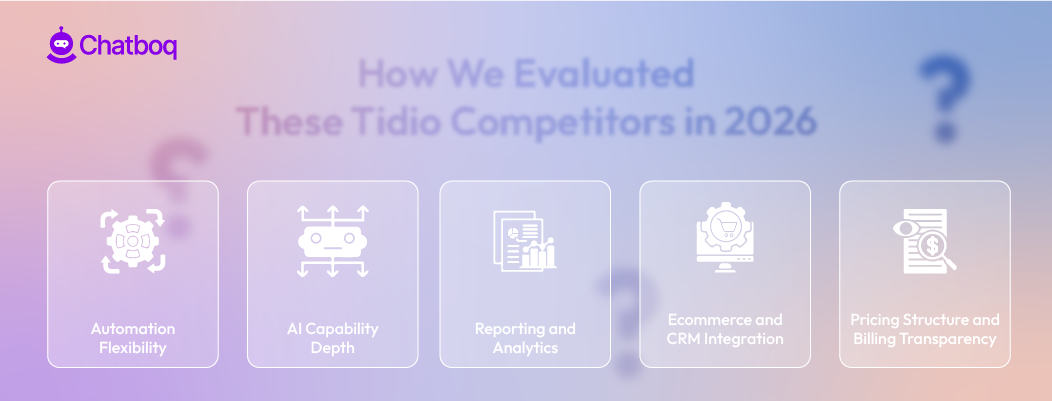

.webp)



Leave a Comment
Your email address will not be published. Required fields are marked *
By submitting, you agree to receive helpful messages from Chatboq about your request. We do not sell data.