
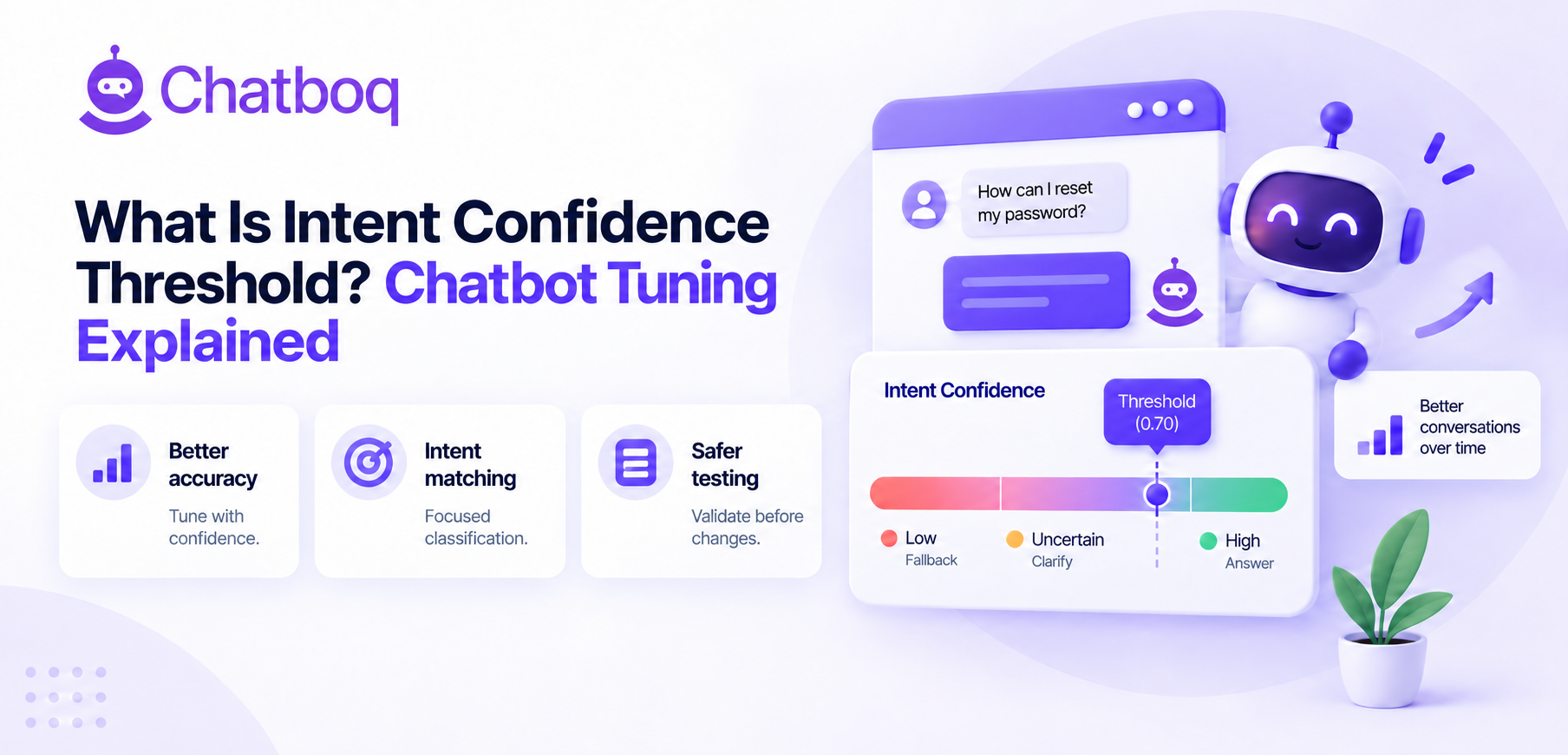
Lowering a threshold matches more messages and introduces more wrong matches, while raising it matches fewer and sends more to fallback.
What a low threshold costs
A permissive threshold means the system acts on weak matches, producing confident answers to questions it did not correctly identify.
These errors are invisible in fallback statistics, which is why teams optimising for a low fallback rate frequently do so at the cost of accuracy they never measure.
What a high threshold costs
A conservative threshold sends messages to fallback that the system understood correctly, which frustrates users and increases escalation without any accuracy benefit.
The cost here is visible and therefore tends to be over-corrected, which is how deployments drift toward permissive settings over time.
Which error to prefer
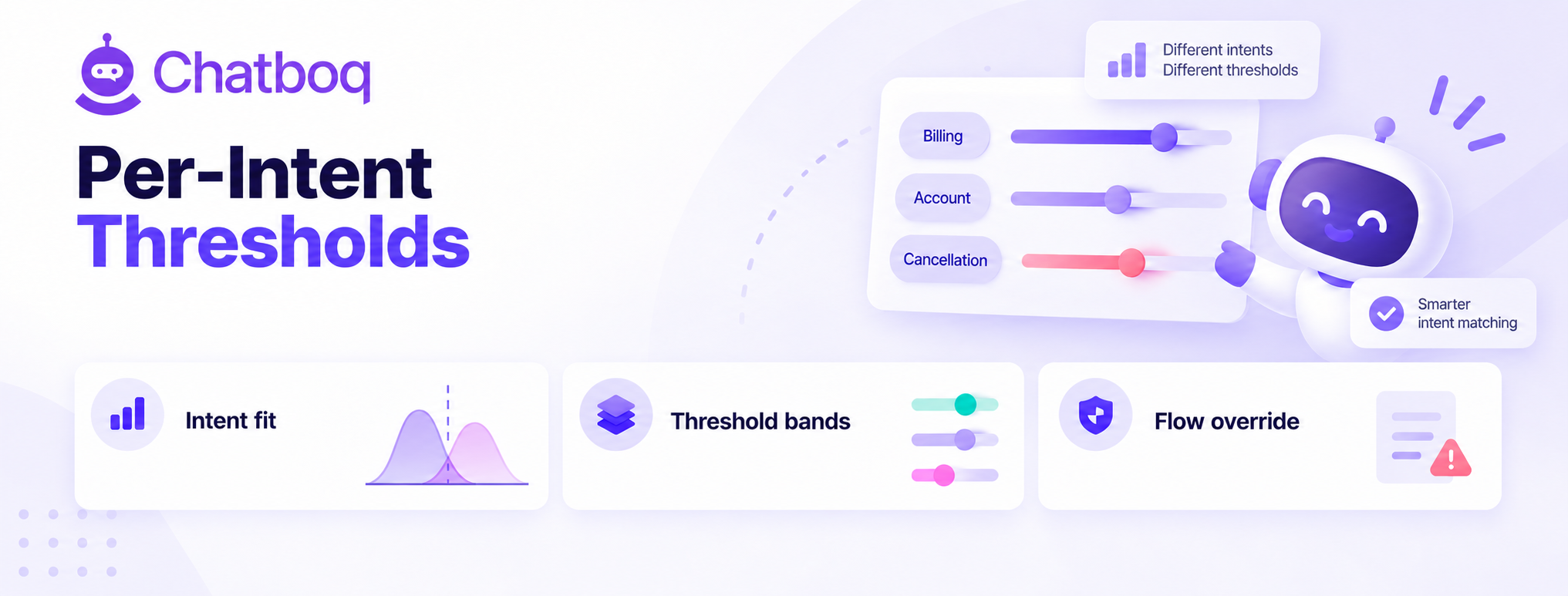
The right answer depends on what a wrong match does, since answering the wrong question about opening hours is trivial and doing so about eligibility is not.
This is the reasoning that leads to per-intent thresholds rather than a single global setting.
 ChatGPT
 Perplexity
 Claude






Leave a Comment
Your email address will not be published. Required fields are marked *
By submitting, you agree to receive helpful messages from Chatboq about your request. We do not sell data.