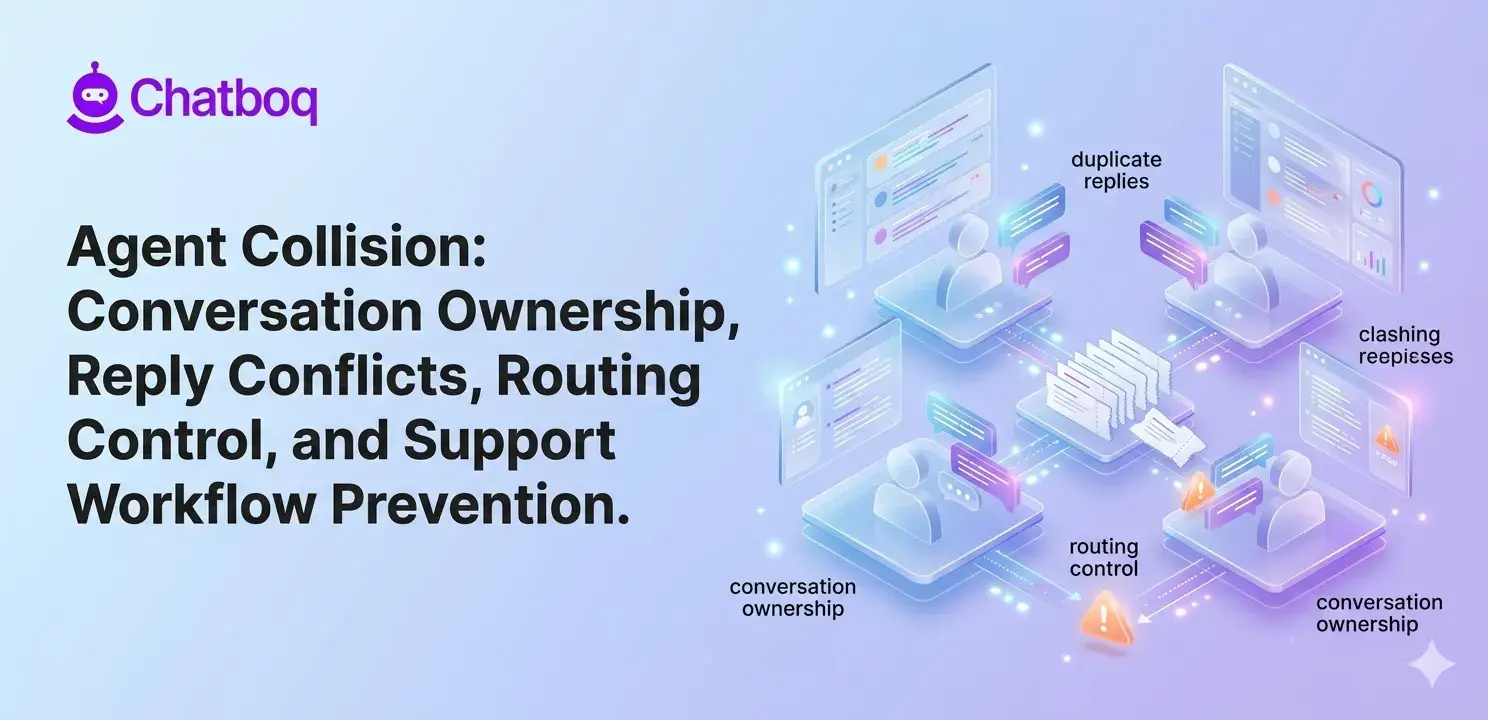
Agent collision stems from unclear conversation ownership, missing real-time visibility into agent activity, and poor routing rules. When support teams lack assigned ticket owners and real-time activity indicators, multiple agents inevitably respond to the same customer.
Agent collision isn't random. It's predictable. Understanding root causes helps teams fix collisions at the source.
Lack of clear conversation ownership
When no single agent owns a conversation, every agent in a shared inbox shares responsibility. Shared responsibility becomes no responsibility. Each agent assumes someone else is handling the ticket.
Conversation ownership means assigning every ticket to one agent. That agent is accountable for responding. Without assignment, there's no way to know who should reply.
Many teams don't enforce ownership rules. They use shared inboxes like first-come-first-served queues. The first agent who reads the message replies. If two agents read the message in the same minute, both reply.
Clear ownership prevents collision by design. The assigned agent responds. Other agents see the assignment and skip the ticket. Ownership creates accountability and eliminates ambiguity about who should act.
Missing real-time agent visibility
When agents can't see what other agents are doing, they work blind. They don't know if someone else is already typing a response to the same customer.
Real-time visibility means seeing typing indicators, active viewing status, and assignment changes instantly. If Agent A is typing a response, Agent B sees "Agent A is typing" and waits or skips the ticket.
Many support platforms don't show real-time activity across agents. Email-based support especially lacks visibility. An agent replies to an email not knowing another agent already sent a response. The responses cross in transit, reaching the customer simultaneously.
Live chat platforms have better visibility built in. Agents can see when other agents are typing in the same chat. But visibility only works if agents notice and respect the indicator.
Poor ticket assignment rules
Assignment rules control which agent gets new tickets. Bad rules create confusion about ownership.
Some teams use round-robin assignments. Others are assigned by agent skill or availability. Without clear rules, assignment happens randomly or manually. Manual assignment at scale is unreliable.
When assignment rules are unclear, agents pick up tickets that are already assigned. They see a new message, assume they should respond, and don't check if another agent owns the ticket.
Clear assignment rules mean every new ticket goes to a specific agent automatically. That agent owns the response. Other agents see the assignment and know not to respond. Automated assignment removes human error.
Multiple channels feeding into one inbox
When email, live chat, social messages, and WhatsApp all feed into one shared inbox, visibility becomes chaotic. Messages appear without clear context about which channel they came from or who's handling them.
Omnichannel inboxes, which are unified systems that display all customer communication channels in one interface, combine messages from different sources. Agents work from one view but lack channel-specific context. A customer might start on email and continue on chat. Different agents handle each channel without seeing the unified history.
The problem intensifies when channels aren't synchronized. A customer sends an email. Agent A responds via email. The same customer then starts a live chat about the same issue. Agent B responds via chat without seeing the email history. The customer receives duplicate responses across different channels.
Manual handoffs without status updates
When agents transfer conversations manually without notes or status changes, the next agent doesn't know the conversation is already being handled. They see an unresponsive ticket and add their own reply.
A common scenario: Agent A handles a ticket but needs to escalate to Agent B. Agent A sends an internal note to Agent B but doesn't update the ticket status to show it's been handed off. Agent C sees the same unresponsive ticket and replies, not knowing Agent B is handling it.
Manual processes become difficult to manage consistently at scale without workflow enforcement. Status changes must happen automatically or be clearly visible to prevent collision. Without system-enforced handoffs, teams rely on memory and communication that often fail.

 ChatGPT
 Perplexity
 Claude


Leave a Comment
Your email address will not be published. Required fields are marked *
By submitting, you agree to receive helpful messages from Chatboq about your request. We do not sell data.