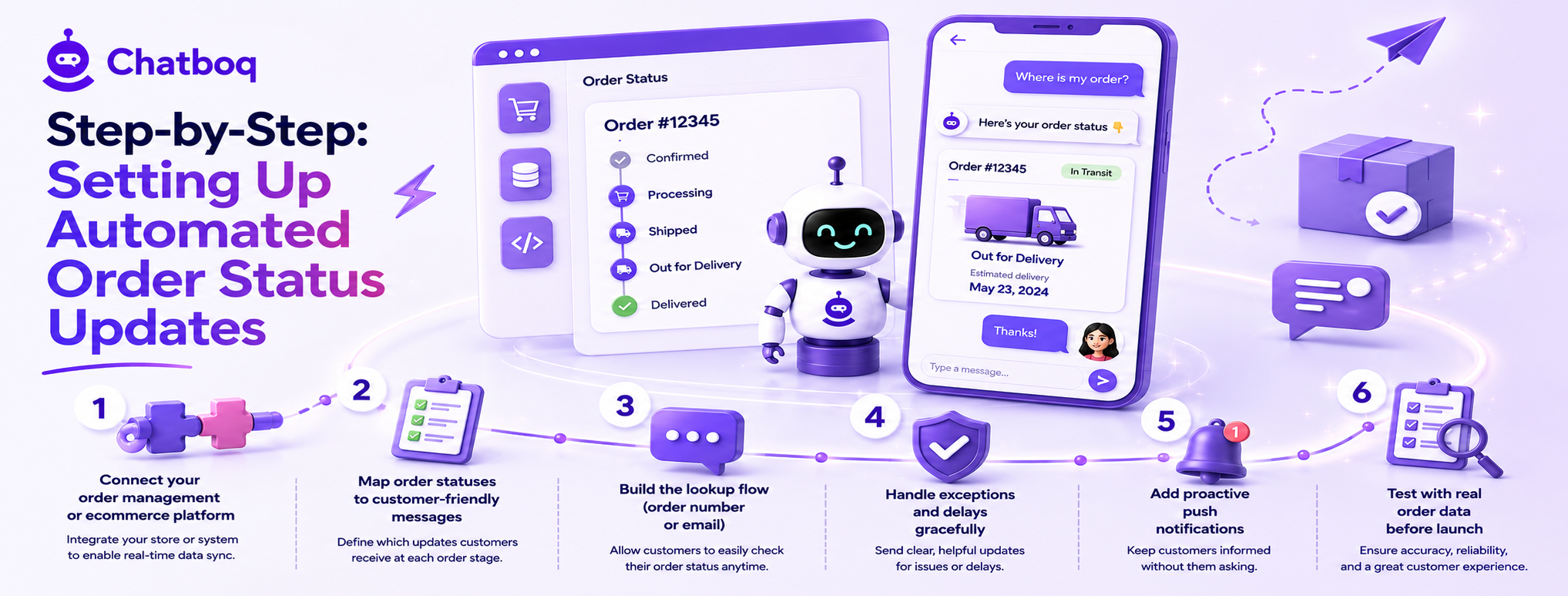
Building this out involves connecting the relevant order platform, mapping internal statuses to clear customer language, building a simple lookup flow, handling exceptions and delays gracefully, layering in proactive notifications where possible, and thoroughly testing against real order data before launch.
Step 1: Connect your order management or ecommerce platform
Most modern chatbot platforms offer either a native integration or an API-based connection to popular ecommerce platforms, and establishing this connection first, before designing any conversation flow, ensures the rest of the build is working against real, accurate data from the very beginning.
Step 2: Map order statuses to customer-friendly messages
Every internal status the fulfillment system can return, processing, packed, shipped, out for delivery, delayed, needs a clear, plain-language customer-facing equivalent, ideally reviewed by someone thinking specifically about how each message will land with an anxious customer checking on their order.
Step 3: Build the lookup flow (order number or email)
The actual conversation flow should ask for the minimum information genuinely needed to identify the order, usually an order number or the email used at checkout, keeping the interaction as fast and low-friction as possible for what is ultimately a very simple request.
Step 4: Handle exceptions and delays gracefully
Building explicit handling for delayed, lost, or otherwise exceptional orders, rather than only the happy path of an order proceeding normally, prevents the bot from either giving a misleadingly cheerful status or hitting a dead end exactly when a customer needs the most reassurance.
Step 5: Add proactive push notifications
Beyond answering when a customer asks, proactively pushing a status update at key milestones, shipped, out for delivery, delivered, through chat or another connected channel can prevent a meaningful share of status questions from ever needing to be asked in the first place.
Step 6: Test with real order data before launch
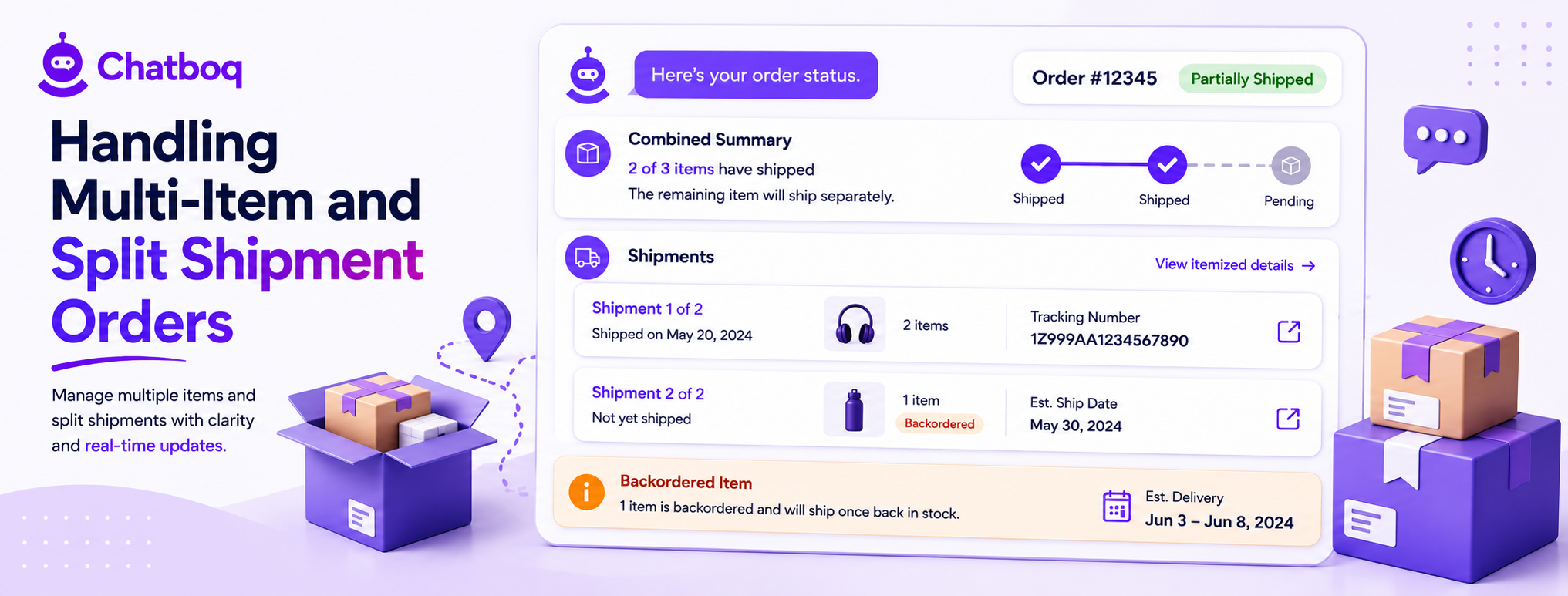
Running the lookup flow against a range of real orders in different actual states, on time, delayed, split shipment, before opening it up to live customers catches mapping errors and edge cases that are easy to miss when testing only against a single, ideal example order.

 ChatGPT
 Perplexity
 Claude




Leave a Comment
Your email address will not be published. Required fields are marked *
By submitting, you agree to receive helpful messages from Chatboq about your request. We do not sell data.