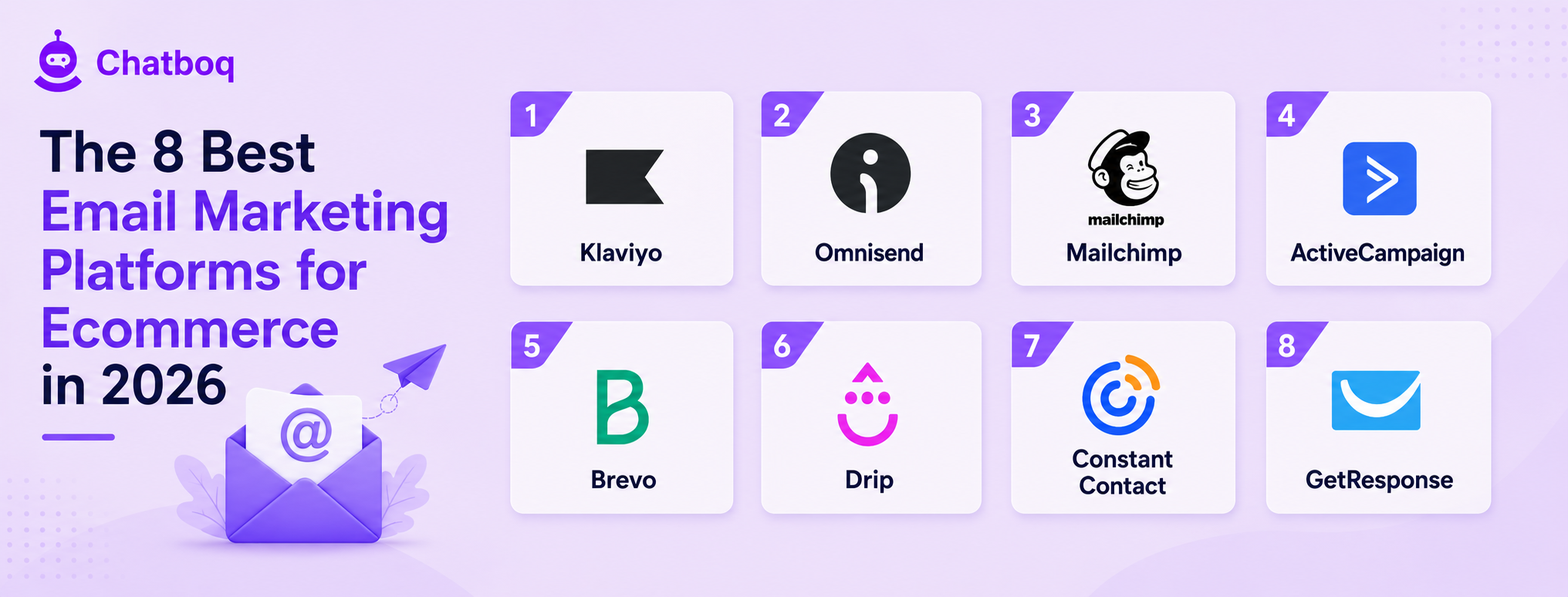
Klaviyo, Omnisend, Mailchimp, ActiveCampaign, Brevo, Drip, Constant Contact, and GetResponse cover the range of email marketing platforms ecommerce brands evaluate in 2026, from ecommerce-native leaders to general-purpose tools widely adopted by online stores.
1. Klaviyo
Best for
Ecommerce brands, particularly on Shopify, that want the deepest predictive analytics and segmentation available in this category.
Key features
Unified customer profiles built from full purchase and browsing history, 350-plus platform integrations, predictive analytics, and AI-generated segments and content.
Pricing
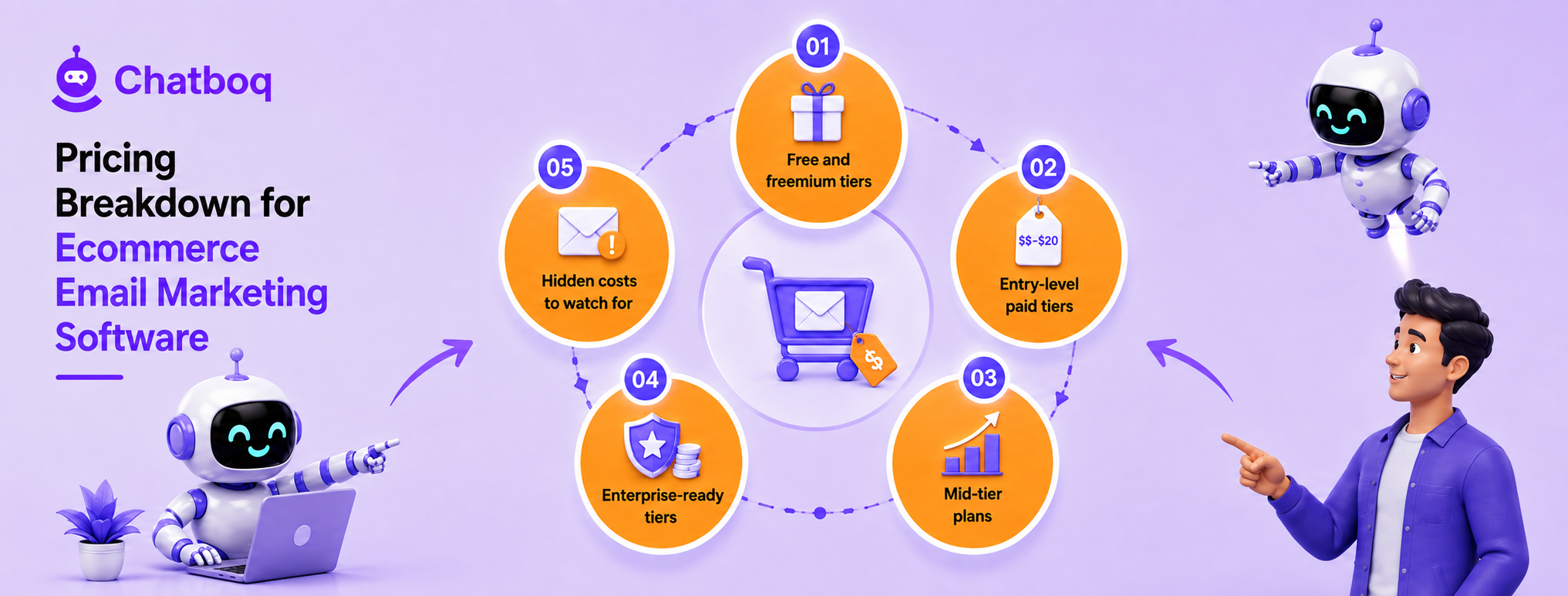
A free plan covers up to 250 profiles; the Email plan starts around $20 per month at 500 profiles and scales with active profile count, reaching roughly $175 at 5,000 profiles and $400 at 25,000, with SMS billed separately and no annual discount.
Limitations
Pricing scales purely with active profile count regardless of plan tier, which means a growing list drives cost up steadily even though the feature set doesn't change between tiers.
2. Omnisend
Best for
Ecommerce brands that want Klaviyo-comparable automation depth with every feature included at every tier, including the free plan.
Key features
Pre-built ecommerce automation workflows, unified email, SMS, and web push, and a full feature set available on every plan rather than gated by tier.
Pricing
A free plan covers up to 250 contacts; Standard starts around $16 per month at 500 contacts, and Pro starts around $59 per month with a 2,500-contact minimum, including SMS credits matching the plan price.
Limitations
Its feature parity across tiers is a strength, but very large lists can still reach a meaningful monthly cost, and the Pro plan's 2,500-contact minimum means smaller lists can't access unlimited sending at that price point.
3. Mailchimp
Best for
Brands that want a widely recognized, general-purpose platform with strong third-party app integrations beyond pure ecommerce.
Key features
A large integration marketplace covering Shopify, WordPress, and hundreds of other tools, AI-assisted content optimization, and predictive segmentation on higher tiers.
Pricing
A free plan covers up to 500 contacts and 500 emails monthly; Essentials starts around $13 per month, Standard around $20, and Premium around $350 at higher contact tiers.
Limitations
Mailchimp counts unsubscribed and inactive contacts toward billing unless manually archived, and its ecommerce-specific automation depth is generally considered lighter than Klaviyo's or Omnisend's.
4. ActiveCampaign
Best for
Brands that want marketing automation combined with CRM and sales features in a single platform, particularly those with a hybrid ecommerce and direct-sales model.
Key features
A visual automation builder with over 900 templates, built-in CRM and lead scoring on its Plus tier and above, and predictive sending on higher tiers.
Pricing
No free plan, only a trial; Starter runs around $15 to $19 per month at 1,000 contacts, Plus around $49, and Pro around $79 to $89, with steep jumps at certain contact thresholds.
Limitations
Its three-product, multi-tier pricing matrix (Marketing, Sales, and Bundle plans) is one of the more confusing structures in this category, and costs can jump sharply when a list crosses certain size thresholds.
5. Brevo
Best for
Brands with a large contact list but relatively infrequent sending, since Brevo prices by emails sent rather than contacts stored.
Key features
Unlimited contacts on every plan including free, marketing automation, a built-in CRM, and transactional email alongside marketing email.
Pricing
A free plan sends up to 300 emails daily with unlimited contacts; Starter runs roughly $9 to $25 per month depending on volume, and Business runs roughly $18 to $65 per month, scaling by monthly email volume.
Limitations
Its send-based pricing is a disadvantage for brands that email a smaller list very frequently, since cost scales with total sends rather than list size.
6. Drip
Best for
Ecommerce brands that want every feature unlocked from day one without navigating tiered feature gating.
Key features
A single, fully-featured tier structure with no feature gates between price points, deep ecommerce integrations for behavioral workflows, and a visual automation builder.
Pricing
No free plan, only a 14-day trial; pricing starts around $39 per month for up to 2,500 contacts and scales by contact count from there, with SMS as a separate add-on.
Limitations
Its entry price is higher than several budget competitors for a similar feature set at low contact counts, positioning it more for brands past the earliest bootstrapped stage.
7. Constant Contact
Best for
Small ecommerce brands and store owners who want a simple, long-established platform without a steep learning curve.
Key features
An easy-to-use campaign builder, event and social marketing tools, and pre-built automation on its Standard and Premium tiers.
Pricing
No free plan, only a trial; Lite starts around $12 per month at 500 contacts, Standard around $35, and Premium around $80, scaling steeply as contact count grows.
Limitations
Its automation depth is generally considered lighter than ecommerce-native competitors, and per-contact cost increases can be steep when crossing certain list-size thresholds.
8. GetResponse
Best for
Brands that want email marketing bundled with broader tools like webinars, landing pages, and sales funnels in one subscription.
Key features
A free tier with basic sending, an ecommerce-focused Marketer tier, and a Creator tier adding webinars and funnel-building tools.
Pricing
A free plan covers up to 500 contacts without automation; Starter runs around $19 per month at 1,000 contacts, Marketer around $59 with ecommerce features, and Creator around $69.
Limitations
Its most ecommerce-relevant automation and funnel features are reserved for the Marketer and Creator tiers rather than included at the entry level.

 ChatGPT
 Perplexity
 Claude



Leave a Comment
Your email address will not be published. Required fields are marked *
By submitting, you agree to receive helpful messages from Chatboq about your request. We do not sell data.