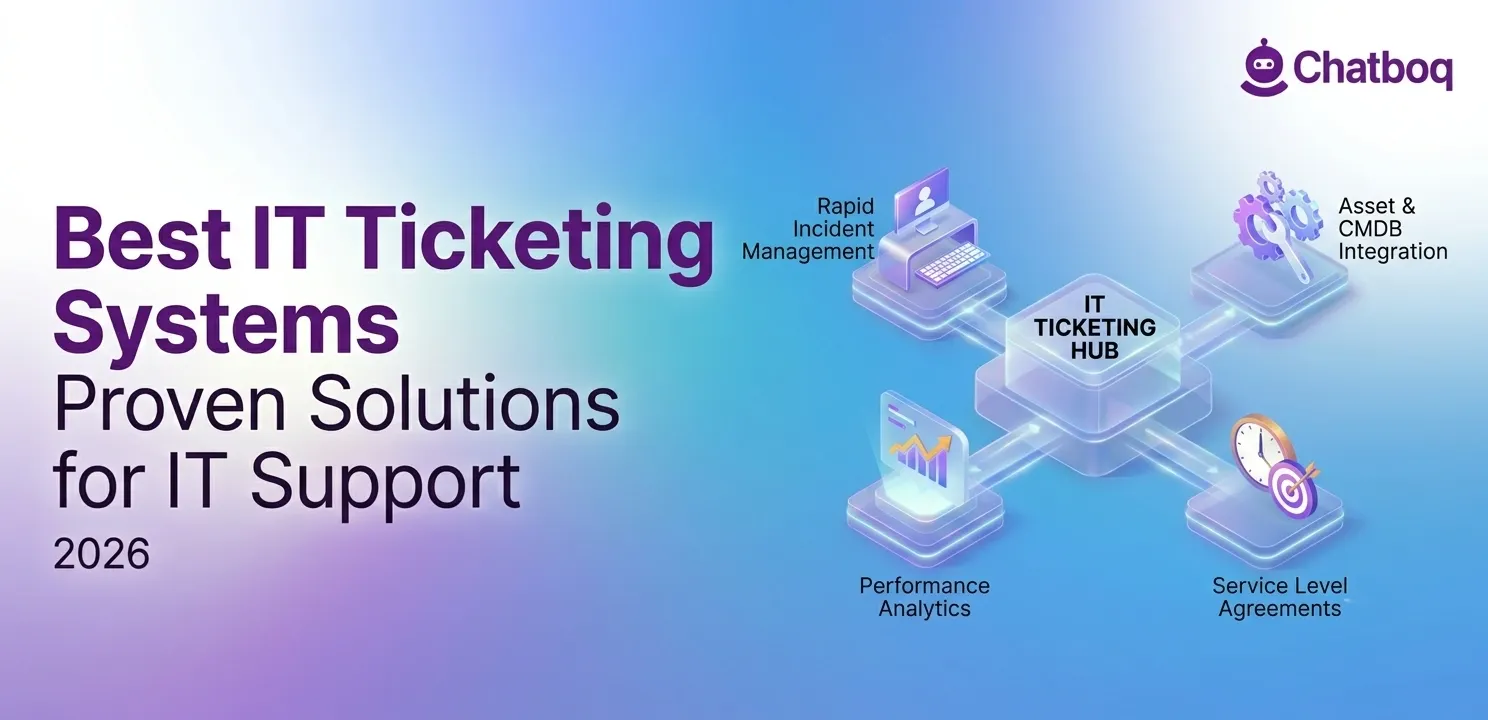
13 platforms dominate the IT ticketing and ITSM market in 2026, spanning developer-native tools, fast-deploying mid-market platforms, deeply governed enterprise suites, and budget-friendly on-premise options, each with a genuinely different ideal buyer profile rather than a single universal "best" answer.
1. Jira Service Management, Best for DevOps Teams
Jira Service Management (JSM) is Atlassian's ITSM platform, built directly on the Jira platform and designed to unite IT, DevOps, and business teams within the same ecosystem already used for software development.
Best For
JSM is best for organizations that are developer-adjacent and already live in Atlassian tools (Jira Software, Confluence, Bitbucket), wanting strong Dev-IT alignment without ServiceNow's complexity and cost.
Key Features
JSM covers incident, problem, change, and service request management, with deep Confluence integration for knowledge management and native Jira issue linking that lets engineering teams see and act on IT incidents directly inside their existing workflow.
Strengths
JSM's pricing is publicly published, a genuine differentiator versus competitors that require a sales call for any cost figure, and organizations already paying for the Atlassian suite see low incremental cost to add JSM, with no dedicated JSM admin typically required at mid-market scale.
Weaknesses
If an organization is not already running Jira Software or Confluence, it will likely need both to get full value from JSM, and the platform's customization power comes with a real learning curve; new users without prior Atlassian exposure may need additional training and implementation support.
Pricing
JSM publishes tiered, per-user pricing starting around $19 per agent monthly for Starter and reaching $109 per agent for Enterprise, with a free tier covering up to 3 agents; estimated 3-year TCO for a 50-agent team runs $120,000 to $250,000 depending on Atlassian ecosystem adoption.
Integrations
JSM integrates natively with Jira Software, Confluence, Bitbucket, and Atlassian Intelligence/Rovo for AI capability, plus standard connectors for Slack, Microsoft Teams, and Azure AD.
Why Choose Jira
Choose JSM specifically when IT operates like an engineering org and Dev-IT alignment, shared visibility between software issues and IT incidents, is a genuine organizational priority rather than a nice-to-have.
When Not to Choose Jira
Avoid JSM if the IT organization is traditional, operates in a deeply regulated environment requiring ServiceNow-level governance, or has no existing Atlassian investment to amortize the platform's incremental cost against.
2. Freshservice, Best Overall ITSM for Most Businesses
Freshservice, by Freshworks, is a cloud-based ITSM platform built around fast deployment, a clean interface, and built-in ITIL capabilities without the implementation burden of enterprise-heavy systems.
Best For
Freshservice is best for organizations with 200 to 2,000 employees seeking a well-designed, rapid-to-deploy ITSM platform without ServiceNow's implementation complexity or cost.
Key Features
Freshservice covers incident, problem, change, and asset management in one platform, a no-code Workflow Automator for routing and approvals, native asset discovery, and a customizable employee self-service catalog.
Strengths
Freshservice's onboarding is genuinely fast: a $35,000-per-year Freshservice deployment can outperform the ITSM practices of organizations ten times its size, according to one architect-level field comparison, specifically because it actually gets implemented and adopted rather than stalling in a multi-month rollout.
Weaknesses
One issue surfaces consistently across G2 reviews: auto-renewal clauses with tight exit windows, meaning the contract terms deserve close attention before signing, and live support availability (24/5 in some tiers) can be a limitation for organizations needing true round-the-clock vendor support.
Pricing
Freshservice uses straightforward per-agent subscription pricing; estimated 3-year TCO for a 50-agent team runs $90,000 to $175,000 depending on tier and AI add-ons, with Freddy AI features increasingly bundled into higher tiers but advanced capabilities carrying additional cost.
Integrations
Freshservice integrates with Microsoft 365, Slack, Microsoft Teams, Azure AD, and the broader Freshworks ecosystem (Freshdesk, Freshsales) for organizations running multiple Freshworks products.
Why Choose Freshservice
Choose Freshservice when speed-to-value and clean UX matter more than maximum customization depth, and when the organization wants ITSM that will actually be adopted by agents rather than fought against.
When Not to Choose Freshservice
Avoid Freshservice for very large enterprises (2,000+ employees) with deeply complex, highly regulated change management needs, where ServiceNow's governance depth becomes necessary despite the cost.
3. Zendesk, Best Enterprise Support Platform
Zendesk is best known as a customer support platform but is frequently evaluated alongside ITSM tools by IT teams that need strong ticketing and omnichannel support without full ITIL-aligned process management.
Best For
Zendesk is best for organizations prioritizing support ticket volume, omnichannel coverage, and customer- or employee-facing service quality over deep ITSM governance processes like formal change management.
Key Features
Zendesk covers omnichannel ticketing (email, chat, social, voice), a large app marketplace, and AI-assisted triage and response suggestions, with strength concentrated in support workflow rather than IT-specific process modules like CMDB or change approval chains.
Strengths
Zendesk's interface and agent workspace are widely regarded as more polished and easier to learn than several traditional ITSM platforms, and its integration marketplace is among the largest in this comparison.
Weaknesses
Zendesk lacks the deep ITIL-aligned modules (formal change management, mature CMDB) that dedicated ITSM platforms like ServiceNow or ManageEngine provide natively, making it a stronger fit for support-centric IT teams than for organizations needing full ITSM governance.
Pricing
Zendesk Suite pricing starts around $55 per agent monthly for Team-level plans and scales upward through Professional and Enterprise tiers, with AI features increasingly available as separate paid add-ons.
Integrations
Zendesk integrates broadly with Slack, Microsoft Teams, Jira, Salesforce, and hundreds of marketplace apps.
Why Choose Zendesk
Choose Zendesk when the primary need is high-volume, multi-channel support ticketing with strong agent experience, rather than formal ITIL process governance.
When Not to Choose Zendesk
Avoid Zendesk when formal change management, problem management, or a mature CMDB are core requirements, since these are not Zendesk's primary strength.
4. ManageEngine ServiceDesk Plus
ManageEngine ServiceDesk Plus is a comprehensive ITSM suite known as a "Swiss Army knife" for IT management, offering both cloud and on-premises deployment with deep functionality for ITIL processes at a lower price point than most enterprise competitors.
Best For
ServiceDesk Plus is best for cost-conscious organizations, particularly in healthcare, government, and education, that need real ITIL alignment and on-premises deployment for data security or compliance reasons.
Key Features
ServiceDesk Plus covers incident, problem, change, and asset management plus endpoint management and Active Directory integration, often bundled in one package rather than sold as separate add-on modules.
Strengths
ServiceDesk Plus offers one of the few robust on-premises deployment options among major ITSM vendors, with a feature-rich "Standard" plan at a notably lower entry point than top-tier competitors; its Active Directory integration is among the best in the market for organizations where AD is the authoritative identity source.
Weaknesses
G2 reviews repeatedly flag a dated UI compared to Freshservice, an overly detailed interface that can feel overwhelming, customization limitations around request formats, and reported error 504 platform downtime issues from some users.
Pricing
ServiceDesk Plus offers tiered, device- or technician-based pricing that starts notably lower than Freshservice or ServiceNow, with cloud and on-premises options priced differently.
Integrations
ServiceDesk Plus integrates with the broader ManageEngine ecosystem (monitoring, security, endpoint tools) along with standard Microsoft 365 and Active Directory connections.
Why Choose ManageEngine
Choose ServiceDesk Plus when on-premises deployment is a hard requirement, when budget is constrained, or when the organization needs ITIL alignment without enterprise-tier pricing.
When Not to Choose ManageEngine
Avoid it if a modern, polished interface and minimal customization friction are priorities, since both Freshservice and Jira Service Management are repeatedly cited as more usable out of the box.
5. ServiceNow
ServiceNow is the enterprise ITSM standard, offering sprawling capability, deep customization, full ITIL support, and a robust CMDB, built for organizations with the budget and IT maturity to absorb significant implementation complexity.
Best For
ServiceNow is best for enterprise IT organizations (typically 250+ agents) in regulated industries with complex change management needs, where the platform's depth justifies its substantial cost.
Key Features
ServiceNow covers the full ITSM suite plus Now Assist and AI Agents for automatic incident classification and predictive problem detection, advanced CMDB, and the ability to extend the same platform beyond IT into HR, finance, and legal service management.
Strengths
ServiceNow's single data model and platform-wide governance provide capability no other platform in this comparison fully matches, with world-class compliance documentation and advanced real-time analytics; for IT under 100 agents the cost rarely pays back, but for true enterprise scale the depth often does.
Weaknesses
The r/servicenow community consistently cites licensing frustration, particularly around renewal negotiations and the cost of adding fulfiller seats mid-contract, as a top recurring theme; one comparison reports organizations spending $400,000 on ServiceNow and using it as little more than a glorified ticket inbox due to under-implementation.
Pricing
ServiceNow uses per-user (named or concurrent) annual licensing with custom enterprise agreements at scale; estimated 3-year TCO for a 50-agent team runs $800,000 to $1,500,000 or more, including implementation and admin headcount, with implementation timelines of 3 to 9 months for a meaningful rollout.
Integrations
ServiceNow offers the deepest integration ecosystem in this comparison, spanning enterprise systems, security tools, and hundreds of certified third-party connectors.
Why Choose ServiceNow
Choose ServiceNow when enterprise-scale governance, compliance auditability, and cross-departmental service management (beyond just IT) are genuine, demonstrated requirements rather than aspirational ones.
When Not to Choose ServiceNow
Avoid ServiceNow for organizations under 200 to 250 agents, where the cost and implementation burden consistently fail to deliver proportional value compared to Freshservice or Jira Service Management.
6. Zoho Desk
Zoho Desk is a budget-friendly help desk and lightweight ITSM option, particularly attractive to organizations already invested in the broader Zoho ecosystem.
Best For
Zoho Desk is best for small to mid-sized organizations that want straightforward ticketing with AI assistance at a low cost, especially those already using other Zoho products.
Key Features
Zoho Desk covers multichannel ticketing, automation rules, and Zia AI for sentiment analysis, tag suggestions, and response drafting, with integration directly into Zoho CRM and the wider Zoho One suite.
Strengths
Zoho Desk's pricing is among the most accessible in this comparison, and native integration with Zoho CRM gives support agents immediate visibility into the broader customer or employee record without separate integration work.
Weaknesses
Zoho Desk's ITSM-specific depth (formal change management, mature CMDB) is significantly lighter than dedicated ITSM platforms like ServiceNow or ManageEngine, making it better suited to general help desk needs than full IT service management.
Pricing
Zoho Desk pricing scales from a free tier for very small teams through paid tiers in roughly the $14 to $40 per agent monthly range.
Integrations
Zoho Desk integrates tightly with Zoho CRM, Zoho Analytics, and the broader Zoho One ecosystem, with standard third-party connectors for Slack and Microsoft 365.
Why Choose Zoho Desk
Choose Zoho Desk when cost efficiency and Zoho ecosystem alignment matter more than deep ITSM process governance.
When Not to Choose Zoho Desk
Avoid Zoho Desk when formal ITIL-aligned change and problem management are core, non-negotiable requirements.
7. SysAid
SysAid is an ITSM platform built around generative AI integrated throughout the service desk, combining ticketing with built-in asset tracking in a single platform without requiring third-party add-ons.
Best For
SysAid is best for mid-market IT teams wanting cost-effective, enterprise-grade ITSM with AI-driven automation and integrated asset visibility built in from the start.
Key Features
SysAid spans three tiers, Help Desk (incident management, self-service, basic reporting), ITSM (adds workflow automation and advanced SLA management), and Enterprise (unlimited agents and custom automation rules), with AI woven through ticket categorization and agent assistance.
Strengths
SysAid lets teams deploy rapidly without extensive infrastructure setup or hardware investment, and its DIY customization model avoids the professional-services dependency that platforms like ServiceNow often require.
Weaknesses
Some users describe SysAid's interface as outdated, and the platform's email notification system has been reported to generate excessive alerts that create communication noise rather than clarity; implementation has also been reported as longer than expected by some users.
Pricing
SysAid uses quote-based, tiered pricing (Help Desk, ITSM, Enterprise) without published rates, requiring direct vendor contact for cost figures, with a 14-day free trial available.
Integrations
SysAid integrates with Microsoft Teams for in-platform approval workflows and standard directory and SSO connectors.
Why Choose SysAid
Choose SysAid when integrated asset management without third-party tools, paired with strong AI-driven automation, is the priority at a mid-market budget.
When Not to Choose SysAid
Avoid SysAid if a highly polished, modern interface is a hard requirement, since user feedback consistently flags this as a weak point relative to Freshservice.
8. SolarWinds Service Desk
SolarWinds Service Desk is a cloud-based, AI-powered ITSM platform offering a full ITIL suite (incident, problem, change, release) alongside service catalog and asset management, designed for fast deployment.
Best For
SolarWinds Service Desk is best for IT teams that want core ITIL coverage and asset management without long implementation timelines, particularly smaller teams prioritizing speed over deep enterprise feature depth.
Key Features
SolarWinds covers the standard ITIL modules plus an integrated asset management layer, with cloud deployment designed to get core ITSM workflows running quickly.
Strengths
SolarWinds Service Desk is consistently cited as easy to configure for smaller teams, and its starting price (reported around $39 per technician monthly with unlimited users in one source, and as low as $7 per month per node in another, reflecting different licensing models across sources) sits well below most enterprise competitors.
Weaknesses
Some users report limitations in advanced reporting and analytics depth compared to enterprise-focused competitors like ServiceNow, and initial setup can take longer than the platform's "quick deployment" positioning suggests despite its overall simplicity advantage.
Pricing
SolarWinds Service Desk offers three pricing tiers; one source cites a starting rate around $39 per technician monthly with unlimited users and a 30-day free trial, while another cites pricing starting around $7 per month per node, a discrepancy likely reflecting different product lines or licensing units, worth confirming directly with current vendor pricing.
Integrations
SolarWinds Service Desk integrates with standard directory services and common collaboration tools, with a smaller third-party marketplace than ServiceNow or Zendesk.
Why Choose SolarWinds
Choose SolarWinds Service Desk when fast deployment of core ITIL functionality matters more than advanced reporting depth or enterprise-scale customization.
When Not to Choose SolarWinds
Avoid it for organizations with complex, multi-tier reporting and analytics requirements that exceed the platform's current capability.
9. Ivanti Neurons
Ivanti Neurons for ITSM combines IT service management with Unified Endpoint Management (UEM) and security, distinguishing it through "hyper-automation" that extends beyond traditional ticketing into proactive remediation.
Best For
Ivanti Neurons is best for enterprises managing large, diverse device fleets that want predictive automation and endpoint security combined with traditional ITSM in a single platform.
Key Features
Ivanti Neurons supports core ITIL processes alongside automated remediation actions (such as restarting services or running health checks) without creating a ticket at all, plus endpoint discovery, security, and management capability that goes beyond what pure ITSM platforms offer.
Strengths
Ivanti's automated remediation can resolve threshold violations (system space, application health, compliance drift) proactively, reducing ticket volume by fixing issues before they become a logged incident at all, a genuine differentiator versus platforms that only manage tickets after the fact.
Weaknesses
Initial setup and customization can be complex, requiring significant time and specialized expertise for advanced configurations, and customer support response times and documentation quality have received mixed user feedback.
Pricing
Ivanti does not disclose pricing publicly; it is quote-based and typically bundled with other Ivanti endpoint and security solutions, meaning total cost depends heavily on which modules are included.
Integrations
Ivanti Neurons integrates natively with the broader Ivanti Neurons platform (endpoint management, security) and standard ITSM connectors.
Why Choose Ivanti
Choose Ivanti Neurons when endpoint security and proactive, automated remediation across a large device fleet are equally important to traditional ticket-based ITSM.
When Not to Choose Ivanti
Avoid Ivanti if the organization wants pure ITSM without endpoint management bundled in, since the platform's UEM-plus-security scope can feel overbuilt for that narrower need.
10. TOPdesk
TOPdesk is a Dutch-founded, modular ITSM and Enterprise Service Management platform known for its user-friendly interface and strong knowledge base, designed to unify IT, facilities, and other service departments.
Best For
TOPdesk is best for mid-sized organizations that want a modular, ITIL-aligned platform emphasizing usability and cross-departmental service management over pure IT-only ticketing.
Key Features
TOPdesk covers incident, asset, and change management with self-service portals, and its modular structure lets organizations implement only the specific features needed rather than paying for a full enterprise bundle upfront.
Strengths
TOPdesk's intuitive design supports quick adoption among both IT professionals and end users, and its strong knowledge base genuinely reduces ticket volume by enabling effective self-service resolution.
Weaknesses
Reporting capabilities are described as limited compared to competitors, lacking the depth some organizations need, and significant customizations may require consultant assistance, which can increase total cost of ownership beyond the advertised per-agent rate.
Pricing
TOPdesk pricing is based on agent count with volume discounts; one source cites roughly £51 per agent monthly at entry tiers, while another cites $76 per agent monthly for up to 10 agents (dropping to $68 for up to 20), figures that likely reflect different currencies, regions, or plan configurations rather than a single contradictory number.
Integrations
TOPdesk integrates with standard business applications to streamline cross-departmental workflows, particularly between IT and facilities management.
Why Choose TOPdesk
Choose TOPdesk when cross-departmental Enterprise Service Management (not just IT) and strong usability are priorities over maximum reporting depth.
When Not to Choose TOPdesk
Avoid TOPdesk if deep, highly customizable reporting and analytics are a core requirement without budgeting for additional consultant-assisted configuration.

 ChatGPT
 Perplexity
 Claude



Leave a Comment
Your email address will not be published. Required fields are marked *
By submitting, you agree to receive helpful messages from Chatboq about your request. We do not sell data.