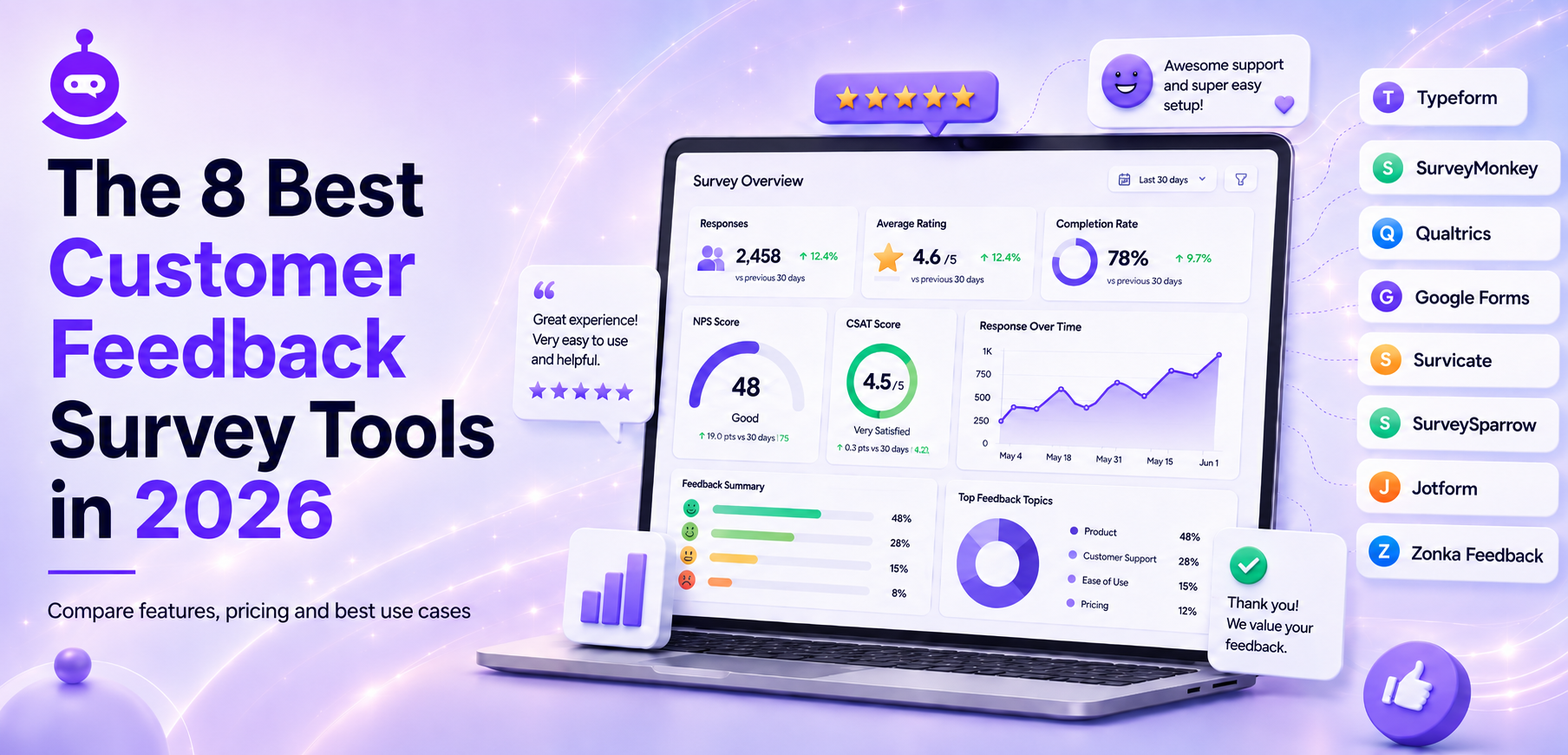
Typeform, SurveyMonkey, Qualtrics, Google Forms, Survicate, SurveySparrow, Jotform, and Zonka Feedback cover the range of customer feedback survey tools businesses evaluate in 2026, from design-led form builders to enterprise experience management platforms.
1. Typeform
Best for
Businesses that want a polished, conversational survey experience where completion rate and brand impression matter as much as the data collected.
Key features
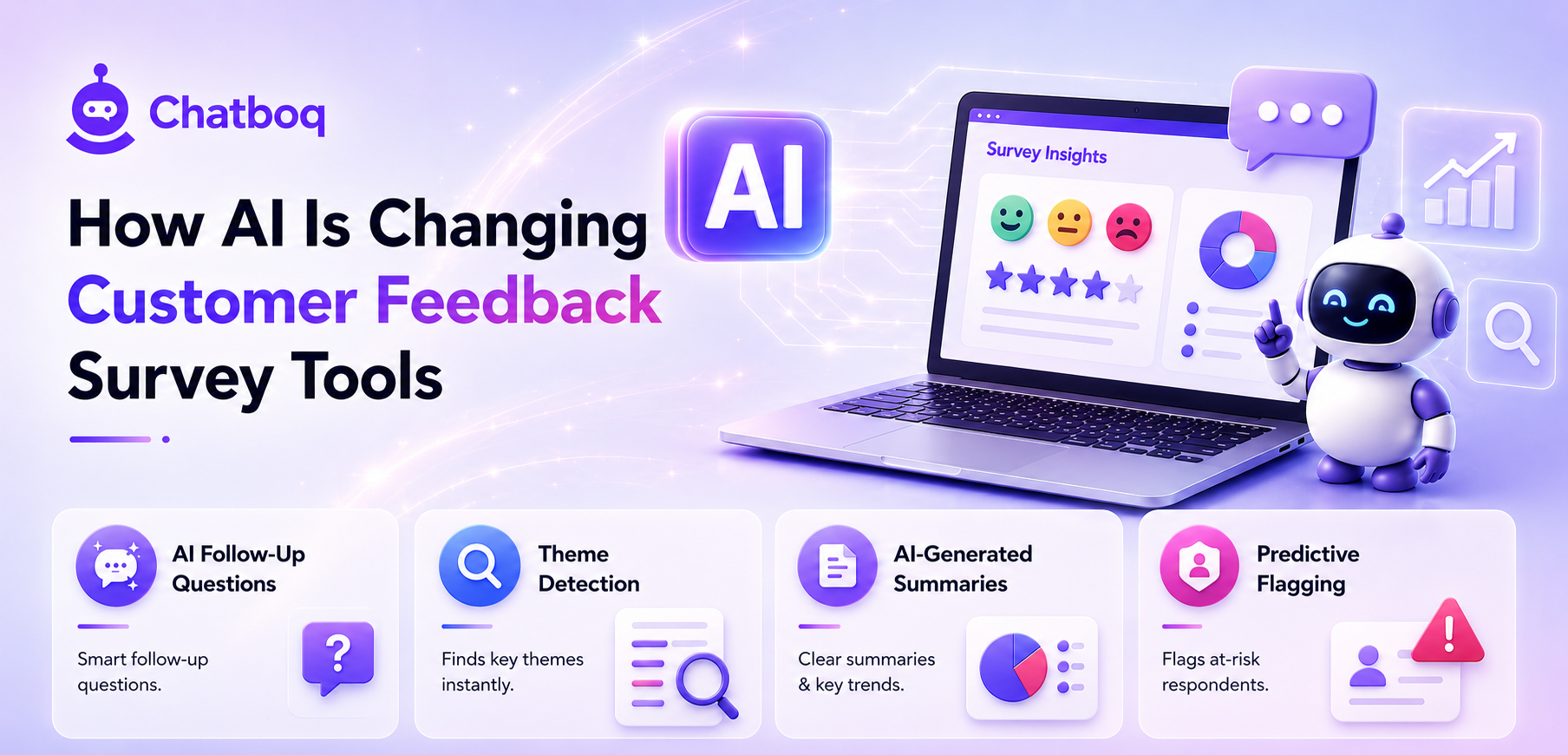
A conversational, one-question-at-a-time interface, logic and branching, and AI-assisted insights on higher tiers.
Pricing
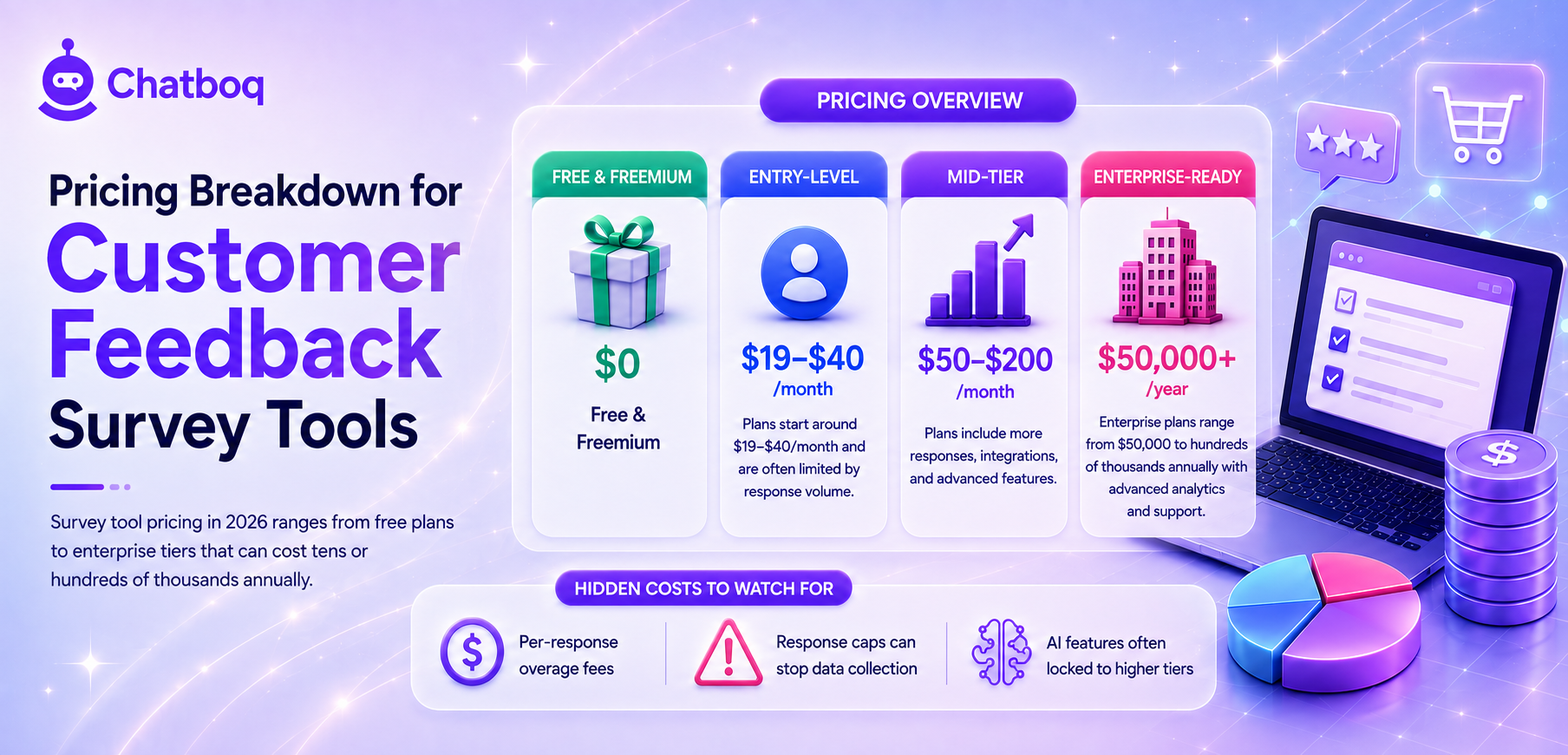
A limited free plan; Basic runs around $25 per month for 100 responses, Plus around $50 for 1,000, and Business around $83 to $99 for 10,000 responses, all on annual billing, with a strict response cap per tier.
Limitations
Pricing is metered strictly by response volume, and hitting a tier's cap stops new responses from being recorded until the plan is upgraded, which can lose real data mid-campaign if volume spikes unexpectedly.
2. SurveyMonkey
Best for
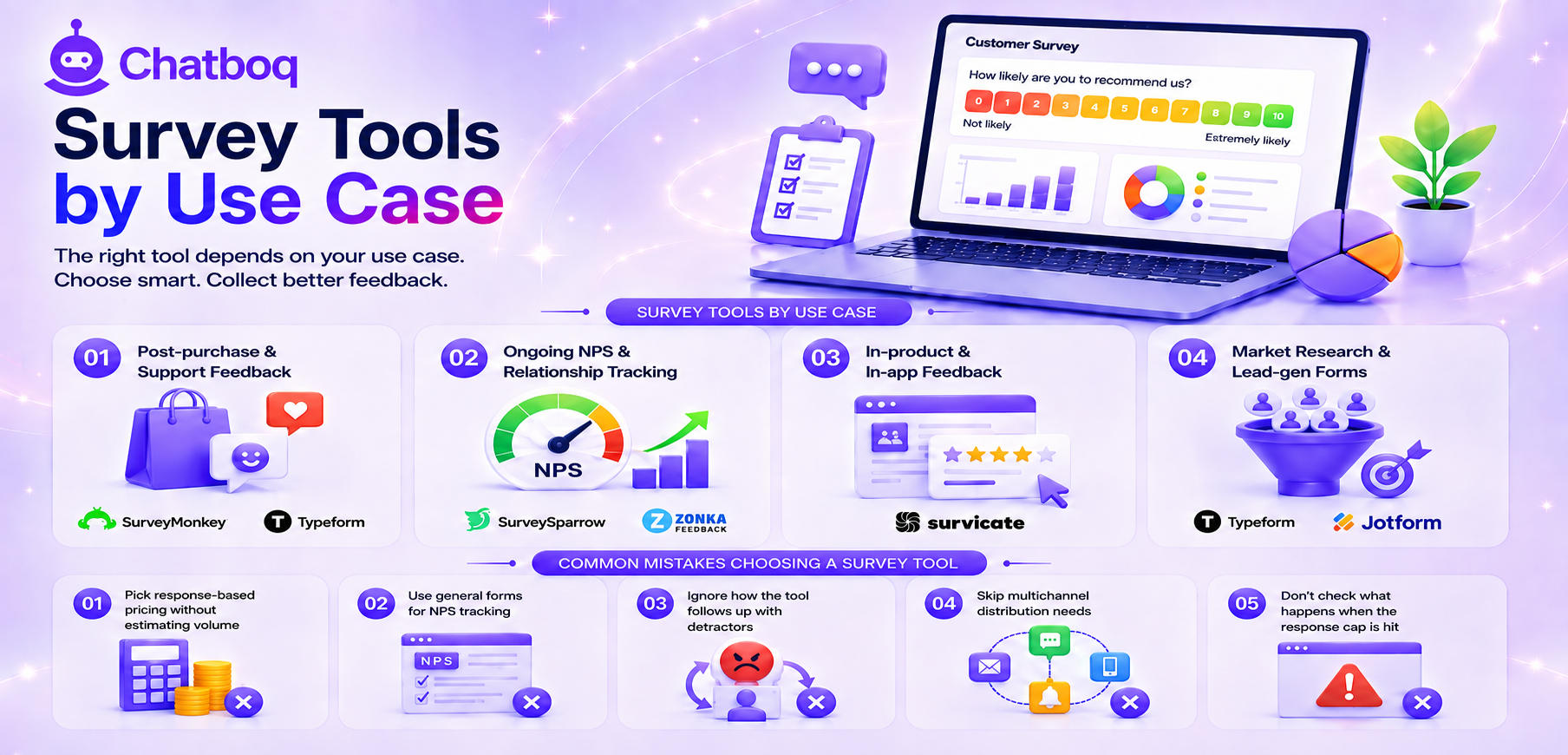
Teams running structured, recurring feedback programs like NPS tracking or market research that benefit from broad template and distribution support.
Key features
A large template library, multichannel distribution, and integrations with over 200 tools including Salesforce, HubSpot, and Slack.
Pricing
A free plan capped at 10 questions and 40 responses per survey; individual plans run from roughly $39 per month, and Team plans from around $25 per user monthly with a 3-user minimum on annual billing.
Limitations
Overage fees apply per extra response beyond a plan's cap, and deeper CRM integrations like automatic bidirectional field updates are limited on lower tiers.
3. Qualtrics
Best for
Large enterprises that need a comprehensive experience management platform unifying customer, employee, and product feedback at scale.
Key features
Deep statistical analysis, extensive integration and API capability, and enterprise-grade governance and security controls.
Pricing
No published self-serve pricing; typical enterprise contracts run from roughly $50,000 to well over $300,000 annually depending on scope, negotiated directly with a sales team.
Limitations
Its cost and implementation complexity make it impractical for small or mid-sized businesses, and the platform's full depth generally requires dedicated internal resources to use well.
4. Google Forms
Best for
Small businesses or teams that need basic, occasional surveys without any dedicated survey software budget.
Key features
Straightforward form building, real-time response collection into a connected spreadsheet, and no cost beyond an existing Google account.
Pricing
Free with any Google account, with no paid tier or response limit for standard use.
Limitations
It lacks native NPS scoring, promoter and detractor segmentation, and the distribution and reporting depth of dedicated customer feedback tools, requiring manual work to replicate those capabilities.
5. Survicate
Best for
SaaS and product teams that want in-product, in-context surveys triggered by specific user behavior rather than sent separately over email.
Key features
Website, in-product, and email survey distribution, a large integration library, and a dedicated Research Hub for deeper analysis.
Pricing
A free plan covers 25 responses monthly across a small team; paid tiers run Growth around $114 per month, Pro around $349, and Enterprise around $569, all on annual billing.
Limitations
Its response-based pricing means costs scale quickly for high-traffic products, and it's more survey-focused than purely NPS-focused, so a team wanting only a lightweight NPS tool may find it broader than needed.
6. SurveySparrow
Best for
Budget-conscious teams and solo users who want a conversational survey format at a lower price point than Typeform.
Key features
Chat-style conversational surveys, an NPS-specific product, and white-labeling on higher tiers.
Pricing
A free plan covers 75 responses per quarter; Basic starts around $19 per month for solo use on annual billing, with team plans adding a per-seat cost of roughly $49 per additional user and its CX, NPS, and 360 suites billed as separate products.
Limitations
Its low entry price is built for solo, low-volume use, and the total cost rises quickly once a team adds seats or needs its specialized NPS or CX product suites.
7. Jotform
Best for
Businesses that want a flexible, general-purpose form builder covering surveys alongside other use cases like registrations and applications.
Key features
A large template library, payment collection, file uploads, and workflow automation across a wide range of form types beyond pure feedback surveys.
Pricing
A free plan is available; paid tiers run Bronze around $39 per month, Silver around $49, and Gold around $129.
Limitations
It's a general-purpose form builder rather than a feedback-specialized tool, so native NPS scoring and CX-specific reporting are less developed than in dedicated survey platforms.
8. Zonka Feedback
Best for
Mid-market and enterprise teams that want multichannel feedback collection, kiosks, offline, email, SMS, WhatsApp, unified with AI-powered analysis in one CX platform.
Key features
Multichannel survey distribution including offline and kiosk modes, AI feedback intelligence that unifies data across surveys, tickets, and reviews, and dedicated support for NPS, CSAT, and CES programs.
Pricing
Plans generally start around $199 per month, with AI-powered features available from roughly $799 per month on higher tiers; no permanent free plan is offered.
Limitations
Costs scale with response volume and can rise quickly for growing programs, and its AI layer sits at a meaningfully higher price point than its base plans.

 ChatGPT
 Perplexity
 Claude




Leave a Comment
Your email address will not be published. Required fields are marked *
By submitting, you agree to receive helpful messages from Chatboq about your request. We do not sell data.