
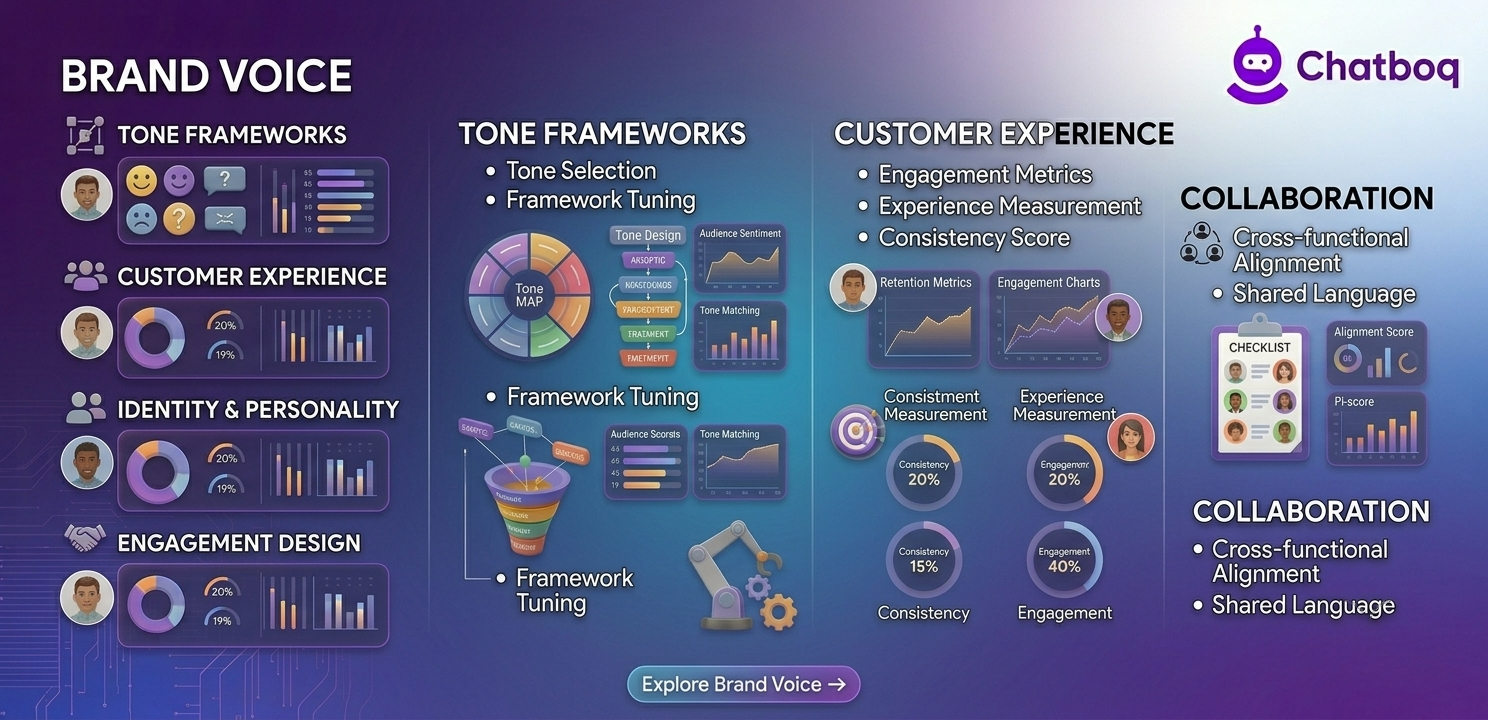
Brand voice shapes how businesses communicate across websites, support conversations, chatbot interactions, emails, marketing campaigns, and customer engagement systems. It influences communication style, tone consistency, messaging clarity, conversational UX, and customer perception across both human and automated interactions. A recognizable brand voice helps customers understand what the business sounds like regardless of channel or conversation type.
A strong brand voice depends on communication frameworks that define tone guidelines, vocabulary, sentence structure, emotional tone, response patterns, and personality traits across customer-facing systems. These rules affect support communication, chatbot workflows, AI-generated messaging, conversational interfaces, onboarding experiences, and customer support automation where messaging consistency directly impacts trust and usability.
Brand voice influences customer experience, engagement, retention, and conversion-focused communication across support and marketing interactions. Consistent tone across support tickets, chatbot conversations, marketing messages, and omnichannel communication systems reduces friction and improves how customers move through conversational journeys. Messaging consistency becomes especially important when businesses scale automation across conversational AI platforms, chatbot systems, and customer engagement workflows.
As conversational AI systems expand, businesses use response templates, chatbot workflows, and communication audits to maintain brand consistency across automated customer interactions. At the same time, companies must avoid tone inconsistency, generic messaging, over-automation, and communication styles that conflict with audience expectations or weaken customer trust.
 ChatGPT
 Perplexity
 Claude





Leave a Comment
Your email address will not be published. Required fields are marked *
By submitting, you agree to receive helpful messages from Chatboq about your request. We do not sell data.