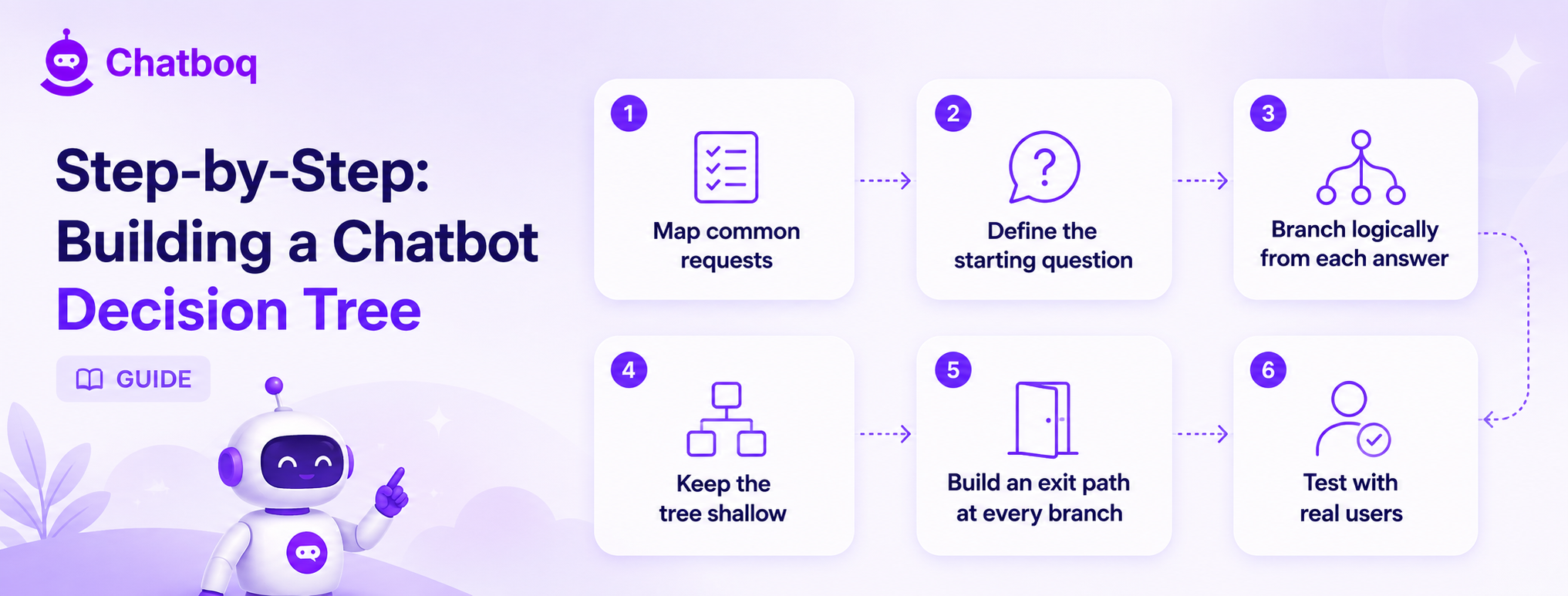
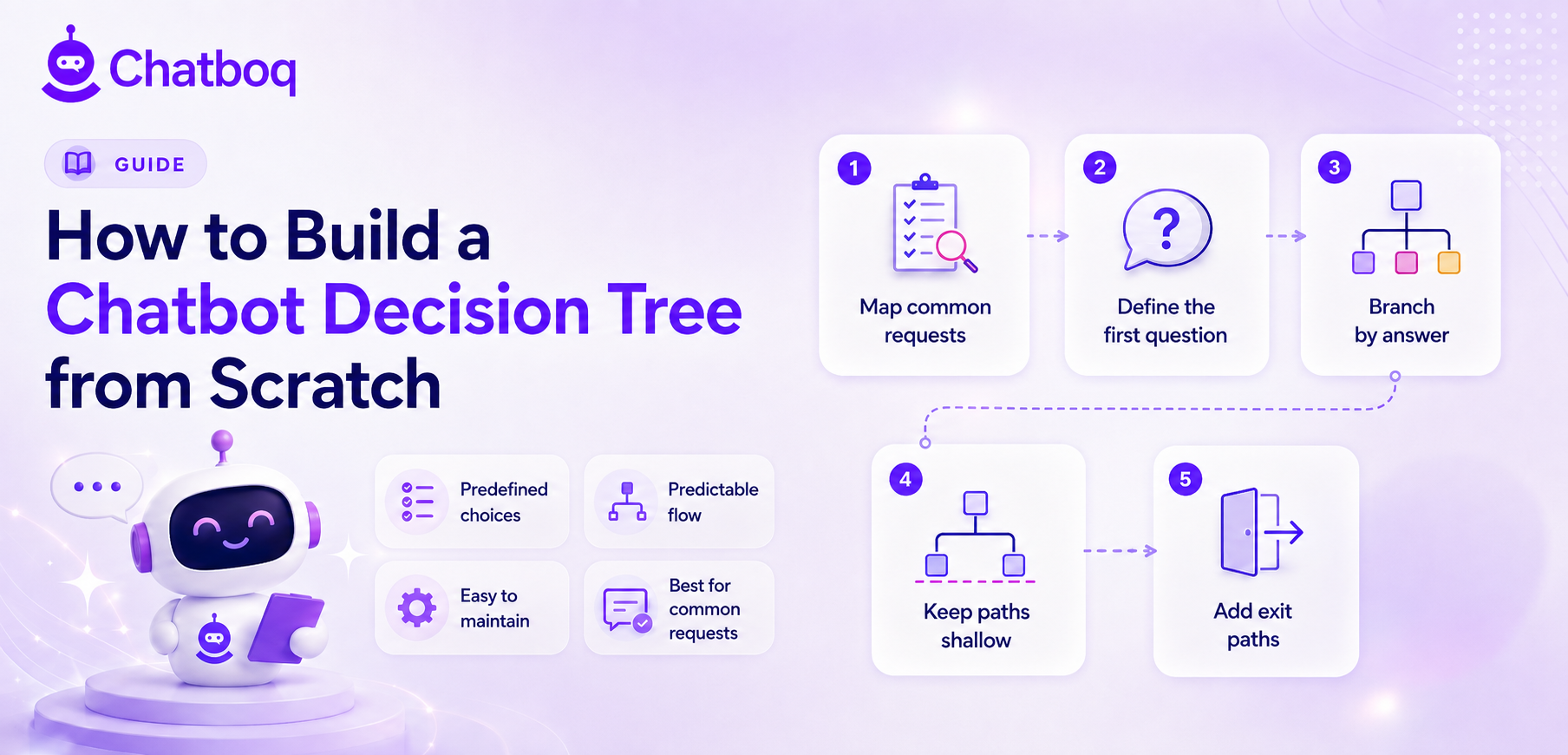
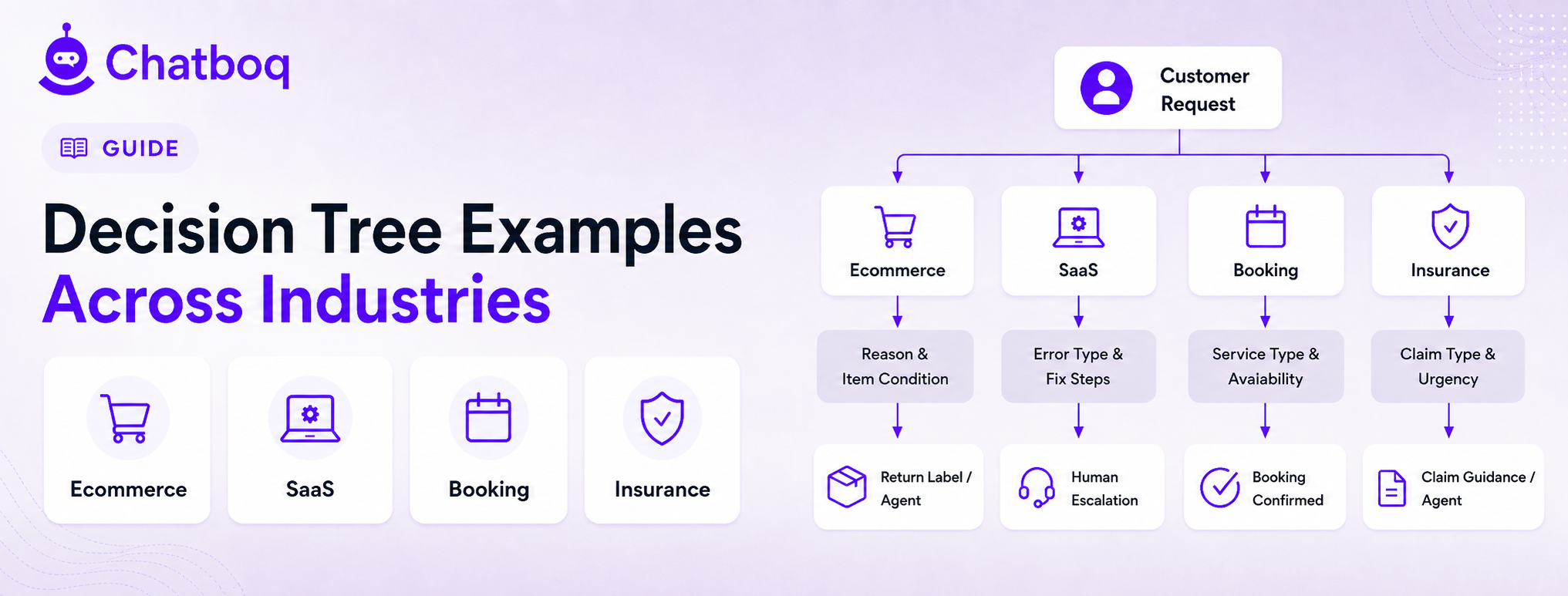
Building an effective decision tree follows six steps: map the most common customer requests, define a clear starting question, branch out logically from each possible answer, keep the tree shallow rather than deep, build in an exit path at every branch, and test the finished tree with real users before launch.
Step 1: Map the most common customer requests
Starting from real, frequent requests, pulled from support ticket or chat data, ensures the tree covers what customers actually need rather than a theoretical structure built from internal assumptions about likely questions.
Step 2: Define the starting question
The opening question should split customers into the broadest, most useful initial categories, order support, account help, general questions, for example, giving the tree a clean, logical foundation to branch from.
Step 3: Branch out logically from each answer
Each subsequent branch should narrow the customer's need progressively, with every option at a given step leading somewhere genuinely distinct rather than converging back to the same generic answer regardless of which choice was made.
Step 4: Keep the tree shallow, not deep
A tree requiring five or six clicks before reaching an actual answer tests a customer's patience considerably more than one reaching a useful resolution within two or three steps, so favoring breadth over depth generally produces a better experience.
Step 5: Build in an exit path at every branch
Every single branch, not just the final ones, should include a visible option to reach a human or restart, preventing a customer from feeling trapped partway through a flow that doesn't match their actual situation.
Step 6: Test the tree with real users
Watching real users navigate a draft decision tree, rather than only reviewing it internally, reveals confusing branch labels or illogical groupings that are easy to miss when you already know exactly what each option is supposed to mean.

 ChatGPT
 Perplexity
 Claude





Leave a Comment
Your email address will not be published. Required fields are marked *
By submitting, you agree to receive helpful messages from Chatboq about your request. We do not sell data.