
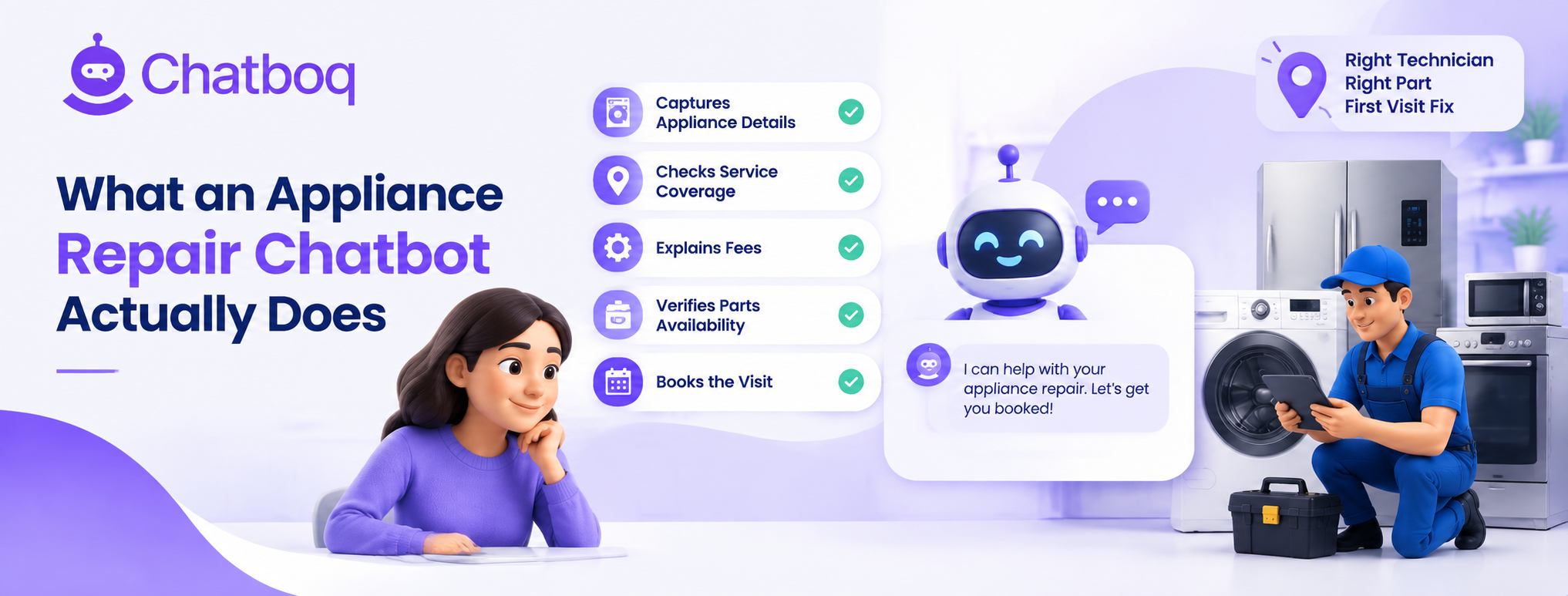
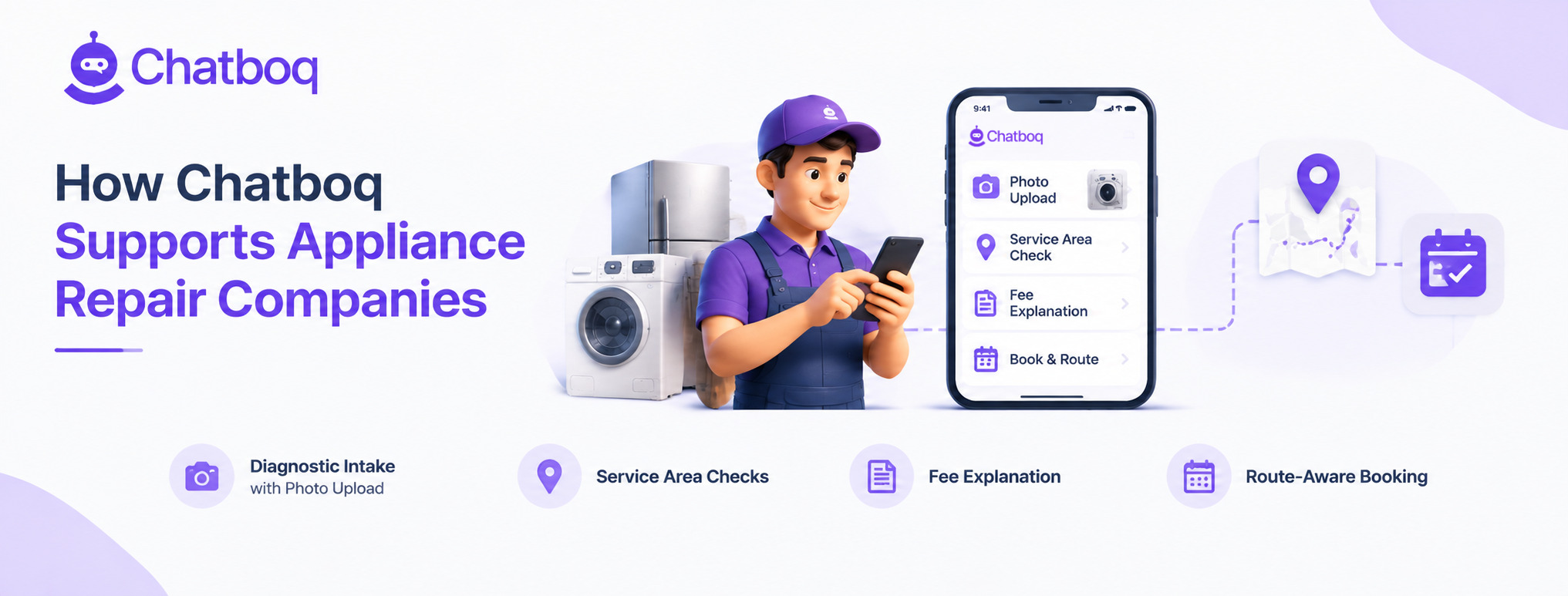
It captures the appliance details and symptom, checks service coverage, explains fees, verifies parts availability where possible, and books the visit into real technician capacity.
Capturing what the technician needs
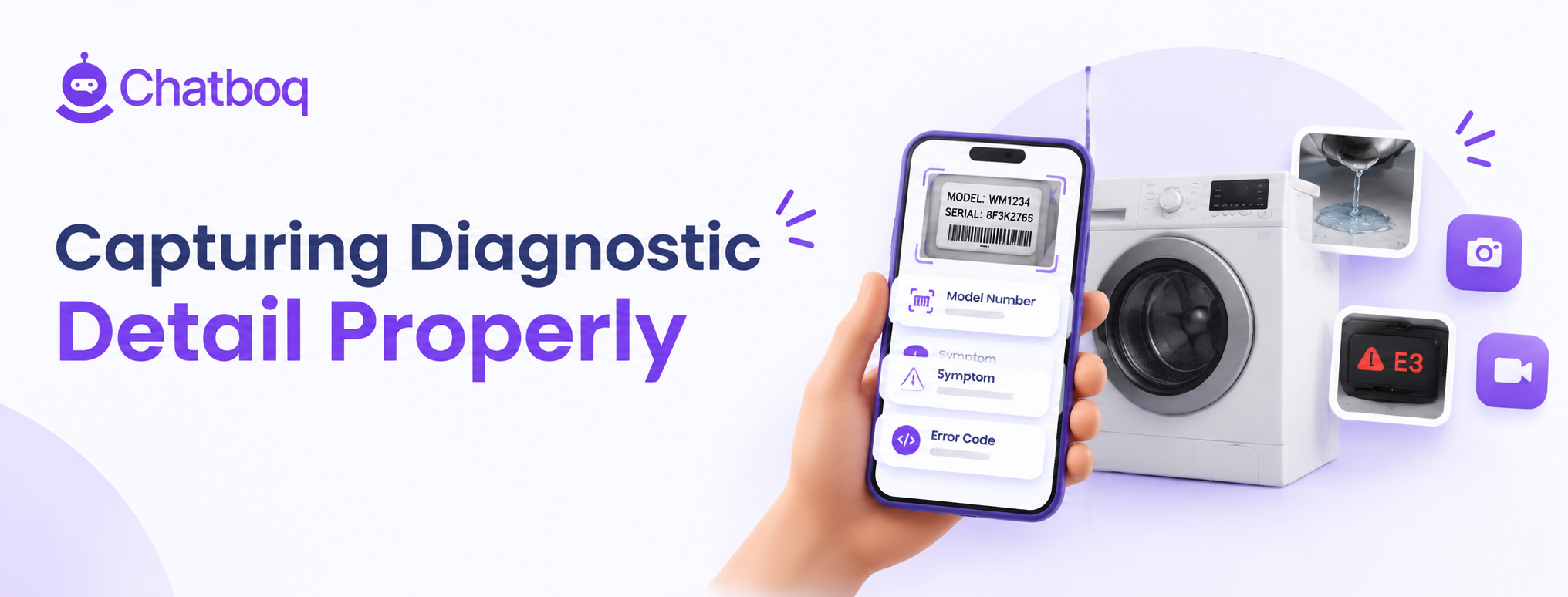
Brand, model number, appliance age, error code and a description of the symptom are what determine whether a job can be completed on the first visit.
Collecting them conversationally, with guidance on where the model plate is located, produces far better information than a phone call taken while a customer stands in a flooded kitchen.
Answering while technicians are on jobs
In smaller repair businesses the person answering the phone is often the technician, which means calls are missed all day and returned in the evening when customers have booked elsewhere.
Automation covers exactly those hours and produces bookings that appear in the schedule without anyone stopping work to take them.
Reducing the wasted second visit
A visit that ends with the technician ordering a part and returning a week later costs a full appointment slot and frequently a frustrated customer as well.
Better intake will not eliminate return visits, but it converts a meaningful share of them into first-visit fixes, which is where the margin in this business sits.
 ChatGPT
 Perplexity
 Claude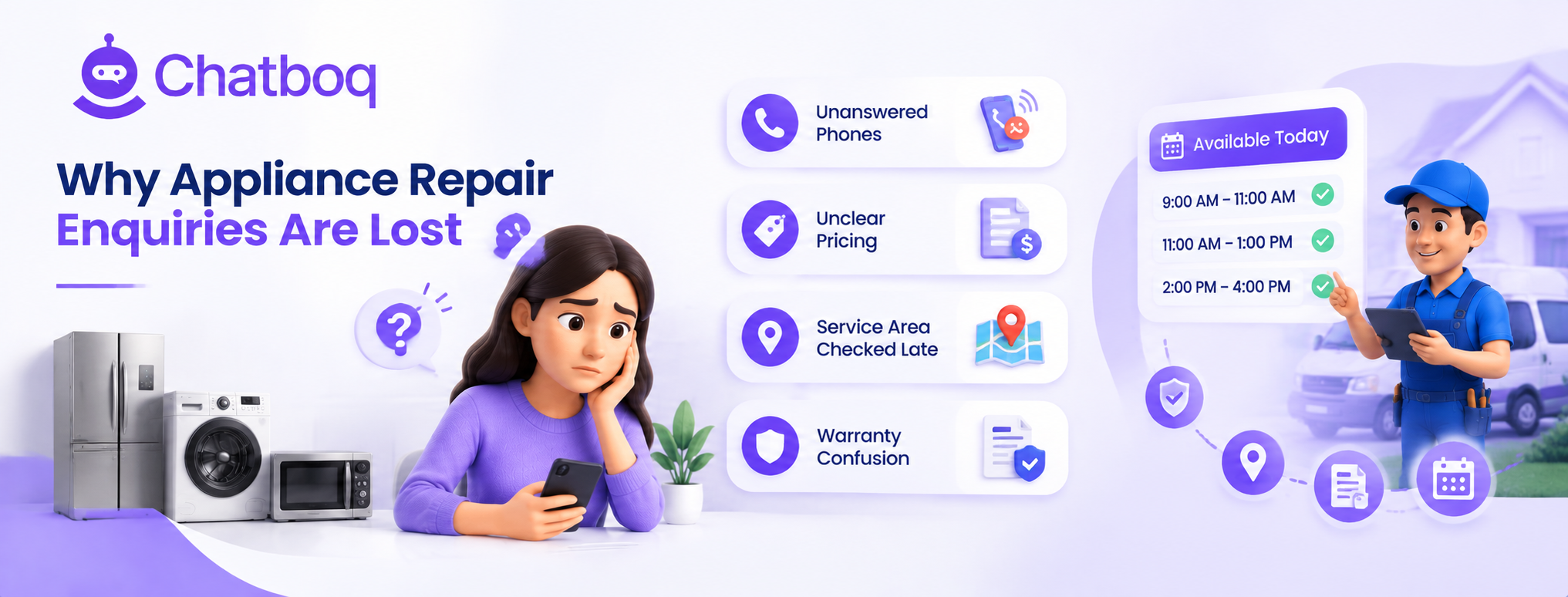



Leave a Comment
Your email address will not be published. Required fields are marked *
By submitting, you agree to receive helpful messages from Chatboq about your request. We do not sell data.