
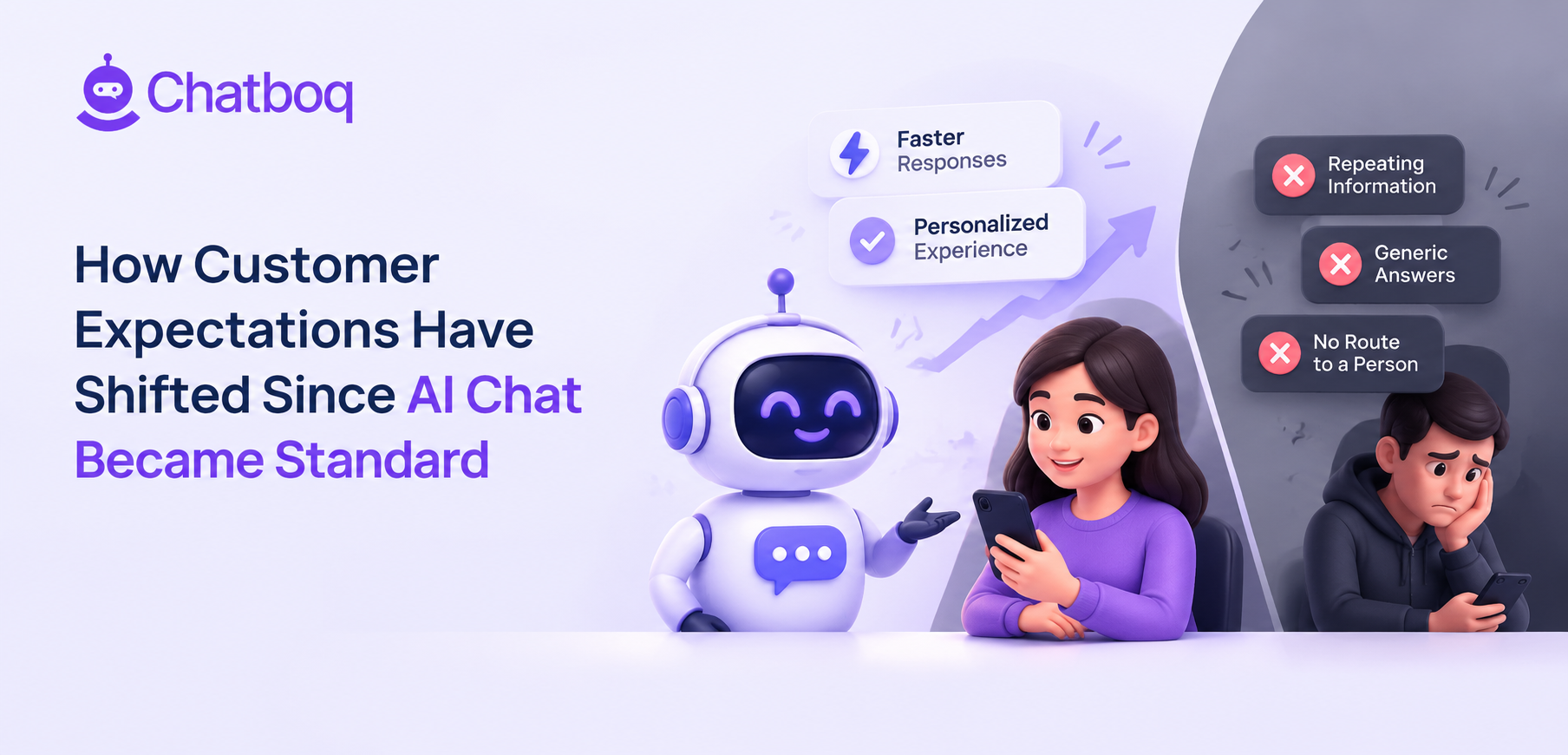
Immediacy, availability and the assumption that a business knows its own customers are the three clearest changes.
Immediate rather than fast
Where a response within an hour was once good, customers now compare against businesses answering instantly and judge accordingly.
This is a genuine shift and it applies to first response rather than to resolution, which customers still accept taking longer.
Any hour
Customers increasingly expect to be able to get an answer outside business hours, since enough businesses now provide it that it no longer seems unreasonable.
The expectation is for an answer rather than for a person, which is what makes it satisfiable.
Knowing who they are
A customer contacting a business that holds their order history reasonably expects not to be asked for their order number.
This expectation has risen substantially and is met considerably less often than it could be.
Resolution rather than routing
Being told where to go, or given a link, is less acceptable than it was, since customers know the thing could have been done in the conversation.
This raises the bar from answering to acting, which is where many deployments fall short.
Consistency across channels
Customers increasingly expect the same answer whether they message, email or call, and notice immediately when they do not get it.
This expectation is met less often than any of the others and is entirely a knowledge management problem.
 ChatGPT
 Perplexity
 Claude




Leave a Comment
Your email address will not be published. Required fields are marked *
By submitting, you agree to receive helpful messages from Chatboq about your request. We do not sell data.