
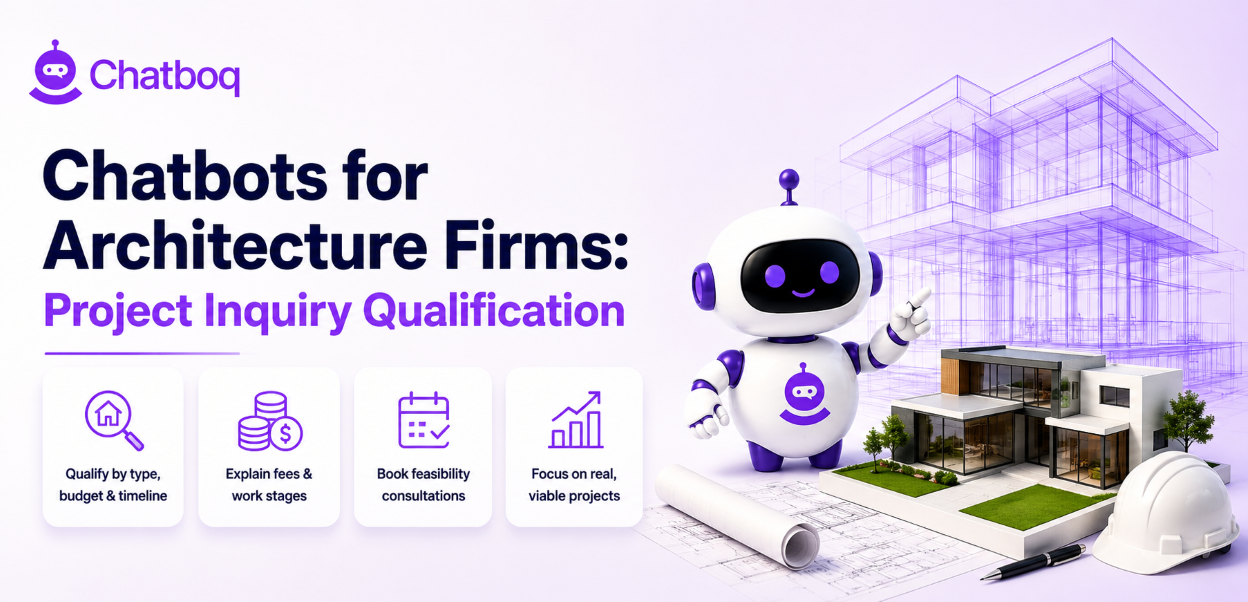
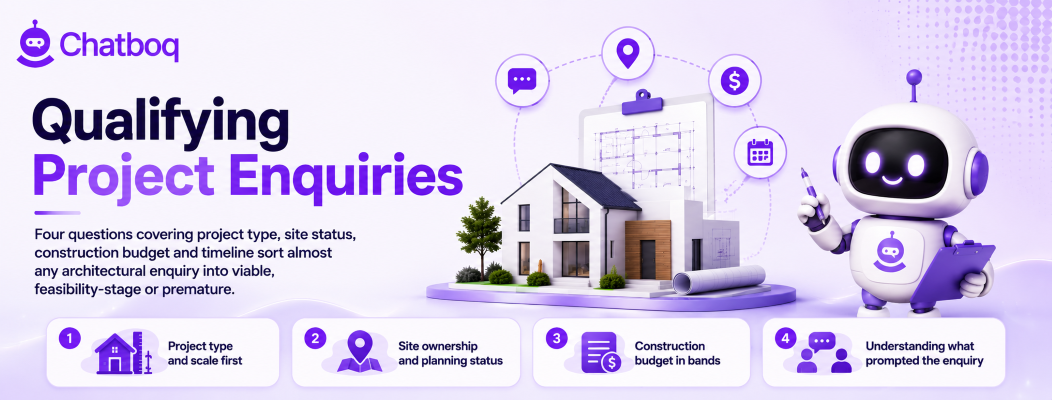
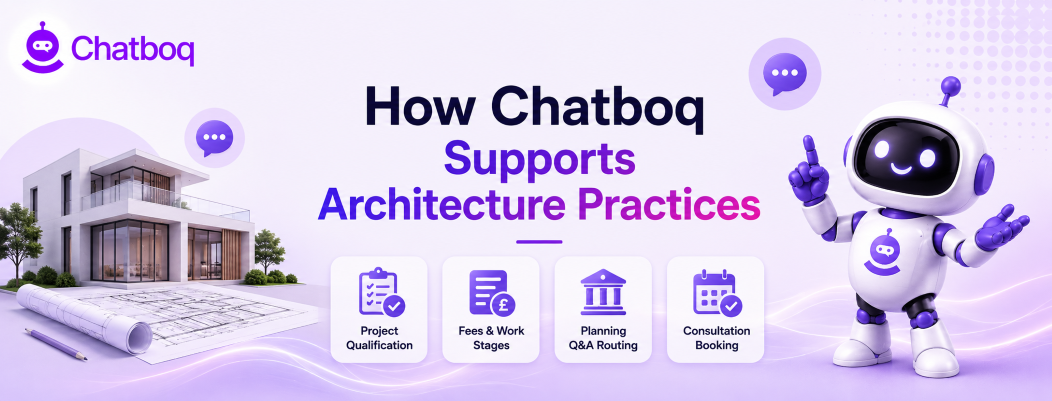
It establishes project type, scale, site status and budget, explains fee structures and work stages, answers common planning questions, and books consultations for viable projects only.
Protecting principal time
In practices under twenty people, initial enquiry conversations are usually handled by a director or principal whose hours are the practice's most expensive and most constrained resource.
Filtering enquiries before they reach that person is worth considerably more than increasing enquiry volume, since the practice is limited by capacity rather than by interest.
Answering the questions that precede a brief
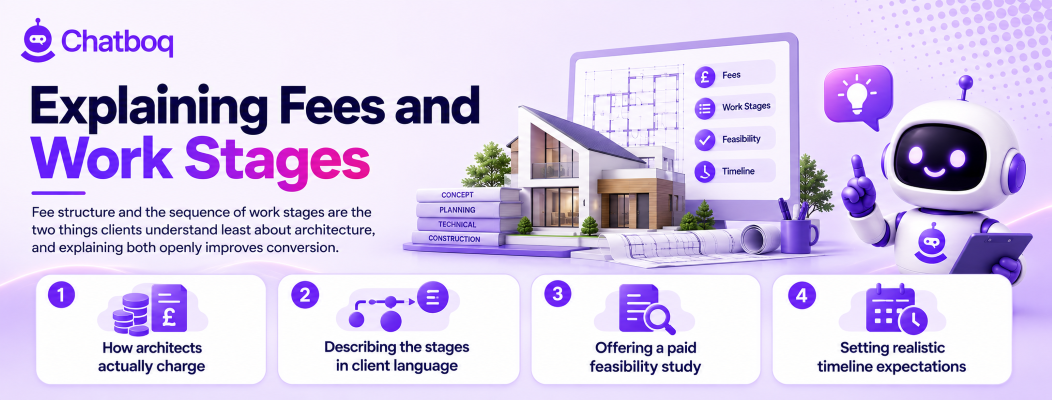
Most enquirers need to understand what an architect does across a project, when planning is involved and roughly what the fees look like before they can form a brief at all.
Answering those questions clearly and automatically produces better-prepared enquiries and removes the most repetitive part of a principal's business development work.
Separating residential, commercial and developer work
These three streams have different fee models, different timelines and usually different people leading them within the practice, yet they all arrive through the same website contact form.
Identifying the stream in the first exchange lets each route to the appropriate person with the relevant information already captured.
Handling enquiries the practice cannot take
Practices regularly receive enquiries outside their sector, geography or capacity, and declining these politely with a referral preserves reputation in a profession built on recommendation.
Automating the polite decline also means it actually happens, rather than the enquiry sitting unanswered because nobody wanted to write the email.
 ChatGPT
 Perplexity
 Claude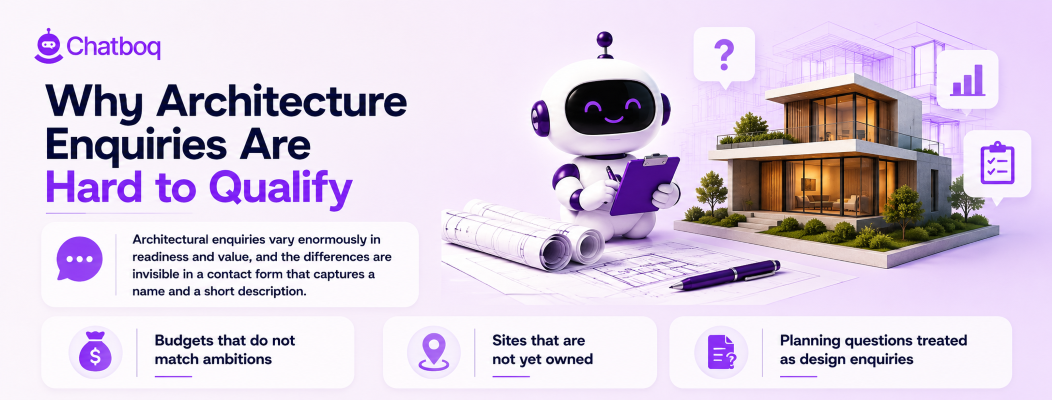




Leave a Comment
Your email address will not be published. Required fields are marked *
By submitting, you agree to receive helpful messages from Chatboq about your request. We do not sell data.