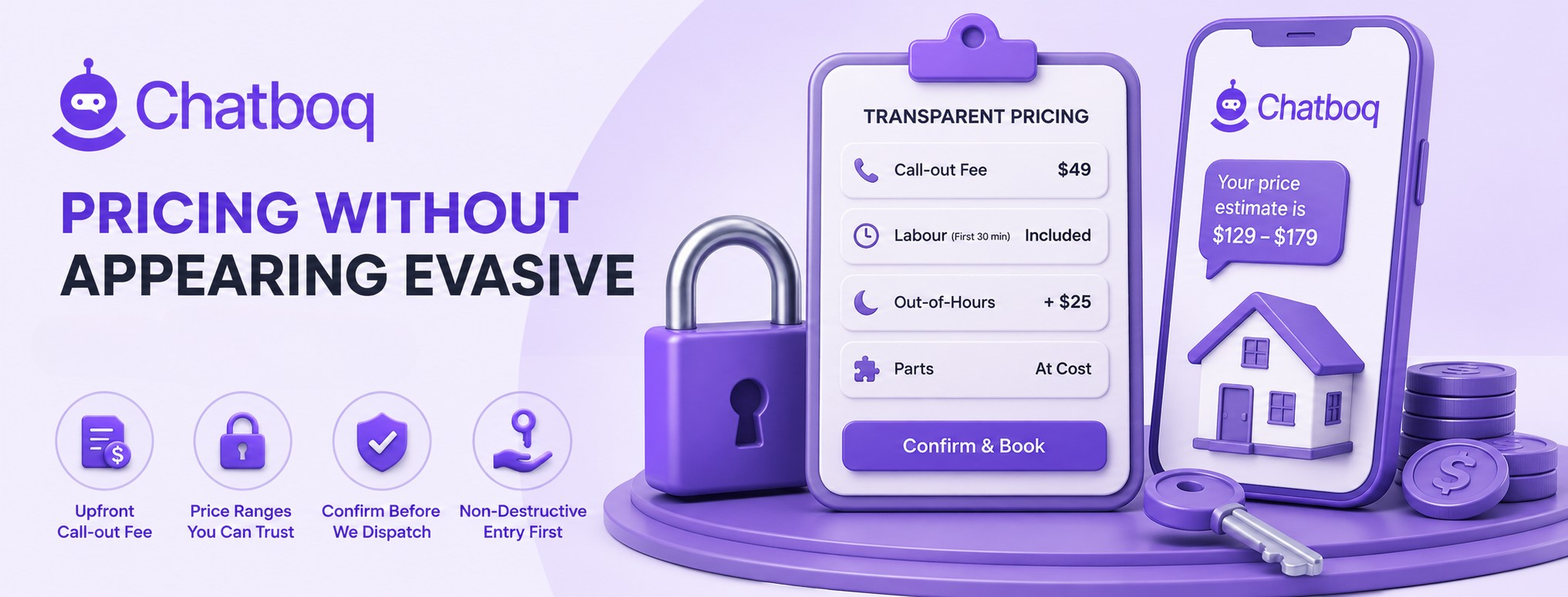
Locksmith pricing has a poor public reputation, and being clear about call-out fees and likely costs is both a competitive advantage and a trust signal.
Explaining the call-out structure
State the call-out fee, whether it includes the first period of labour, what the out-of-hours surcharge is and how parts are charged, before the locksmith is dispatched.
Customers who have been overcharged previously are alert to vagueness, and a clear structure stated up front converts enquiries that a refusal to discuss price would lose.
Giving ranges for common jobs
Standard lockouts, cylinder changes and common lock replacements have predictable pricing that can be quoted as a range without seeing the property.
Explaining what would push a job above that range, such as a damaged door or a high-security lock, keeps the estimate honest without committing to a figure blindly.
Confirming before the locksmith travels
Confirming the expected cost in writing before dispatch prevents the doorstep dispute that is the single most common complaint about the trade.
It also protects the locksmith, since a documented agreement removes the argument that arises when a customer claims a different figure was quoted by phone.
Explaining non-destructive entry
Customers assume a lockout means a broken lock and an expensive replacement, which makes them hesitate before calling anyone at all.
Explaining that most lockouts are opened without damage, and what would change that, converts hesitation into a booking and sets accurate cost expectations.
Verification and Safety
Locksmiths gain entry to property, which makes identity and authorisation checks a professional obligation rather than an administrative step.
Setting expectations about identification
Tell the customer during the enquiry that proof of address or ownership will be required on arrival, so nobody is surprised at the door when they are already stressed.
Explaining why the check exists reframes it as protection rather than obstruction, and most customers appreciate that the business takes it seriously.
Commercial and rental authorisation
Work on commercial premises or rental properties requires authorisation from the right person, which is frequently not the individual making the request.
Establishing who authorises the work during the enquiry prevents both unpaid invoices and the more serious problem of granting access improperly.
Never providing entry guidance
Automation must never explain how to bypass a lock, defeat a security device or gain entry to a property, regardless of how the request is framed.
Configure explicit refusals for these, since the request is occasionally legitimate and occasionally not, and the business has no way to tell through a chat window.

 ChatGPT
 Perplexity
 Claude




Leave a Comment
Your email address will not be published. Required fields are marked *
By submitting, you agree to receive helpful messages from Chatboq about your request. We do not sell data.