

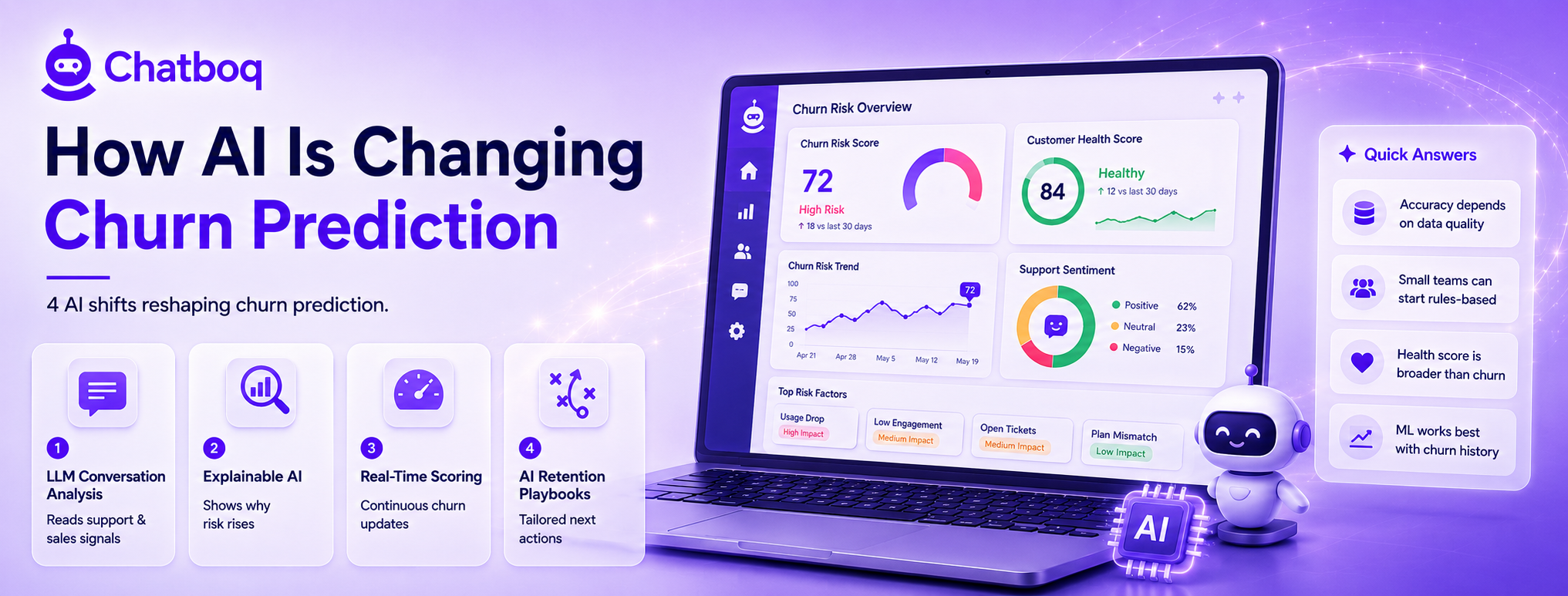
Customer churn prediction is the use of historical and behavioral data, often combined with machine learning, to estimate the likelihood that a specific customer will cancel, downgrade, or stop purchasing within a defined future window, before that outcome actually happens.
Simple definition
At its simplest, churn prediction assigns each customer a risk score based on patterns that have historically preceded other customers leaving, so a team can act on the highest-risk accounts before they're gone.
Churn prediction vs churn analysis vs customer health scoring
Churn analysis looks backward, explaining why customers who already left did so. Churn prediction looks forward, estimating which current customers are at risk. A customer health score is often the vehicle that carries a churn prediction, presenting it as part of a broader account status view alongside other signals like expansion potential.
Voluntary vs involuntary churn
Voluntary churn happens when a customer actively decides to leave, driven by dissatisfaction, a competitor, or changing needs. Involuntary churn happens for reasons unrelated to satisfaction, most commonly a failed payment method, and generally needs a different kind of intervention, such as automated billing retries, rather than a retention conversation.
Why predicting churn matters more than just measuring it
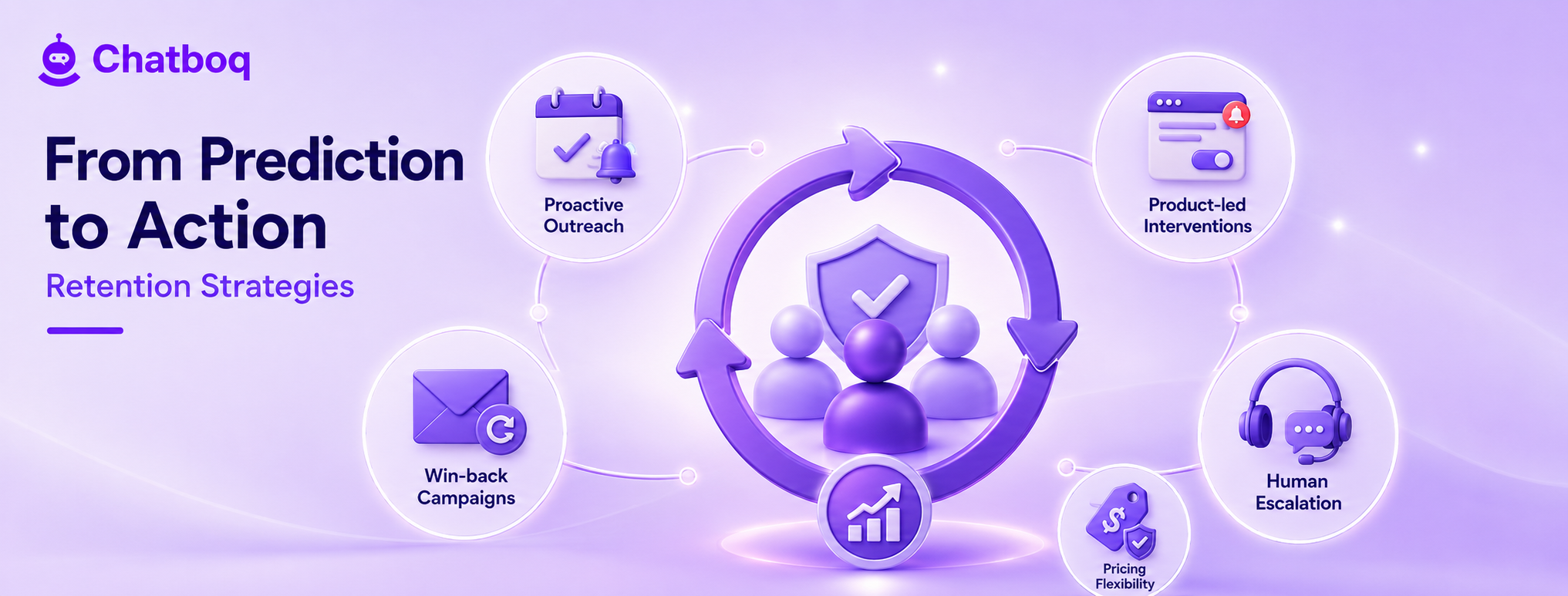
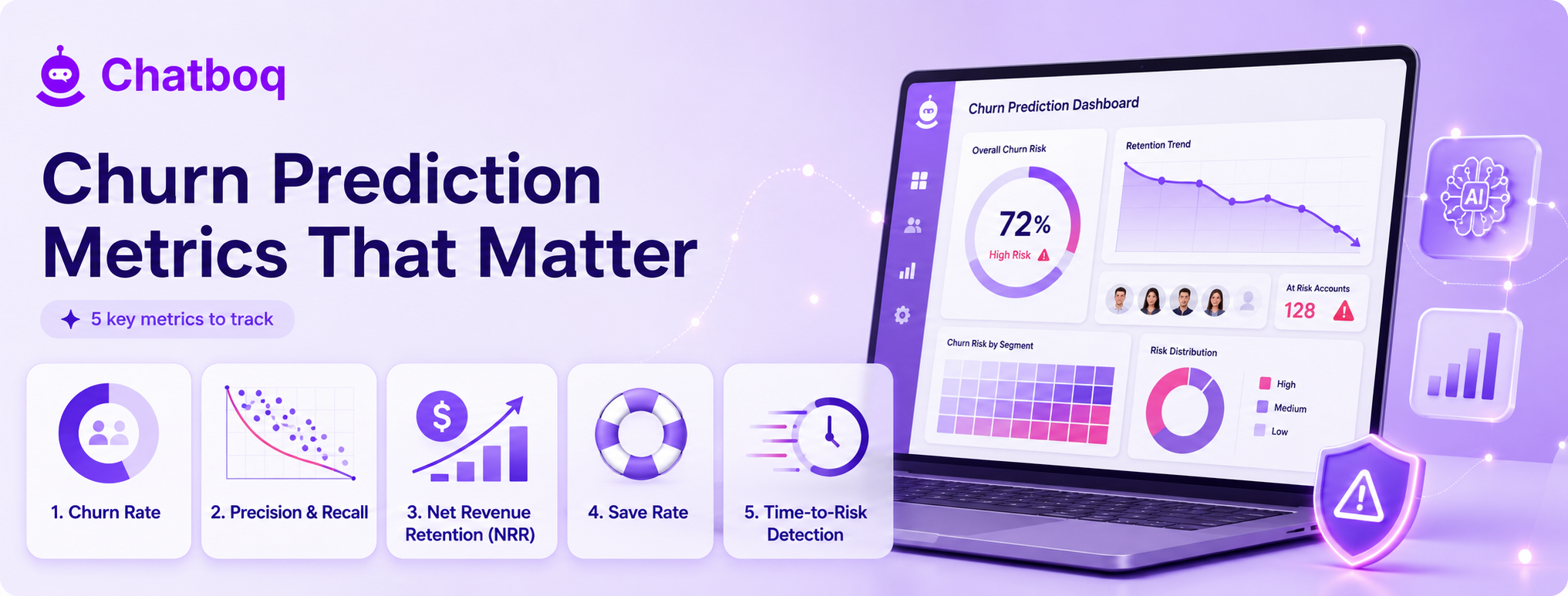
A churn rate reported after the fact confirms what already happened but creates no opportunity to change the outcome. Prediction shifts the work from reporting a result to creating a window for intervention, which is the entire point of investing in it.
 ChatGPT
 Perplexity
 Claude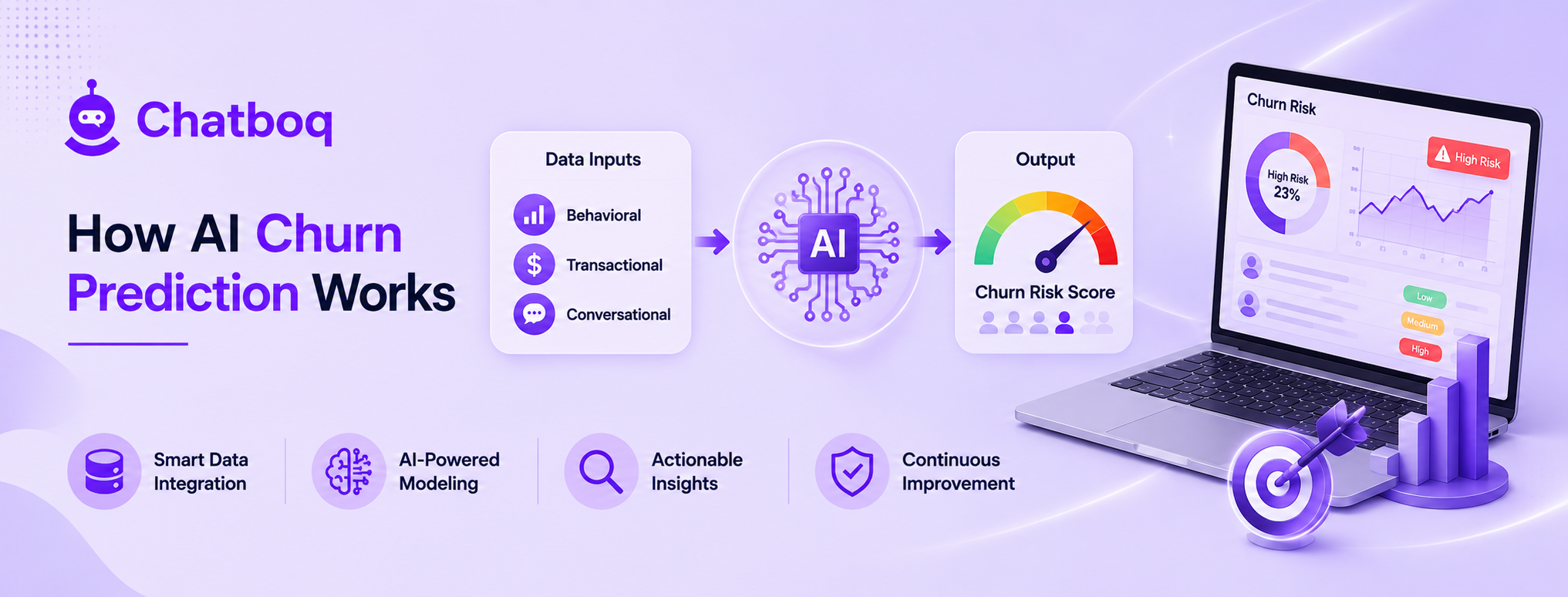




Leave a Comment
Your email address will not be published. Required fields are marked *
By submitting, you agree to receive helpful messages from Chatboq about your request. We do not sell data.