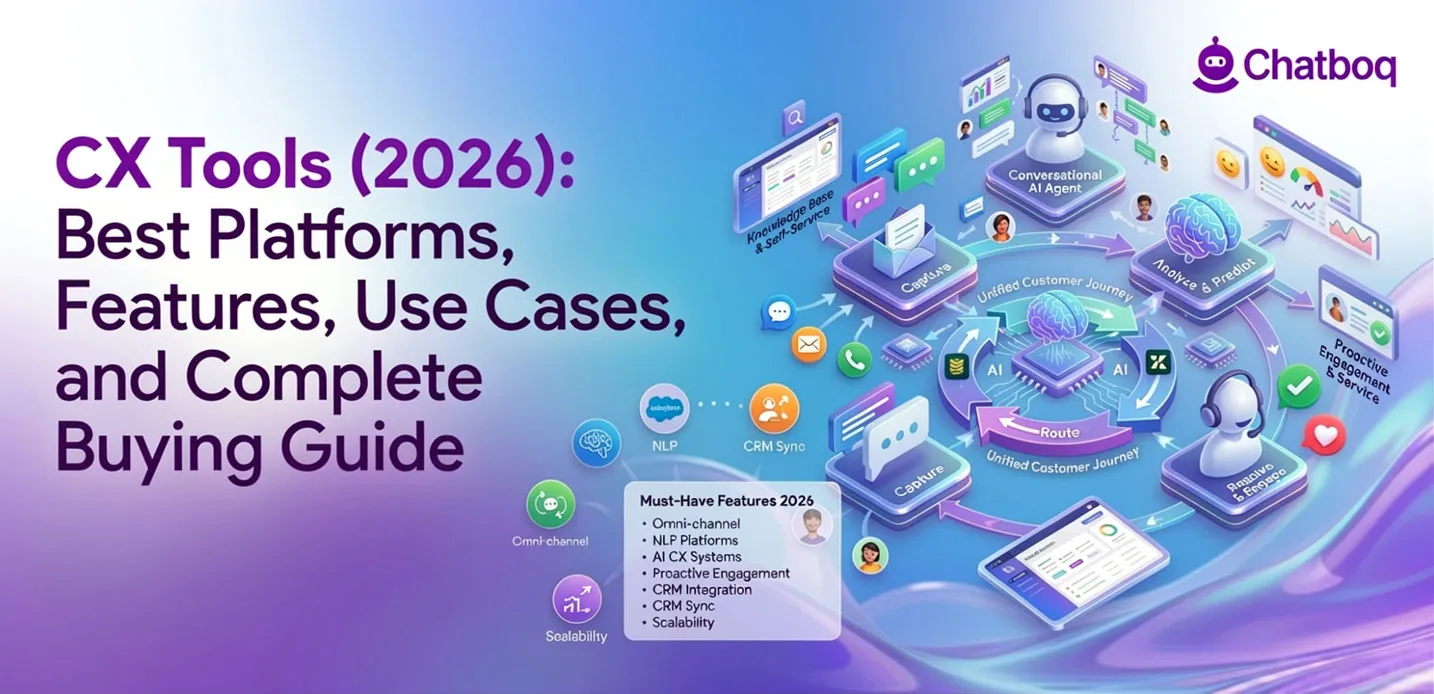
The leading CX tools in 2026 each occupy specific functional positions in the CX stack. Selecting the right combination requires understanding what each tool does at an architectural level, not just what features it lists.
1. Zendesk
Zendesk is an enterprise customer service platform that powers the execution layer of the CX stack, turning multi-channel customer interactions into structured tickets for routing, tracking, and resolution.
Core CX Role
Zendesk sits in the execution layer where customer issues are assigned, managed, and resolved. It receives inputs from frontline channels, applies workflows and SLA rules, and outputs operational data to analytics and intelligence systems via reporting APIs.
Key Features
Zendesk provides multi-channel ticketing (email, chat, voice, social), SLA policies with breach alerts, skill-based routing, agent collaboration tools, knowledge base support via Zendesk Guide, a community forum product, and workforce management integrations.
AI Capabilities
Its AI layer includes Intelligent Triage for automatic ticket classification and sentiment detection, macro suggestions for agent responses, and AI resolution bots that attempt autonomous handling of common queries using help center content.
Integrations
Zendesk offers 1,200+ integrations across Salesforce, HubSpot, Jira, Slack, Microsoft Teams, Shopify, and major CRM and commerce platforms, supporting complex enterprise CX ecosystems.
Pros and Limitations
Zendesk is strong in enterprise routing, SLA enforcement, compliance, and reporting at scale. Limitations include high per-agent pricing at advanced tiers and significant implementation complexity for full enterprise deployments.
2. Intercom
Intercom is a conversational CX platform designed around messaging-first support, where customer interactions are handled as real-time conversations rather than structured tickets, prioritizing chat experience over traditional ticket workflows.
Best Use Case
Intercom is best suited for SaaS and digital-first businesses that need real-time conversational support combined with lifecycle messaging, including onboarding flows, proactive outreach, product updates, and in-app customer engagement managed from a single platform.
AI Support Capabilities
Intercom’s Fin AI agent resolves customer queries autonomously using help center content and connected data sources directly within the chat interface. It delivers answers in real time and is reported to achieve 45 to 50 percent resolution rates for help-center-based queries.
Automation Features
Its workflow automation system enables conversational bots to collect customer details, handle predefined request types, and trigger actions in external systems. Unlike ticket-based automation, all logic operates inside an ongoing conversation thread.
Pros and Limitations
Intercom delivers a strong conversational experience and high AI-driven resolution for digital-first support. Limitations include high pricing at scale due to contact-based billing and less mature enterprise compliance and governance compared to platforms like Zendesk.
3. HubSpot Service Hub
HubSpot Service Hub is the customer service layer of the HubSpot CRM platform, built for organizations that want support operations integrated directly with marketing, sales, and CRM data in a single system.
CX and CRM Integration Layer
Its core strength is native CRM integration, where every support interaction is automatically tied to a unified customer record. Agents can see marketing engagement, sales activity, deal stages, and account history without switching systems.
Key Features
HubSpot Service Hub includes a shared team inbox, ticketing system with customer portal, knowledge base, feedback tools (NPS, CSAT, CES), conversation intelligence for calls, and SLA management for support operations.
Automation Capabilities
HubSpot workflows automate cross-functional actions across CRM, sales, and service. A service ticket can trigger sales alerts, update deal properties, send emails, and create tasks without external automation tools when configured through Operations Hub.
Pros and Limitations
It is best suited for companies already using HubSpot for CRM and marketing, enabling unified data across teams. Limitations include less advanced routing, SLA control, and reporting depth compared to dedicated support platforms like Zendesk.
4. Freshdesk
Freshdesk is Freshworks’ customer support platform offering ticketing, omnichannel support, and AI automation for mid-size to enterprise teams, competing with Zendesk while focusing on cost efficiency.
Ticketing and Support Strength
Freshdesk provides email-to-ticket conversion, SLA management, routing rules, agent collaboration, internal notes, and CSAT tracking. It supports email, chat, phone, social media, and WhatsApp through its omnichannel support architecture.
AI Automation Features
Its Freddy AI handles ticket categorization, routing, response suggestions, sentiment analysis, and self-service automation via chatbots that resolve common queries through customer portals and knowledge base content.
Scalability
Freshdesk offers tiered pricing with strong feature coverage: Growth ($18/agent) includes automation rules, Pro ($59/agent) adds advanced AI and multi-product support, and Enterprise ($95/agent) includes full AI routing and reporting.
Pros and Limitations
Freshdesk delivers strong cost efficiency compared to Zendesk with similar core functionality. Limitations include a smaller integration ecosystem, less mature enterprise compliance tooling, and comparatively less advanced AI depth.
5. Qualtrics
Qualtrics is an enterprise CX intelligence platform focused on Voice of Customer analytics, feedback analysis, and experience optimization insights.
CX Intelligence and VoC Focus
It aggregates feedback from surveys, NPS, CSAT, and CES programs, combining it with operational data from CRM and support systems to identify experienced drivers across the customer journey.
Analytics Depth
Its driver analysis identifies which experience factors most strongly influence satisfaction scores. Text analytics processes open-ended feedback at scale, while predictive models flag churn risk based on behavioral and sentiment patterns.
Enterprise Use Cases
It is used to close the feedback loop: collecting feedback across touchpoints, identifying improvement drivers, routing insights to responsible teams, and tracking whether changes improve future customer sentiment.
Pros and Limitations
Qualtrics provides unmatched VoC depth, but it is not an execution system. It identifies problems in the customer experience but requires integration with CX and operational tools to drive actual resolution.
6. Sprinklr
Sprinklr is an enterprise unified CX management platform combining social media management, customer service, marketing execution, and CX analytics in one system.
Omnichannel CX Management
It supports 35+ digital channels including social platforms, messaging apps, and review sites, enabling enterprises to manage all digital customer interactions within a single operational workspace.
AI and Social Listening Capabilities
Its AI analyzes social data to detect sentiment, brand mentions, trends, and emerging issues. It enables proactive customer engagement by identifying dissatisfaction before it becomes formal support demand.
Enterprise Use Cases
Sprinklr is used where social media and customer service are tightly linked, allowing unified workflows for complaints and engagement across public and private channels.
Pros and Limitations
It offers the widest channel coverage and strong enterprise social capabilities, but comes with high cost, complex implementation, and is overpowered for smaller or support-focused organizations.

 ChatGPT
 Perplexity
 Claude


Leave a Comment
Your email address will not be published. Required fields are marked *
By submitting, you agree to receive helpful messages from Chatboq about your request. We do not sell data.