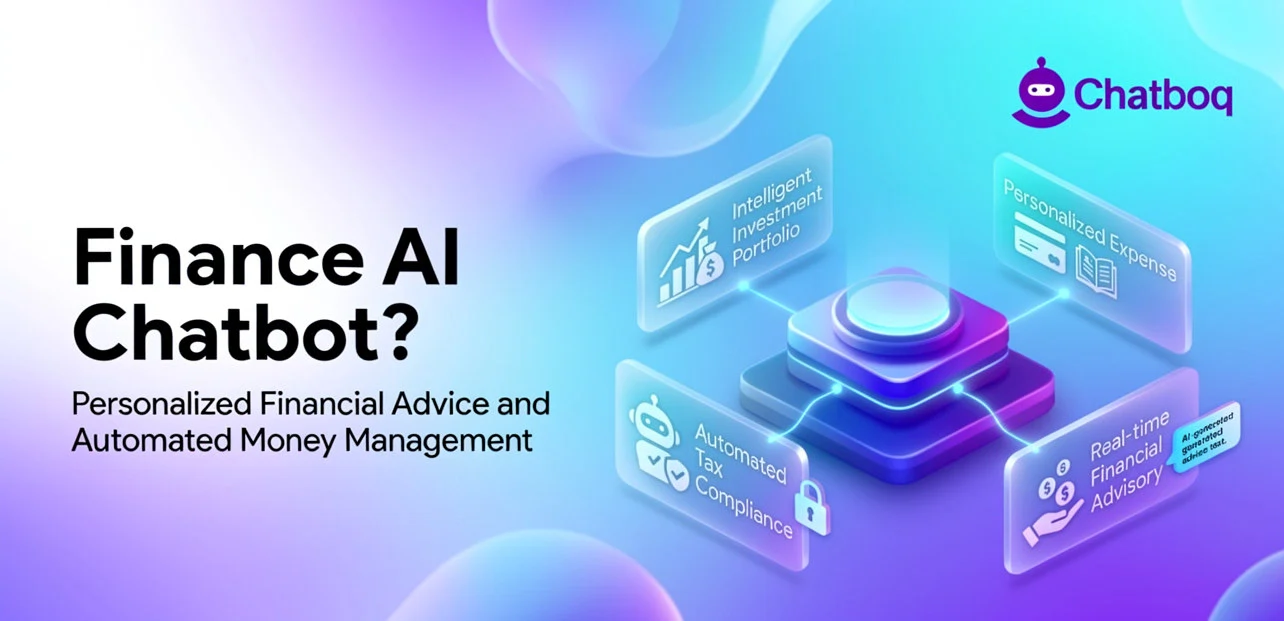
Finance AI chatbots serve 6 primary use cases across consumer banking, personal finance, lending, investment management, fraud prevention, and internal enterprise finance operations.
Personal Finance Management and Budgeting Assistants
Personal finance AI chatbots connect to bank accounts via Open Banking APIs to analyze transaction history, categorize spending, identify savings opportunities, and deliver budgeting recommendations. Cleo provides spending insights and weekly summaries through chat. Plum automates savings by moving small amounts based on income and spending patterns without user intervention.
These assistants reduce financial management effort by making insights conversational instead of requiring spreadsheets or advanced financial literacy, helping users manage money more consistently.
Banking Customer Support Automation
Banking customer service chatbots handle 60 to 80% of routine inquiries such as account balances, transaction history, card activation, PIN resets, branch hours, and product information. Platforms like Kasisto KAI enable 90%+ first-contact resolution, reducing call center volume and cost per interaction.
This automation allows human agents to focus on complex cases like loan guidance, fraud disputes, and financial hardship situations that require judgment, empathy, and higher account access authority beyond chatbot capabilities.
Loan and Credit Assistance Chatbots
Loan assistance chatbots guide users through eligibility checks, required documentation, and application status updates without human agents during initial stages. By collecting income, employment status, and loan amount, they provide instant preliminary eligibility feedback, saving 20 to 40 minutes per application while improving user experience.
Platforms like Clinc enable natural language loan queries, such as income-based eligibility questions, and return guidance using bank-specific lending criteria integrated via banking APIs.
Investment and Wealth Management Assistants
Investment AI chatbots provide portfolio summaries, market updates, and asset allocation insights through conversational interfaces that simplify access to financial data without requiring complex dashboards. They operate within regulatory limits by offering information and education rather than personalized investment advice, which requires licensed advisors.
Wealth management firms use these chatbots to scale client communication by delivering automated portfolio updates, market commentary, and rebalancing notifications, reducing the need for routine advisor interactions.
Fraud Detection and Transaction Alerts
Fraud detection chatbots send real-time alerts when anomaly systems detect unusual transaction behavior. If activity deviates from a user’s baseline, the chatbot requests confirmation via SMS, WhatsApp, or in-app messages within a fixed response window. No response or rejection triggers automatic card blocking and case escalation.
This real-time model reduces fraud losses by 15 to 30% compared to batch detection by intervening during the transaction instead of after it has already been completed.
Internal Finance Department Automation Tools
Enterprise finance chatbots automate internal workflows such as accounts payable inquiries, expense tracking, budget variance explanations, and financial reporting support. Integrated with ERP systems, they can answer questions like Q3 marketing budget remaining without manual finance team intervention.
Platforms like Microsoft Copilot Studio enable organizations to build ERP-connected finance chatbots, reducing routine query workload and freeing finance teams to focus on analysis instead of repetitive information retrieval.

 ChatGPT
 Perplexity
 Claude



Leave a Comment
Your email address will not be published. Required fields are marked *
By submitting, you agree to receive helpful messages from Chatboq about your request. We do not sell data.