
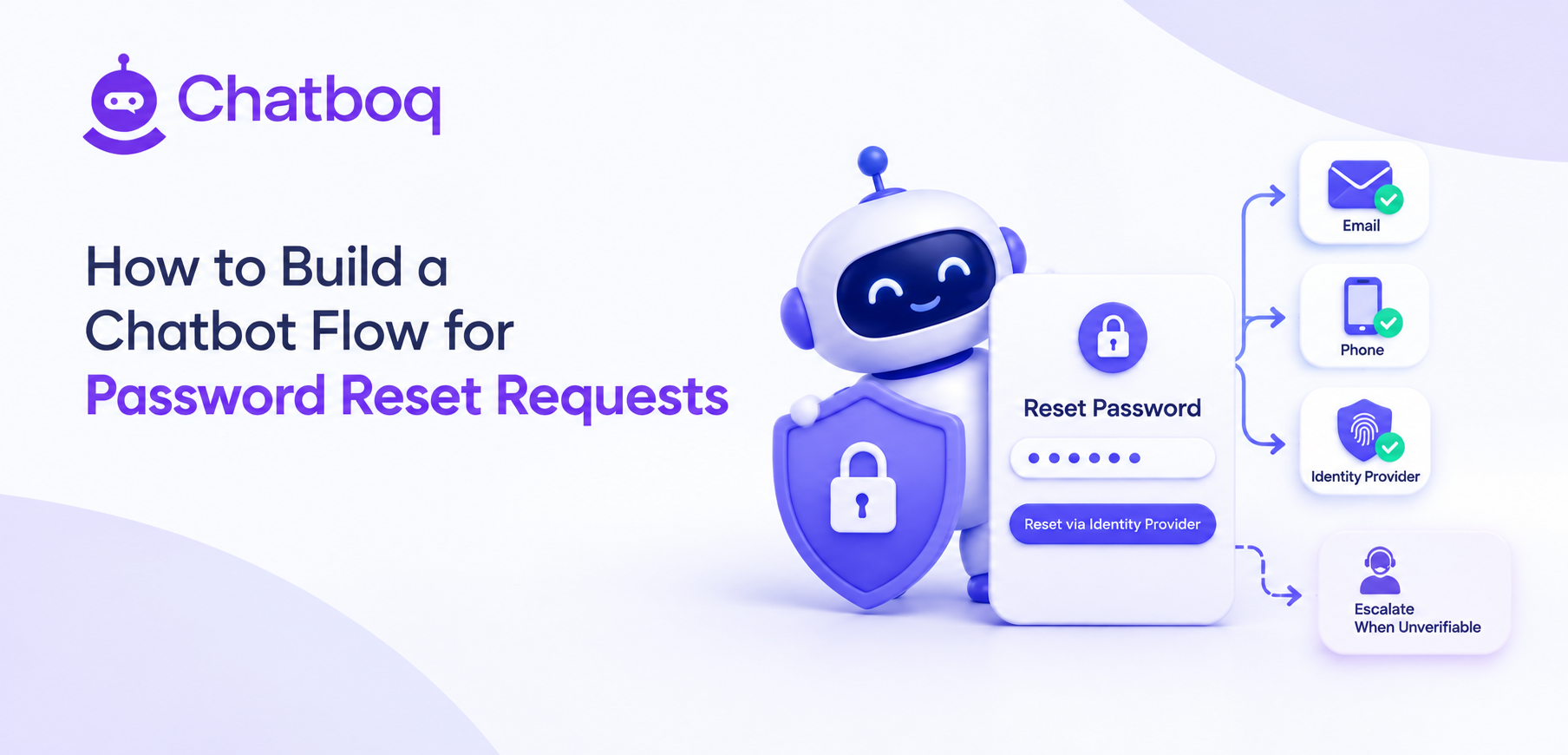
Identify the account, verify through a possessed channel, trigger the reset, confirm completion and log the event.
Identifying the account
Accepting an email address or username identifies the account, and the response should not reveal whether that account exists.
Confirming existence lets an attacker enumerate valid accounts, which is a common and avoidable information leak.
Verifying through possession
Sending a reset link or code to the registered email or phone verifies possession, which is the only reliable check available in chat.
The verification and the reset are the same action here, which is why this pattern is both simple and safe.
Triggering rather than handling
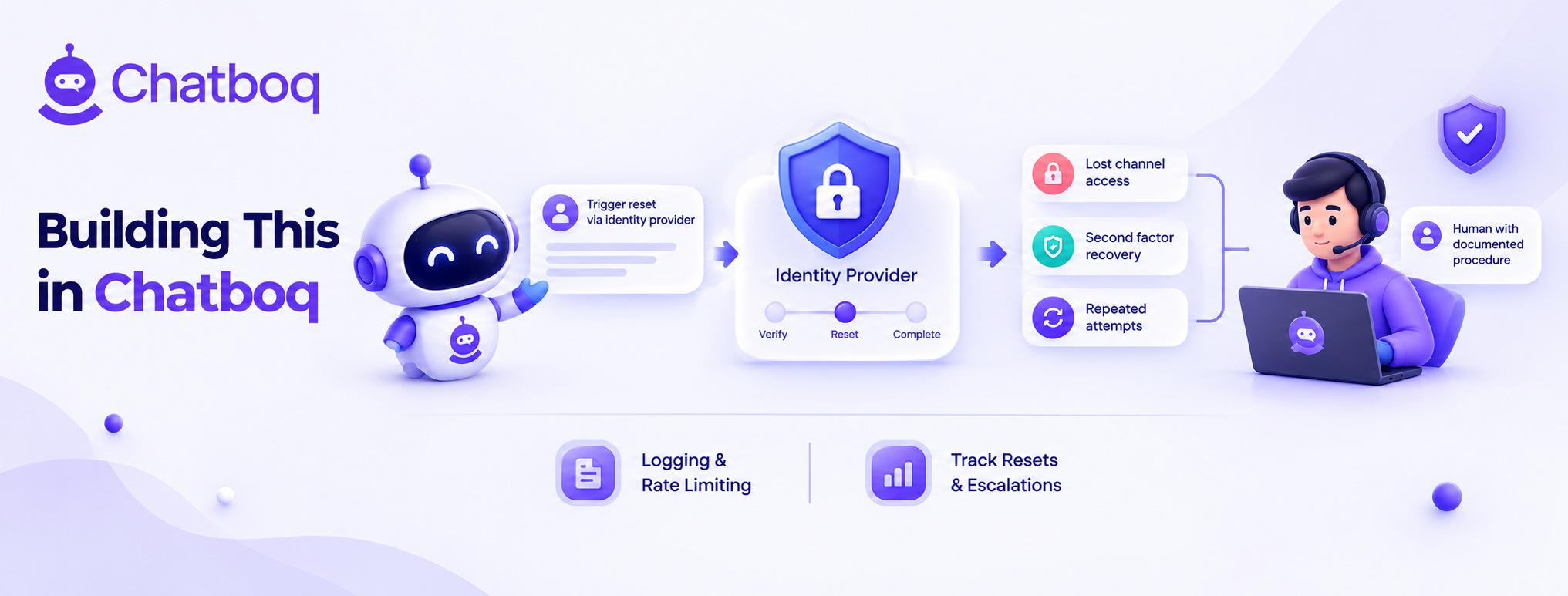
The assistant should trigger the identity provider's reset process rather than collecting or setting a password itself.
Credentials should never pass through a chat conversation, since transcripts are stored and viewed by agents.
Confirming and logging
Telling the customer what was sent and where, without revealing the full address, closes the loop and reduces the follow-up contact.
Every reset attempt should be logged with source and outcome, since this is the record security teams need if an account is compromised.
 ChatGPT
 Perplexity
 Claude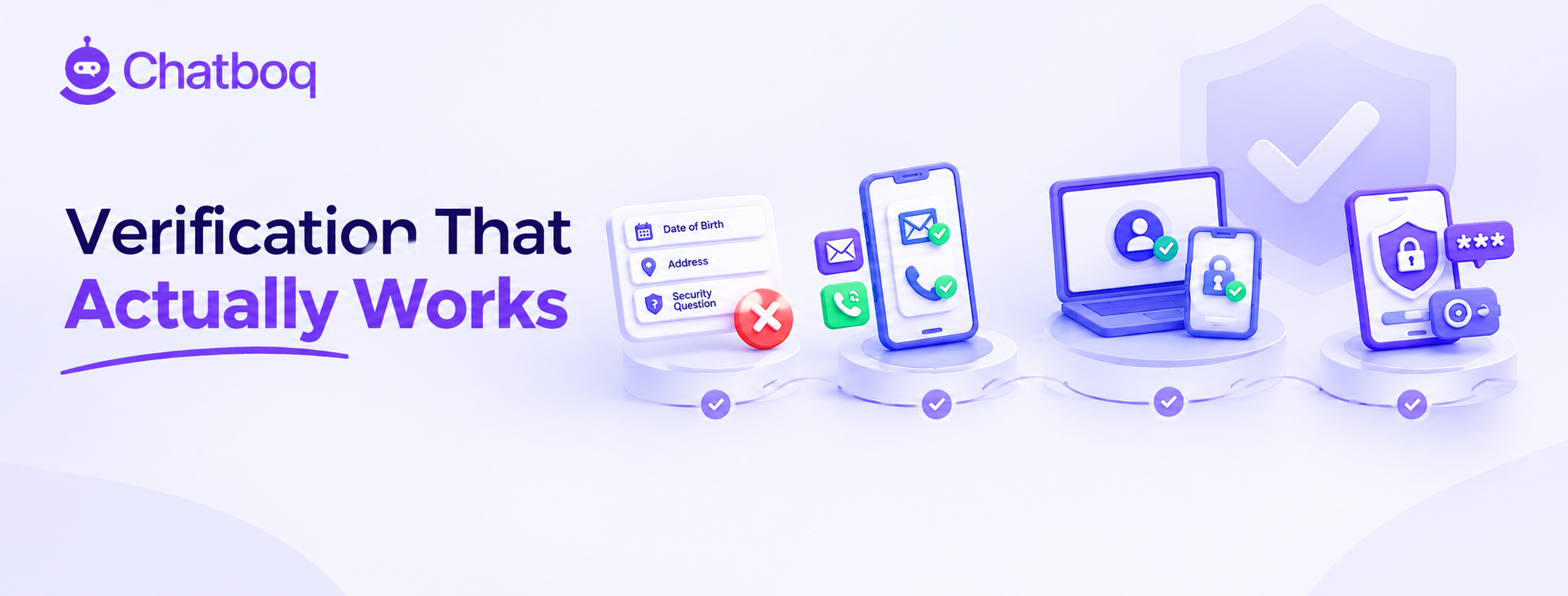





Leave a Comment
Your email address will not be published. Required fields are marked *
By submitting, you agree to receive helpful messages from Chatboq about your request. We do not sell data.