
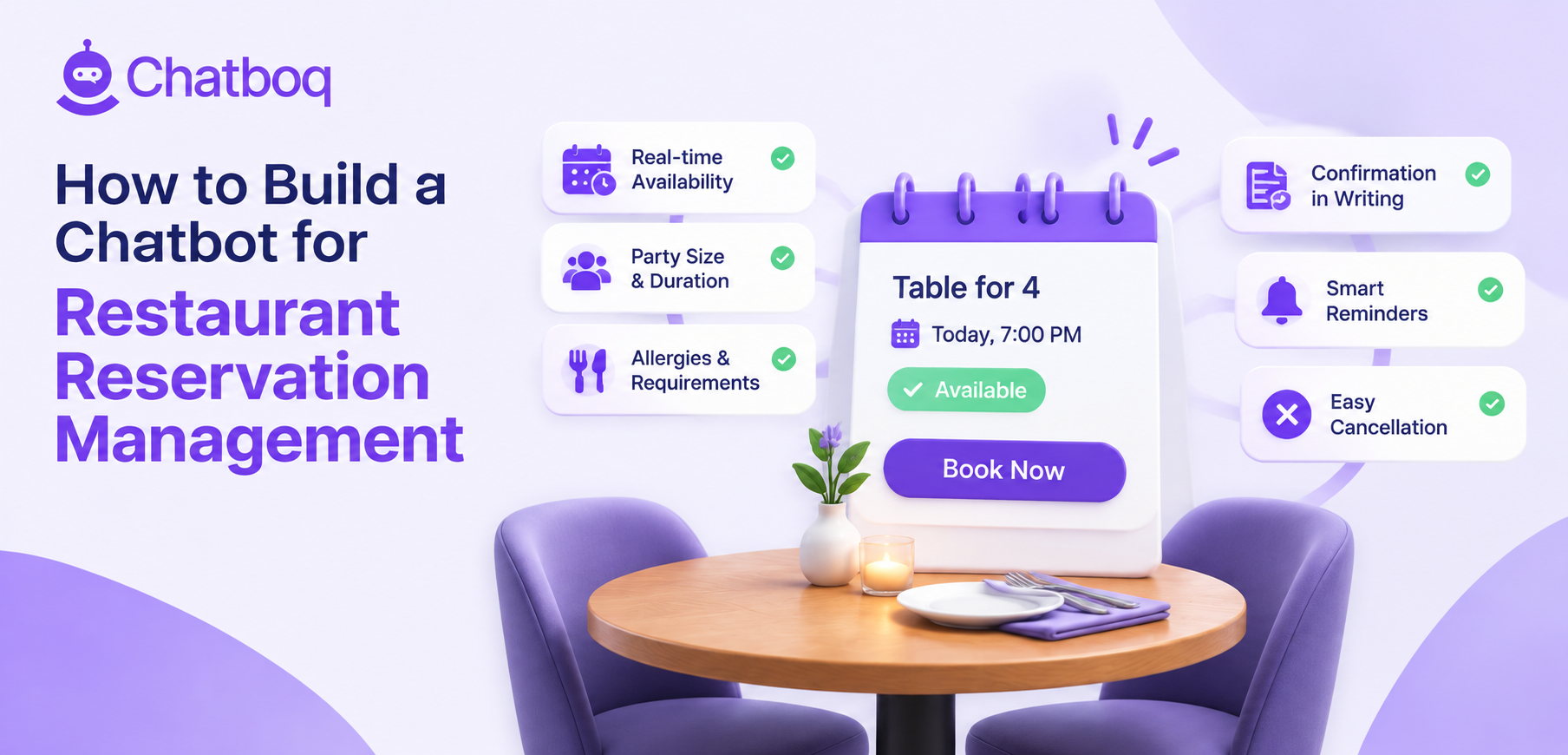
Restaurant availability depends on party size, table configuration and expected seating duration, not simply on whether the restaurant is open.
Party size drives everything
A restaurant with tables free may still be unable to seat six, which means the availability answer is meaningless without the party size.
Asking this before offering any times prevents the sequence where a time is offered and then withdrawn.
Seating duration
Different party sizes and service periods have different expected durations, and availability calculated without them either overbooks or wastes capacity.
Where the restaurant operates seatings, being clear about the time available is better than a diner discovering it on arrival.
Offering alternatives
When the requested time is unavailable, offering the nearest options converts a meaningful proportion of bookings that a simple decline would lose.
Diners are frequently flexible by half an hour and rarely say so unless asked.
Outdoor and section preferences
Where sections differ meaningfully, such as outdoor seating or a bar area, treating them as separate availability rather than one pool avoids disappointment on arrival.
Weather-dependent seating needs particular care, since a booking made in sunshine may not be honourable in rain.
Service period boundaries
A booking near the end of a service period may not leave time for a full meal, and offering it without saying so produces a disappointing experience.
Being explicit about last orders at the point of booking is better than a rushed table or a difficult conversation on arrival.
 ChatGPT
 Perplexity
 Claude




Leave a Comment
Your email address will not be published. Required fields are marked *
By submitting, you agree to receive helpful messages from Chatboq about your request. We do not sell data.