
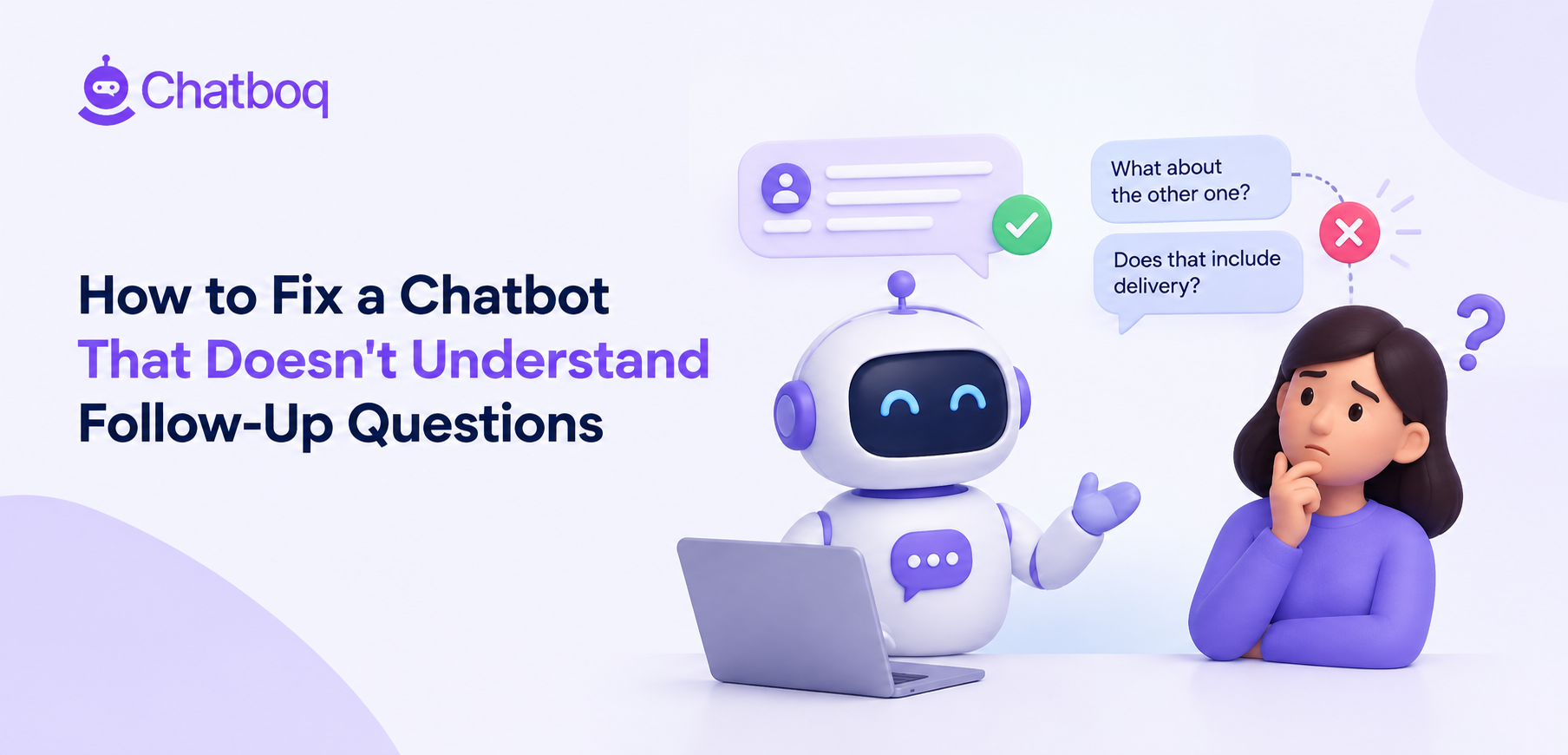
Send the follow-up question as a standalone message and then within the original conversation, since the difference tells you where the failure sits.
Correct alone, wrong in context
Where the question works in isolation and fails inside the conversation, the problem is that retained context is being applied wrongly rather than missing.
This is the least expected result and the one that points at clearing rules rather than at recognition.
Wrong alone, wrong in context
A question that fails both ways is not a follow-up problem at all, since the system does not recognise the phrasing regardless of what preceded it.
This is an ordinary intent coverage gap and should be fixed as one rather than treated as a context issue.
Meaningless alone
Where the question cannot be answered without history, such as what about the other one, the test confirms the system genuinely needs context to succeed.
The question then becomes whether the context existed and whether the reference was resolved, which are separate checks.
Checking what state was held
Looking at what the system retained at that point in the conversation distinguishes state that was cleared from state that was present and unused.
These have opposite fixes, which is why the check is worth making before changing anything.
Checking how long context persisted
Where a follow-up works immediately and fails after a pause, a timeout is discarding state on a timescale shorter than customers actually pause for.
Customers routinely take a minute to read an answer before responding, which is well within the window many systems use to clear.
 ChatGPT
 Perplexity
 Claude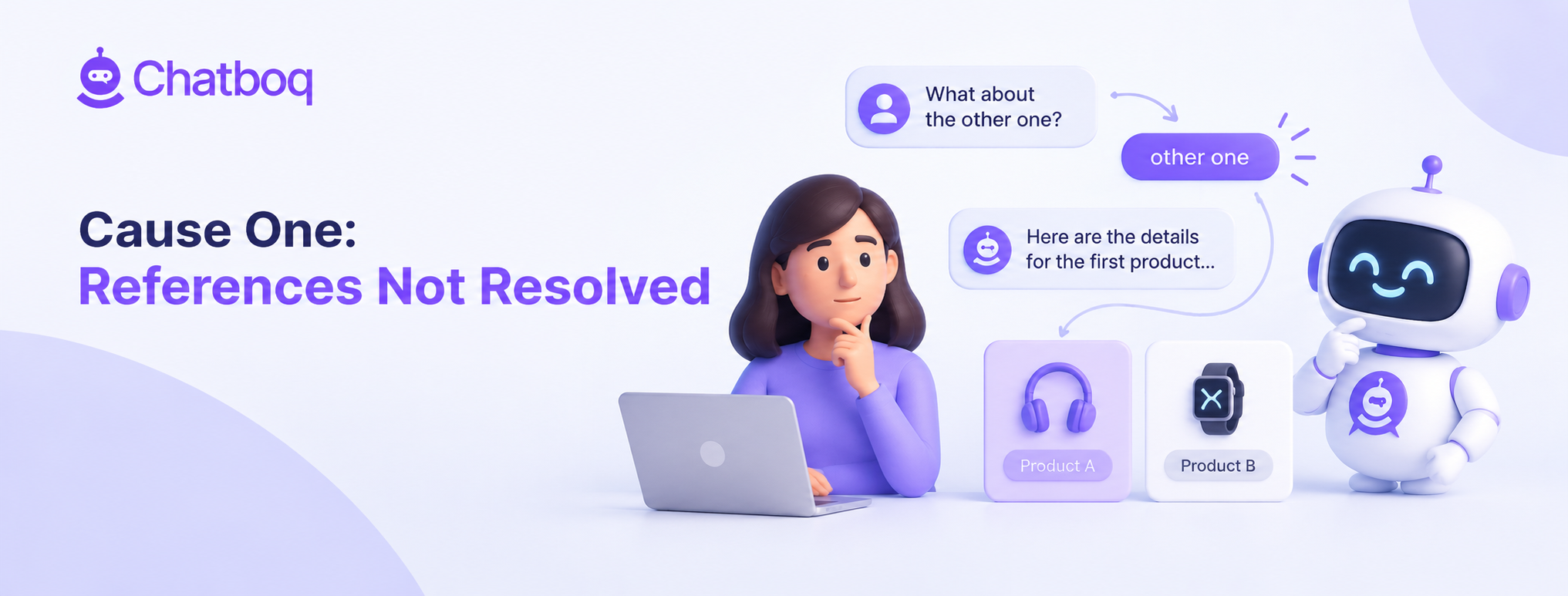




Leave a Comment
Your email address will not be published. Required fields are marked *
By submitting, you agree to receive helpful messages from Chatboq about your request. We do not sell data.