
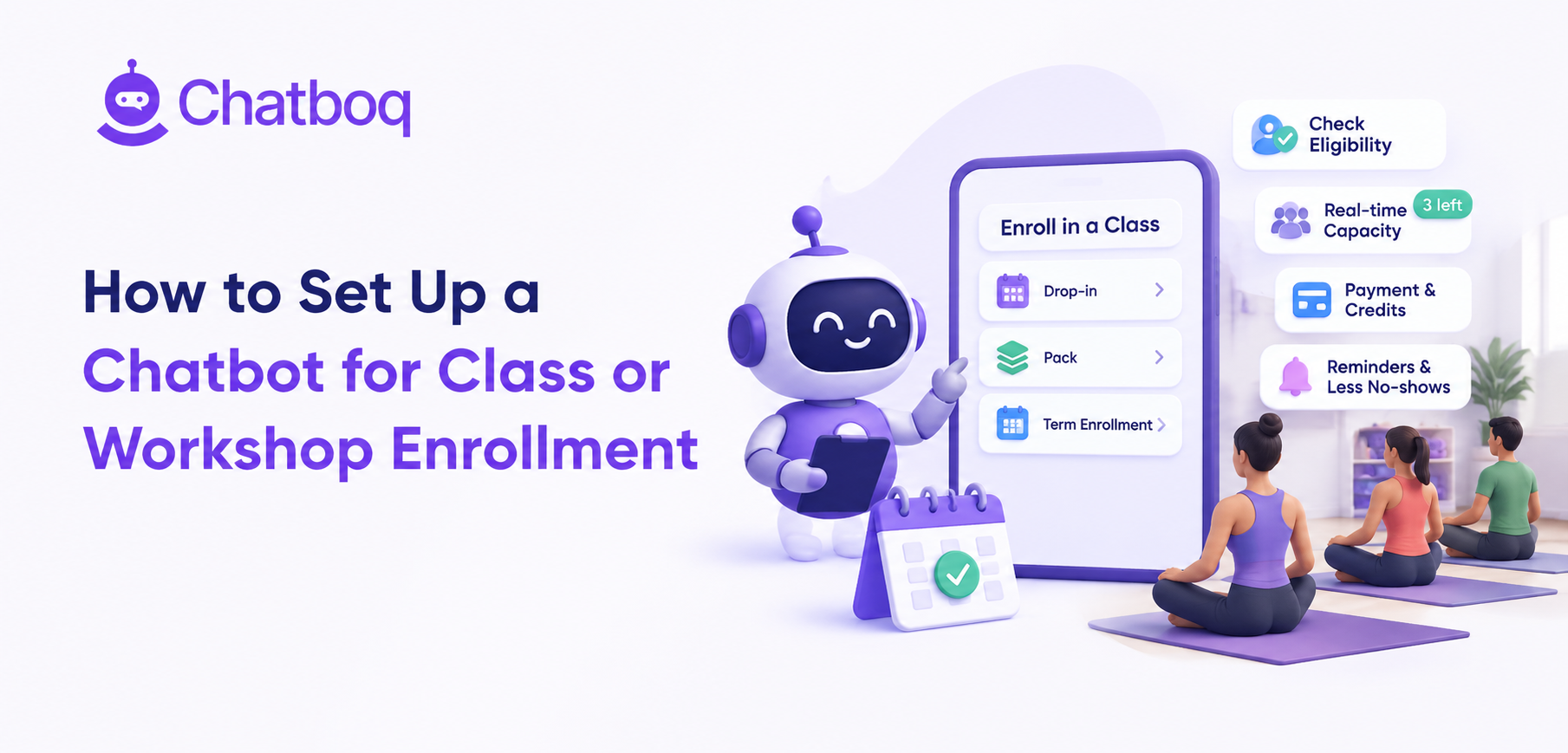
Drop-in, class pack, term enrolment and membership access all behave differently, and the flow must establish which applies before anything else.
Drop-in bookings
A single class booked and paid for individually is the simplest case and the one most first-time participants use, which makes it the right default for new visitors.
It is also the trial route, so the experience here disproportionately determines whether someone returns at all.
Class packs and credits
Where participants hold credits, the flow should check the balance, apply a credit automatically and state the remaining balance rather than asking for payment.
Warning when credits are running low, or approaching expiry, prevents the lapse that ends an otherwise active relationship.
Term enrolment
Booking a whole term commits the participant across many weeks and needs a different conversation about start dates, missed sessions and catch-up policy.
This model produces the most stable capacity and deserves being offered explicitly rather than only appearing on a separate page.
Recognising returning participants
A returning participant should skip identification, eligibility and preference questions entirely, reducing a booking to a class selection and confirmation.
Failing to do this is the most common friction in class booking and the easiest to remove once records are connected.
Trial and introductory offers
First-time participants frequently qualify for an introductory rate, and applying it automatically rather than requiring a code removes friction at the highest-stakes moment.
Checking eligibility silently also prevents an existing participant claiming a trial rate, which is the reason codes usually exist.
 ChatGPT
 Perplexity
 Claude





Leave a Comment
Your email address will not be published. Required fields are marked *
By submitting, you agree to receive helpful messages from Chatboq about your request. We do not sell data.