

The flow needs the card number, any verification the platform requires, and should return the balance with the information customers ask about next.
Accepting the card number
Accept the number with or without spaces and dashes, since customers copy it from a card or an email in whatever format it appears.
Validating the format before lookup gives an immediate useful error rather than a not found response that customers interpret as a worthless card.
Requiring a PIN where available
Where cards carry a PIN or security code, requiring it is the single most effective protection against number guessing and should not be optional.
For cards without one, the rate limiting discussed below becomes the primary control and needs to be correspondingly stricter.
Returning useful information
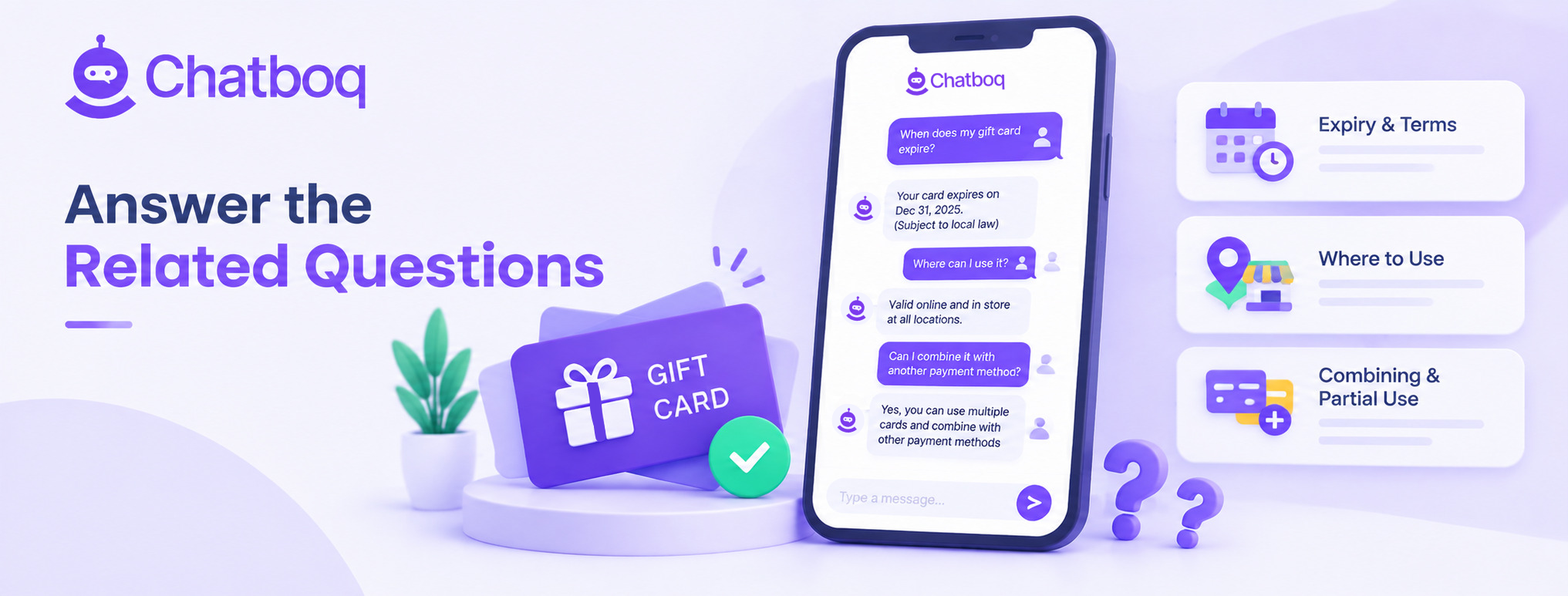
The balance alone prompts an immediate follow-up question about expiry or where the card can be used, so returning all three together resolves the conversation.
Including recent redemption activity, where available, answers the common case where a customer thinks the balance is wrong.
Masking in the transcript
The full card number should not persist in the conversation record, since transcripts are viewed by agents and stored longer than the lookup requires.
Masking all but the last few digits is standard and prevents a transcript becoming a source of usable card numbers.
Digital and physical differences
Digital cards arrive by email and are usually looked up by a code the customer can paste, while physical cards require reading a number from a card.
Accepting a photograph of the card, where the platform supports it, removes transcription errors that otherwise produce false not-found responses.
 ChatGPT
 Perplexity
 Claude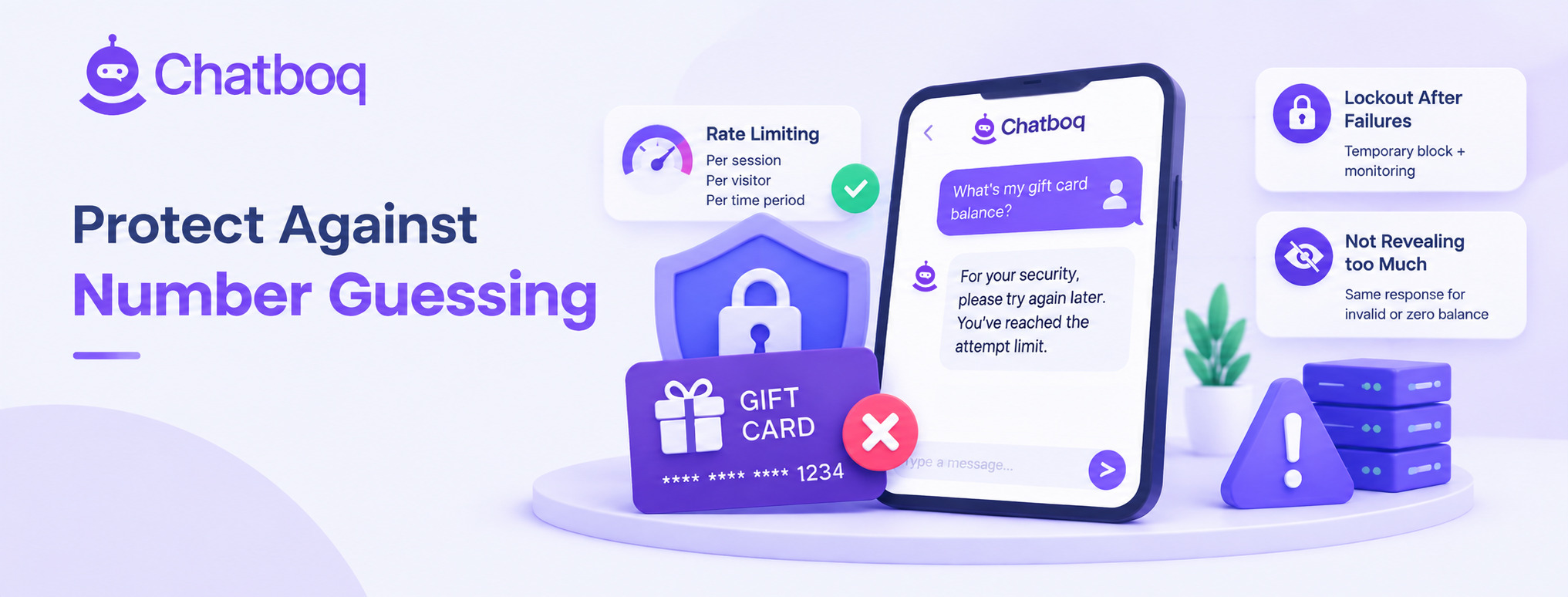






Leave a Comment
Your email address will not be published. Required fields are marked *
By submitting, you agree to receive helpful messages from Chatboq about your request. We do not sell data.