
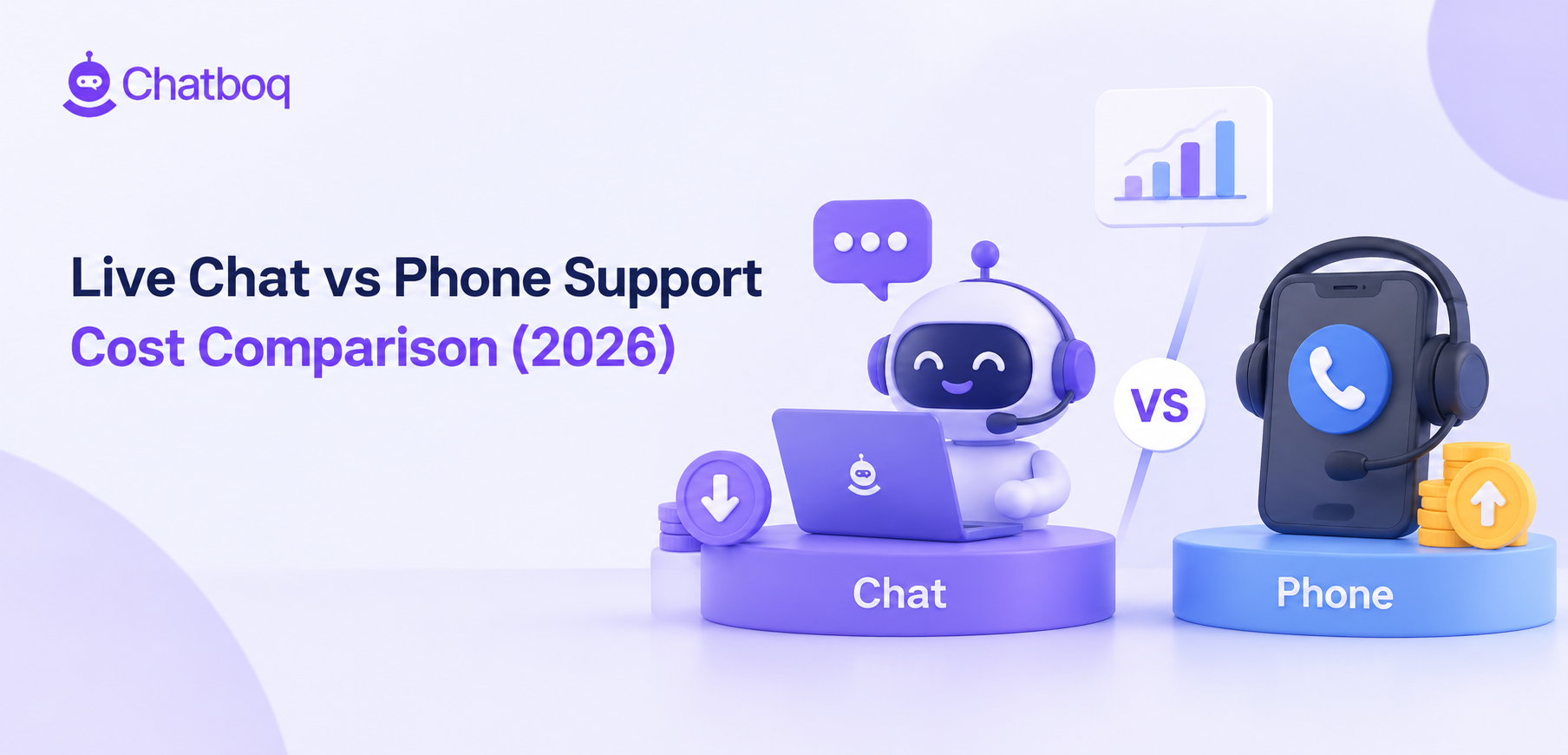
Concurrency accounts for most of it and infrastructure accounts for a smaller and real part.
Concurrency
An agent handling several chat conversations simultaneously produces more contacts per hour than one handling a single call.
This is the entire structural basis of the cost advantage and it is bounded by quality rather than by capability.
Infrastructure
Telephony carries per-minute and platform costs that chat largely avoids, which is a genuine if smaller component.
This difference has narrowed considerably as telephony has moved to internet-based delivery.
Asynchronous handling
A chat conversation can pause and resume, which lets agents use gaps productively in a way a call does not permit.
This is part of the concurrency advantage rather than separate from it.
Automation potential
Chat automates more readily than voice, which means a larger share of chat volume can be handled without an agent at all.
This is increasingly the largest source of the difference and is a property of the channel rather than of the interaction.
Recruitment and retention
Chat roles are frequently easier to fill and retain than phone roles, which affects recruitment cost and the proportion of the team ramping.
This is a real if secondary component of the difference.
 ChatGPT
 Perplexity
 Claude



Leave a Comment
Your email address will not be published. Required fields are marked *
By submitting, you agree to receive helpful messages from Chatboq about your request. We do not sell data.