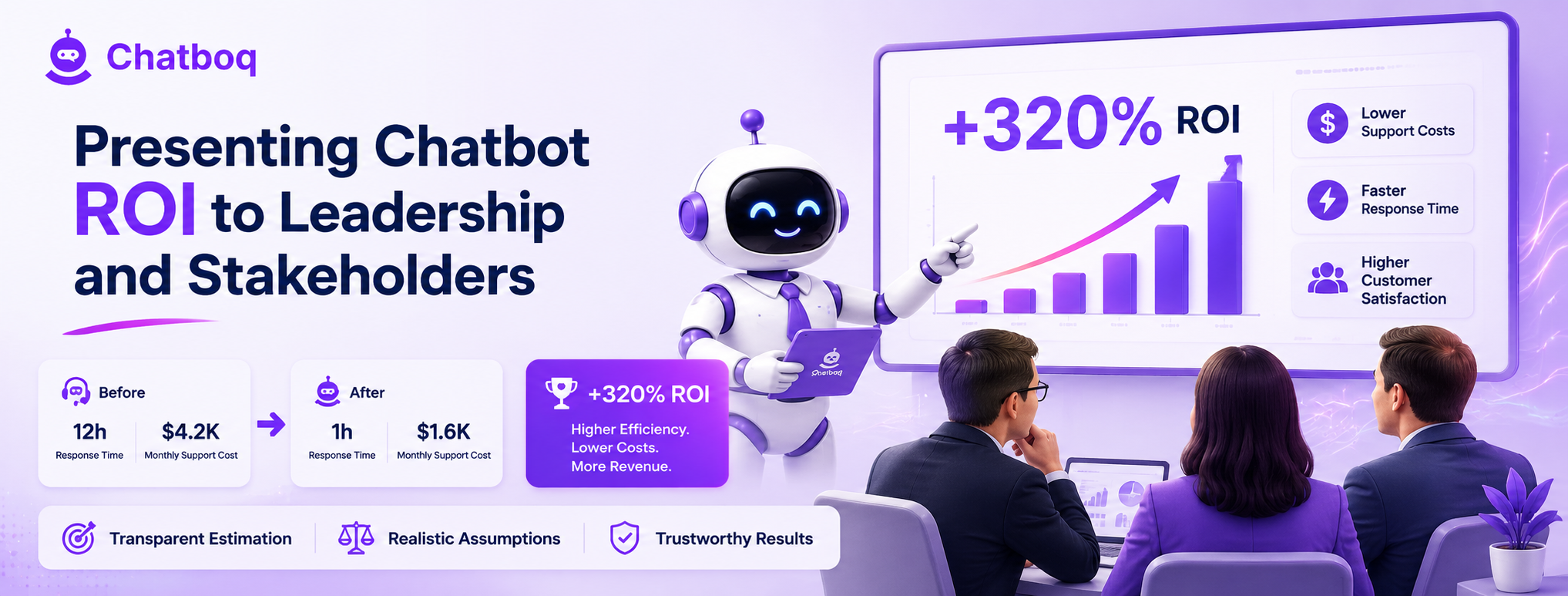
Presenting a chatbot ROI calculation to leadership tends to surface a predictable set of follow-up questions, about causal attribution, about downside risk from bot mistakes, about quarter-to-quarter variability, and about whether the current level of return is genuinely sustainable as the business scales, and having thoughtful, honest answers ready for each strengthens the credibility of the overall business case.
"How do we know the bot caused this?"
Comparing outcomes for bot-assisted conversations against a genuinely comparable baseline, rather than simply observing an overall metric improvement that coincided with the bot's launch, strengthens the causal case considerably, and being upfront about the limits of that attribution where it exists builds more credibility than overstating certainty.
"What if the bot makes a costly mistake?"
Acknowledging this risk directly, and describing the specific safeguards in place, scope limitations, human escalation triggers, ongoing monitoring, reassures stakeholders that the risk has been actively considered and mitigated rather than ignored in pursuit of a favorable ROI number.
"Why does ROI look different this quarter?"
Being able to point to specific, identifiable drivers of quarter-to-quarter variation, a seasonal volume shift, a recent script overhaul, a change in the underlying cost baseline, demonstrates that the number is being genuinely tracked and understood rather than treated as an opaque figure nobody can fully explain.
"Is this sustainable as we scale?"
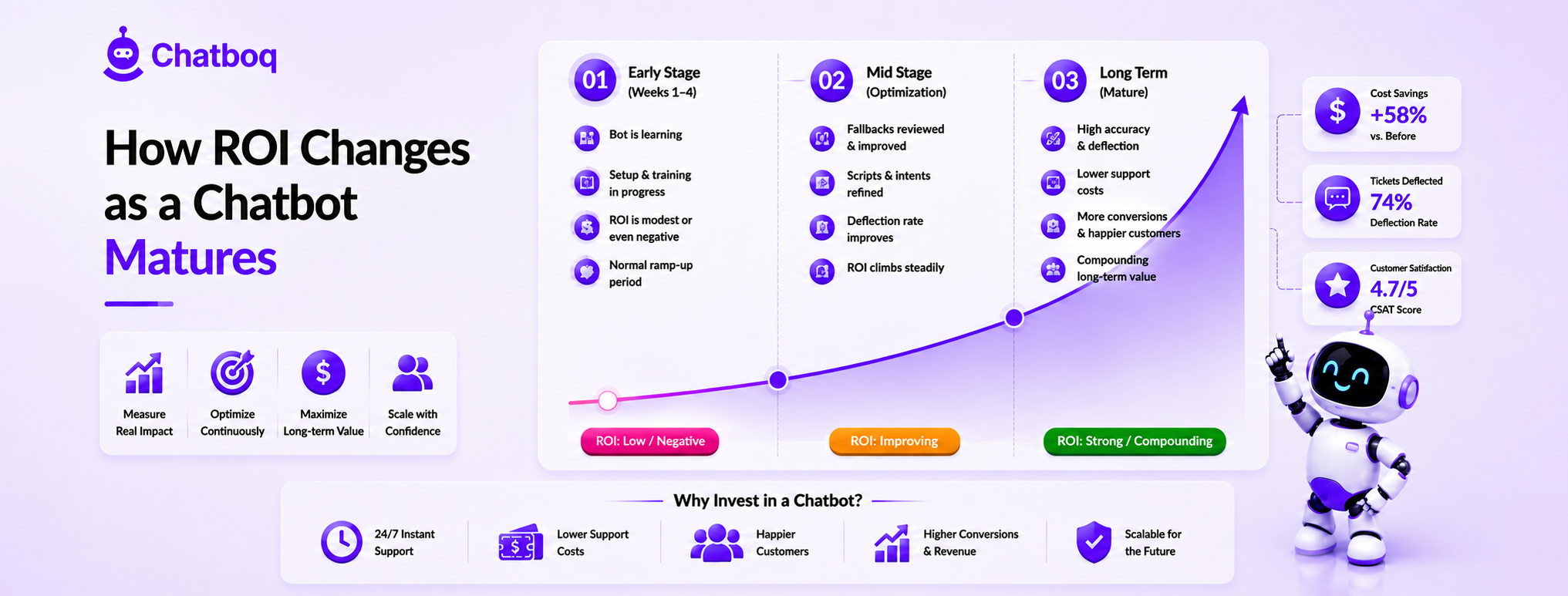
Addressing this requires being honest about which parts of current ROI scale linearly with volume, deflection savings generally do, and which parts require continued, deliberate investment to sustain, ongoing content maintenance and script refinement, rather than assuming the current return will simply persist automatically at a larger scale.

 ChatGPT
 Perplexity
 Claude




Leave a Comment
Your email address will not be published. Required fields are marked *
By submitting, you agree to receive helpful messages from Chatboq about your request. We do not sell data.