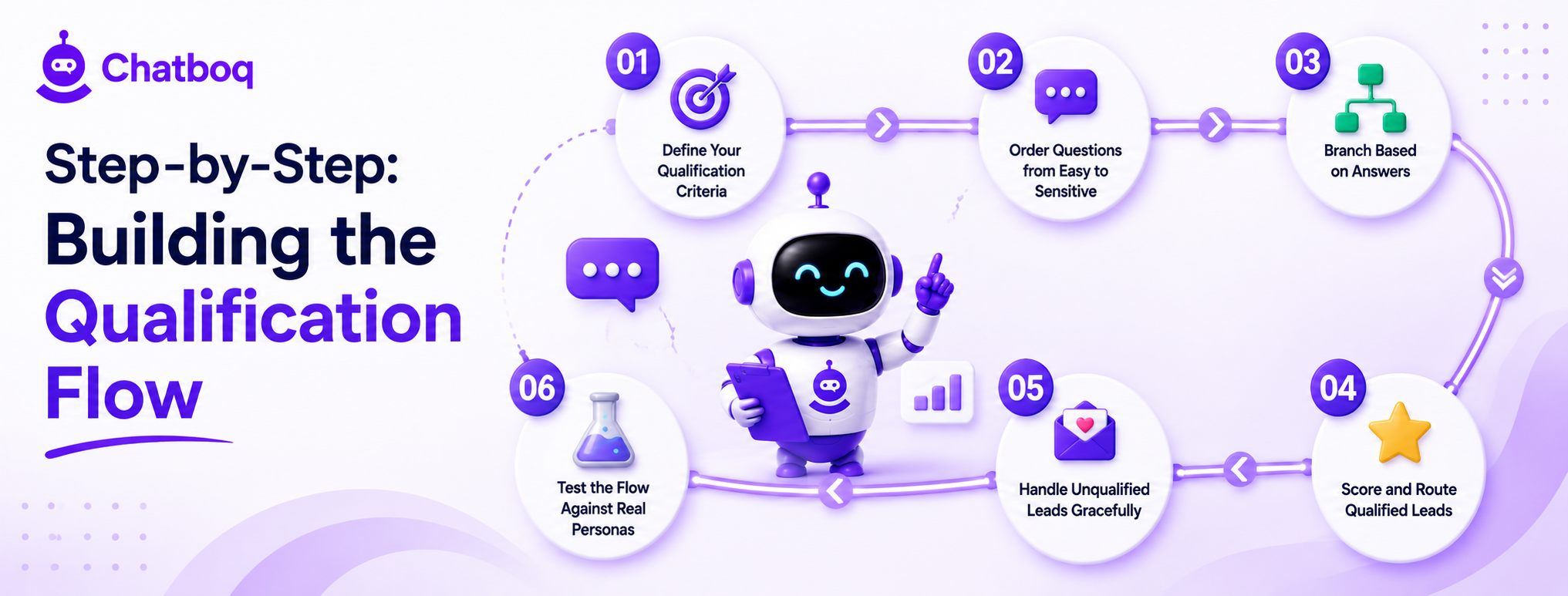
Building this well involves clearly defining your qualification criteria upfront, ordering questions from easy to more sensitive, branching intelligently based on how each question is answered, scoring and routing qualified leads appropriately, gracefully handling those who don't qualify, and testing the whole flow against a range of realistic personas before launch.
Step 1: Define your qualification criteria
Working with the sales team to explicitly define what actually makes a lead worth prioritizing, specific budget thresholds, company size ranges, timeline windows, gives the rest of the flow a clear, agreed-upon target to design toward rather than a vague, subjective sense of a good lead.
Step 2: Order questions from easy to sensitive
Starting with low-friction, easy-to-answer questions before working toward more sensitive ones, like budget, builds conversational momentum and reduces the chance of a visitor abandoning the flow right at the very first, most invasive-feeling question.
Step 3: Branch based on answers
Rather than asking every visitor the identical fixed sequence regardless of their answers, branching the flow based on earlier responses, skipping irrelevant follow-up questions or diving deeper where a strong signal appears, keeps the conversation efficient and genuinely relevant.
Step 4: Score and route qualified leads
Assigning a clear, consistent score based on the combination of answers, and routing leads above a defined threshold directly and quickly to the appropriate sales contact, ensures the highest-value leads get fast attention rather than sitting in an undifferentiated general queue.
Step 5: Handle unqualified leads gracefully
A lead that doesn't meet the qualification bar shouldn't simply be dropped; offering a self-service resource, a lower-touch nurture path, or a general contact option keeps the interaction genuinely useful for that visitor even if they're not currently a strong sales fit.
Step 6: Test the flow against real personas
Running the flow through several realistic buyer personas, a strong-fit enterprise lead, a poor-fit small inquiry, an ambiguous middle case, before launch reveals branching or scoring issues that are easy to miss when only testing a single, idealized example.


 ChatGPT
 Perplexity
 Claude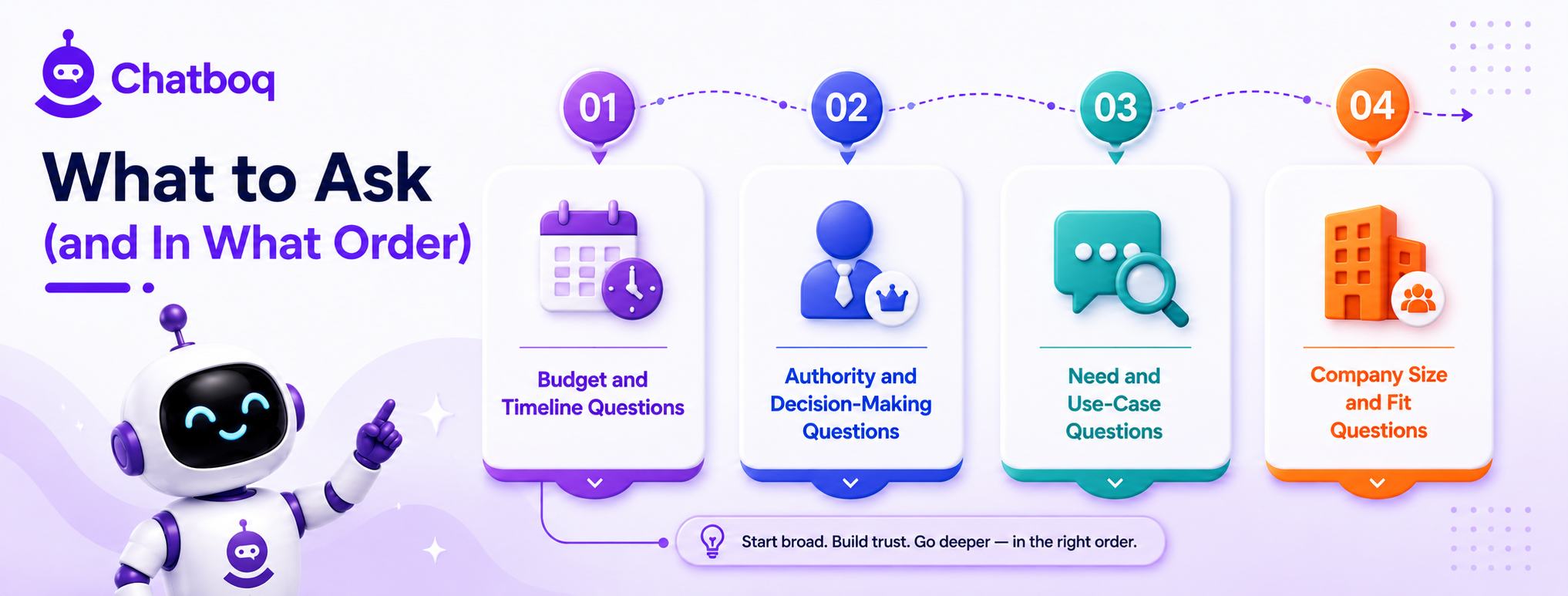

 Questions read as an interrogation when they're framed too bluntly, feel unexplained, or stack up into an unreasonably long sequence, while framing each question conversationally, briefly explaining why it's being asked, and keeping the overall flow appropriately short all help it feel more like a helpful conversation than a form.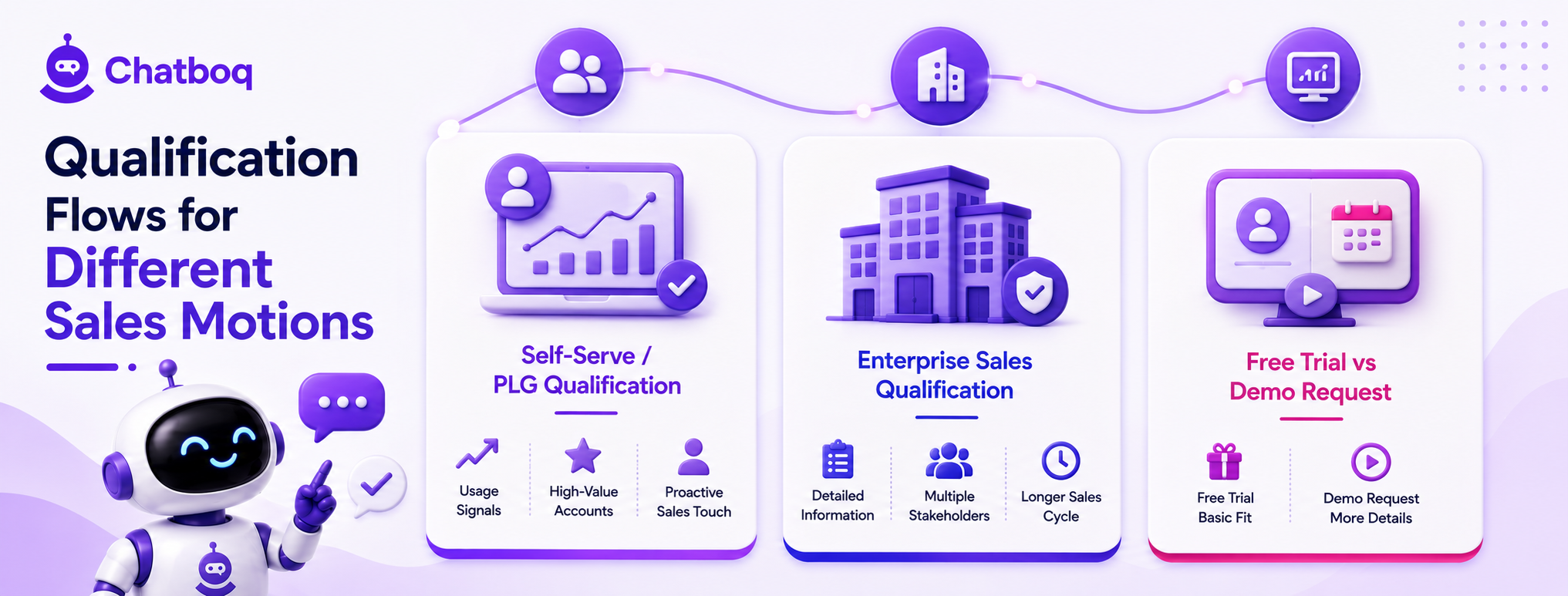
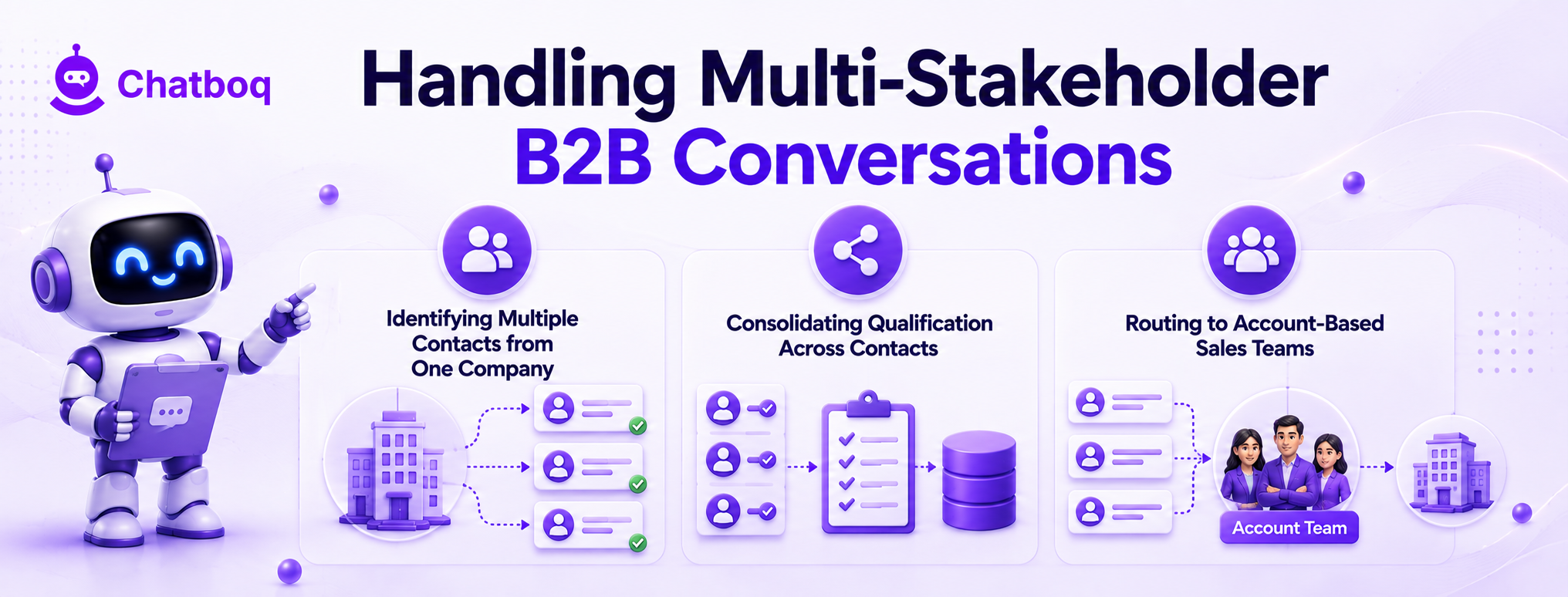 B2B qualification often needs to account for multiple people from the same company engaging separately, requiring a way to identify and consolidate those related contacts rather than treating each one as an entirely independent, disconnected lead.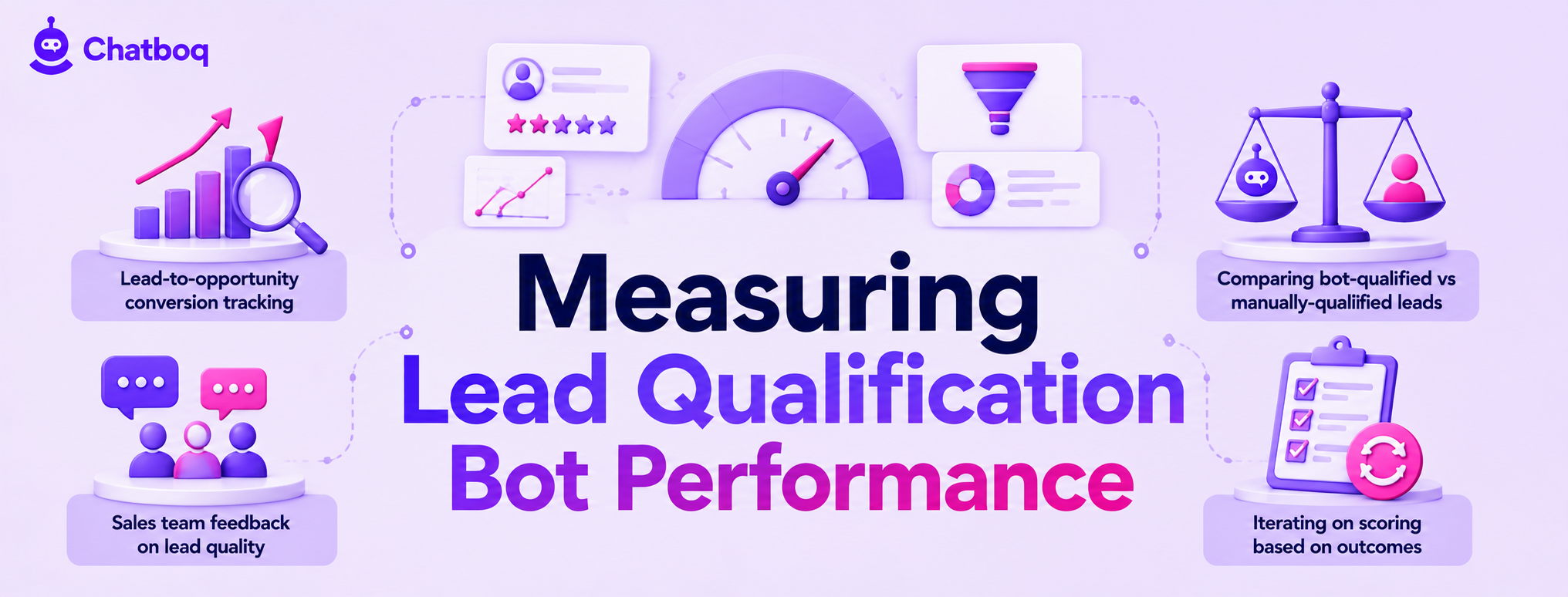



Leave a Comment
Your email address will not be published. Required fields are marked *
By submitting, you agree to receive helpful messages from Chatboq about your request. We do not sell data.