
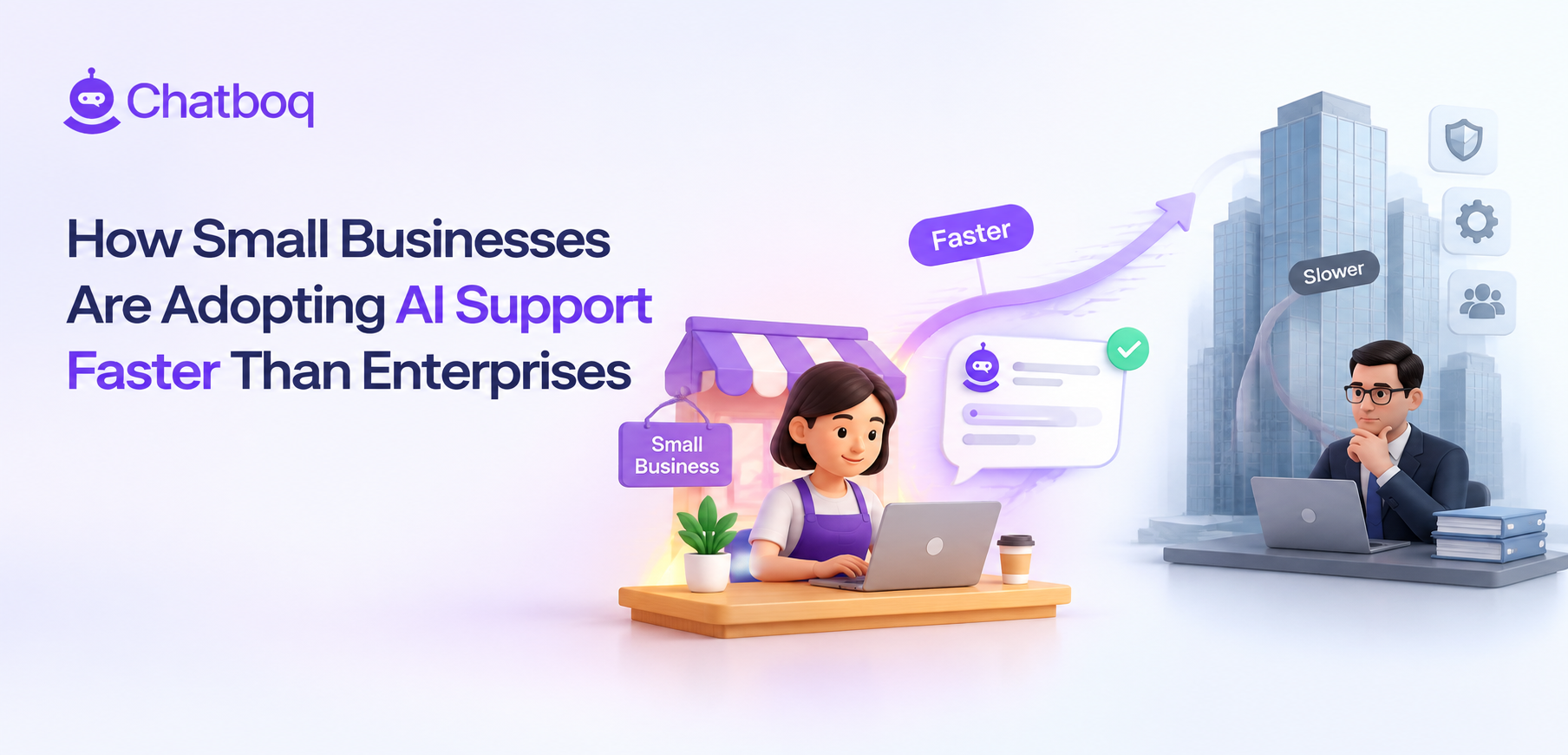
Four structural factors compress the timeline: one decision maker, simple systems, acute need and low switching cost.
One person decides
An owner can evaluate and deploy in an afternoon, where an enterprise decision involves procurement, security, legal, IT and several stakeholders.
This alone accounts for a substantial share of the difference and is not something an enterprise can simply choose to remove.
Simple systems
Connecting one ecommerce platform or one booking system is a straightforward task, whereas enterprise integration involves several systems with their own constraints.
The absence of legacy infrastructure is a genuine advantage rather than only a smaller version of the same problem.
The need is acute
A small business frequently has nobody available to answer during trading hours, which makes an automated response better than the alternative of silence.
The comparison is not against a well-staffed support team, which changes the threshold for adoption considerably.
Low switching cost
Trying something and stopping costs a small business a month's subscription and some configuration time, which makes experimentation rational.
An enterprise deployment carries integration, training and change management costs that make reversal expensive.
Nothing to migrate
A business with no existing support system has no migration, no data mapping and no parallel running to plan.
This absence of legacy is frequently the largest single difference and is not available to larger organisations.
 ChatGPT
 Perplexity
 Claude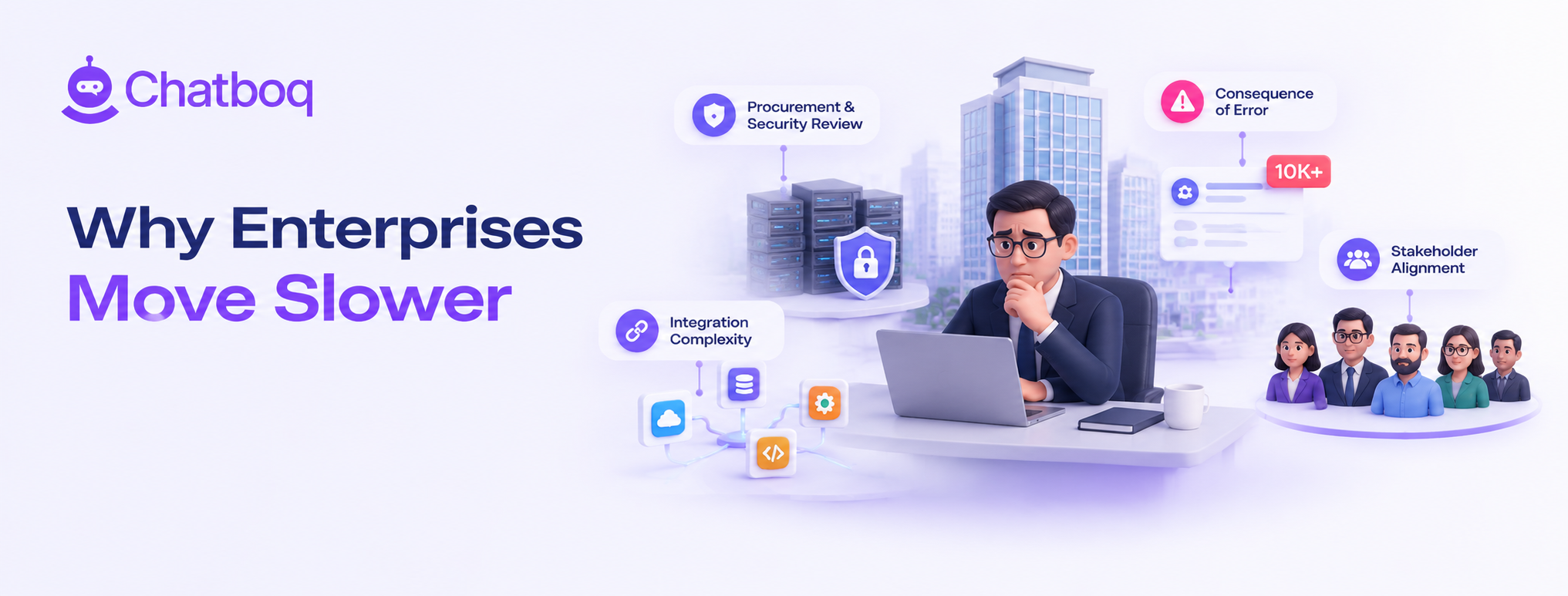



Leave a Comment
Your email address will not be published. Required fields are marked *
By submitting, you agree to receive helpful messages from Chatboq about your request. We do not sell data.