
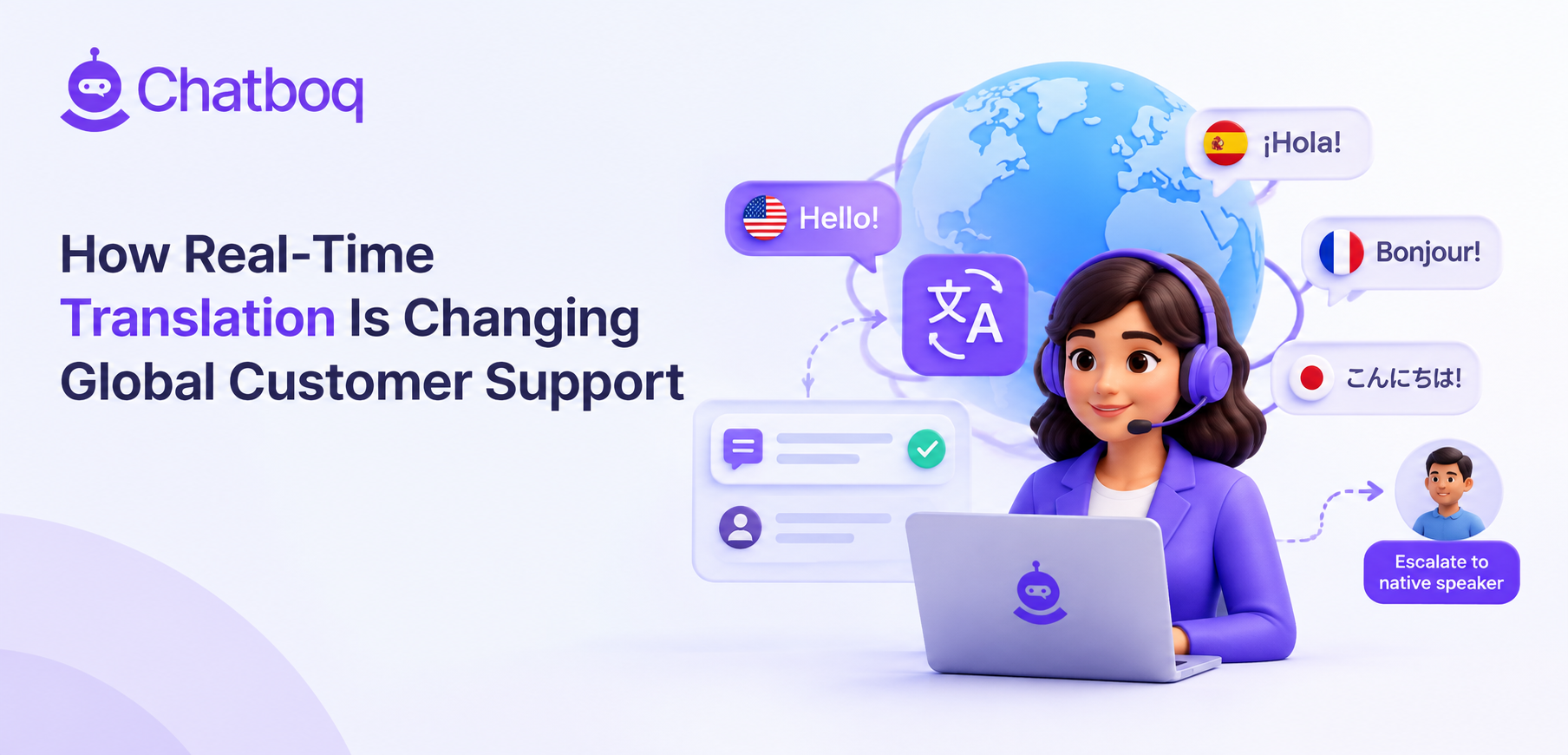
Language coverage stops being a hiring decision, which changes market entry, staffing and the economics of small language markets.
Coverage without hiring
A team can respond in a language nobody on it speaks, which was previously impossible without recruitment or outsourcing.
This is most significant for languages with too little volume to justify a dedicated hire, which was previously the coverage gap.
Market entry cost
Testing a new market no longer requires committing to language support in advance, which lowers the threshold for trying.
Whether translated support is sufficient for a market you are serious about is a separate question from whether it is sufficient to test one.
Agent pooling
Where language no longer determines who can handle a conversation, agents can be pooled rather than segmented, which improves coverage and response times.
This matters most for smaller teams where language segmentation left several queues thinly staffed.
Coverage across time zones
A team in one region can serve customers in another during their working hours, which was previously constrained by both language and location.
The two constraints were frequently the same constraint, and removing one removes much of the other.
 ChatGPT
 Perplexity
 Claude





Leave a Comment
Your email address will not be published. Required fields are marked *
By submitting, you agree to receive helpful messages from Chatboq about your request. We do not sell data.