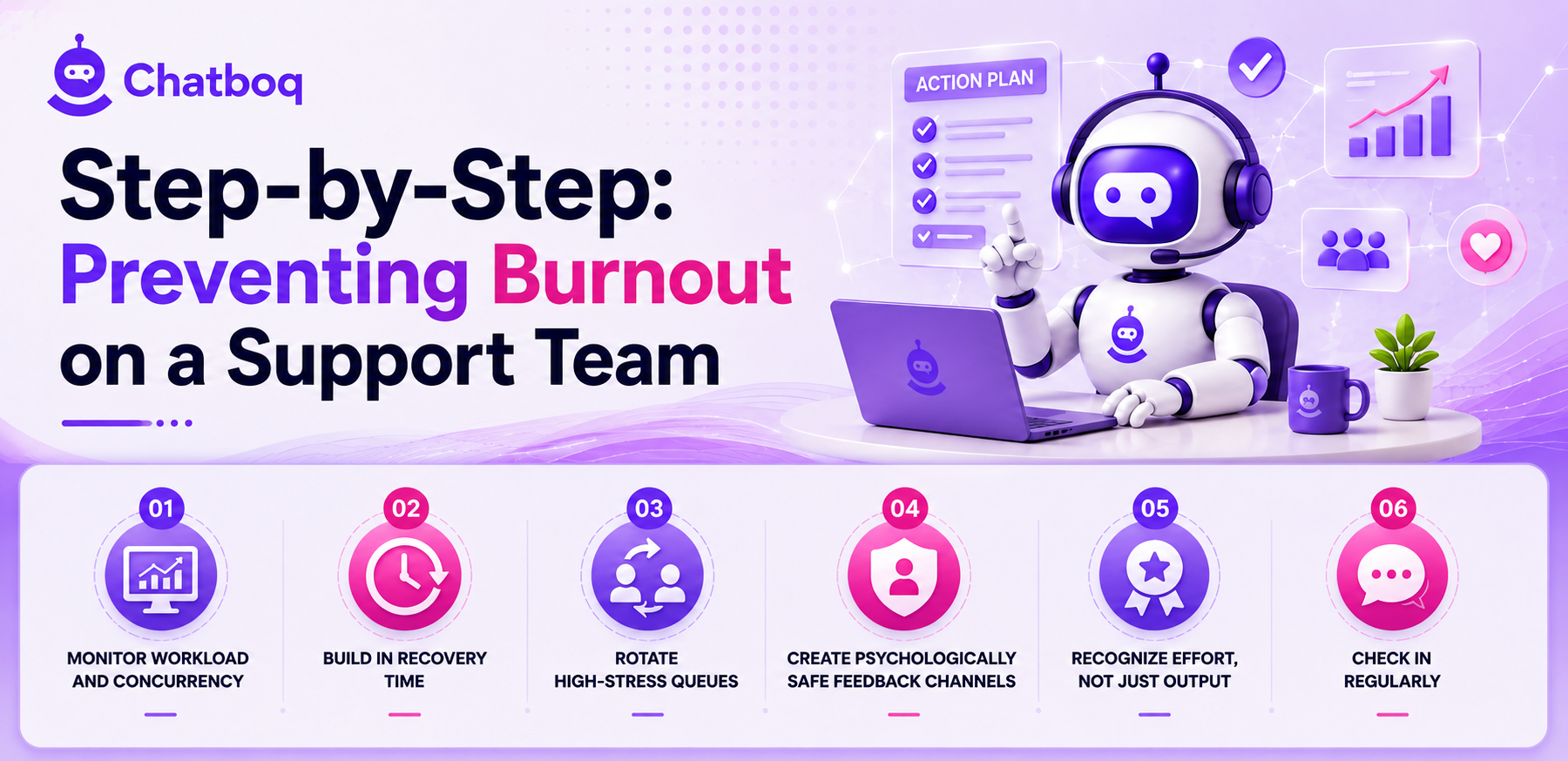
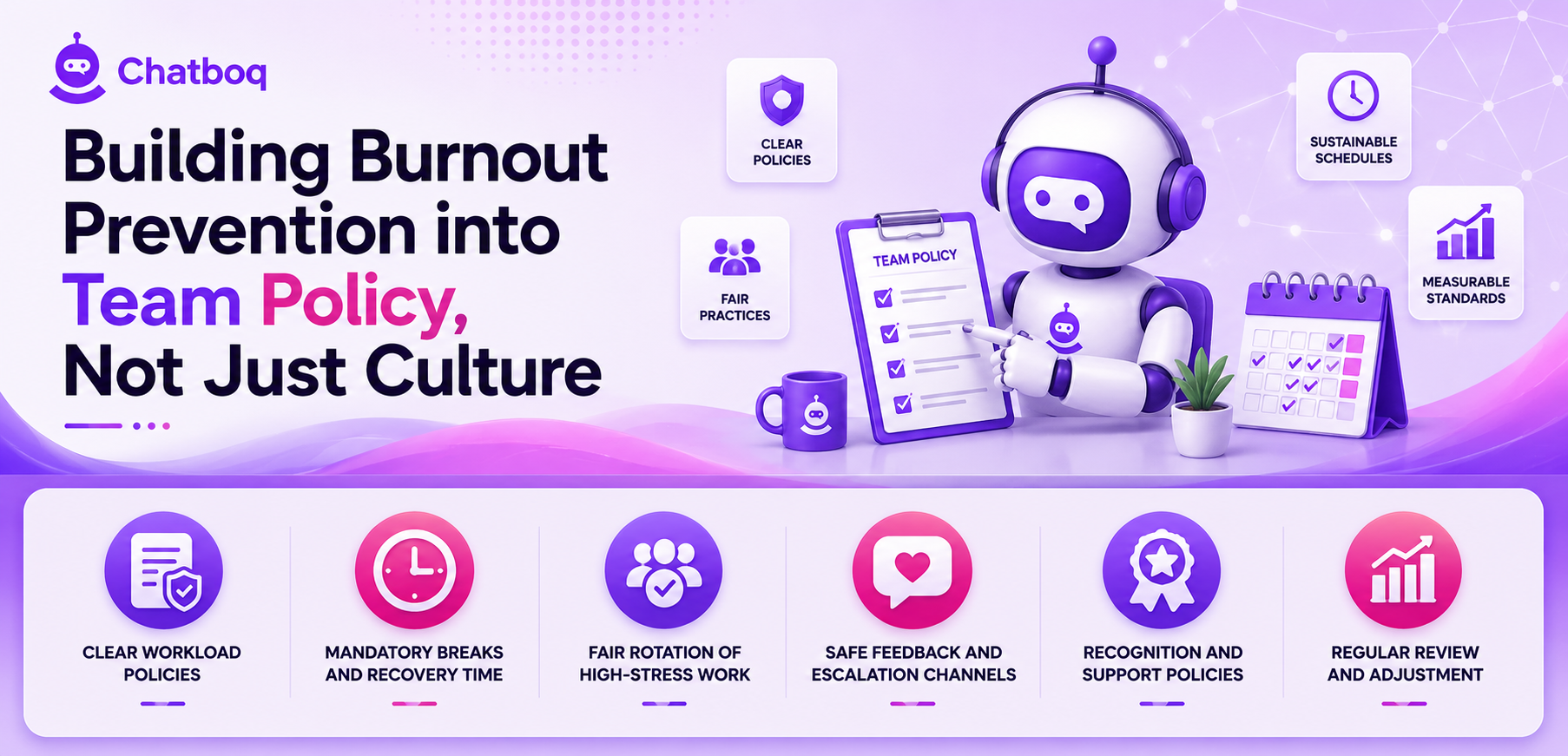
Preventing burnout at the team level involves realistically monitoring workload and concurrency, deliberately building in recovery time after genuinely difficult conversations, rotating agents through high-stress queues rather than leaving the same people there indefinitely, creating psychologically safe feedback channels, recognizing effort and not just raw output, and checking in regularly rather than only during formal reviews.
Step 1: Monitor workload and concurrency realistically
Tracking actual workload against a realistic, sustainable capacity, rather than the maximum theoretical throughput a system allows, prevents the kind of chronic overload that reliably leads to burnout over time.
Step 2: Build in recovery time after difficult conversations
Giving an agent a brief, genuine moment to reset after a particularly difficult conversation, rather than immediately routing the next request to them, respects the real emotional cost of that interaction rather than treating every conversation as interchangeable.
Step 3: Rotate high-stress queues
Rotating which agents handle the most emotionally demanding queue or issue type, rather than permanently assigning the same people to the hardest work, distributes the emotional burden more sustainably across the whole team.
Step 4: Create psychologically safe feedback channels
Agents need a genuine, low-risk way to raise concerns about workload or difficult situations without fear of it being held against them, since a culture where raising concerns feels risky tends to suppress exactly the early signals that would otherwise allow a manager to intervene sooner.
Step 5: Recognize effort, not just output
Explicitly recognizing an agent's effort in handling a genuinely difficult situation well, regardless of the raw output numbers, reinforces that the emotional labor involved is genuinely seen and valued rather than only the visible metrics.
Step 6: Check in regularly, not just during reviews
Brief, regular check-ins focused specifically on how an agent is genuinely doing, separate from formal performance reviews, create more frequent opportunities to catch early burnout signals before they escalate into something more serious.

 ChatGPT
 Perplexity
 Claude




Leave a Comment
Your email address will not be published. Required fields are marked *
By submitting, you agree to receive helpful messages from Chatboq about your request. We do not sell data.