
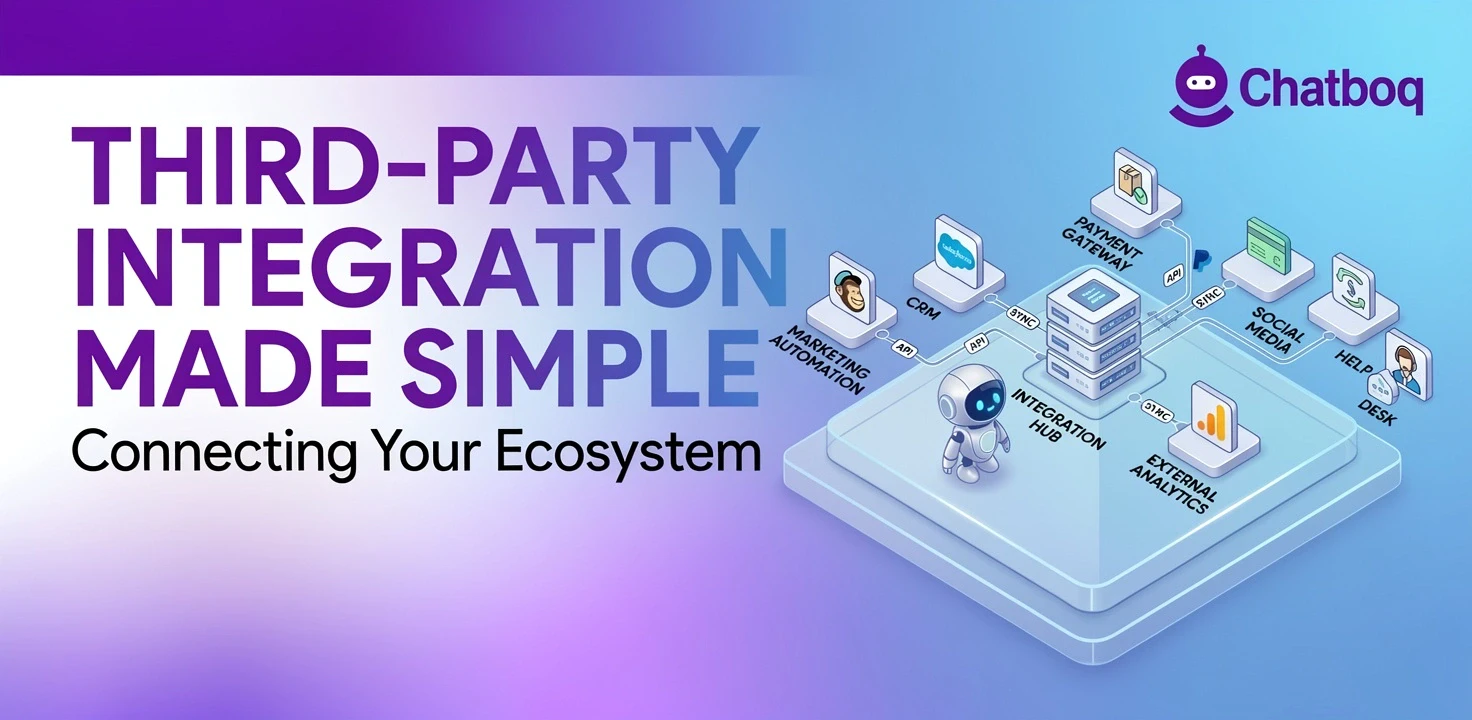
A third-party integration is a connectivity layer that allows different software systems to work together by sharing data and triggering actions across platforms. It allows businesses to extend the functionality of one application by connecting it with external tools instead of building features internally.
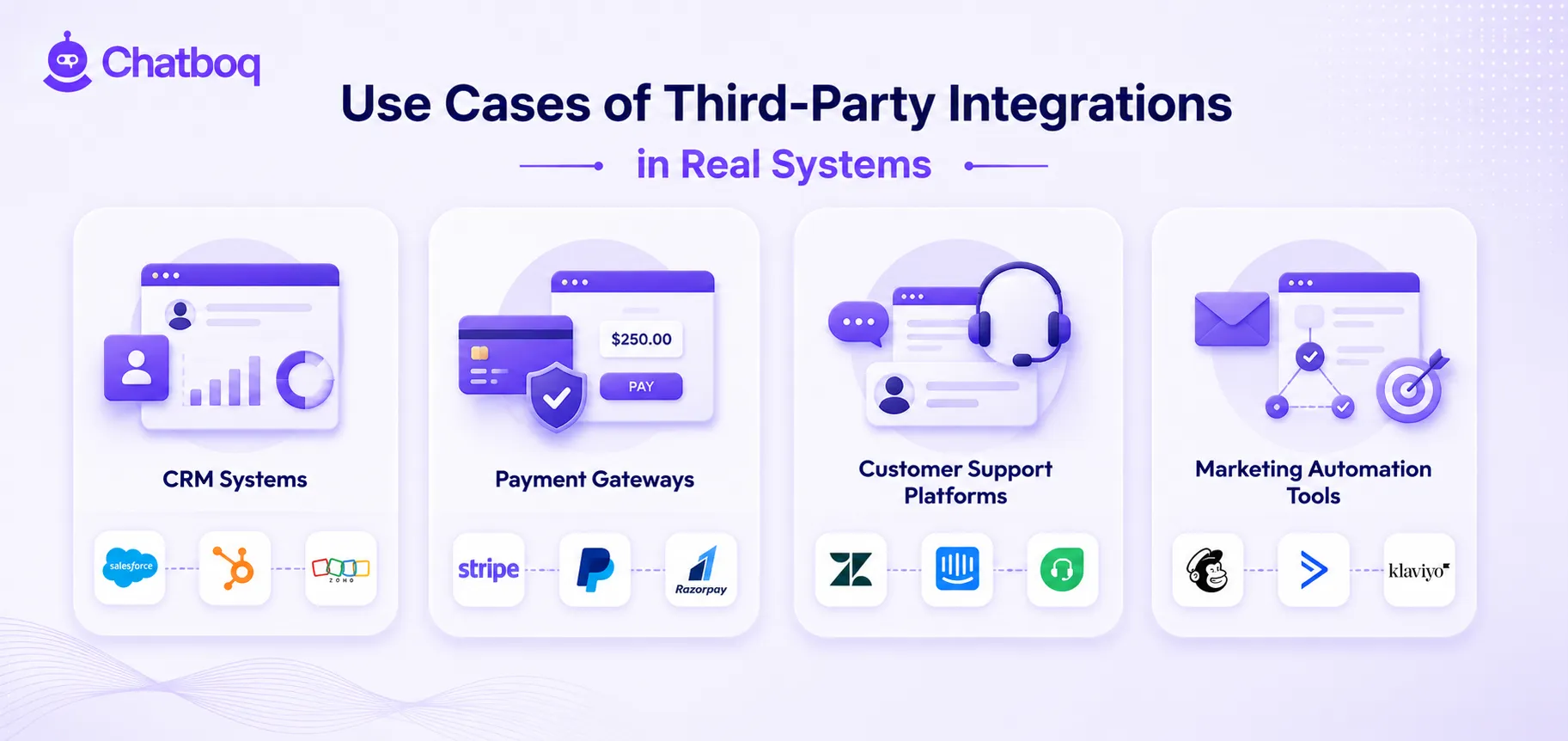
Third-party integrations are used across SaaS products, CRM systems, payment gateways, marketing tools, and customer support platforms. Salesforce integrates with Zendesk. Stripe integrates with eCommerce platforms. HubSpot integrates with Mailchimp. Each connection extends native platform functionality without requiring internal development of the external tool's capabilities.
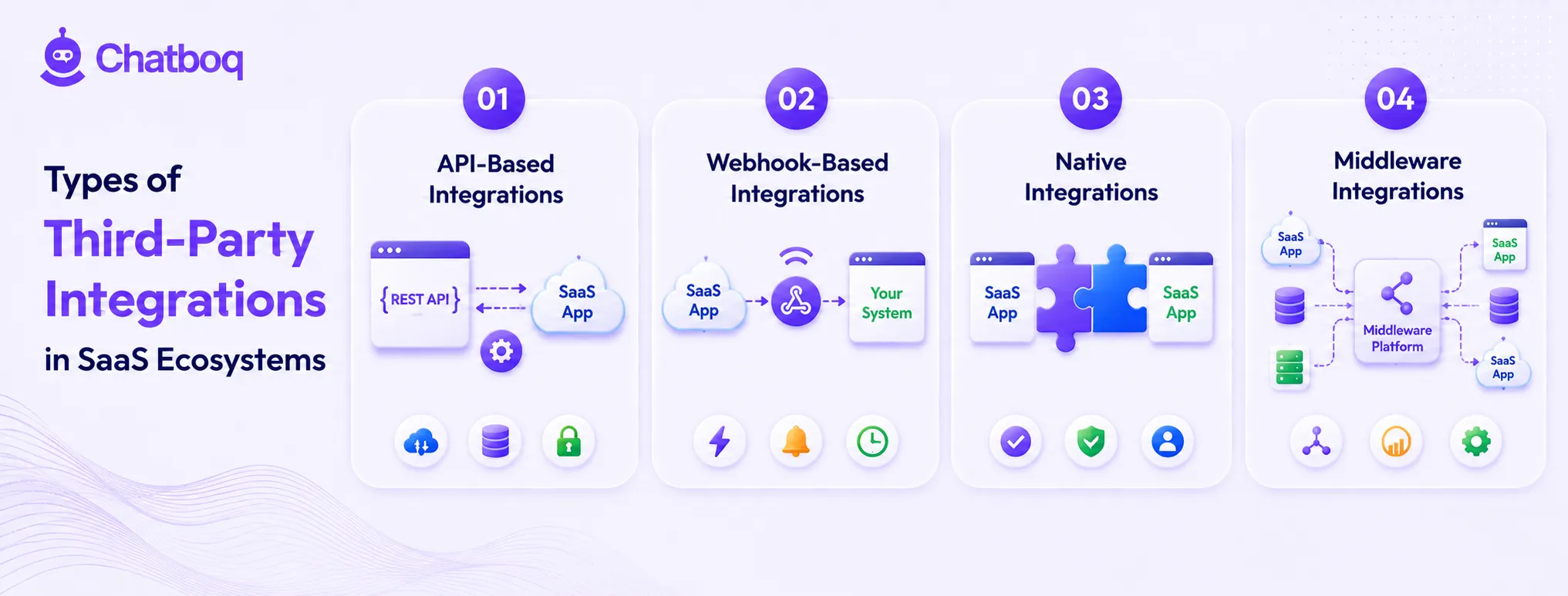
Integrations work through 4 primary models: API-based integration using direct HTTP requests, webhook-based integration using real-time event callbacks, native integration using pre-built platform connectors, and middleware integration using iPaaS platforms like Zapier, Make, or MuleSoft. Each model serves different technical requirements and data volume needs.
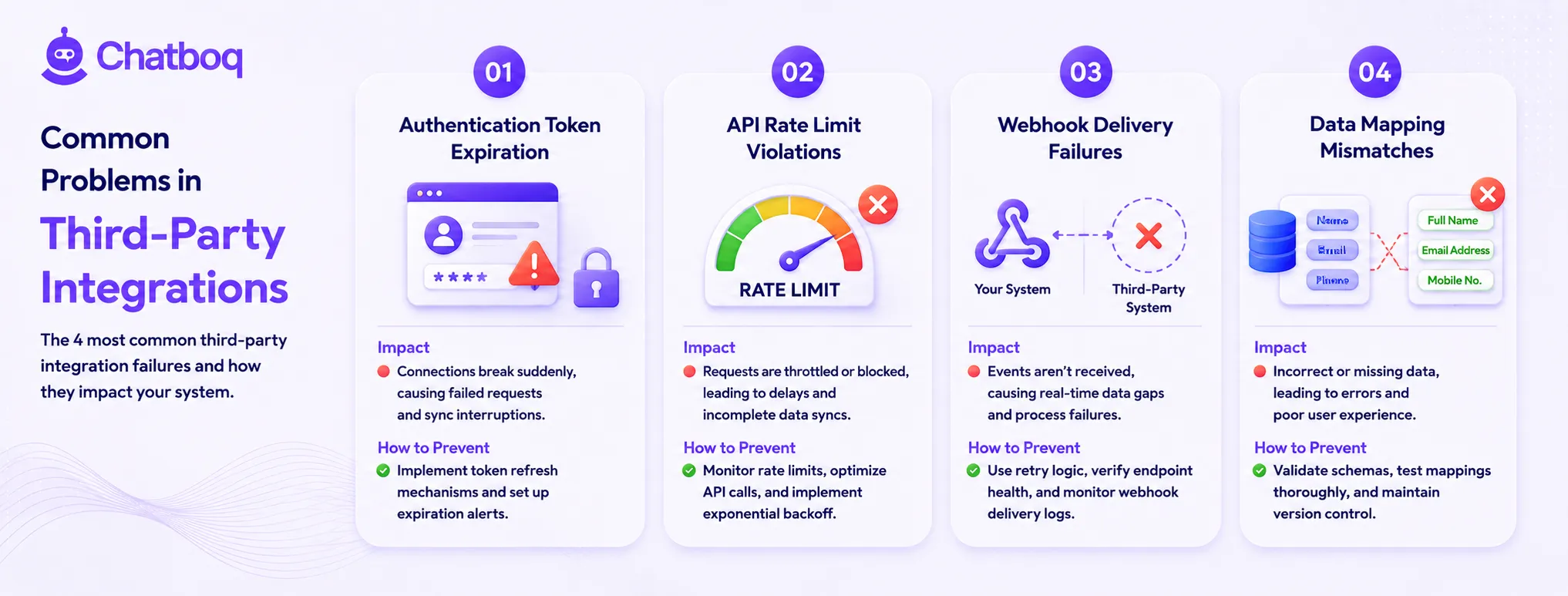
Third-party integrations improve workflow automation by reducing manual handoffs between systems, reduce manual data entry, and improve data accuracy across connected systems. They also introduce security requirements including OAuth 2.0 authentication, scoped access permissions, and encrypted data transmission. Common failure points include API rate limits, expired authentication tokens, and data mapping mismatches between connected platforms. Organizations managing multiple active integrations often require monitoring systems that alert on authentication failures, sync errors, and endpoint unavailability before those failures affect business operations.
 ChatGPT
 Perplexity
 Claude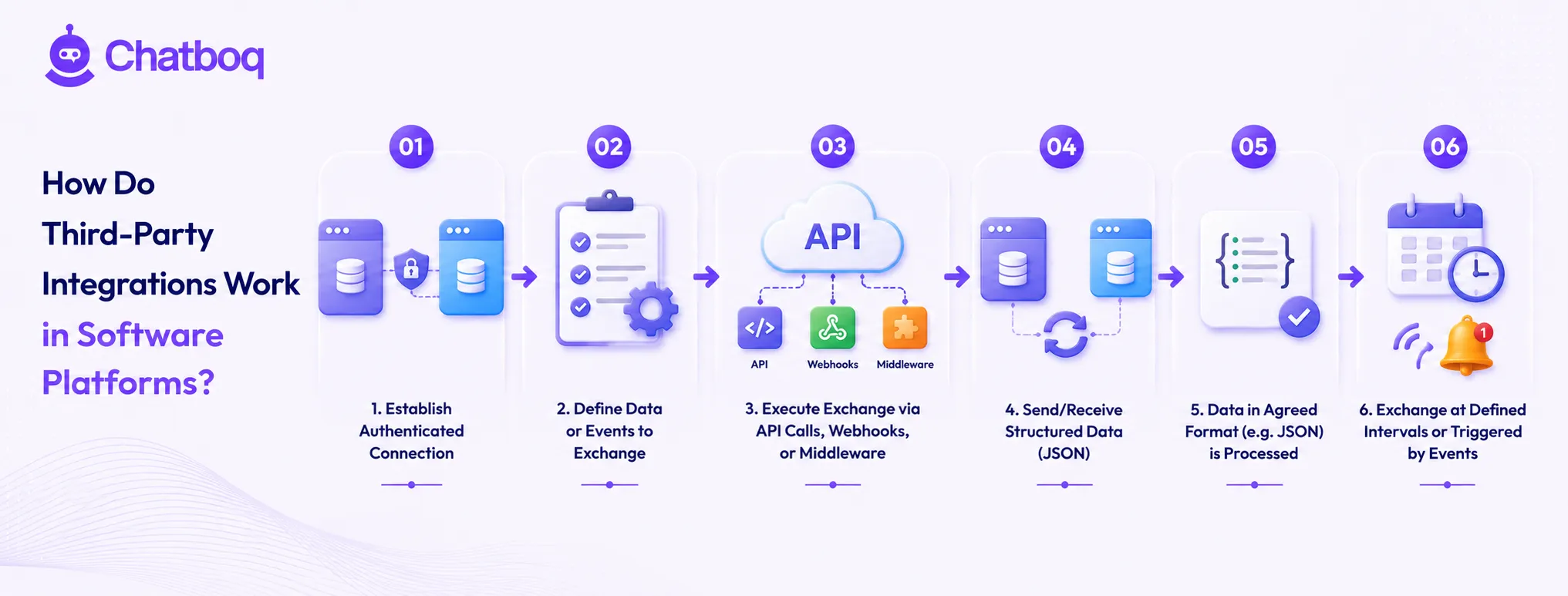

.webp)



Leave a Comment
Your email address will not be published. Required fields are marked *
By submitting, you agree to receive helpful messages from Chatboq about your request. We do not sell data.