
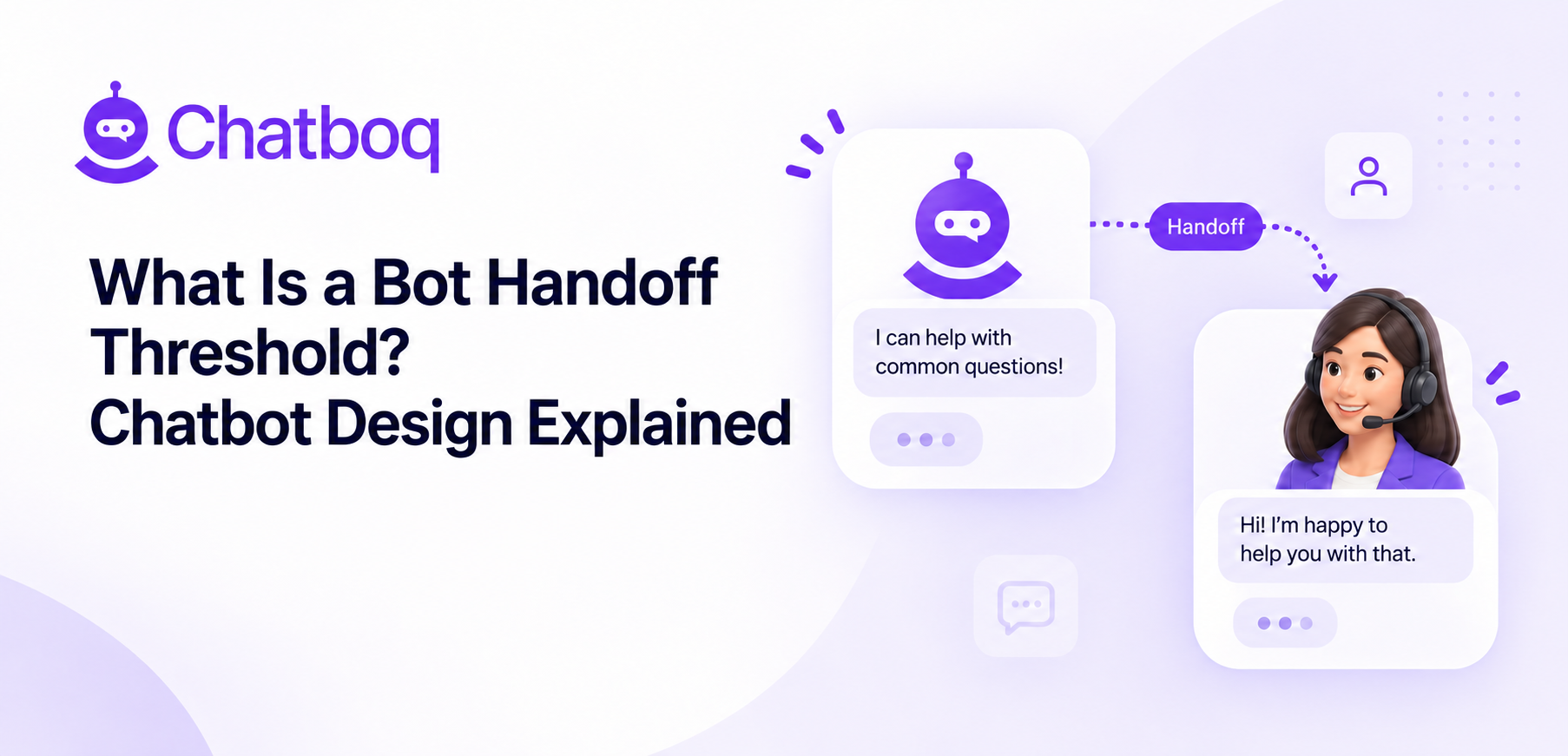
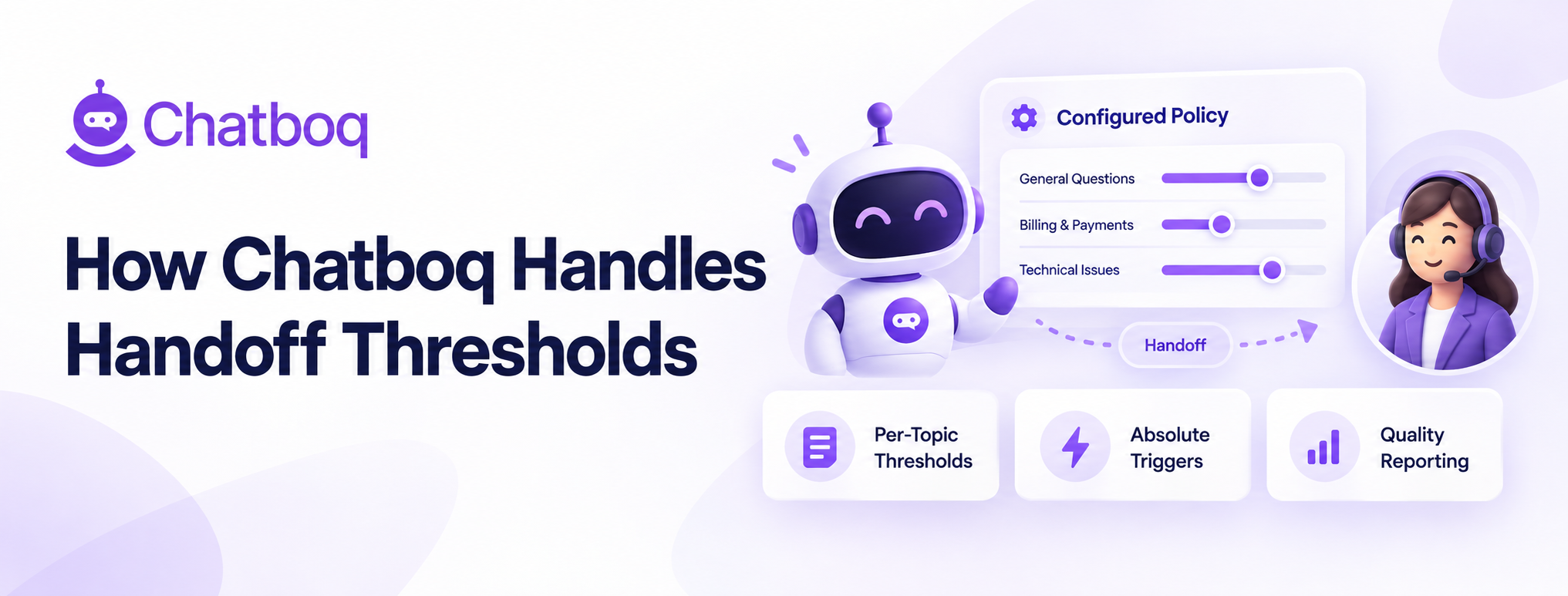
A handoff decision draws on confidence, consecutive failures, turn count, sentiment signals, topic sensitivity and any explicit request for a person.
Confidence as one input among several
Confidence measures certainty about a single message, which is necessary but insufficient, since a system can be confident on every turn of a conversation going nowhere.
Treating confidence as the sole handoff criterion is the most common configuration mistake and produces assistants that never escalate until a customer gives up.
Conversation-level signals
Consecutive fallbacks, total turn count and repeated attempts at the same request all indicate a conversation that is not progressing regardless of per-message confidence.
These signals catch the failure mode confidence misses entirely, which is a conversation where every individual exchange looked fine.
Sentiment and explicit requests
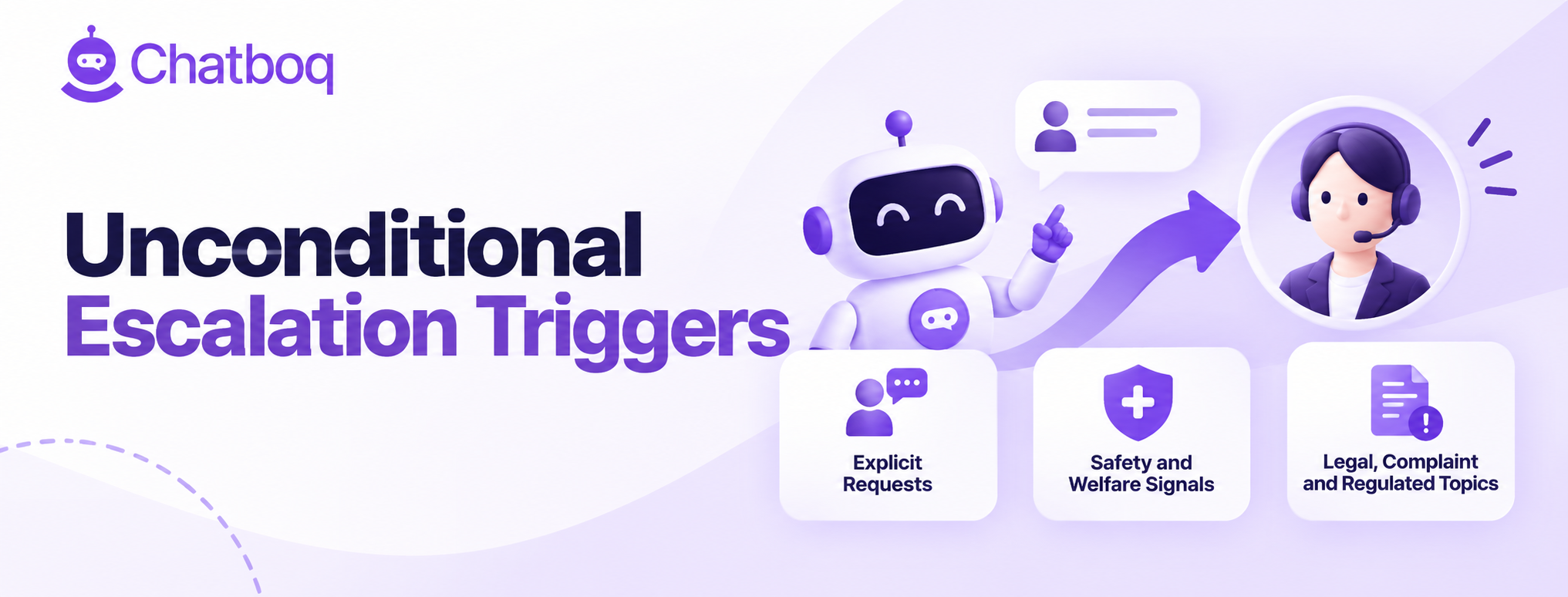
Frustration language and any explicit request for a person should override every other consideration, since continuing to automate at that point reliably makes things worse.
These are unconditional triggers rather than threshold inputs, and configuring them as such is what prevents the worst experiences.
Topic sensitivity
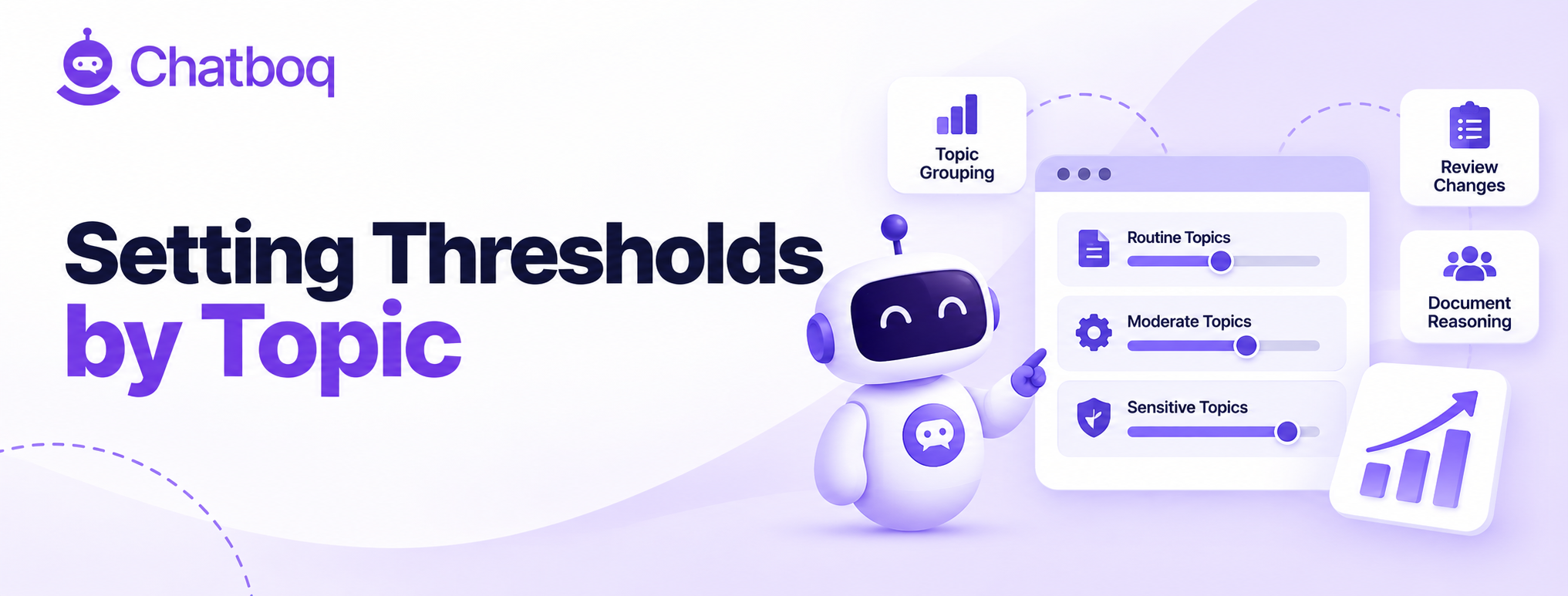
The consequence of a wrong answer varies enormously by topic, and the threshold should reflect that rather than applying a single global setting.
Safety, legal, financial and complaint topics warrant escalating at confidence levels that would be perfectly acceptable for a question about opening hours.
Customer history as a factor
A customer who has already escalated recently, or who has an open complaint, is a reasonable candidate for a lower threshold than a first-time visitor.
Using history this way requires the assistant to read the customer record, which is one of the more valuable reasons to integrate the two.
 ChatGPT
 Perplexity
 Claude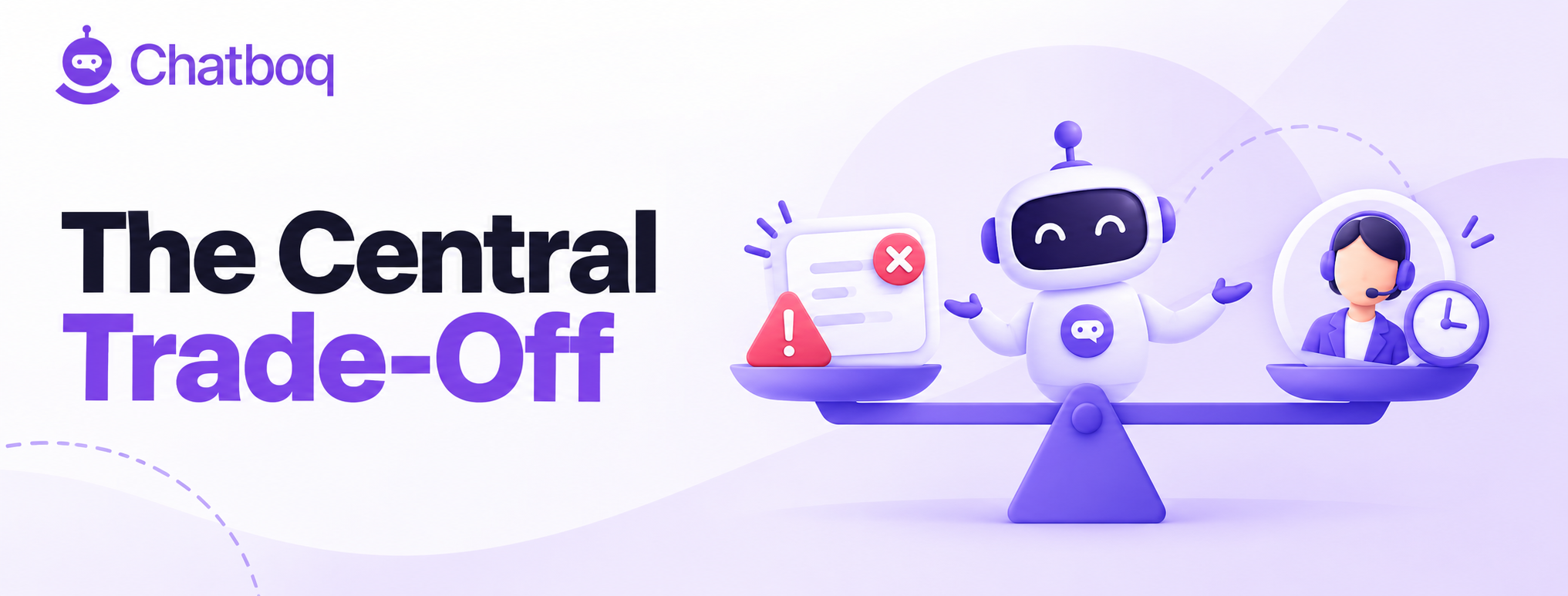




Leave a Comment
Your email address will not be published. Required fields are marked *
By submitting, you agree to receive helpful messages from Chatboq about your request. We do not sell data.