

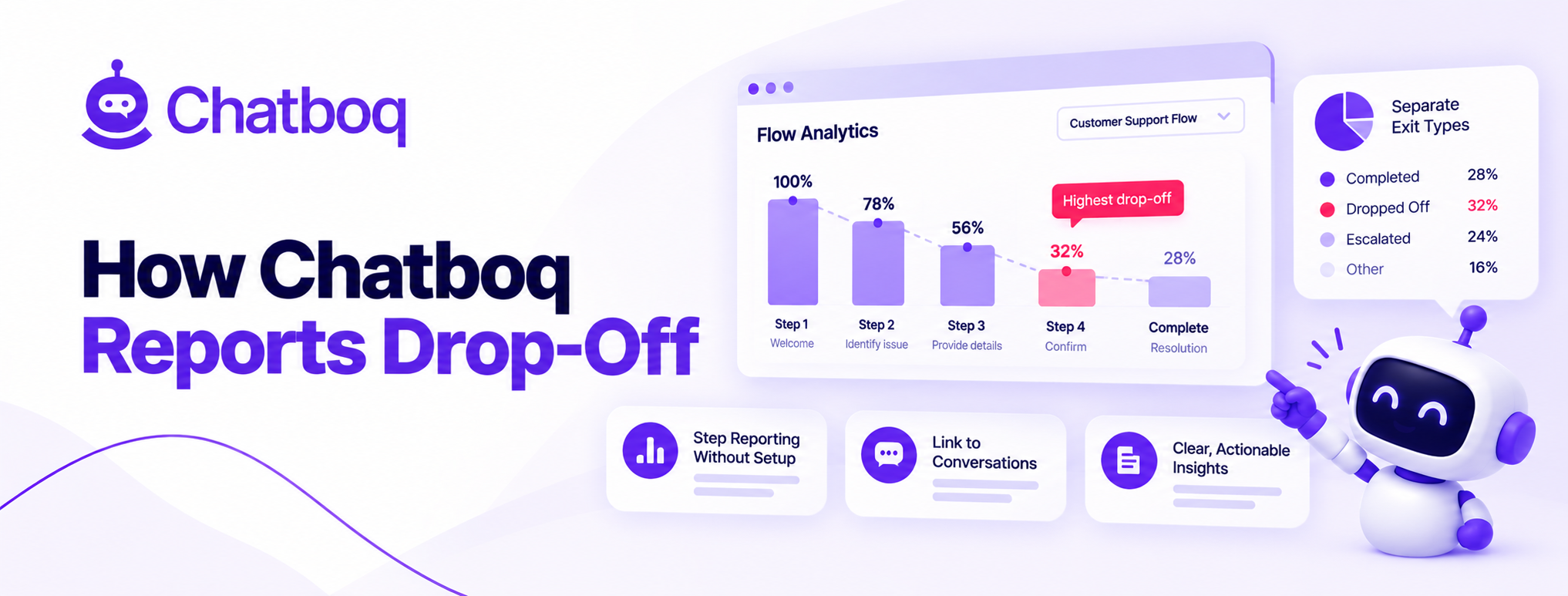
Compare the number of users reaching each step with the number continuing past it, and look for the steps where the gap is disproportionate.
Building the step funnel
Every question, confirmation and action in a flow is a step, and recording arrivals and continuations at each produces the funnel the analysis depends on.
This requires the flow to be instrumented at step level rather than only at start and finish, which many deployments never configure.
Looking for disproportionate loss
Some loss at every step is normal, so the signal is a step losing considerably more than those around it rather than any loss at all.
Expressing each step's loss relative to the flow average makes the outliers immediately visible without needing a threshold.
Separating abandonment from escalation
A user who leaves a flow to reach a person has not abandoned it in the same sense as one who closed the window, and mixing the two obscures both.
Counting them separately is important, since a step producing escalations rather than abandonment is a different problem with a different fix.
Sample size before concluding
A step with a dramatic drop-off across twelve conversations is not evidence of anything, and acting on small samples produces changes that do not hold.
Waiting for enough volume, or aggregating similar steps across flows, avoids redesigning something that was working.
 ChatGPT
 Perplexity
 Claude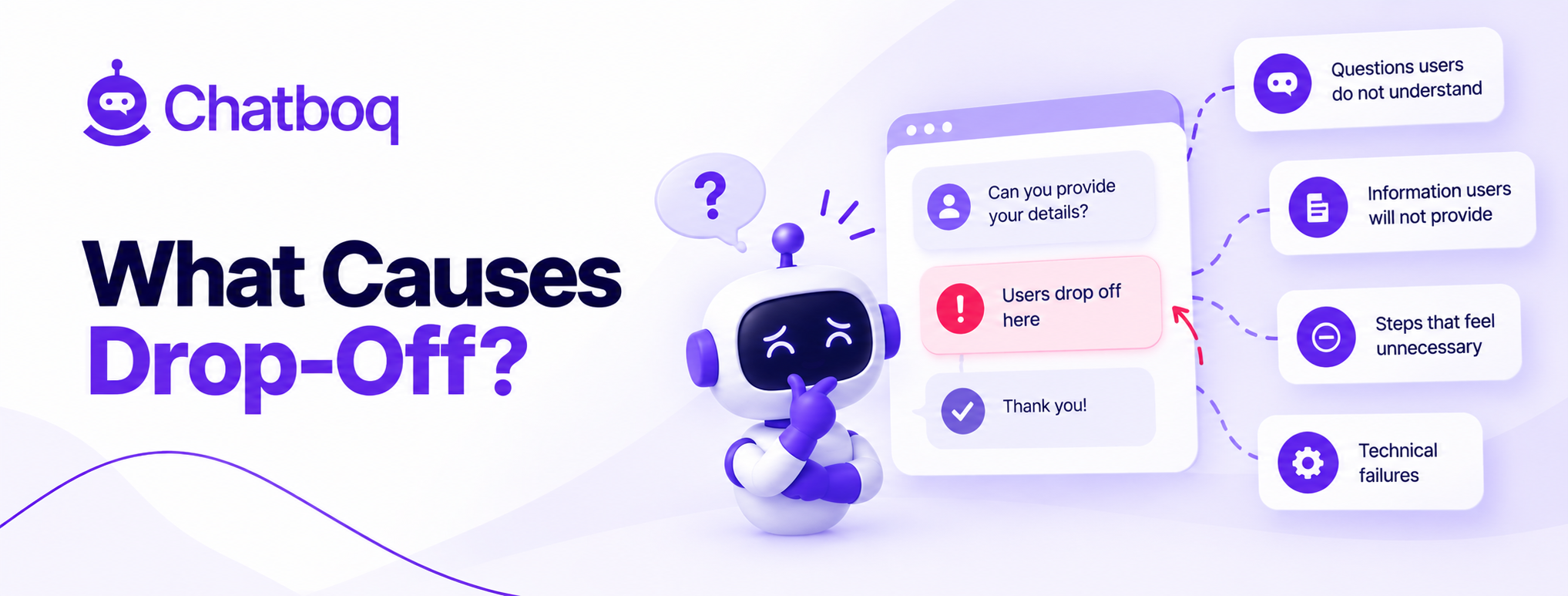






Leave a Comment
Your email address will not be published. Required fields are marked *
By submitting, you agree to receive helpful messages from Chatboq about your request. We do not sell data.