
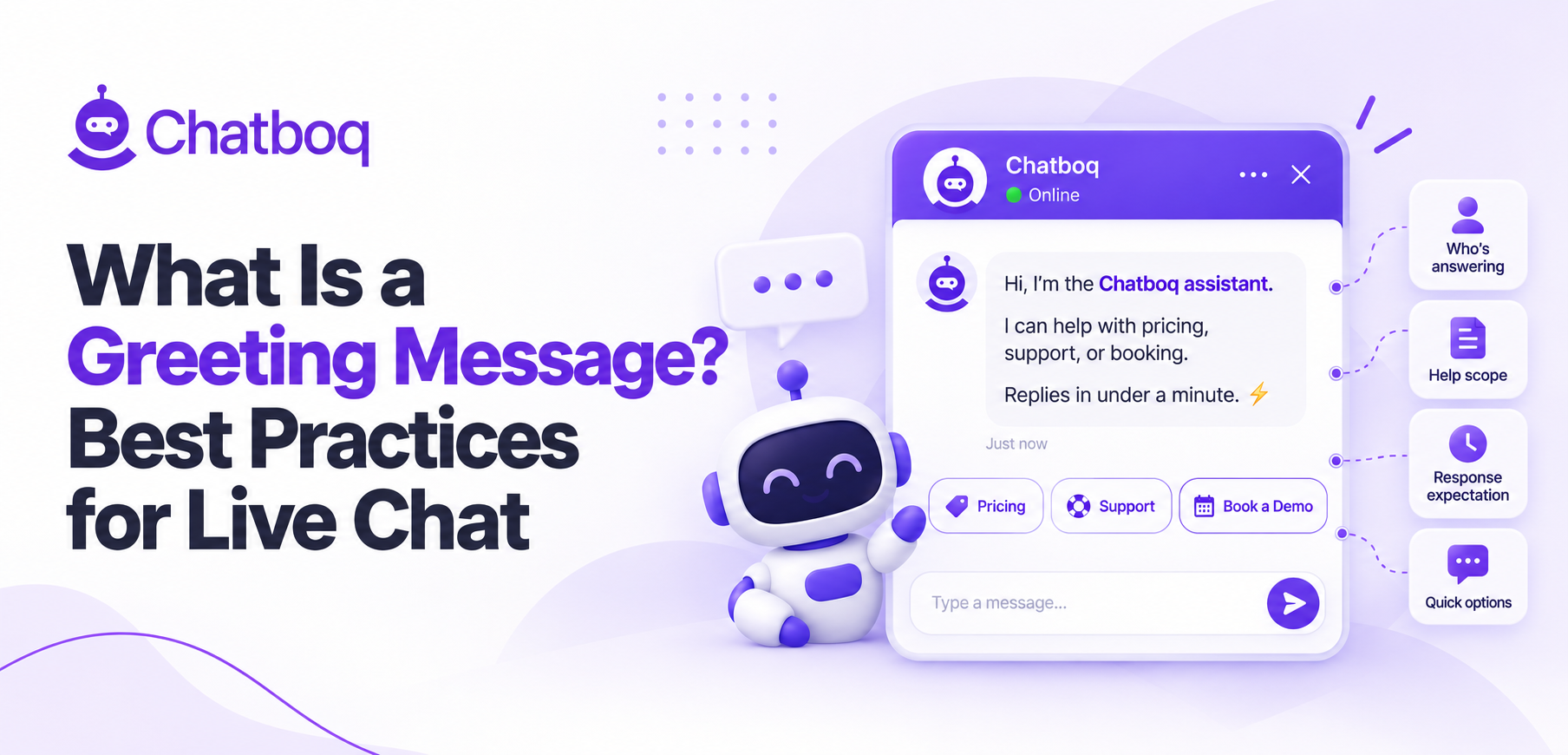
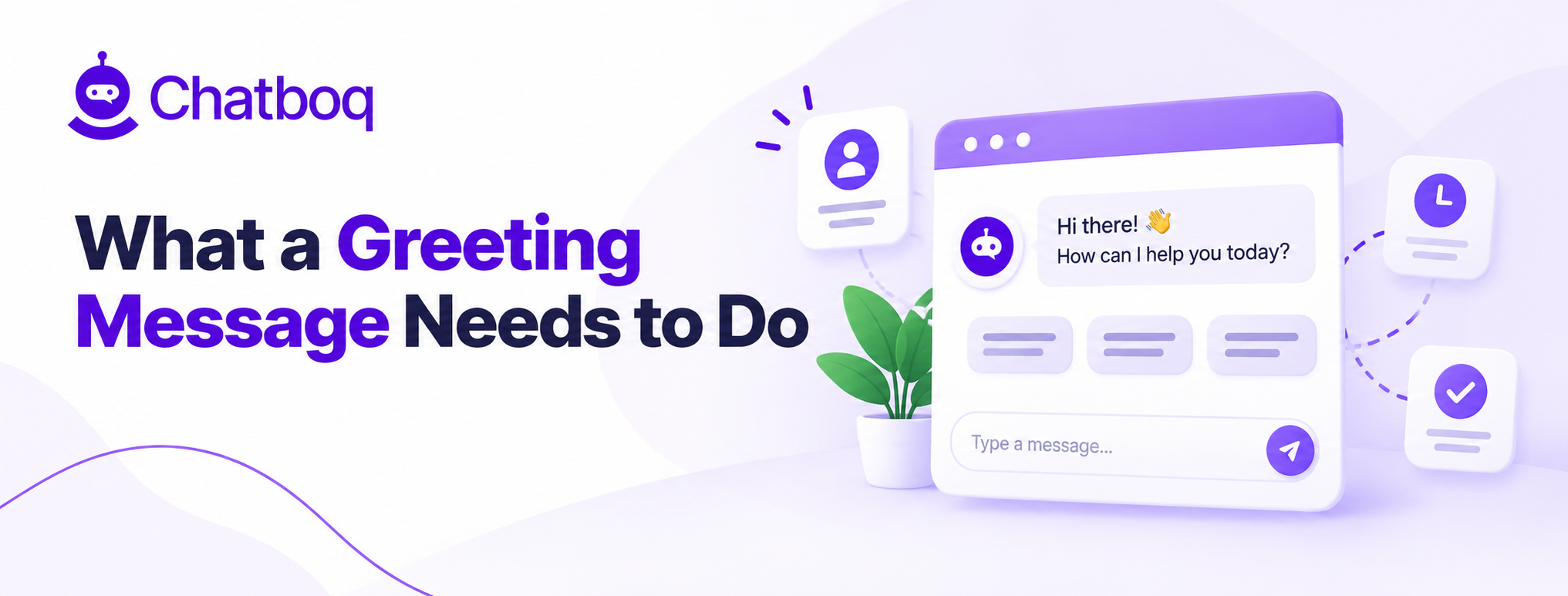
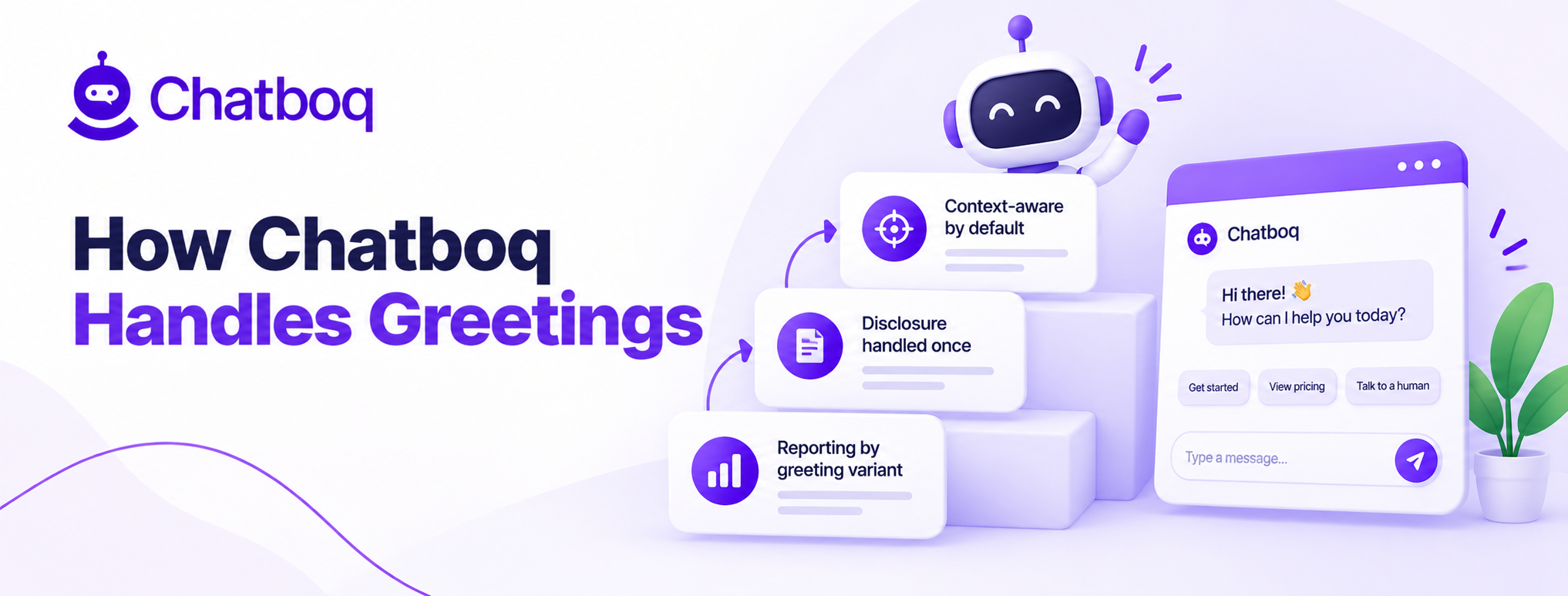
A good greeting discloses who is answering, states what help is available, sets a response expectation and offers an obvious starting point.
Disclosing who is answering
Visitors should be able to tell immediately whether they are speaking to a person or an assistant, since this changes how they phrase things and what they expect.
This is also increasingly a regulatory expectation, and handling it in the first line is considerably more natural than a formal disclaimer elsewhere.
Stating scope concretely
Naming two or three things the assistant can actually do performs far better than a general offer of help, because visitors do not know what to ask an unknown system.
Concrete scope also reduces fallbacks, since visitors self-select toward requests the system can handle rather than testing its limits.
Setting a response expectation
Telling visitors how quickly a reply will arrive is what makes any subsequent wait acceptable, and it costs a handful of words to include.
This matters most where a human may be involved, since an unstated wait is interpreted as being ignored rather than as being queued.
Giving somewhere to start
Offering two or three tappable options alongside the open text field removes the blank-page problem, particularly on mobile where typing is effortful.
The options also communicate scope more effectively than any sentence describing it, since they demonstrate rather than assert.
Not asking for information yet
A greeting requesting a name or an email before anything has been offered reads as a form rather than an opening, and it measurably reduces the number of visitors who reply.
Contact details are collected far more readily once the conversation has provided something useful, which is a sequencing decision rather than a wording one.
 ChatGPT
 Perplexity
 Claude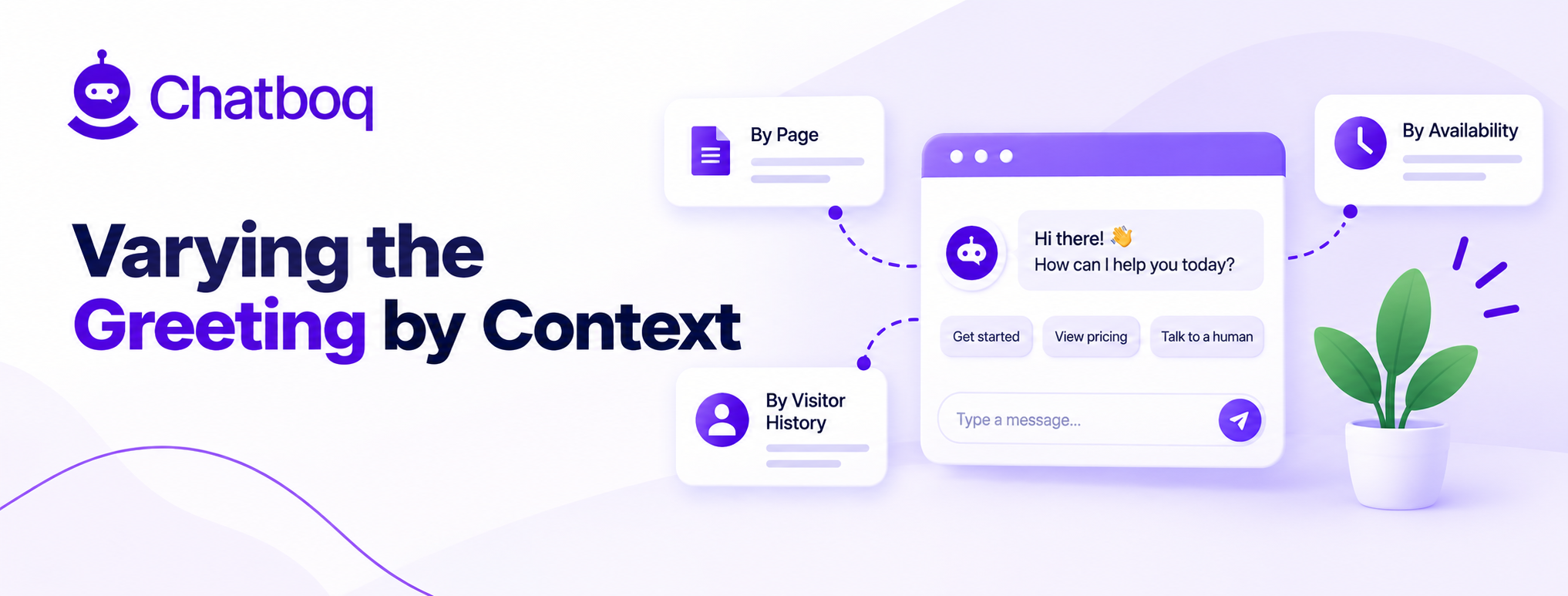





Leave a Comment
Your email address will not be published. Required fields are marked *
By submitting, you agree to receive helpful messages from Chatboq about your request. We do not sell data.