
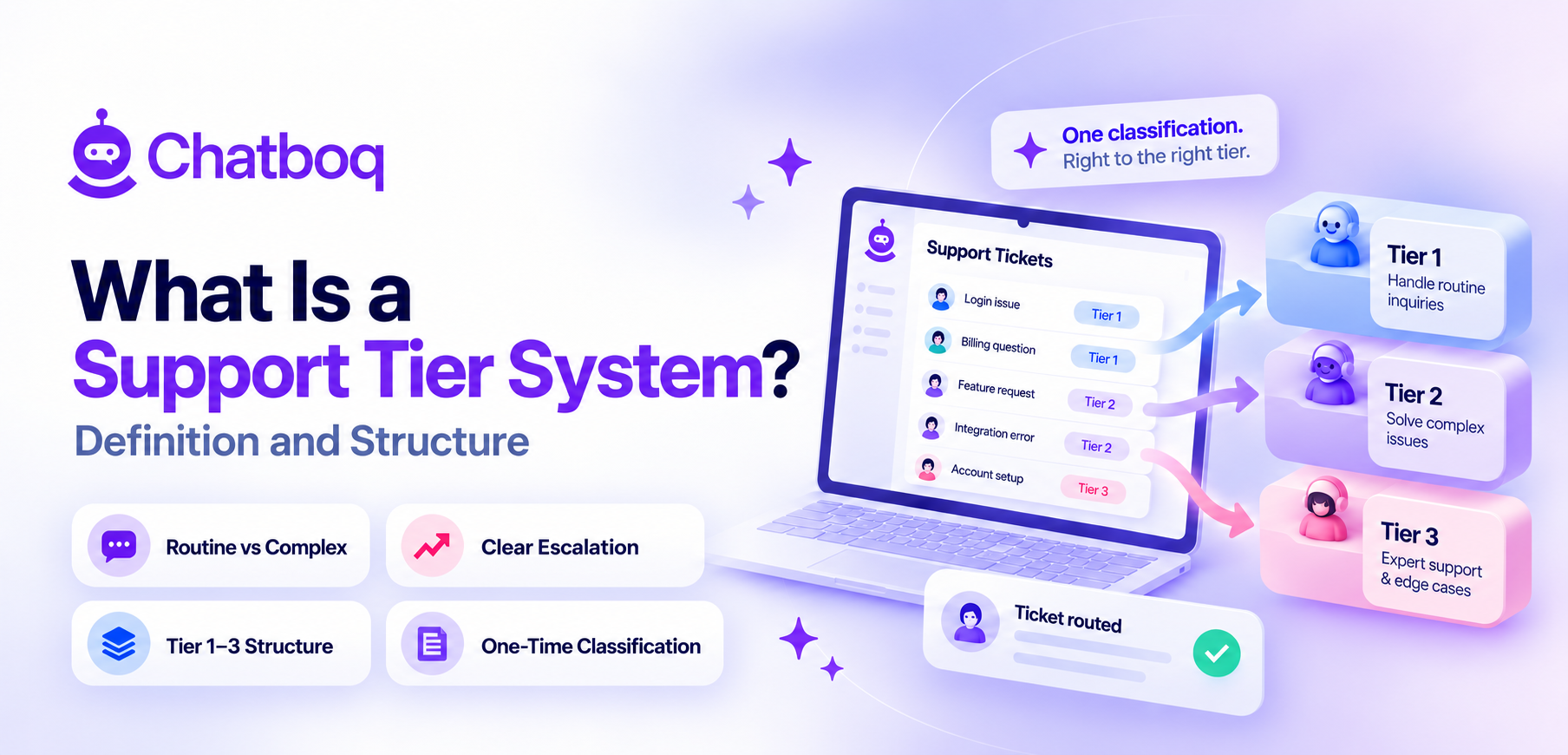
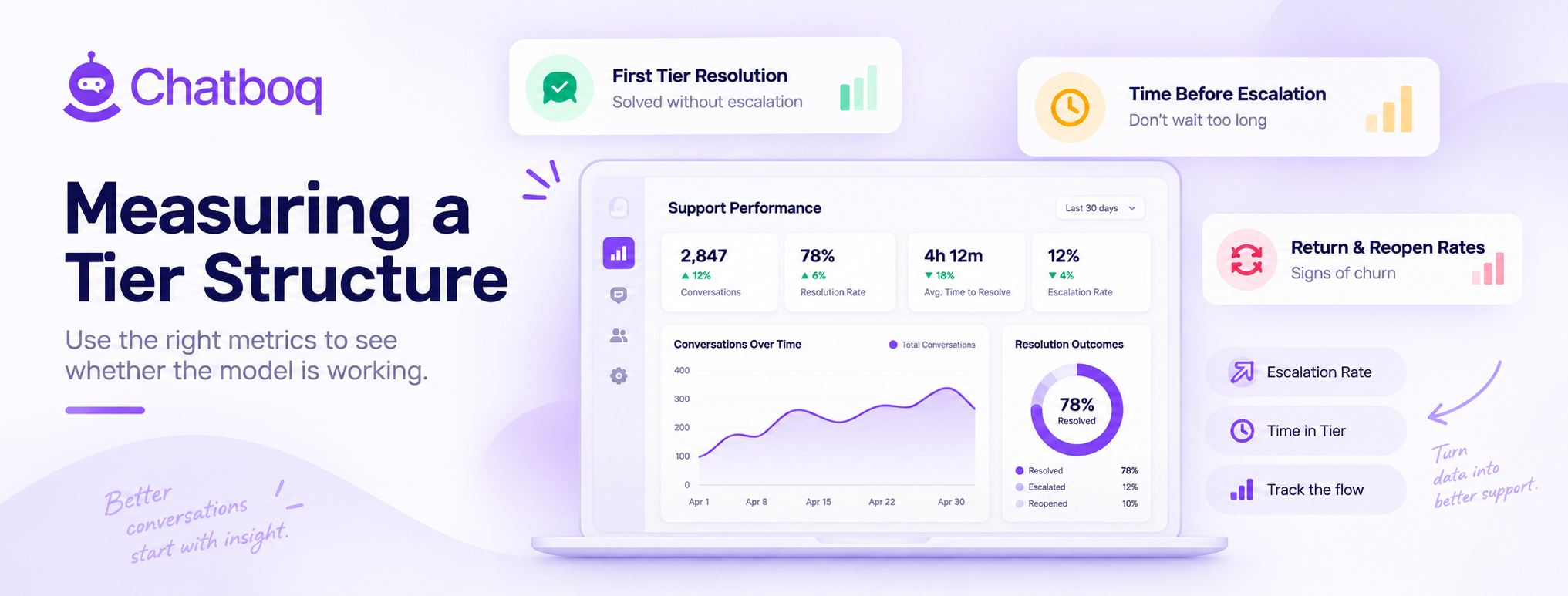
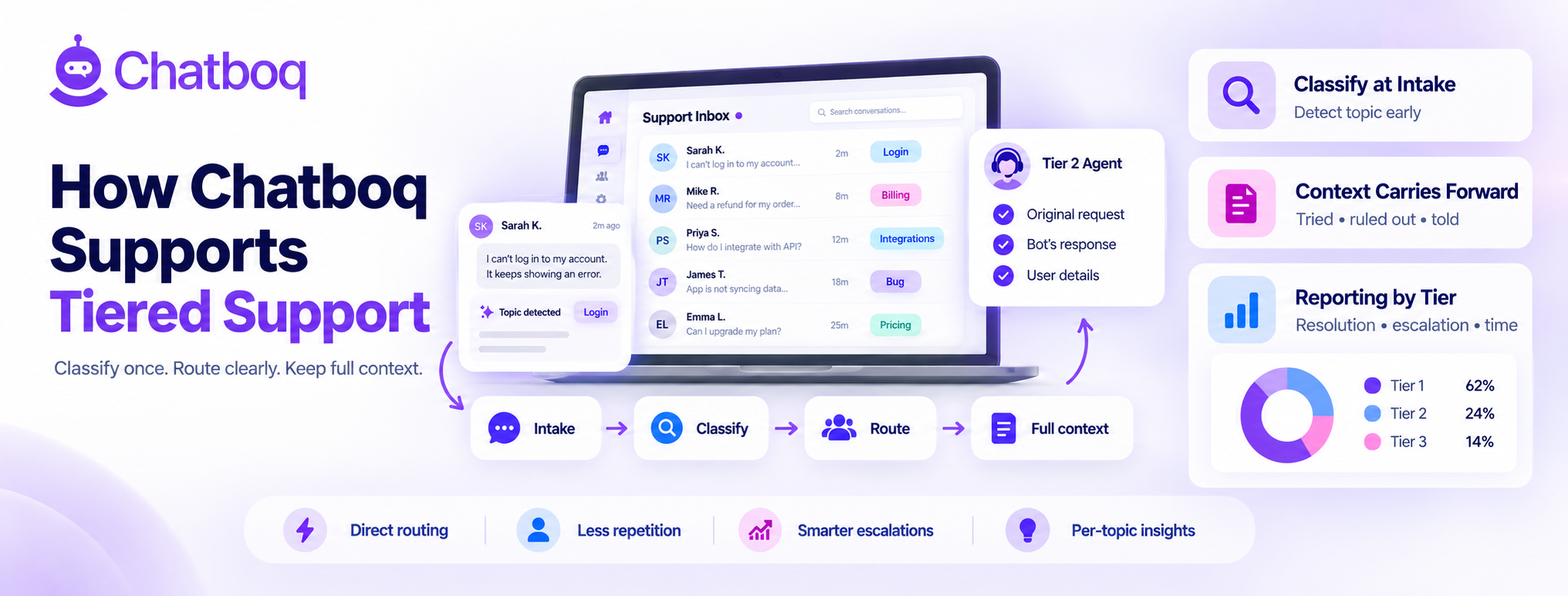
The front line handles known issues with documented answers, the second tier handles problems requiring investigation, and higher tiers handle defects and deep technical work.
Tier one
The front line handles account questions, documented how-to requests, known issues and anything with an answer already recorded, which is usually most of the volume.
The defining characteristic is that resolution requires finding the right answer rather than working out what the answer should be.
Tier two
The second tier handles problems requiring investigation, unusual configurations and situations where documented answers do not apply cleanly.
This is where product depth matters, and where the resolution frequently produces new documentation that the front line can use next time.
Tier three and beyond
Higher tiers typically involve engineering, dealing with defects, data problems and anything requiring changes to the product rather than to a customer's configuration.
These contacts are rare and expensive, which is why the criteria for reaching them should be tighter than for the tier below.
Specialists alongside tiers
Many teams add specialist routes for billing, security or particular products, which sit alongside rather than above the tier structure.
Treating specialisms as a separate dimension from depth avoids the confusion of a billing question being escalated for expertise it does not need.
Feeding knowledge back down
Every escalation resolved by a higher tier is a candidate for documentation that lets the front line resolve the same thing next time.
Without that feedback loop, the same escalations recur indefinitely and the tier structure becomes a permanent tax rather than a temporary one.
 ChatGPT
 Perplexity
 Claude




Leave a Comment
Your email address will not be published. Required fields are marked *
By submitting, you agree to receive helpful messages from Chatboq about your request. We do not sell data.