
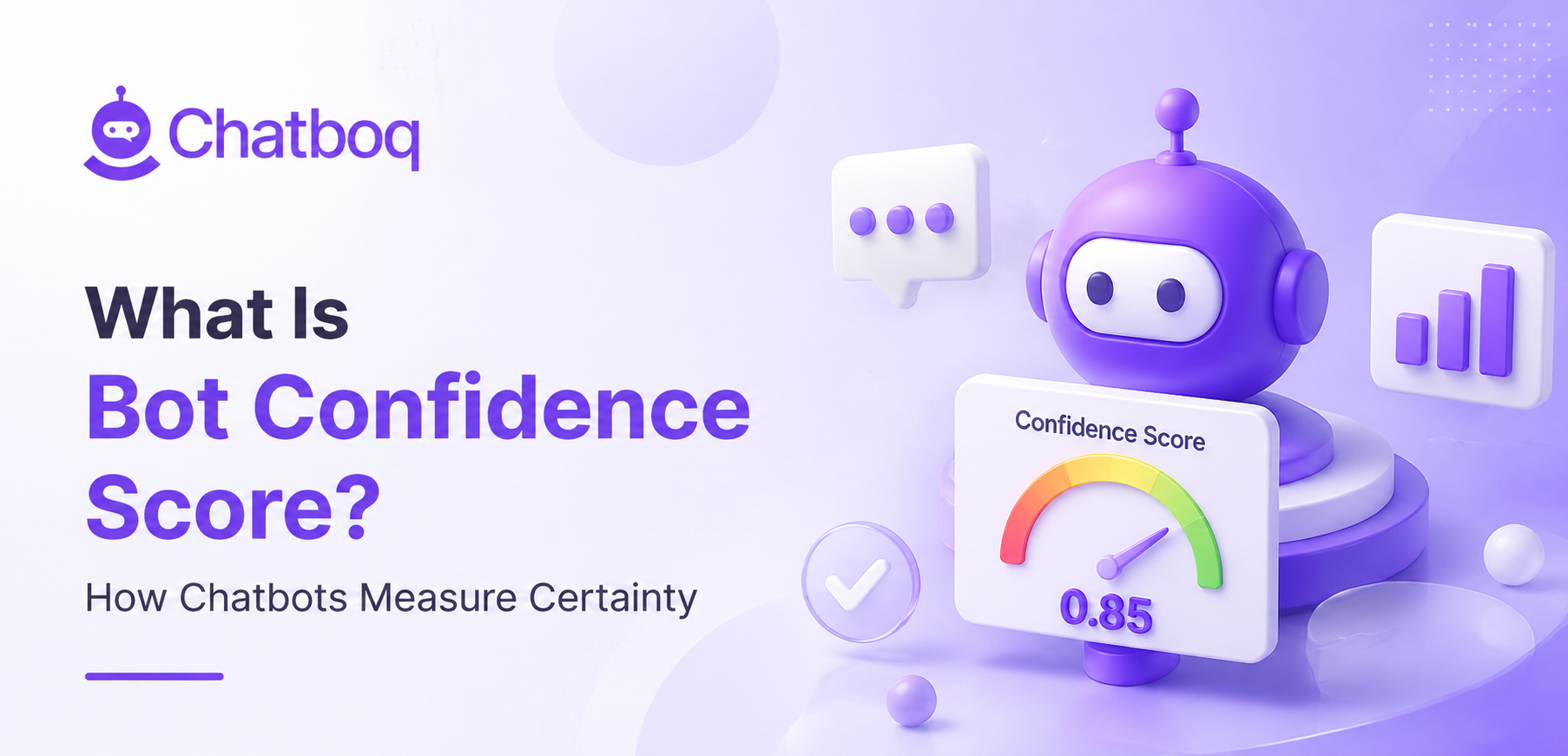
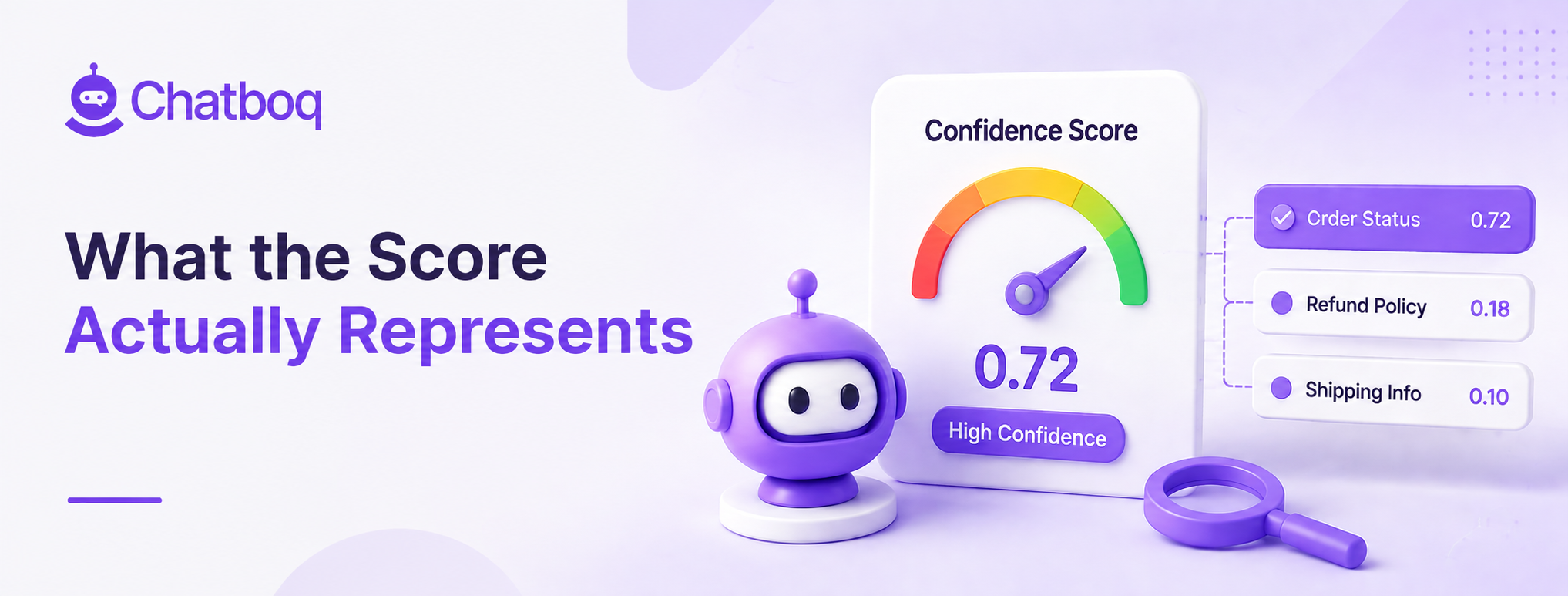
A confidence score expresses how strongly the model associates the user's message with a particular intent, relative to all the other intents it knows about.
A relative measure, not a truth measure
The score reflects how well the message matches the training examples for one intent compared with the others, rather than whether the intent is actually correct.
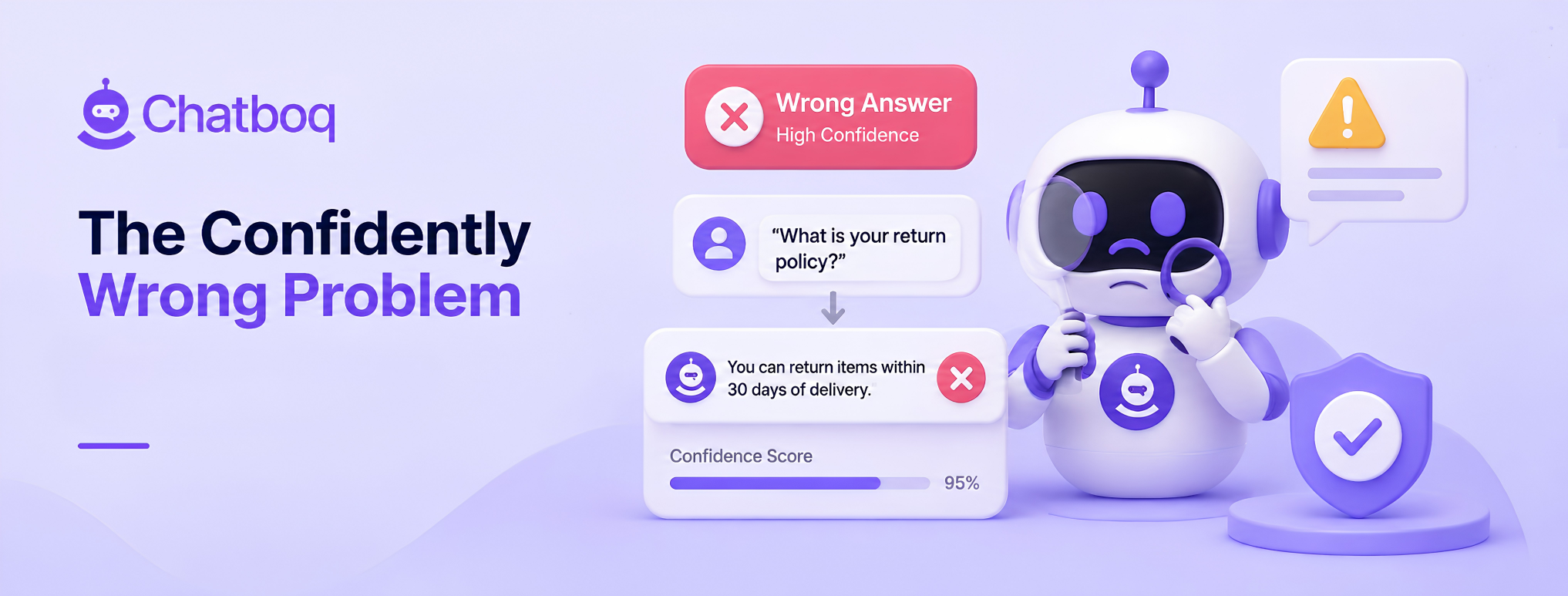
This distinction explains the most common frustration with chatbots, which is a high confidence score attached to an answer that is plainly wrong.
How the number is produced
The language model compares the incoming message against the patterns it learned during training and distributes probability across the possible intents it recognises.
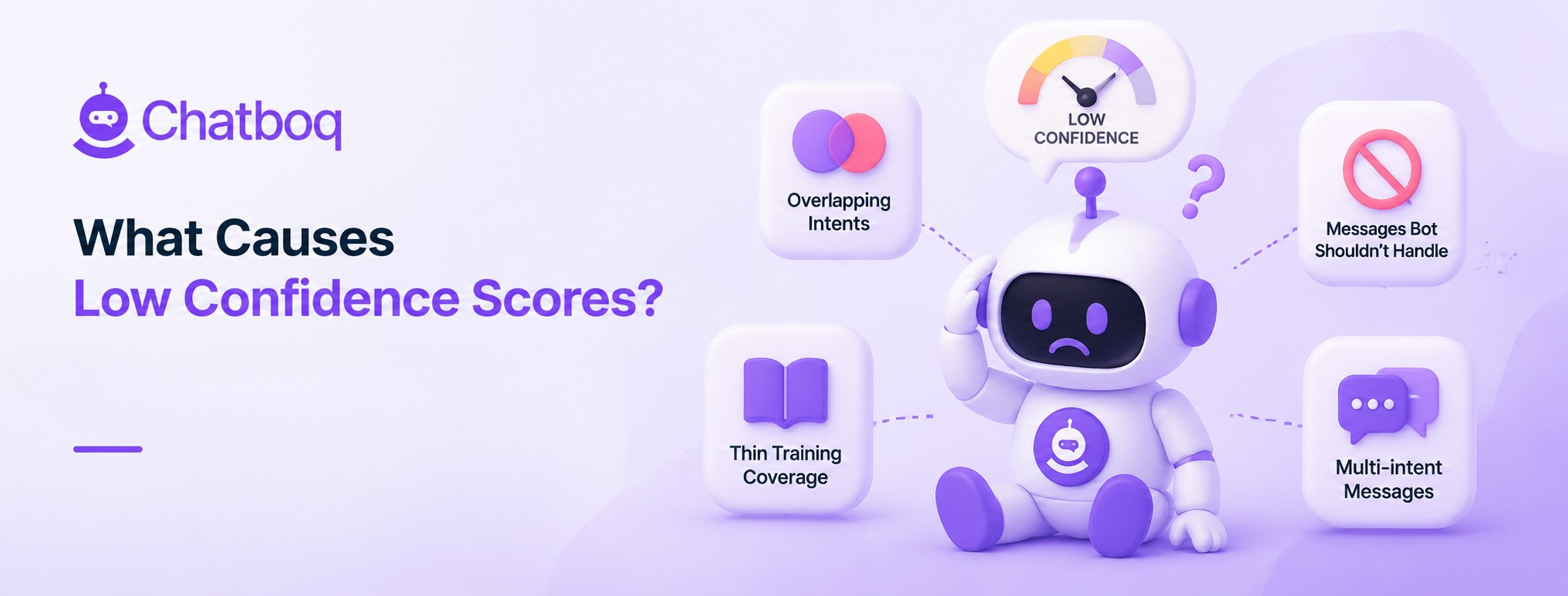
The highest of those probabilities becomes the confidence score for the selected intent, which is why scores tend to fall when two intents are similar.
Why the scale is not intuitive
A score of 0.7 does not mean the answer is seventy percent correct, and comparing scores across different platforms or model versions is rarely meaningful.
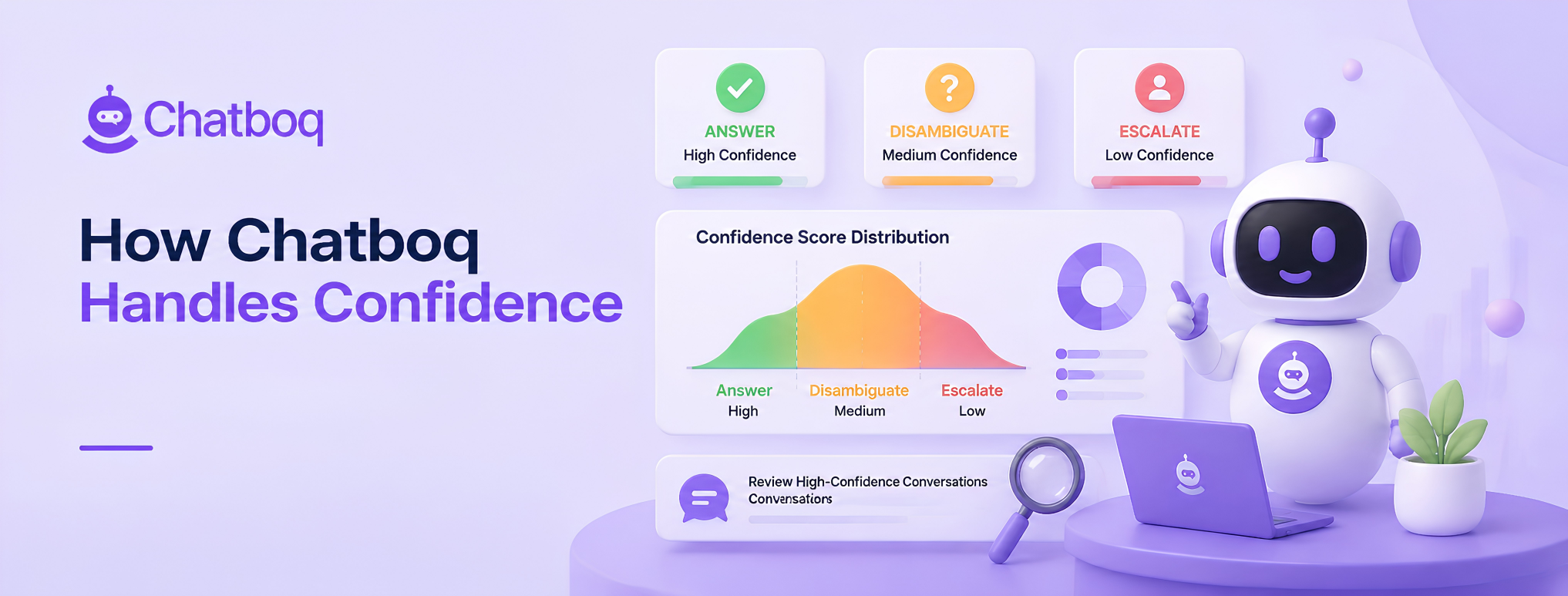
What matters is the distribution of scores in your own system, which is why thresholds should be set from observed data rather than borrowed from a guide.
 ChatGPT
 Perplexity
 Claude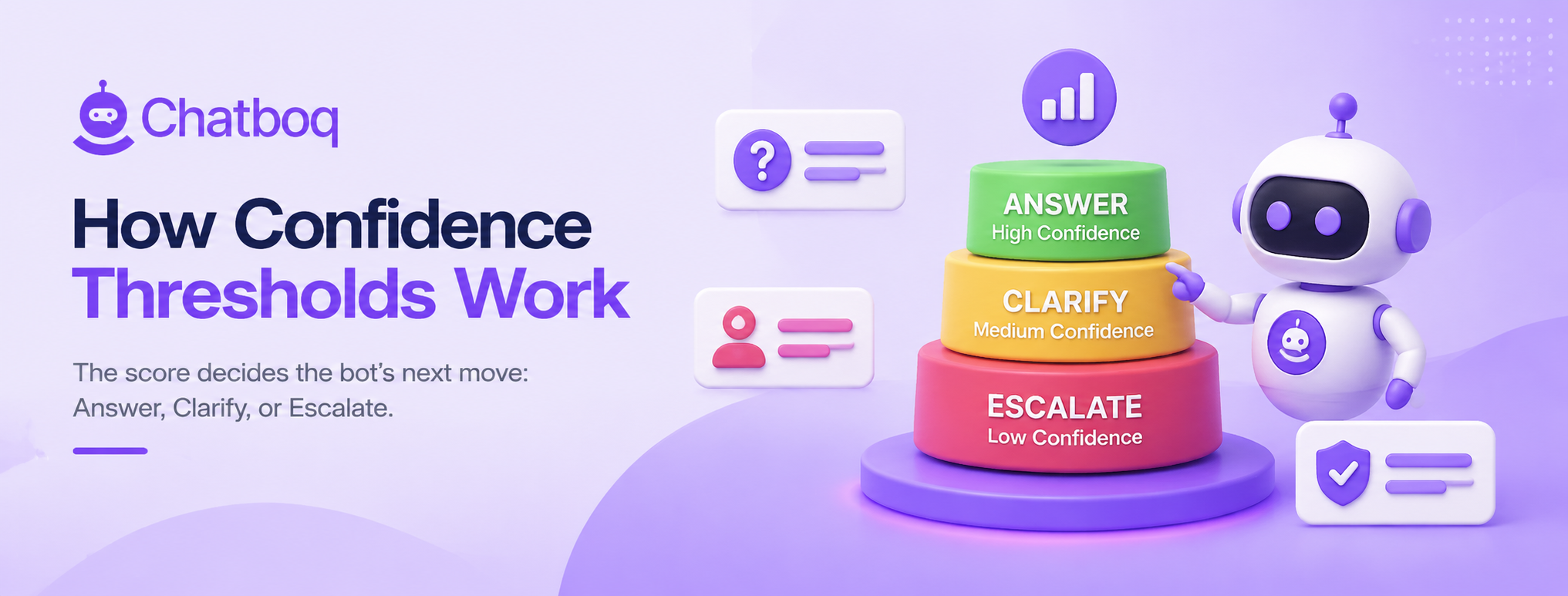






Leave a Comment
Your email address will not be published. Required fields are marked *
By submitting, you agree to receive helpful messages from Chatboq about your request. We do not sell data.