
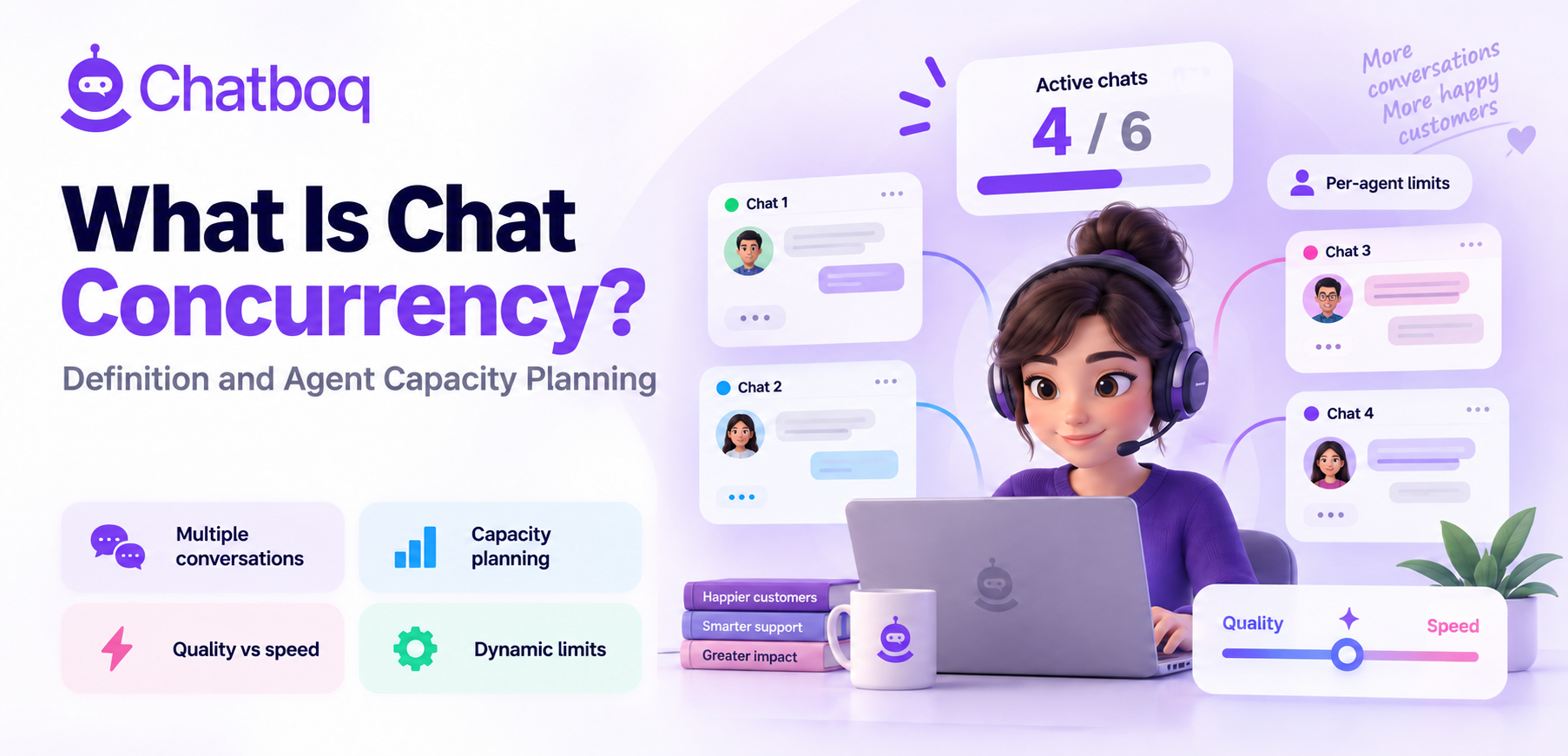
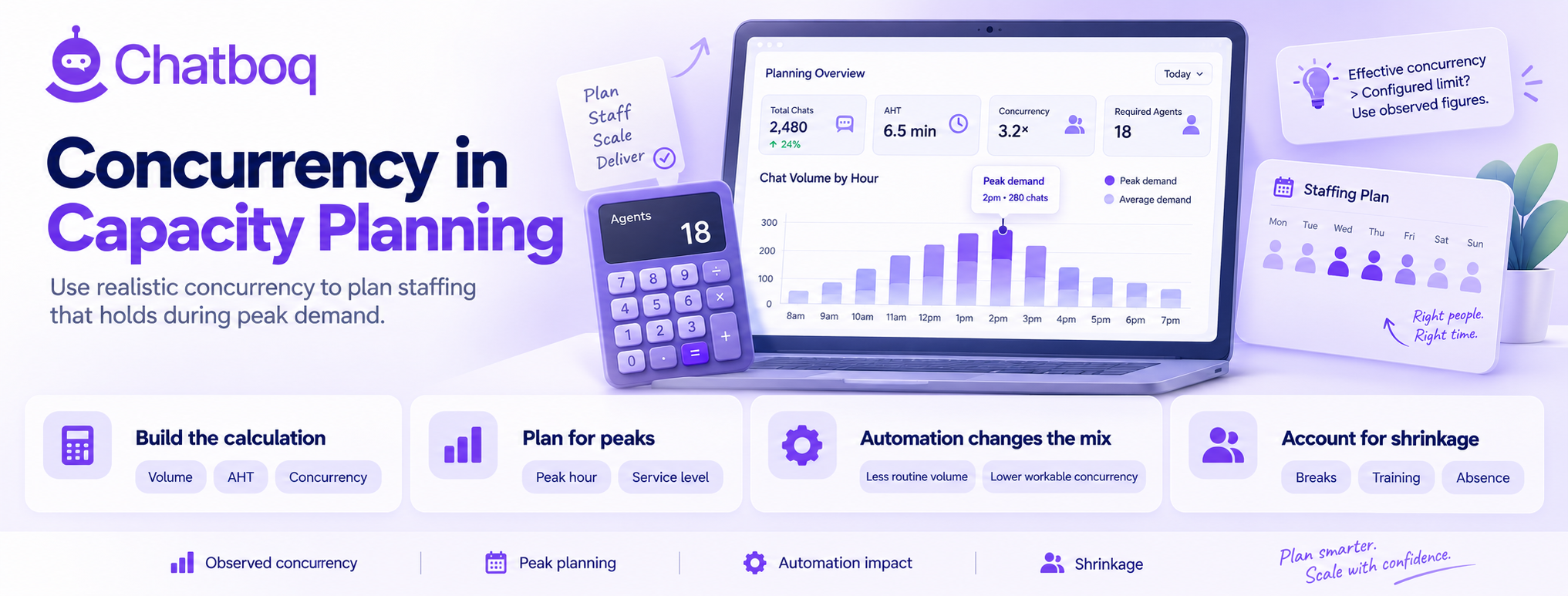
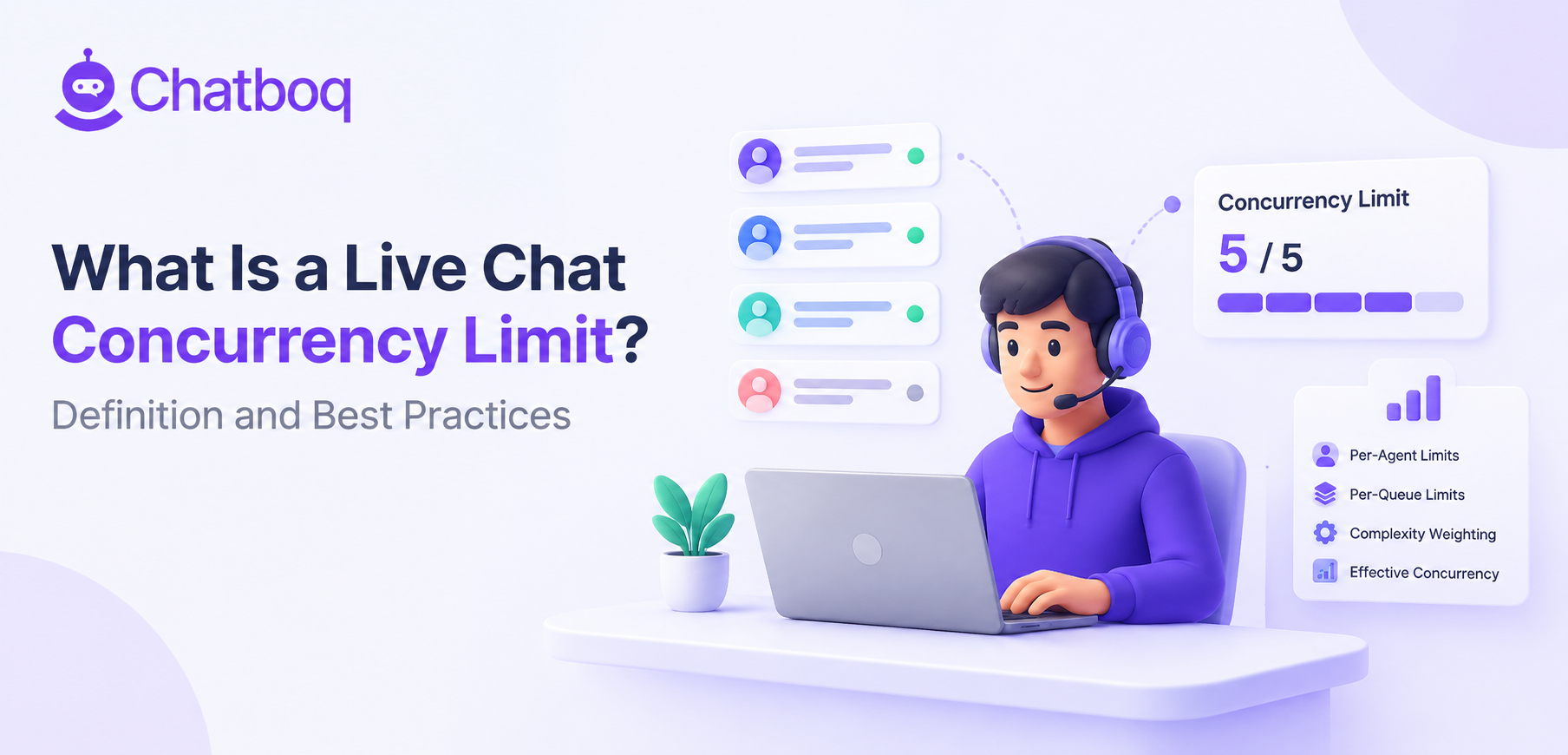
Concurrency is the count of conversations assigned to an agent at one time, which is distinct from how much of their attention each is receiving.
Configured limit versus reality
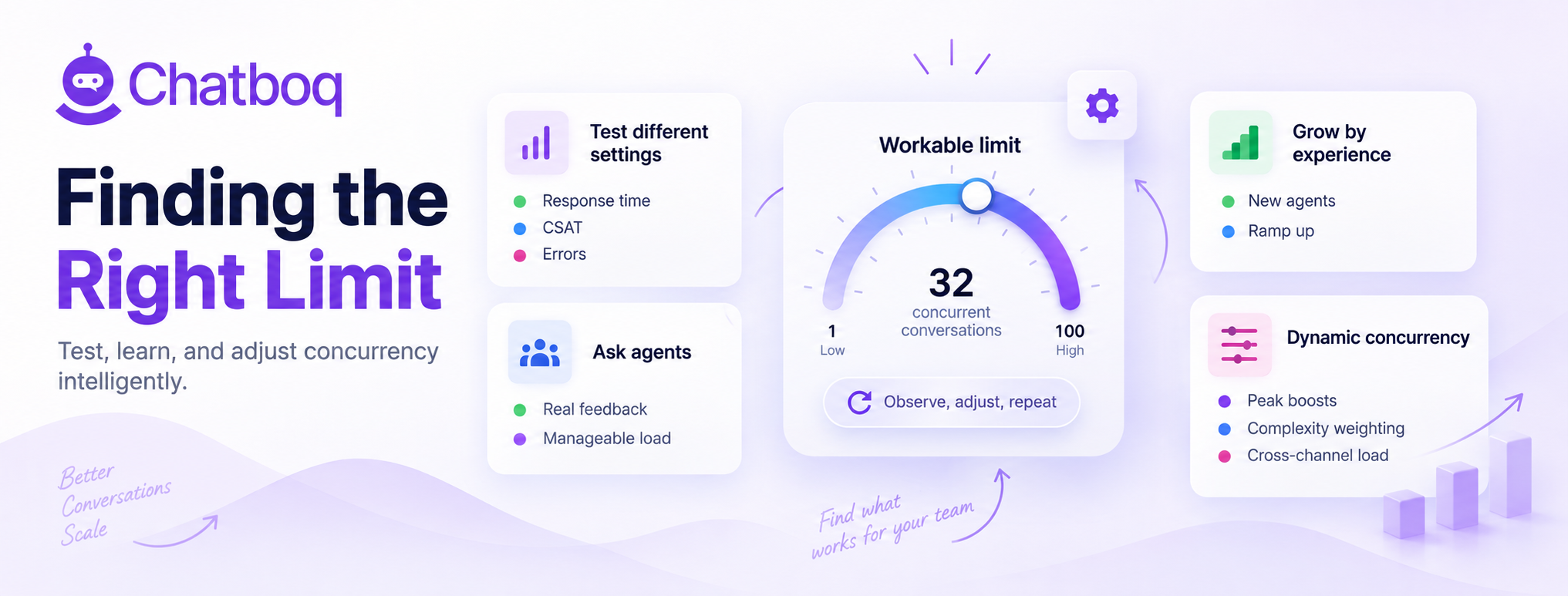
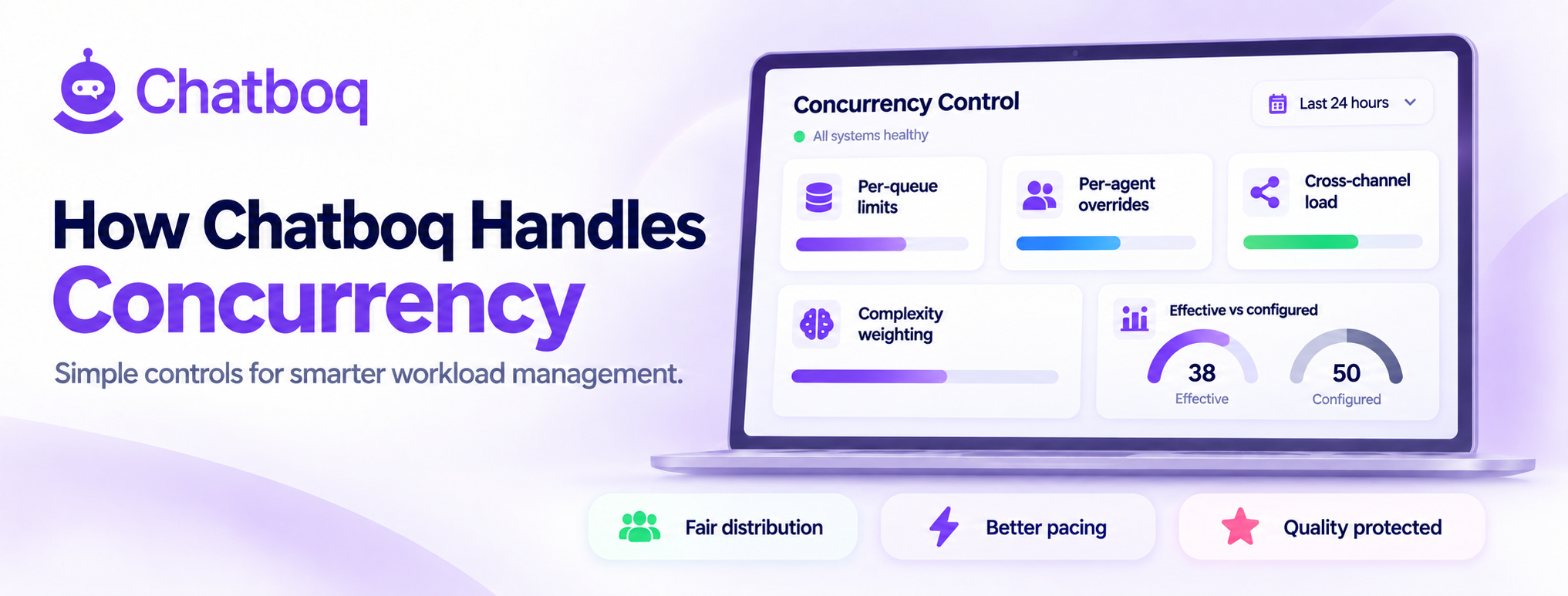
The configured limit is a maximum rather than a target, and effective concurrency is how many conversations an agent typically has open during busy periods.
The gap between these two numbers is informative, since a limit rarely reached is not constraining anything and a limit constantly reached is constraining everything.
Concurrency versus occupancy
Occupancy measures the proportion of an agent's time spent actively working, while concurrency measures how many conversations that work is spread across.
An agent can be fully occupied on two demanding conversations or lightly occupied across five simple ones, which is why both figures are needed.
Why the economics are attractive
Chat conversations contain natural gaps while customers type and read, which is dead time on a phone call and usable capacity in chat.
Concurrency monetises that gap, and the practical question is how many gaps can be filled before the customer starts noticing the wait.
What a limit protects
The limit exists to protect response quality and agent wellbeing rather than to constrain throughput, which is worth stating explicitly to a team.
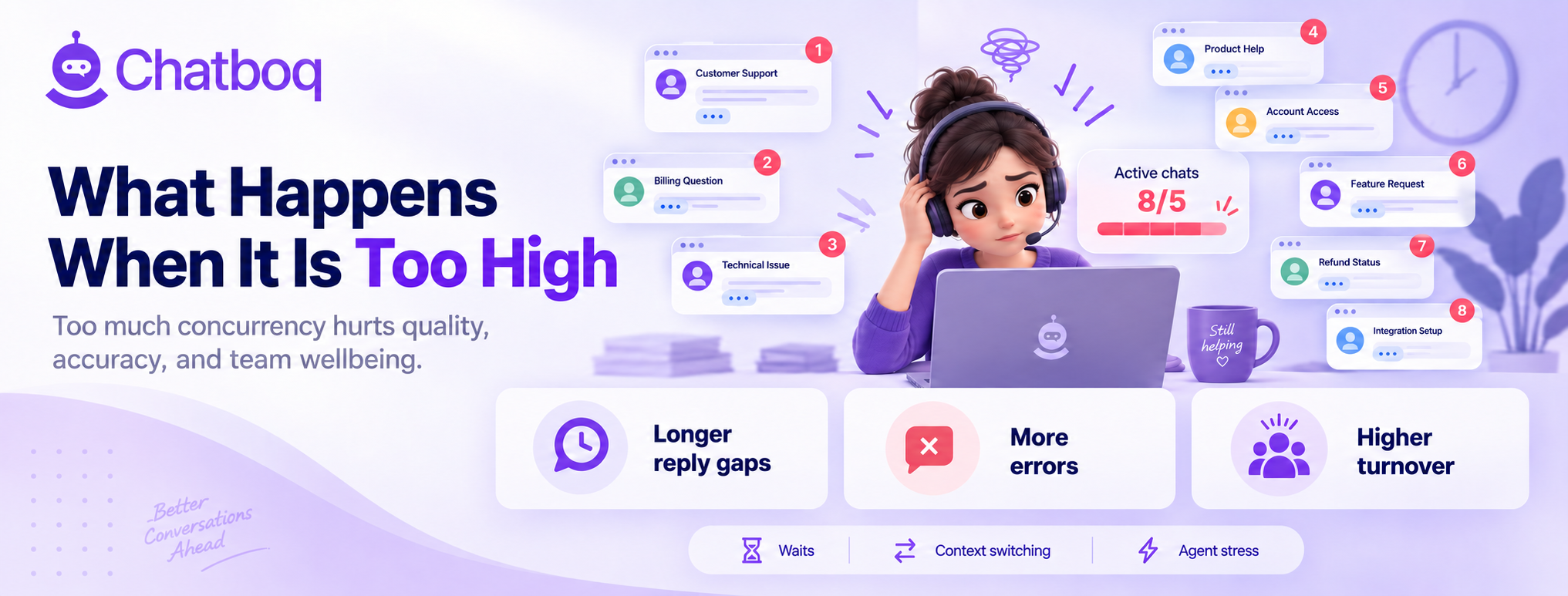
Where agents believe the limit is an efficiency ceiling rather than a quality protection, they will work around it and the protection disappears.
 ChatGPT
 Perplexity
 Claude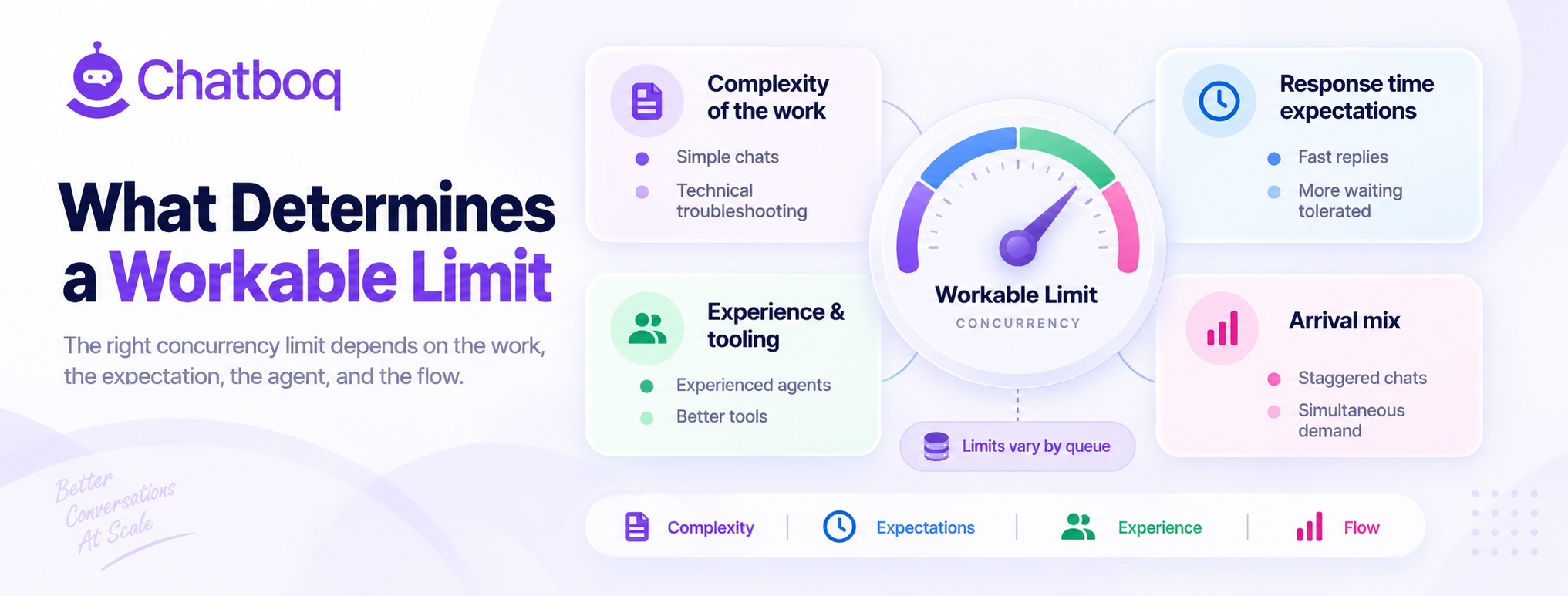



Leave a Comment
Your email address will not be published. Required fields are marked *
By submitting, you agree to receive helpful messages from Chatboq about your request. We do not sell data.