
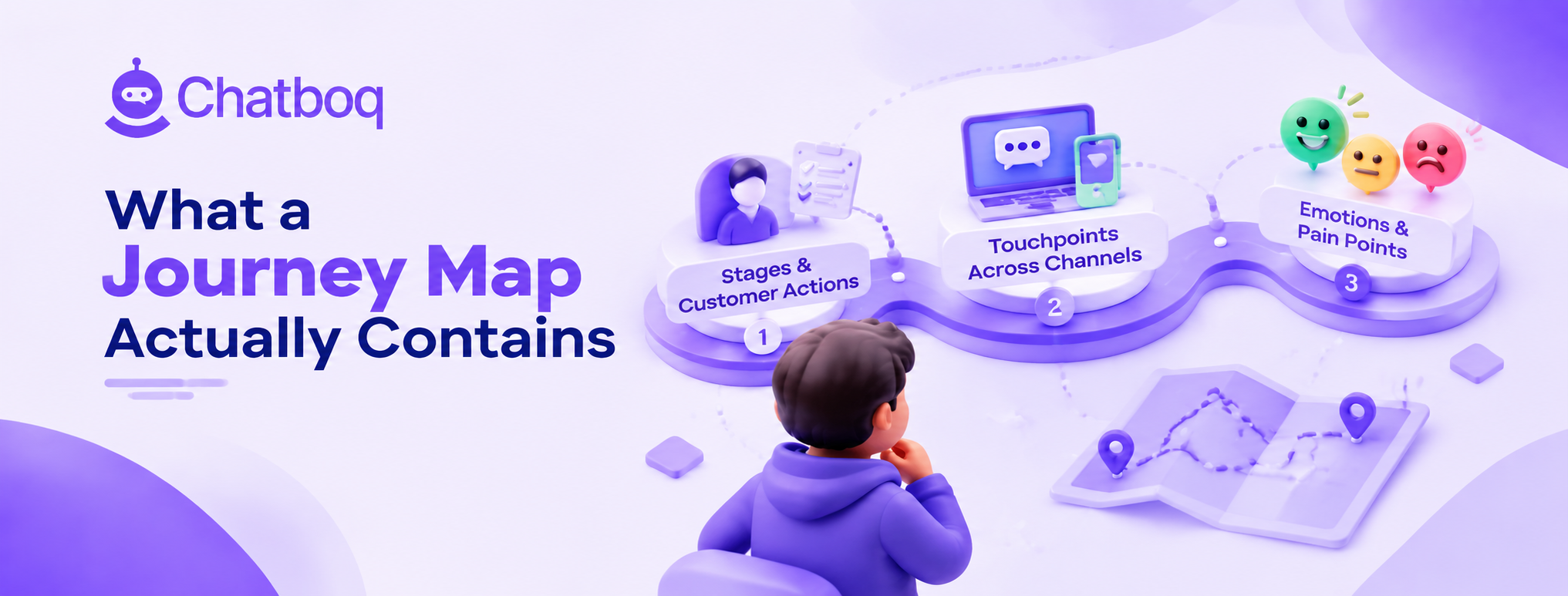
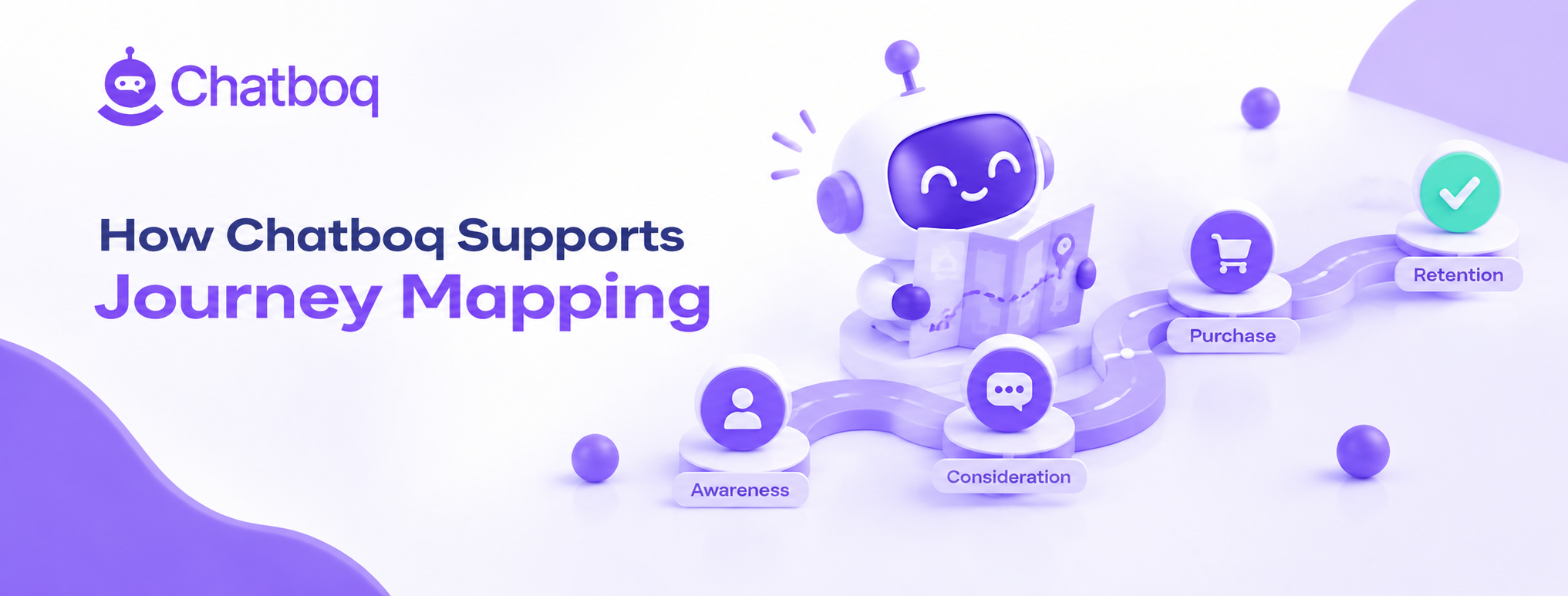
A useful map records the stages a customer moves through, what they do at each, which touchpoints they use, what they are feeling, and where the experience fails them.
Stages and customer actions
Stages should reflect how the customer experiences the process rather than how the business is organised internally, which frequently produces a very different sequence.
A customer does not experience a handoff between marketing and sales, they experience a change in tone and a request to repeat information they already provided.
Touchpoints across channels
Record every point of contact including the website, chat, email, phone, physical premises and third-party platforms such as review sites and marketplaces.
Touchpoints outside the organisation's control are frequently the most influential, and leaving them off the map produces a comfortable but incomplete picture.
Emotions and pain points
Recording what the customer is feeling at each stage identifies where effort and frustration concentrate, which is rarely where the business assumes it does.
Pain points should be described in the customer's language, since translating them into internal terminology tends to soften them into something easier to ignore.
 ChatGPT
 Perplexity
 Claude






Leave a Comment
Your email address will not be published. Required fields are marked *
By submitting, you agree to receive helpful messages from Chatboq about your request. We do not sell data.