
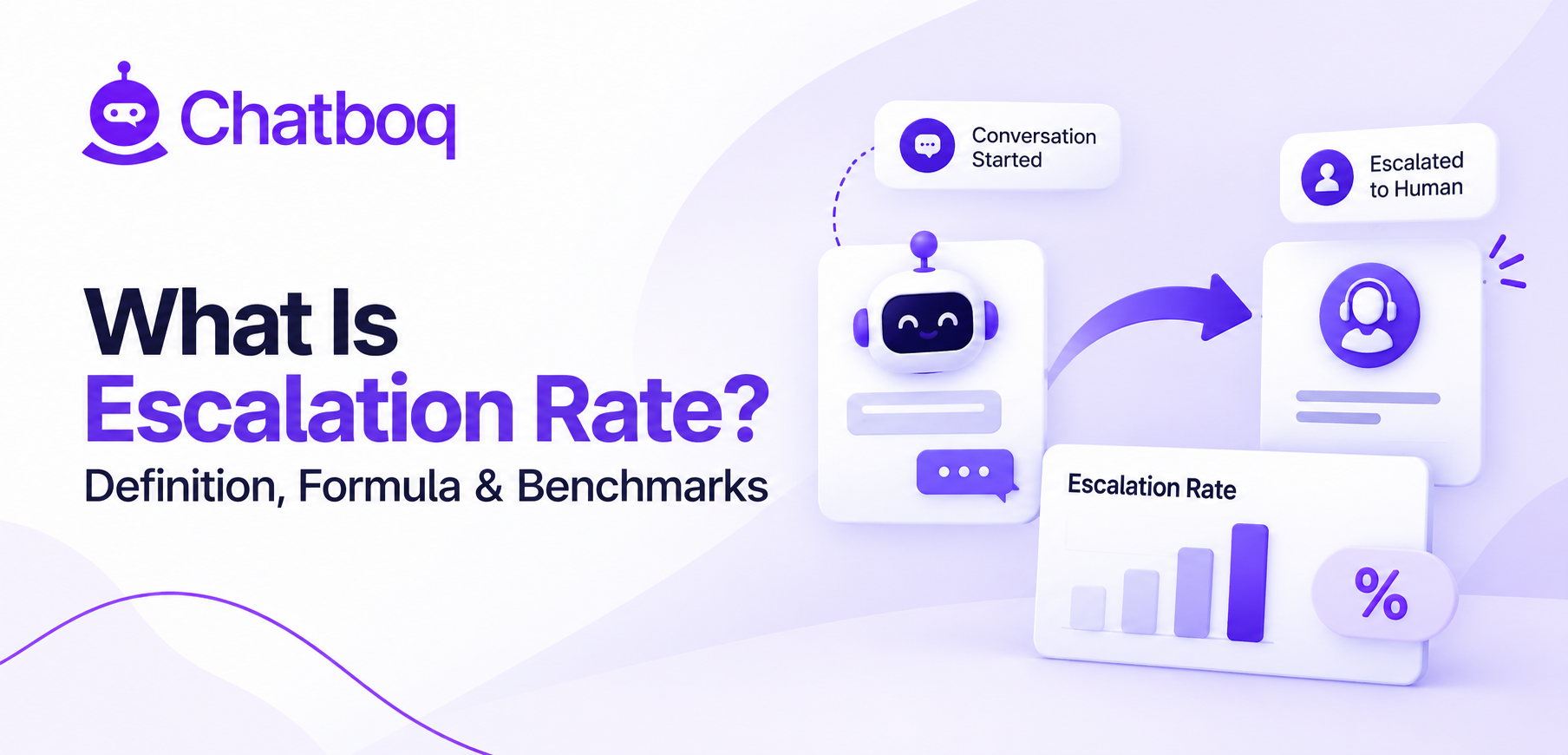
Escalation rate equals escalated conversations divided by total conversations, and the main decision is which conversations count in the denominator.
Choosing the denominator
Counting all conversations including those where the visitor never asked anything meaningful understates the rate, while counting only substantive conversations gives a more honest figure.
Whichever is chosen, it should be documented, since most unexplained changes in this metric turn out to be changes in what was counted.
Counting escalation consistently
Decide whether an escalation that a customer abandons before an agent replies counts, since these are common and materially affect the figure.
Counting them is usually correct, because the escalation decision was made even though the conversation did not continue.
Escalation types worth separating
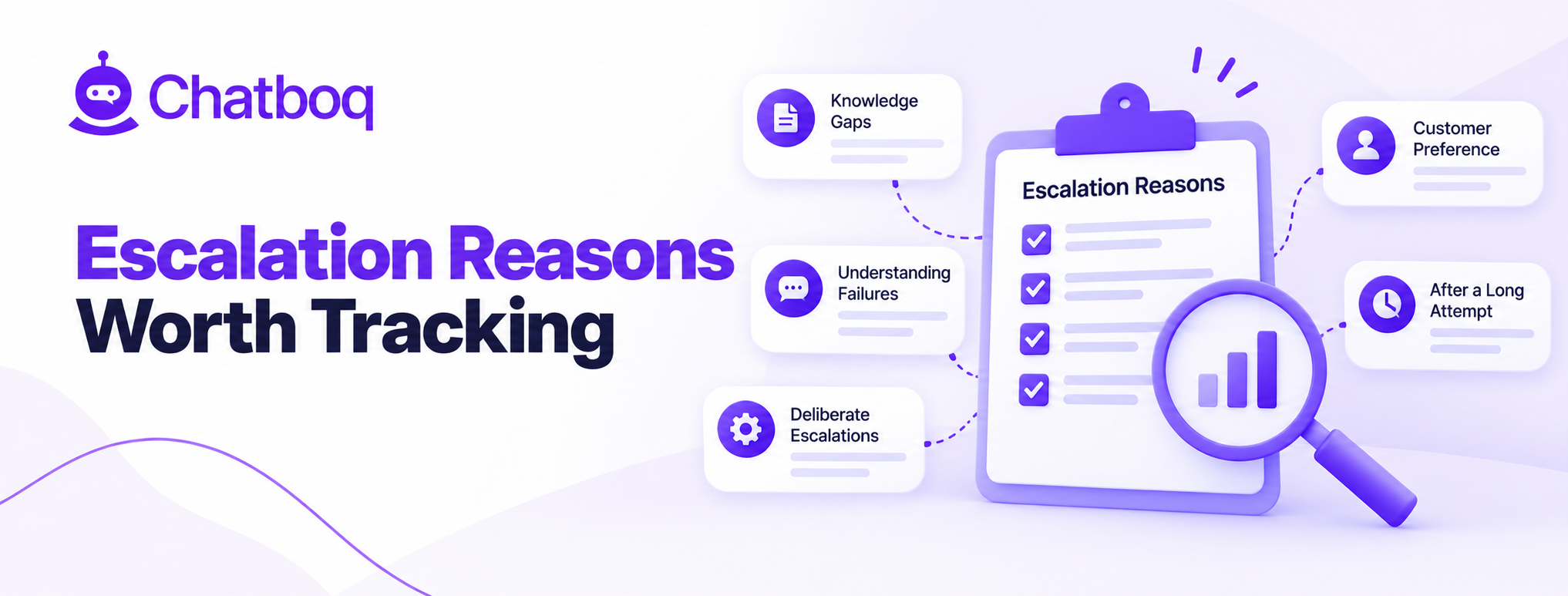
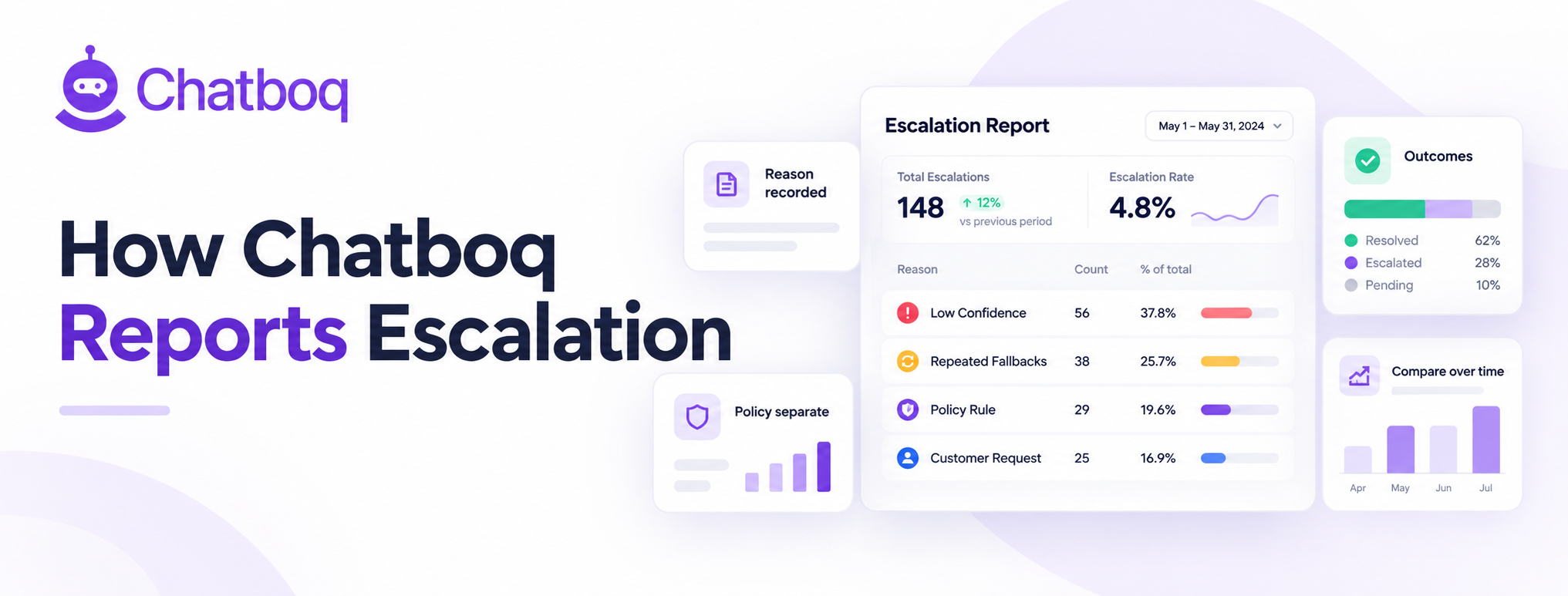
Bot to human, tier to tier, customer requested and rule triggered escalations are different events with different causes and should not be blended into one figure.
A rising overall rate can hide a falling bot-to-human rate alongside a sharply rising tier-to-tier one, which are opposite problems.
Excluding conversations that never started
Widget opens with no message sent should not count in the denominator, since no handling decision was ever made and including them dilutes the figure.
Applying this consistently matters more than the specific choice, because the metric is only useful compared against itself over time.
 ChatGPT
 Perplexity
 Claude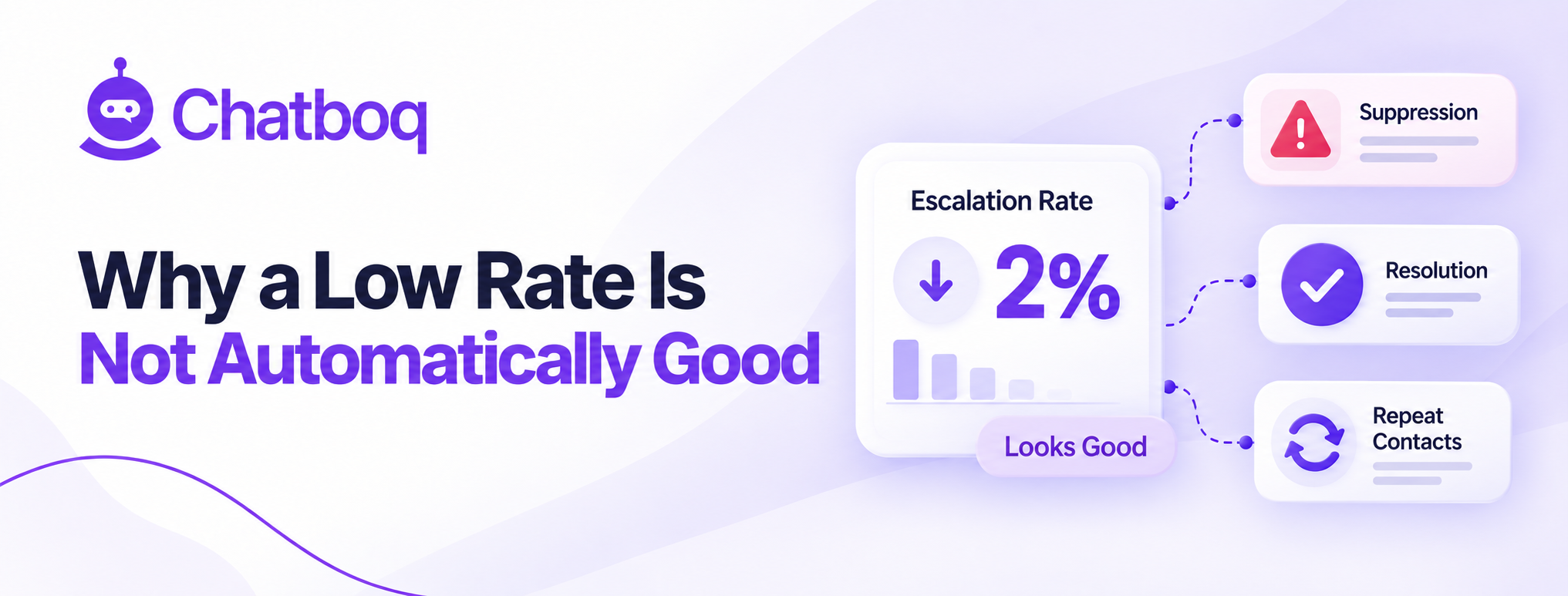






Leave a Comment
Your email address will not be published. Required fields are marked *
By submitting, you agree to receive helpful messages from Chatboq about your request. We do not sell data.