
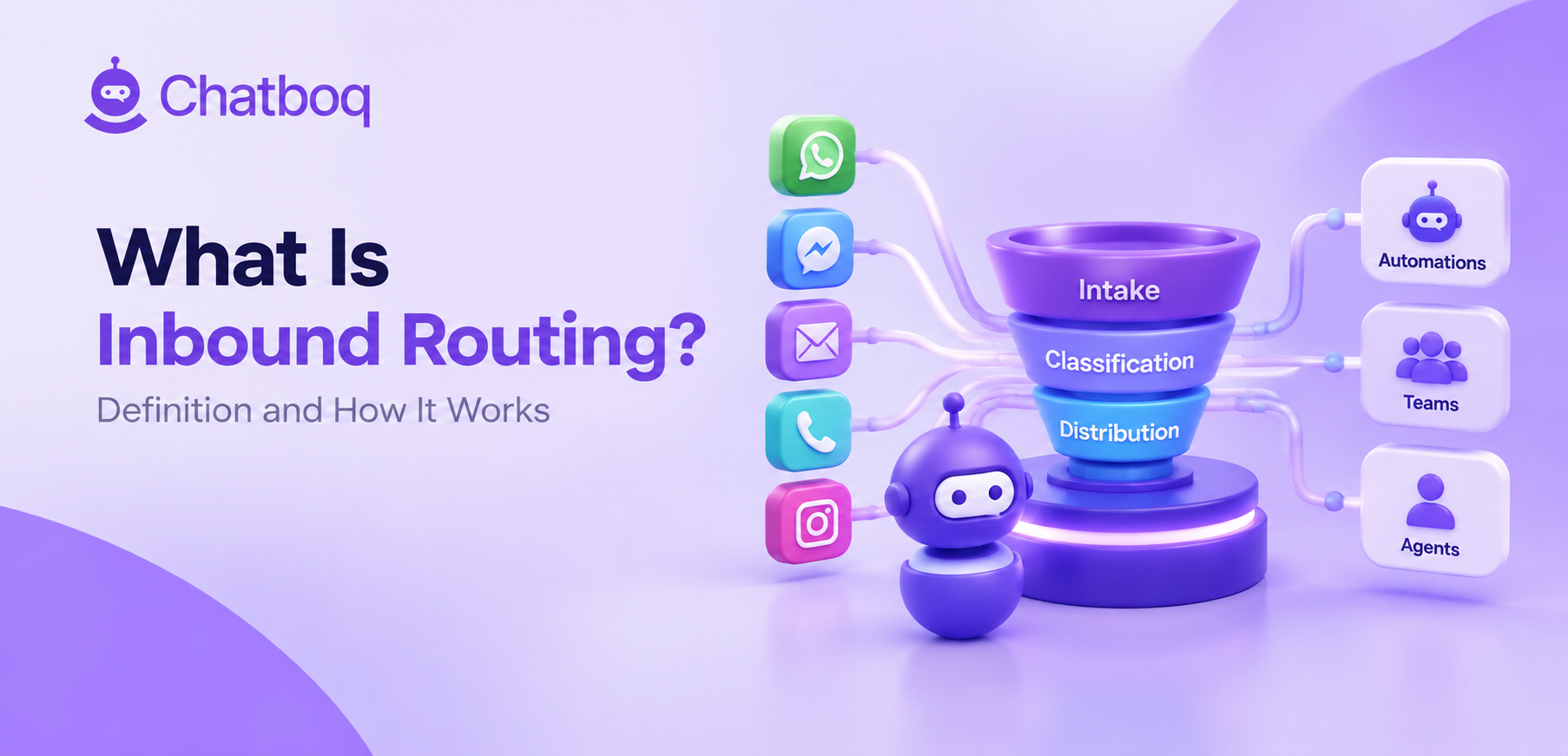
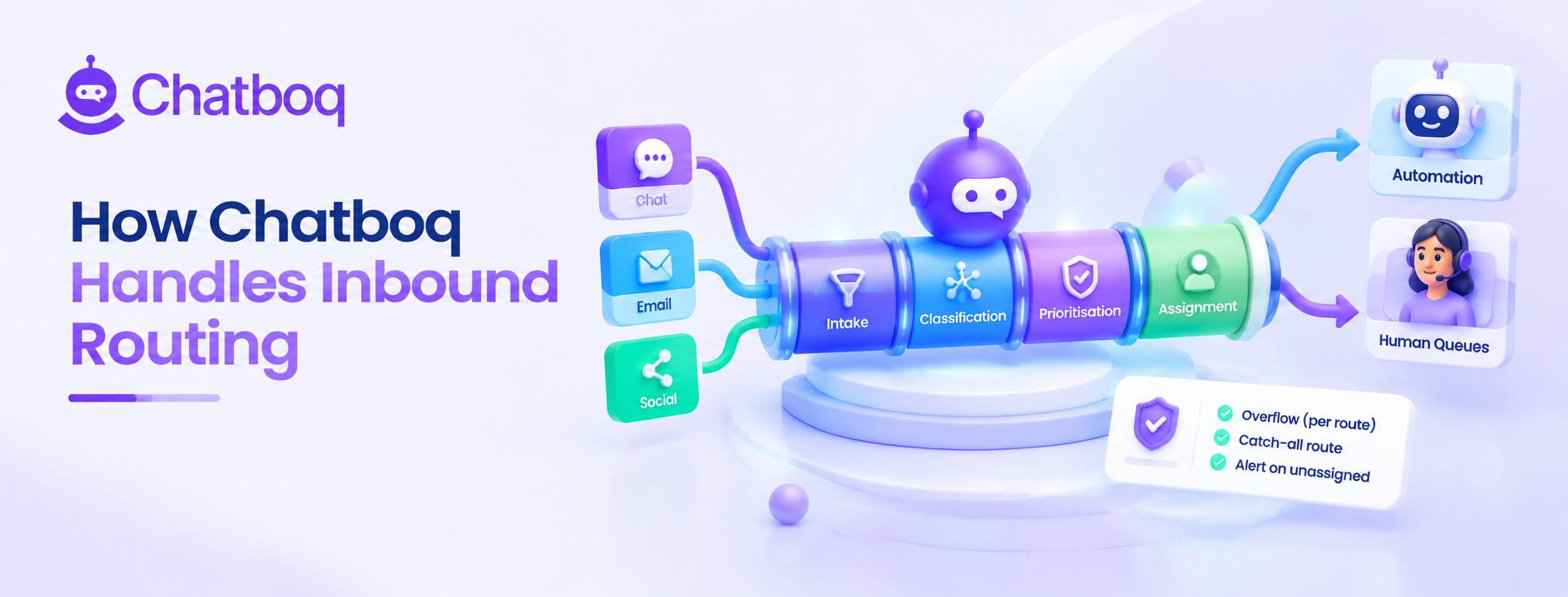
Inbound routing runs through four stages: intake, classification, prioritisation and assignment, and each makes a different kind of decision.
Intake
Intake is where a contact enters the system, whether that is a chat opening, an email arriving, a form submission or a message from a social channel.
The important design decision here is normalisation, since a routing system that treats each channel as a separate world cannot apply consistent policy across them.
Classification
Classification determines what the contact is about, using detected intent, page context, form fields or the customer record depending on what is available.
This is the stage that most determines routing accuracy, since a misclassified contact will be routed confidently to the wrong place.
Prioritisation and assignment
Prioritisation decides where the contact sits relative to others already waiting, and assignment selects the specific destination based on skills, availability and load.
Separating these two is useful, because priority is a property of the contact while assignment depends on the state of the team at that moment.
Normalising contacts at intake
Converting contacts from every channel into a common internal representation is what allows one set of classification and priority rules to apply consistently across them.
Without normalisation, each new channel requires its own parallel rule set, which is how routing configurations become unmaintainable within a couple of years.
 ChatGPT
 Perplexity
 Claude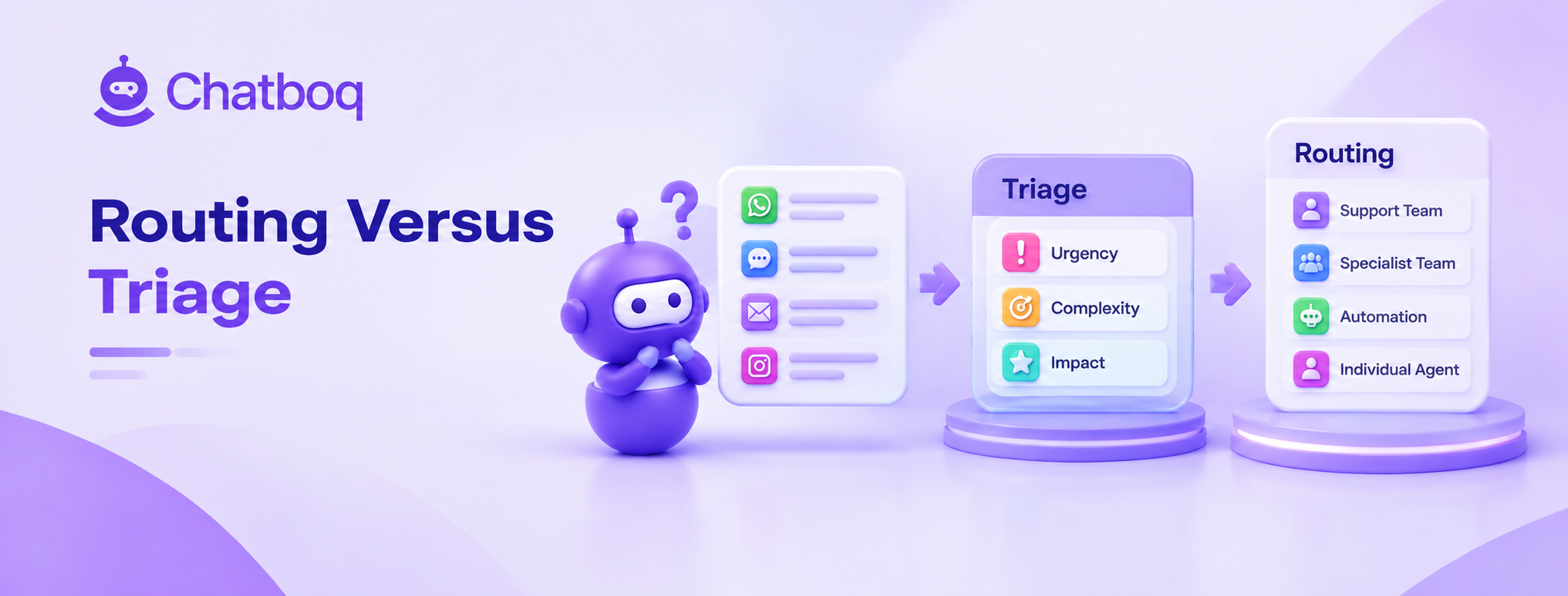





Leave a Comment
Your email address will not be published. Required fields are marked *
By submitting, you agree to receive helpful messages from Chatboq about your request. We do not sell data.