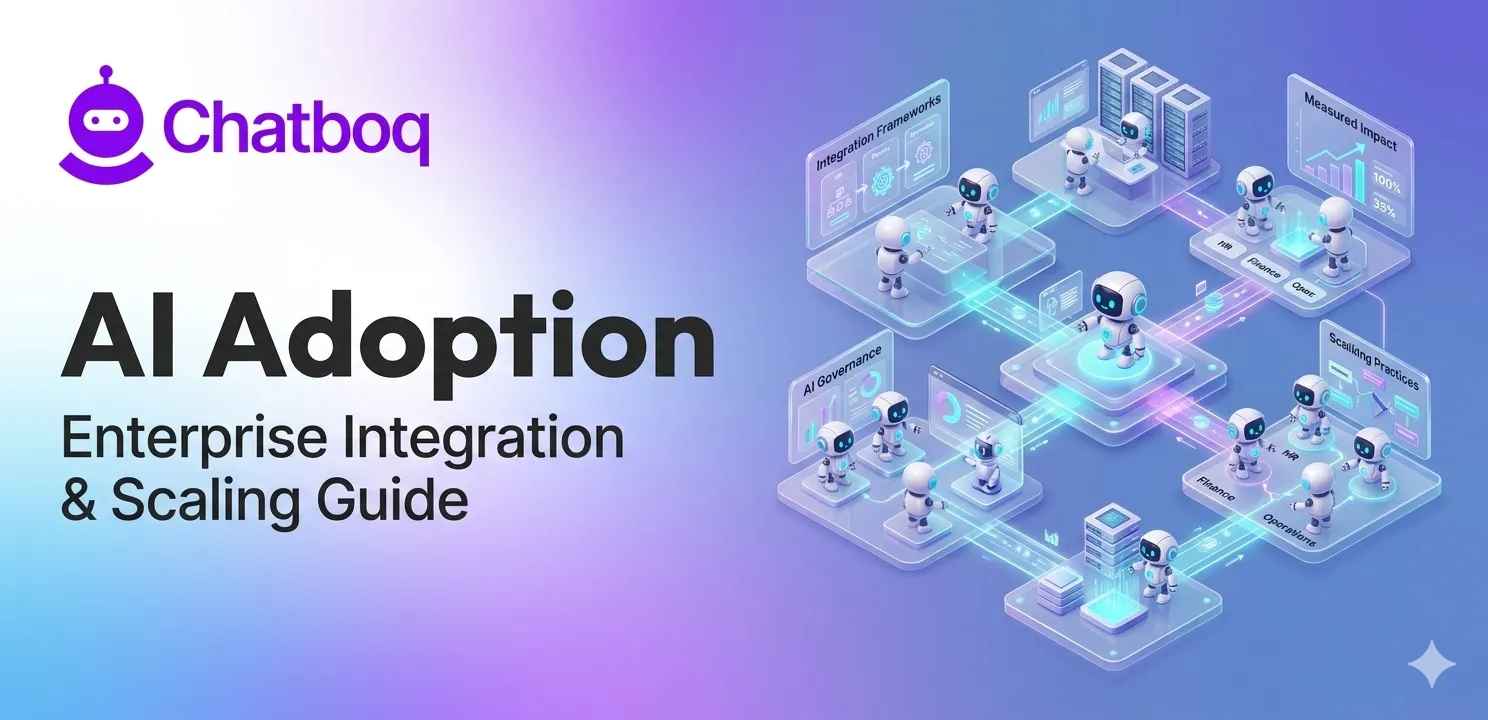
AI adoption progresses through distinct maturity stages: awareness and exploration, pilot experimentation, integration and operationalization, and scaling and optimization.
Awareness and exploration stage
Organizations initially explore AI adoption opportunities by evaluating workflow automation potential, operational efficiency improvements, and business AI integration opportunities. Leaders read about AI success stories. Teams attend training. Executives approve exploratory budgets. This stage builds organizational understanding and identifies promising use cases.
Exploration stages help organizations evaluate AI capabilities, operational constraints, implementation requirements, and AI infrastructure readiness before enterprise scaling begins. What can AI actually do? What data is needed? What skills are required? Exploration answers these questions through small experiments. Risk is low. Learning is high. Awareness stage creates momentum for real implementation.
Pilot and experimentation stage
Organizations run controlled AI projects addressing specific problems. Customer support pilots test AI chatbots. Manufacturing pilots test predictive maintenance. Sales pilots test lead scoring. Each pilot is bounded, measurable, and designed to prove value.
Successful AI implementation pilots generate measurable business outcomes that justify broader enterprise AI adoption investment. A successful pilot might save $50,000 annually. Leadership sees the math. They approve larger budgets. AI implementation pilots also reveal workflow integration limitations, operationalization challenges, and enterprise AI infrastructure constraints. Data quality issues emerge. Teams lack necessary skills. Integration requires system changes.
Integration and operationalization stage
Organizations move successful pilots into production through AI operationalization, workflow integration, and enterprise AI deployment processes. AI operationalization requires coordination across enterprise operations, workflow integration systems, and organizational change management processes. Chatbot handling 10% of support volume becomes mainstream.
Manual processes give way to AI-driven workflows. Large organizations often combine AI implementation frameworks, workflow automation systems, adoption analytics, and enterprise AI governance into centralized transformation strategies.
Operationalization faces organizational resistance often. Old processes disappear. Jobs change. People fear AI. Change management becomes critical. Leadership must maintain commitment through difficulties. Operationalization also reveals scaling challenges. Solutions that work for one team don't work for ten teams.
Scaling and optimization stage
Enterprise AI adoption expands beyond initial pilots by integrating AI systems into broader enterprise operations and workflow integration environments. AI adoption becomes strategic. Systems are optimized. Teams are trained. Processes embed AI completely. Enterprise AI scaling practices require governance systems that coordinate operational AI systems, workflow automation, and compliance management. Organizations must decide: who approves new AI projects? How do we ensure data quality? What compliance requirements apply?
AI governance frameworks create operational consistency by standardizing compliance requirements, approval workflows, and enterprise AI adoption controls. AI operationalization and scaling practices continuously refine AI systems through monitoring, retraining, workflow integration, and adoption analytics. Models improve. Processes streamline. Teams develop mastery.

 ChatGPT
 Perplexity
 Claude


Leave a Comment
Your email address will not be published. Required fields are marked *
By submitting, you agree to receive helpful messages from Chatboq about your request. We do not sell data.